Trustquake — Gallery (Page 15 of 100)
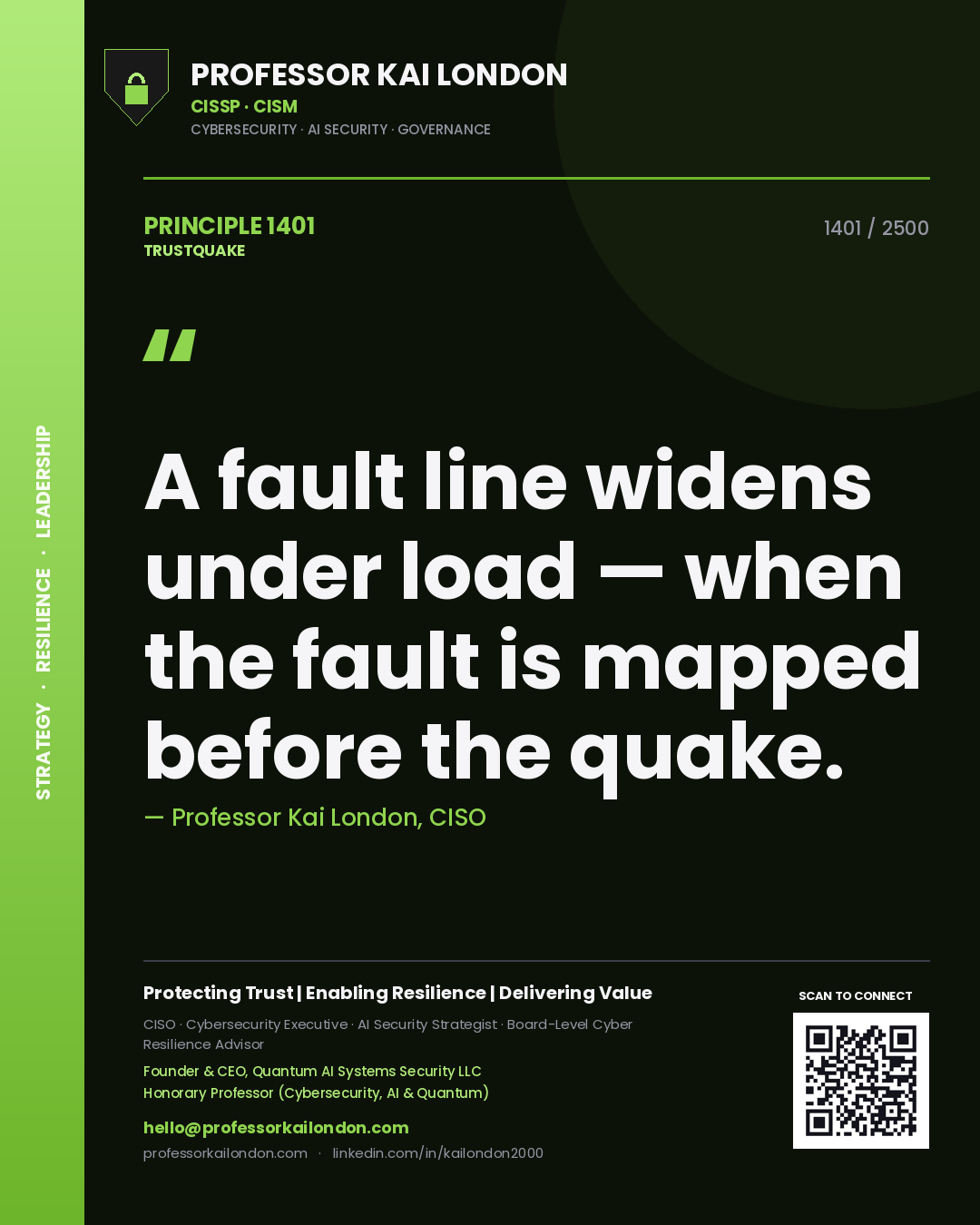
Professor Kai London principle 1401: A fault line widens under load — when the fault is mapped before the quake.
Principle 1401
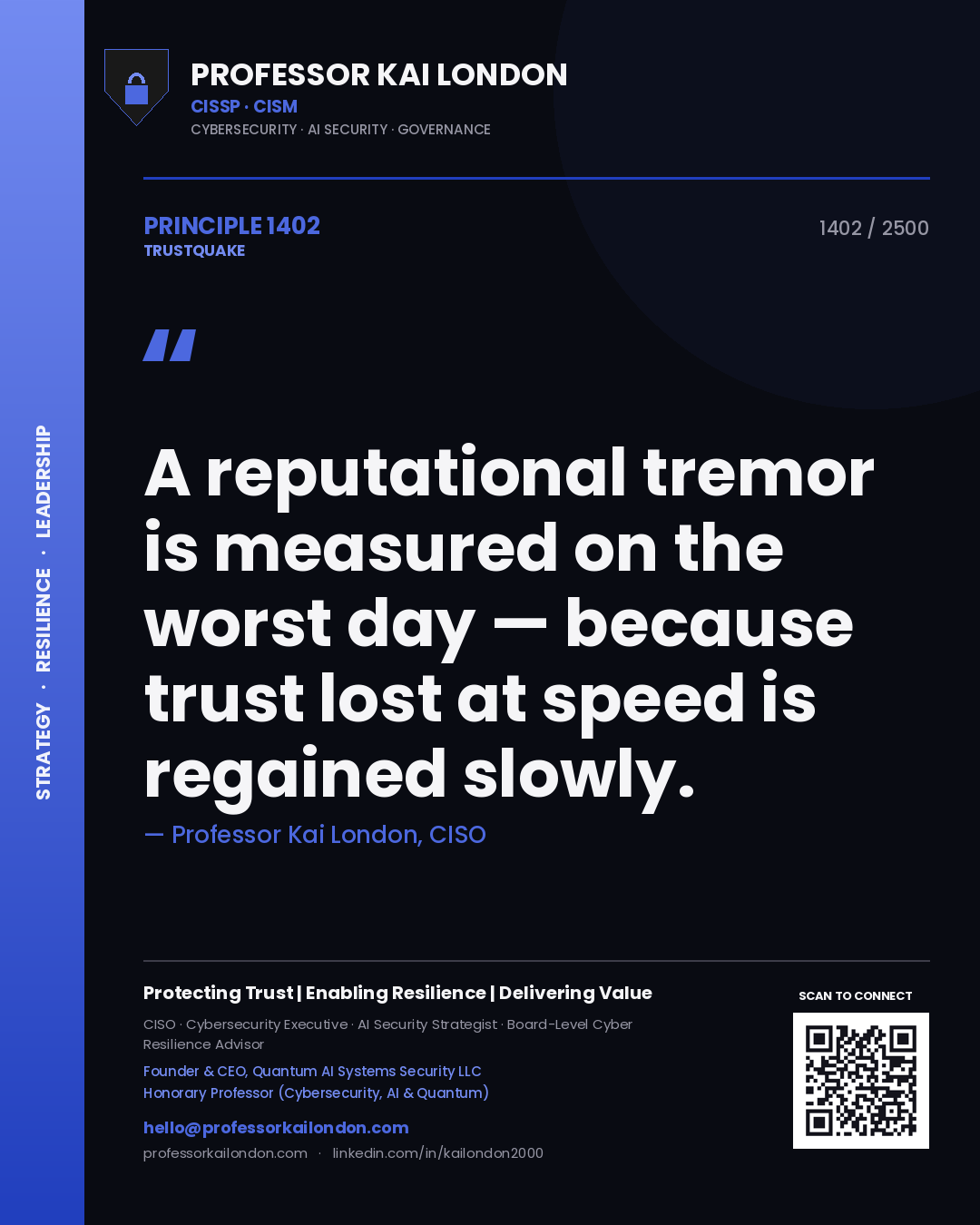
Professor Kai London principle 1402: A reputational tremor is measured on the worst day — because trust lost at speed is regained slowly.
Principle 1402
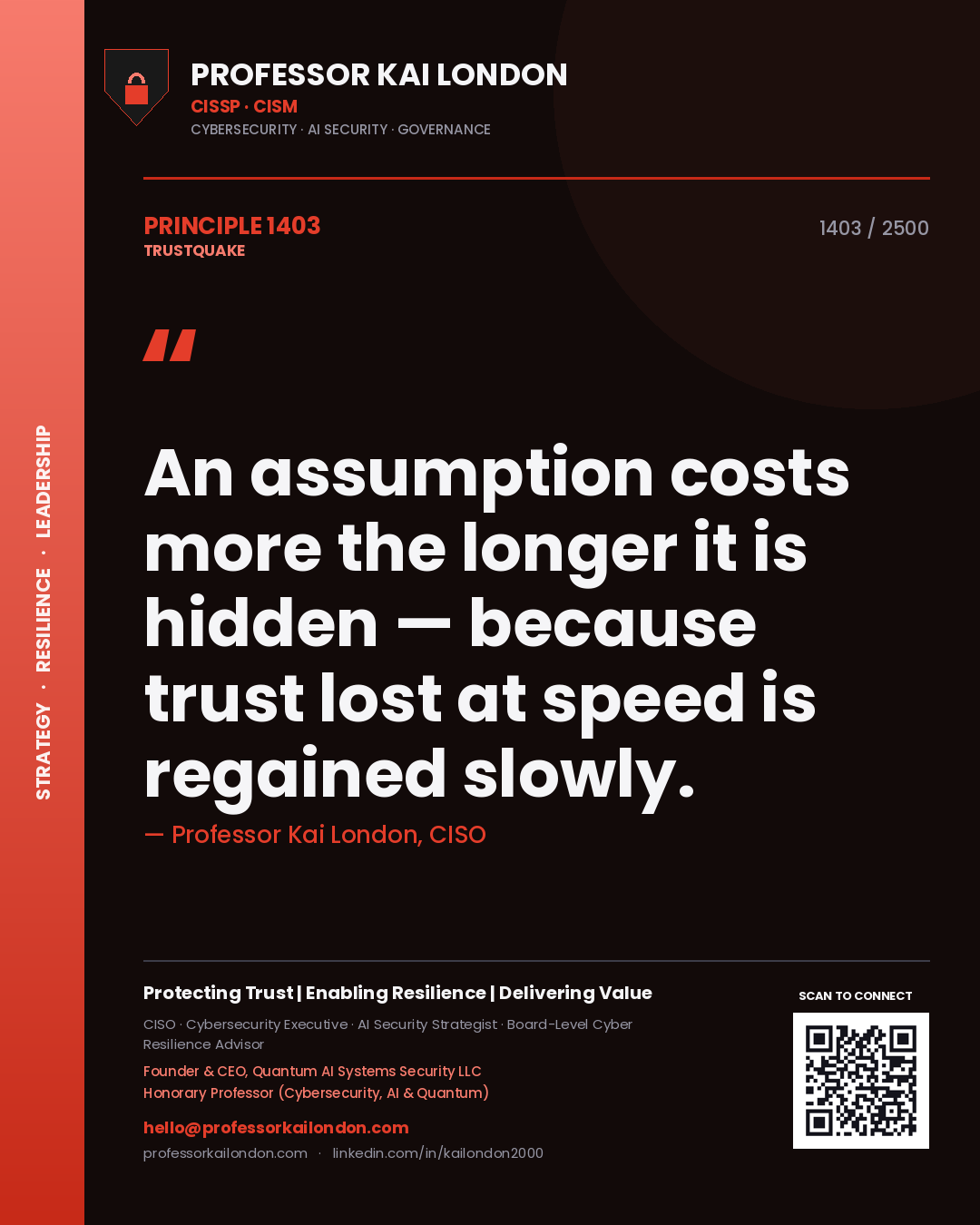
Professor Kai London principle 1403: An assumption costs more the longer it is hidden — because trust lost at speed is regained slowly.
Principle 1403
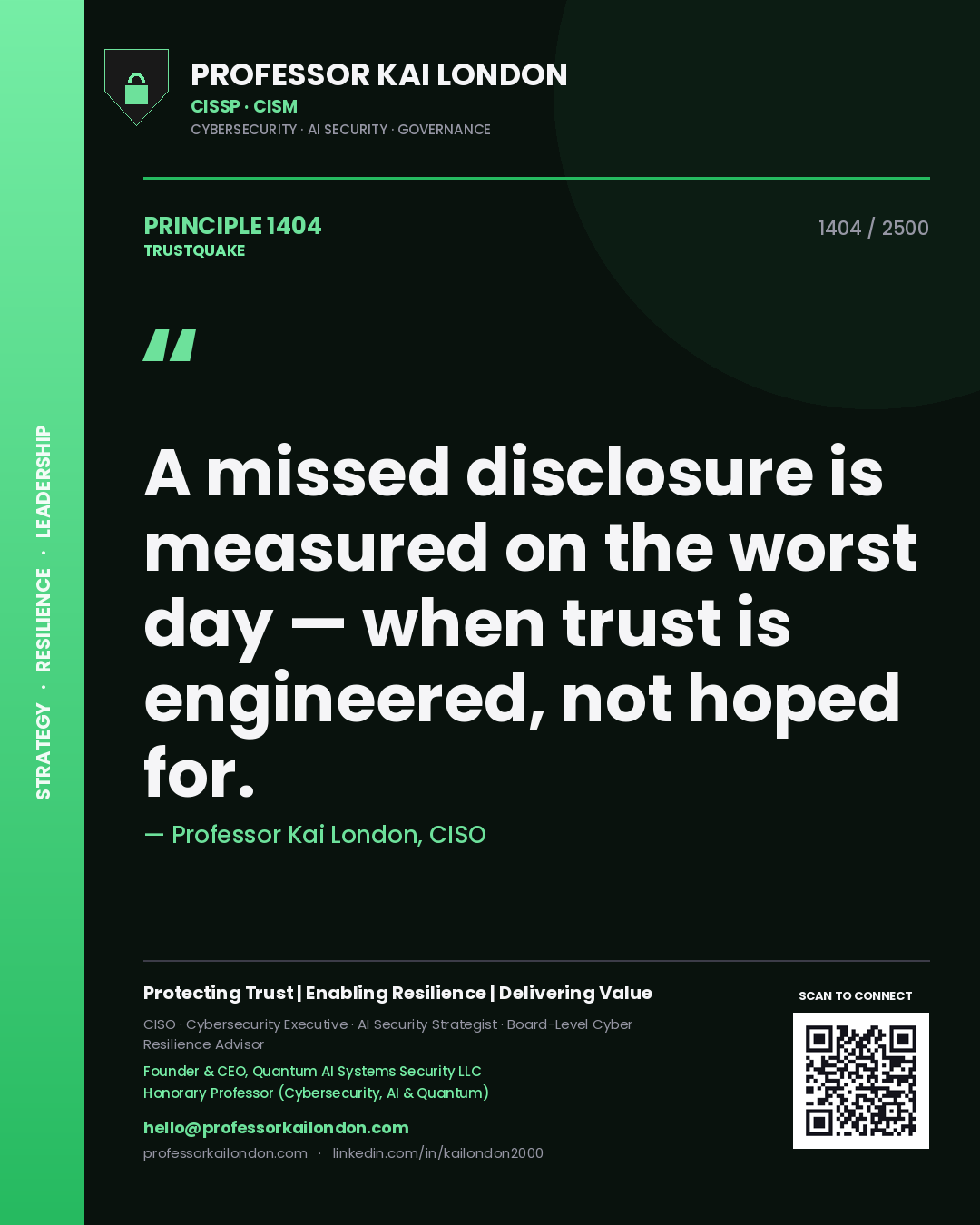
Professor Kai London principle 1404: A missed disclosure is measured on the worst day — when trust is engineered, not hoped for.
Principle 1404
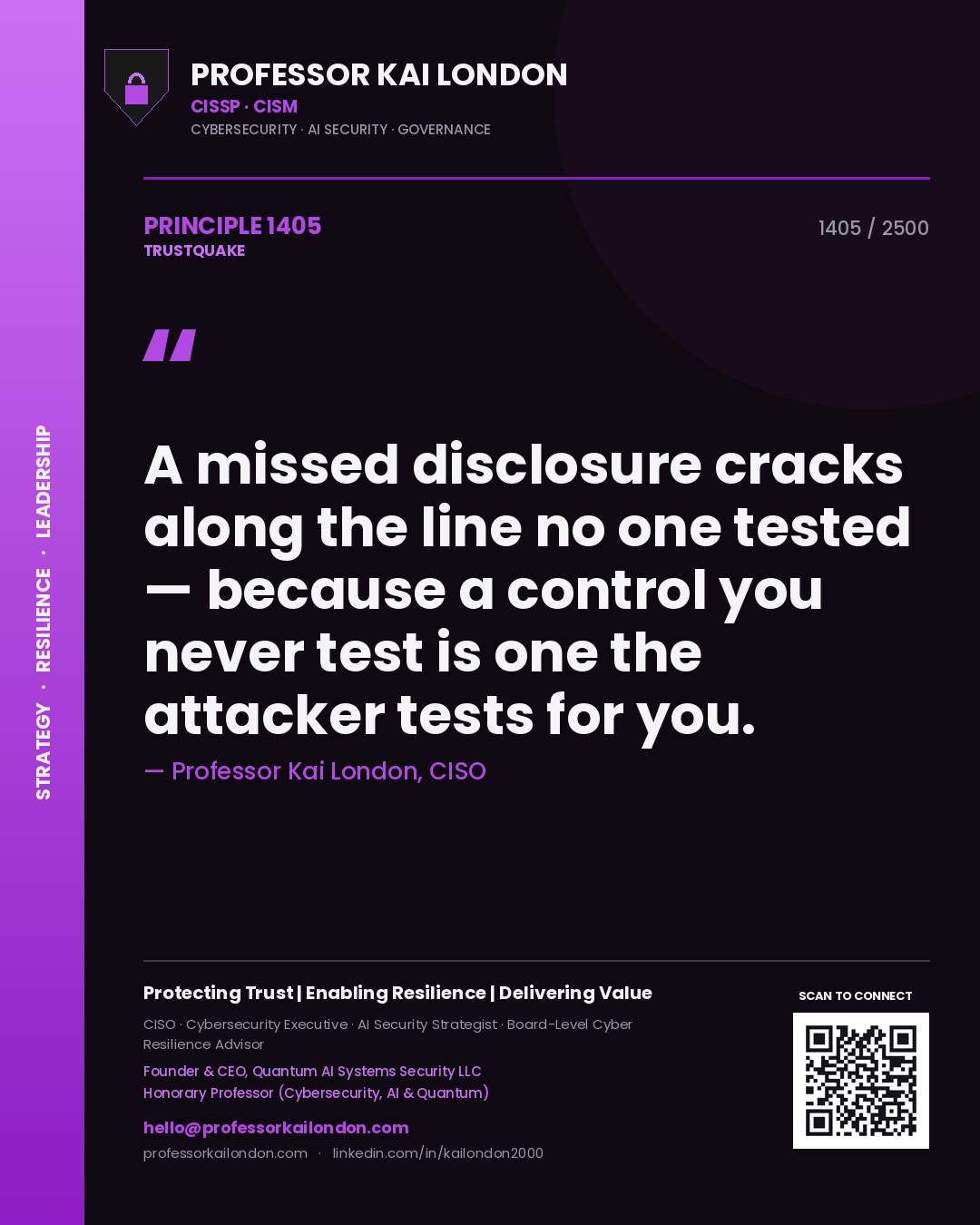
Professor Kai London principle 1405: A missed disclosure cracks along the line no one tested — because a control you never test is one the attacker tests for you.
Principle 1405
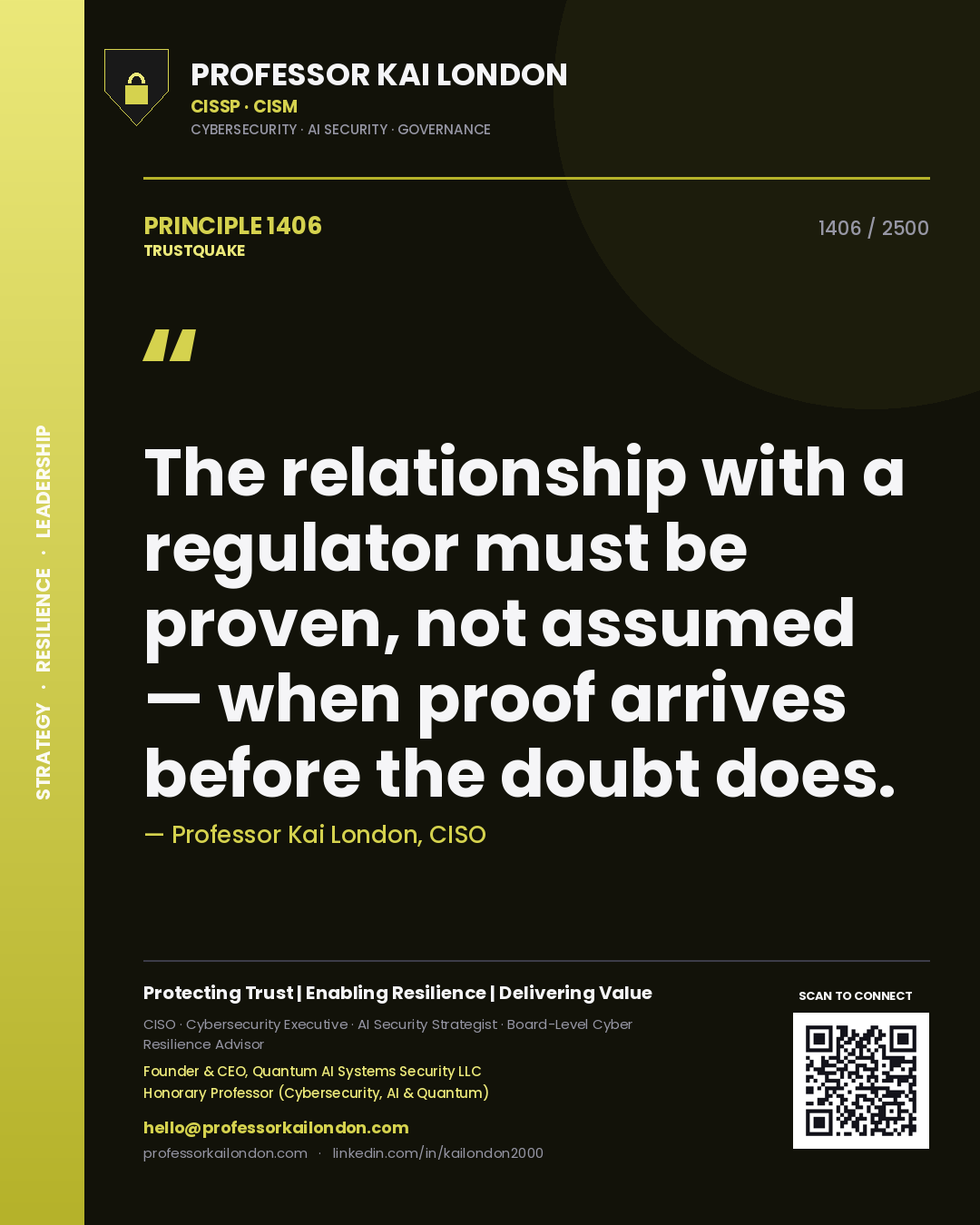
Professor Kai London principle 1406: The relationship with a regulator must be proven, not assumed — when proof arrives before the doubt does.
Principle 1406
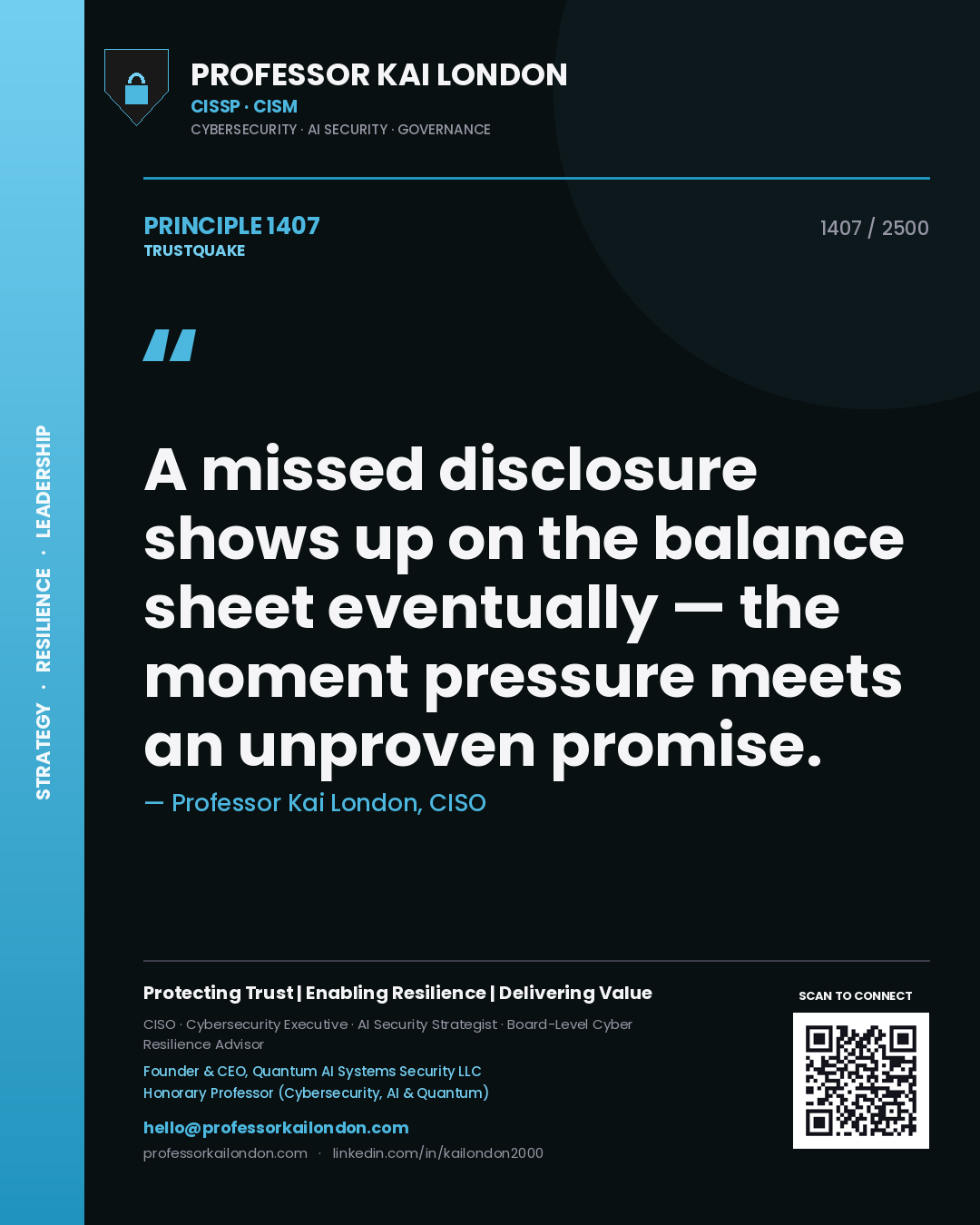
Professor Kai London principle 1407: A missed disclosure shows up on the balance sheet eventually — the moment pressure meets an unproven promise.
Principle 1407
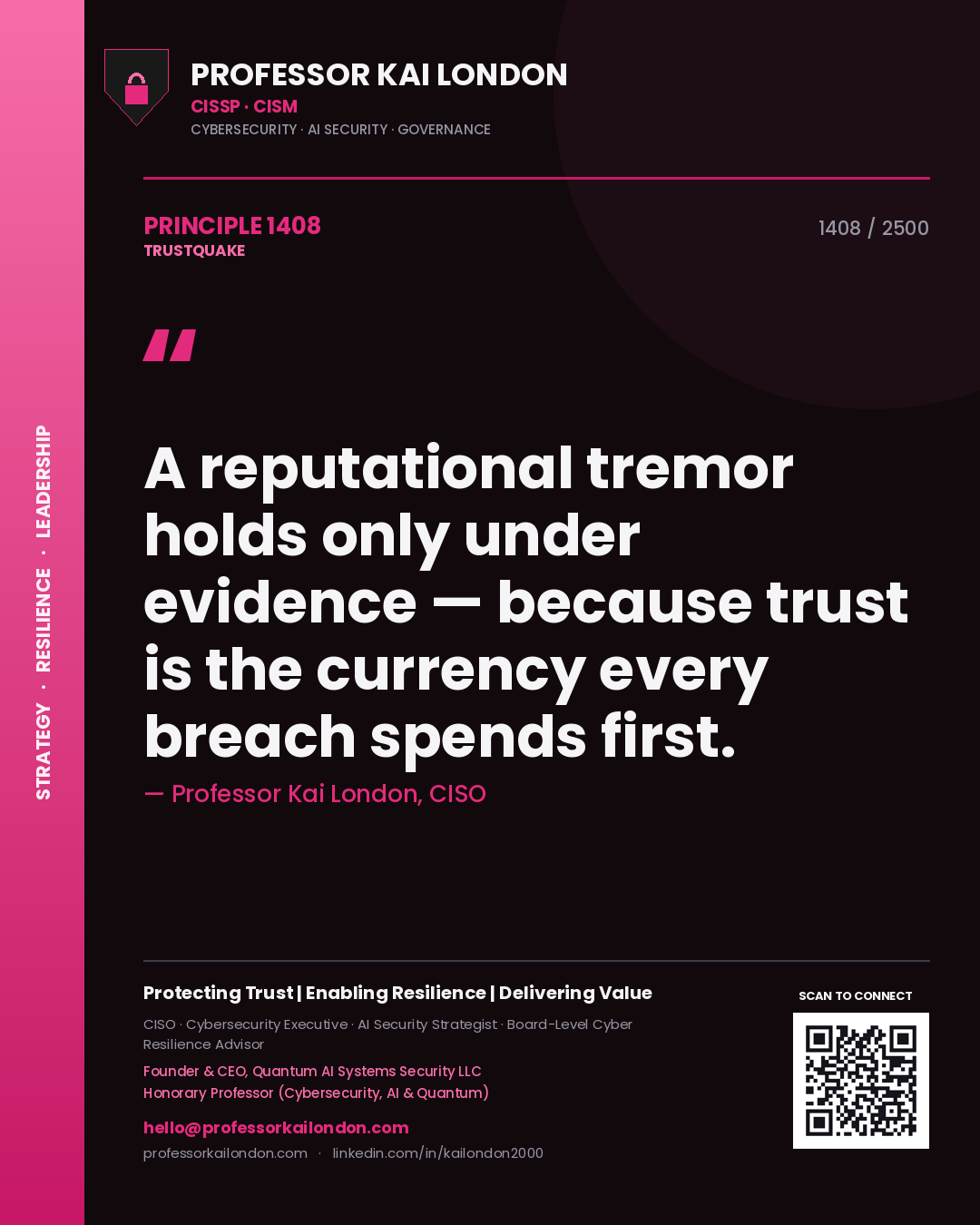
Professor Kai London principle 1408: A reputational tremor holds only under evidence — because trust is the currency every breach spends first.
Principle 1408
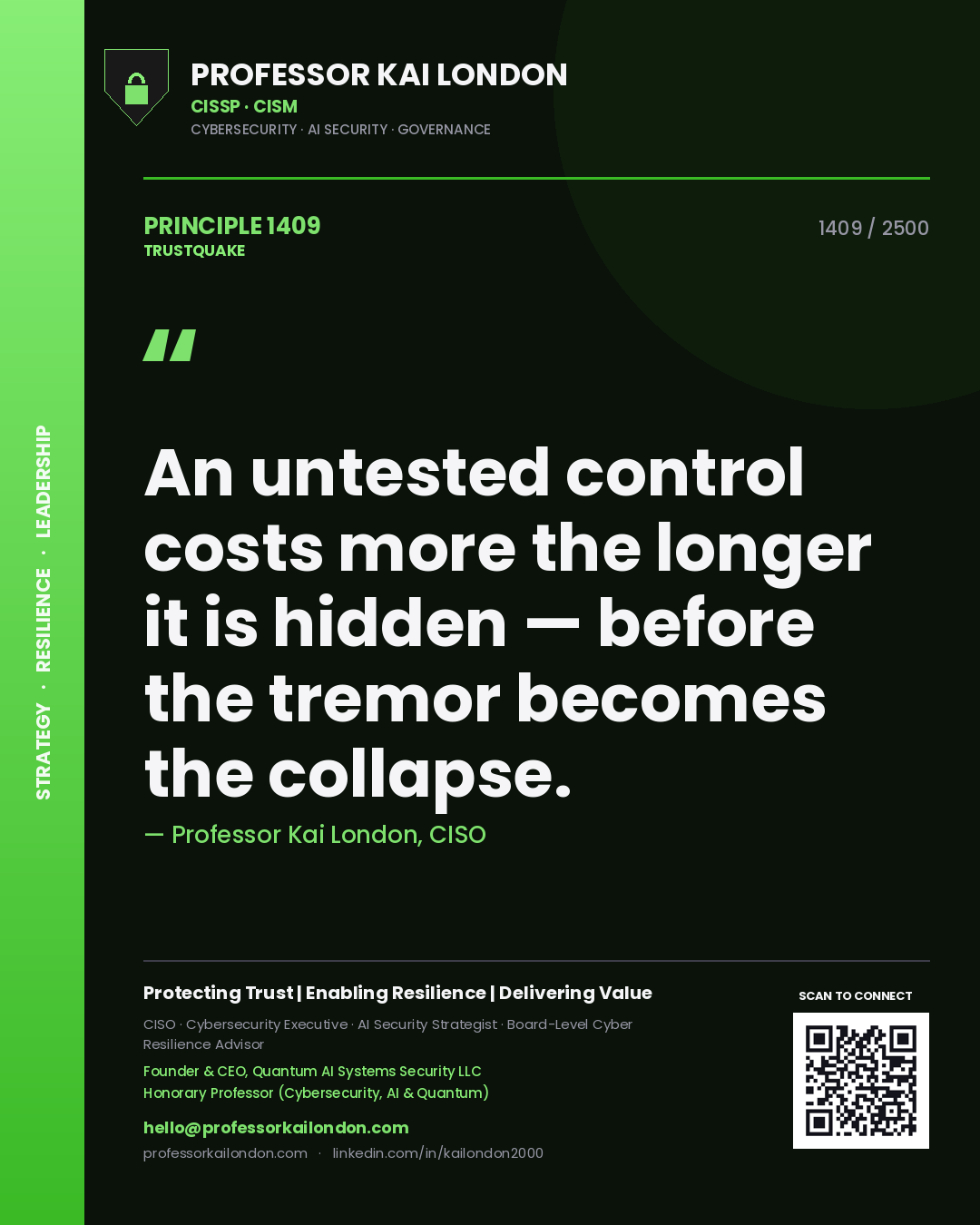
Professor Kai London principle 1409: An untested control costs more the longer it is hidden — before the tremor becomes the collapse.
Principle 1409
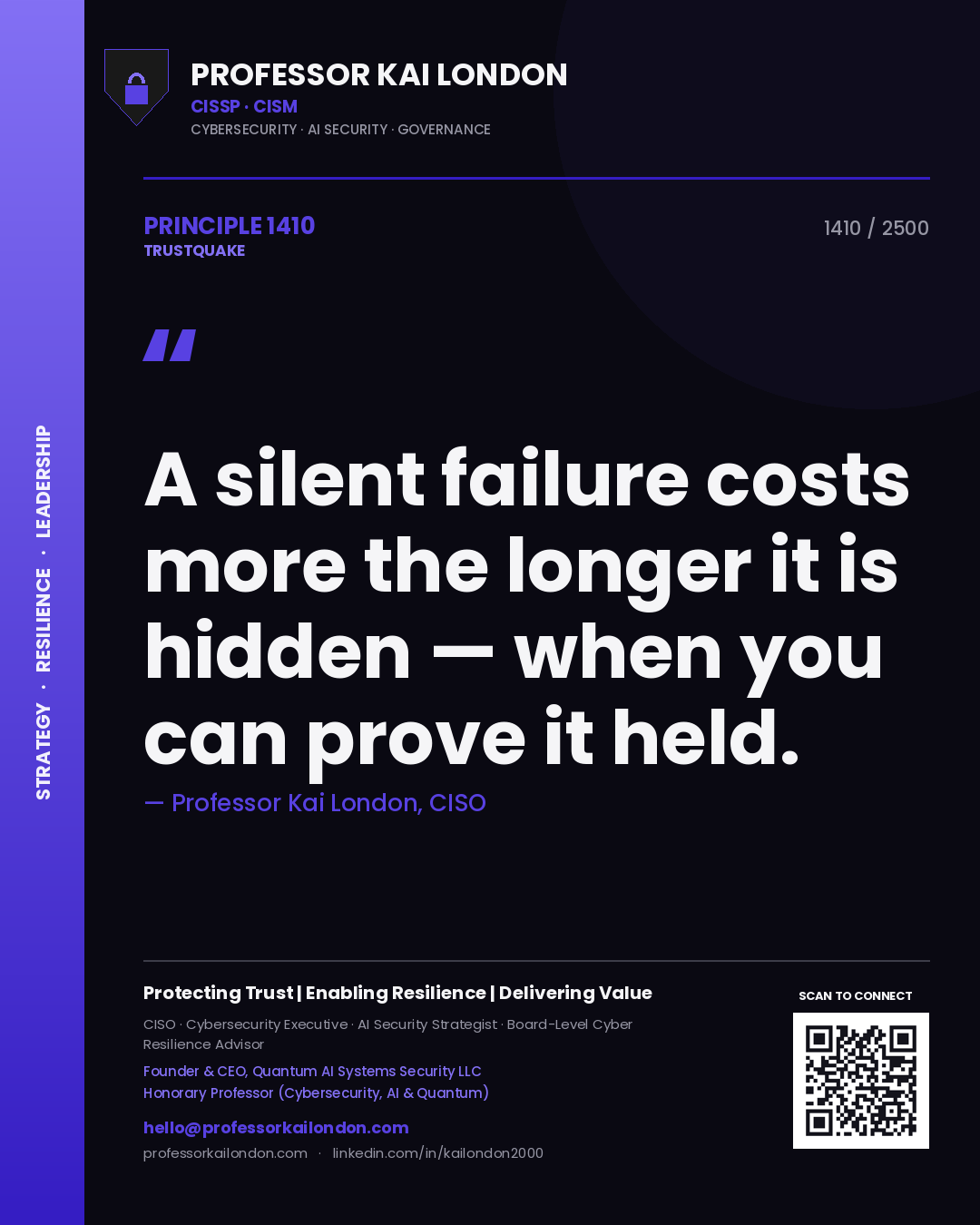
Professor Kai London principle 1410: A silent failure costs more the longer it is hidden — when you can prove it held.
Principle 1410
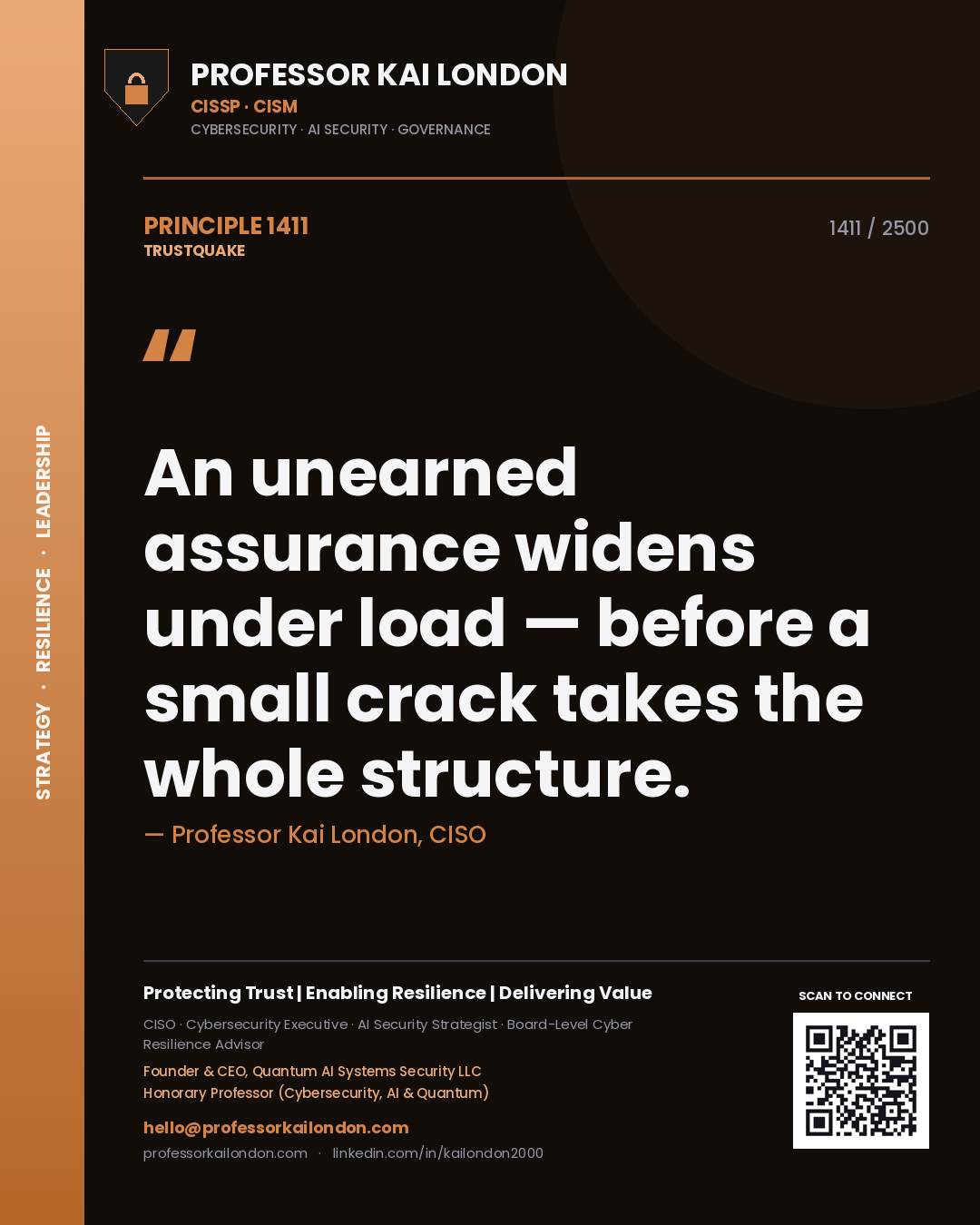
Professor Kai London principle 1411: An unearned assurance widens under load — before a small crack takes the whole structure.
Principle 1411
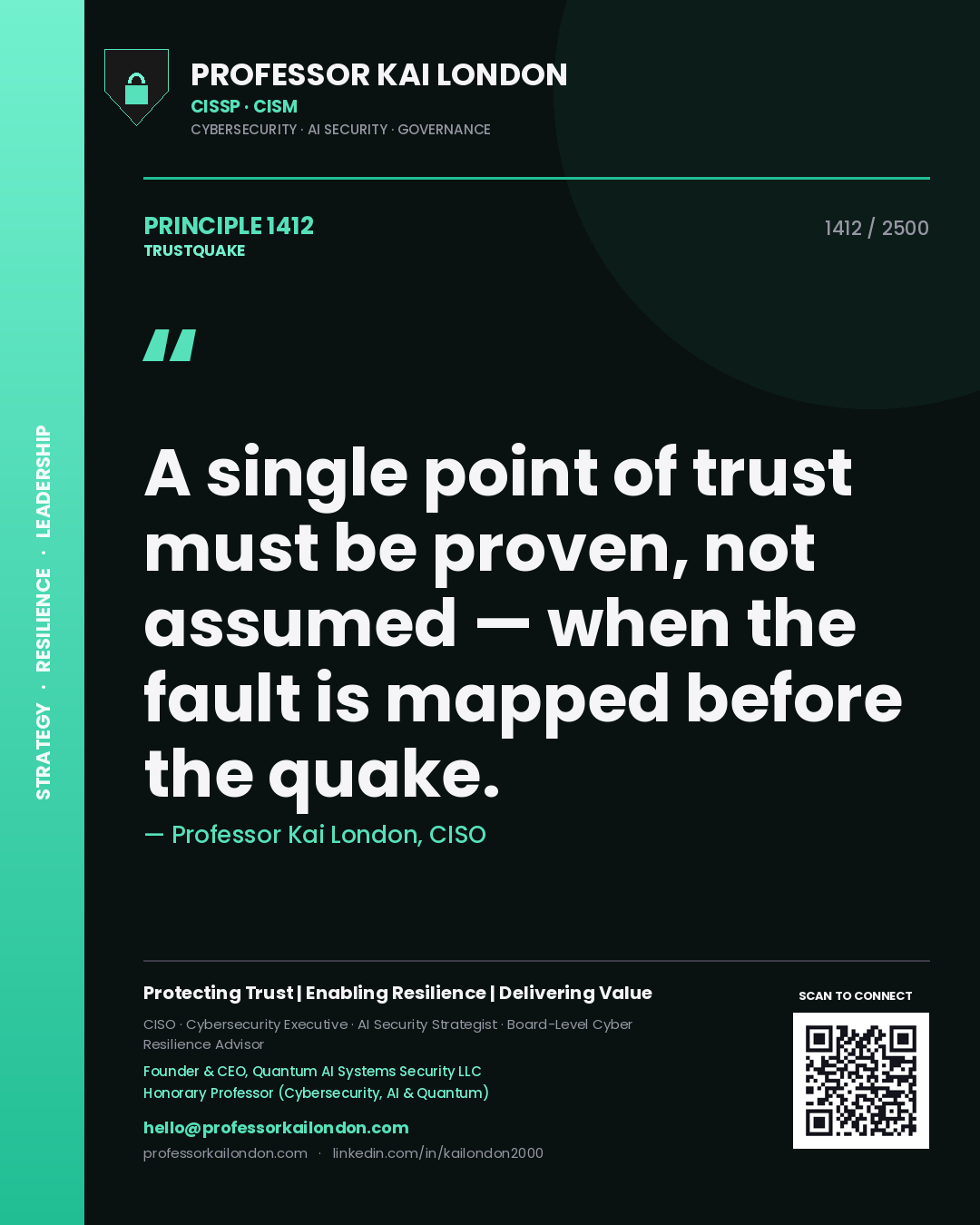
Professor Kai London principle 1412: A single point of trust must be proven, not assumed — when the fault is mapped before the quake.
Principle 1412
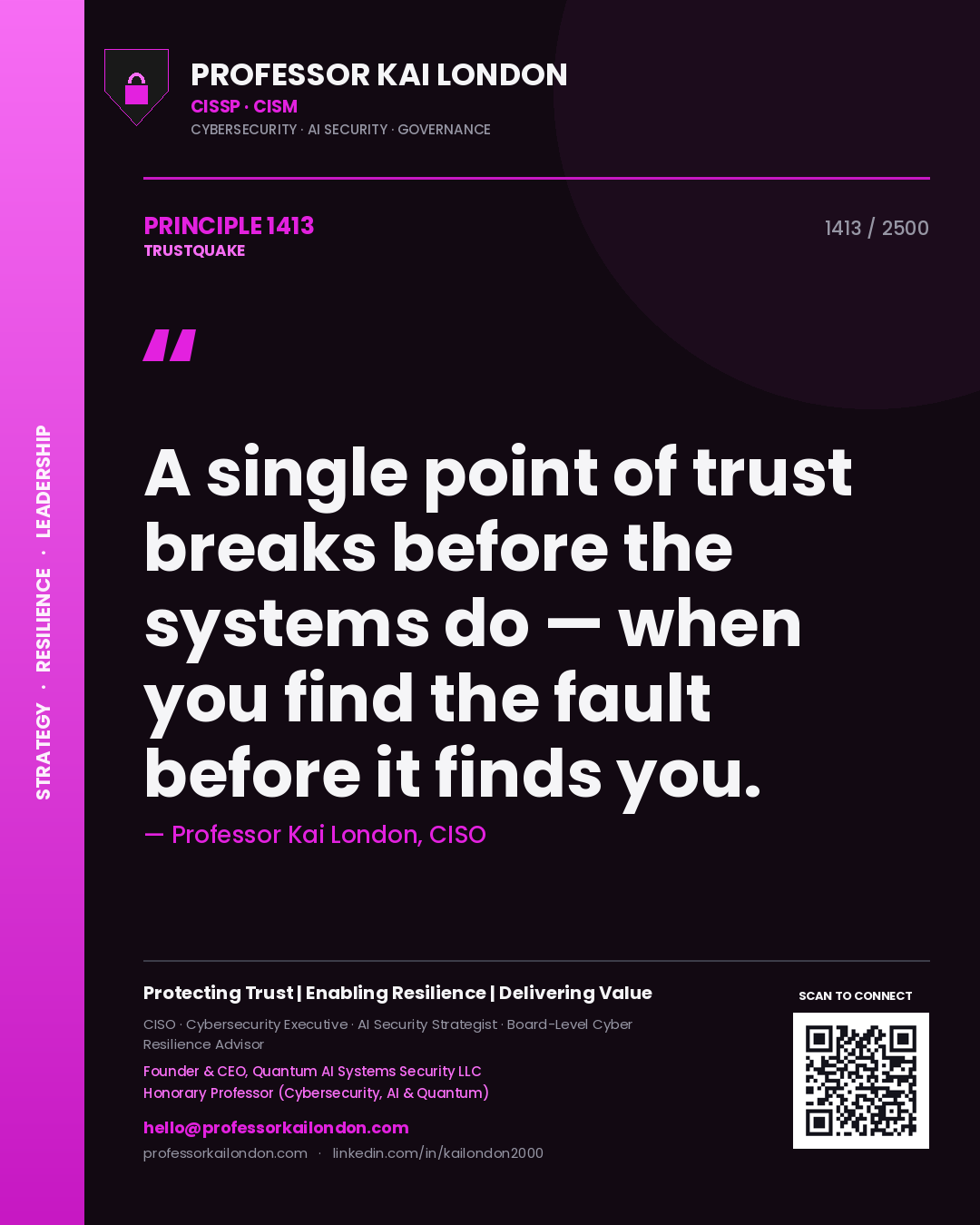
Professor Kai London principle 1413: A single point of trust breaks before the systems do — when you find the fault before it finds you.
Principle 1413
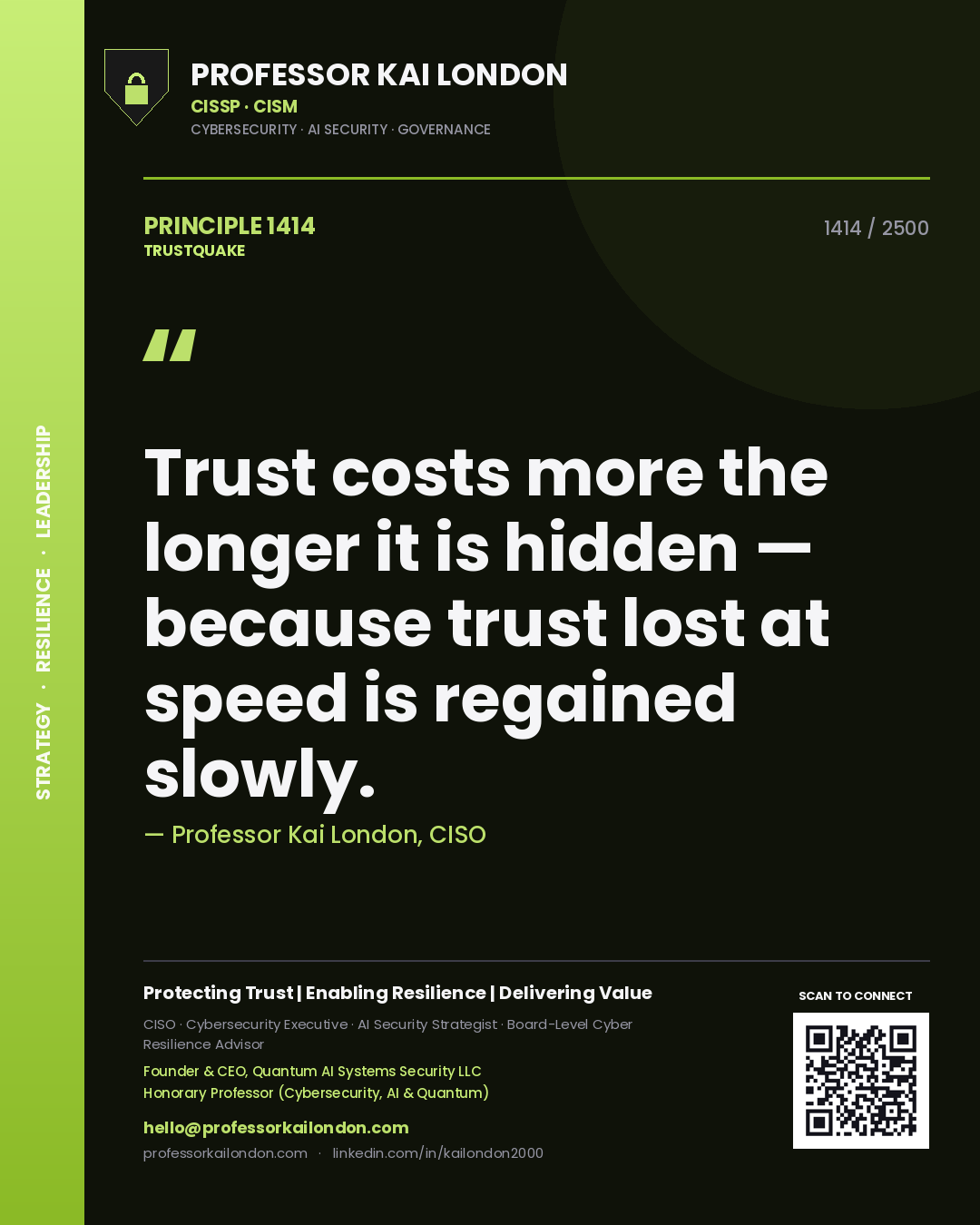
Professor Kai London principle 1414: Trust costs more the longer it is hidden — because trust lost at speed is regained slowly.
Principle 1414
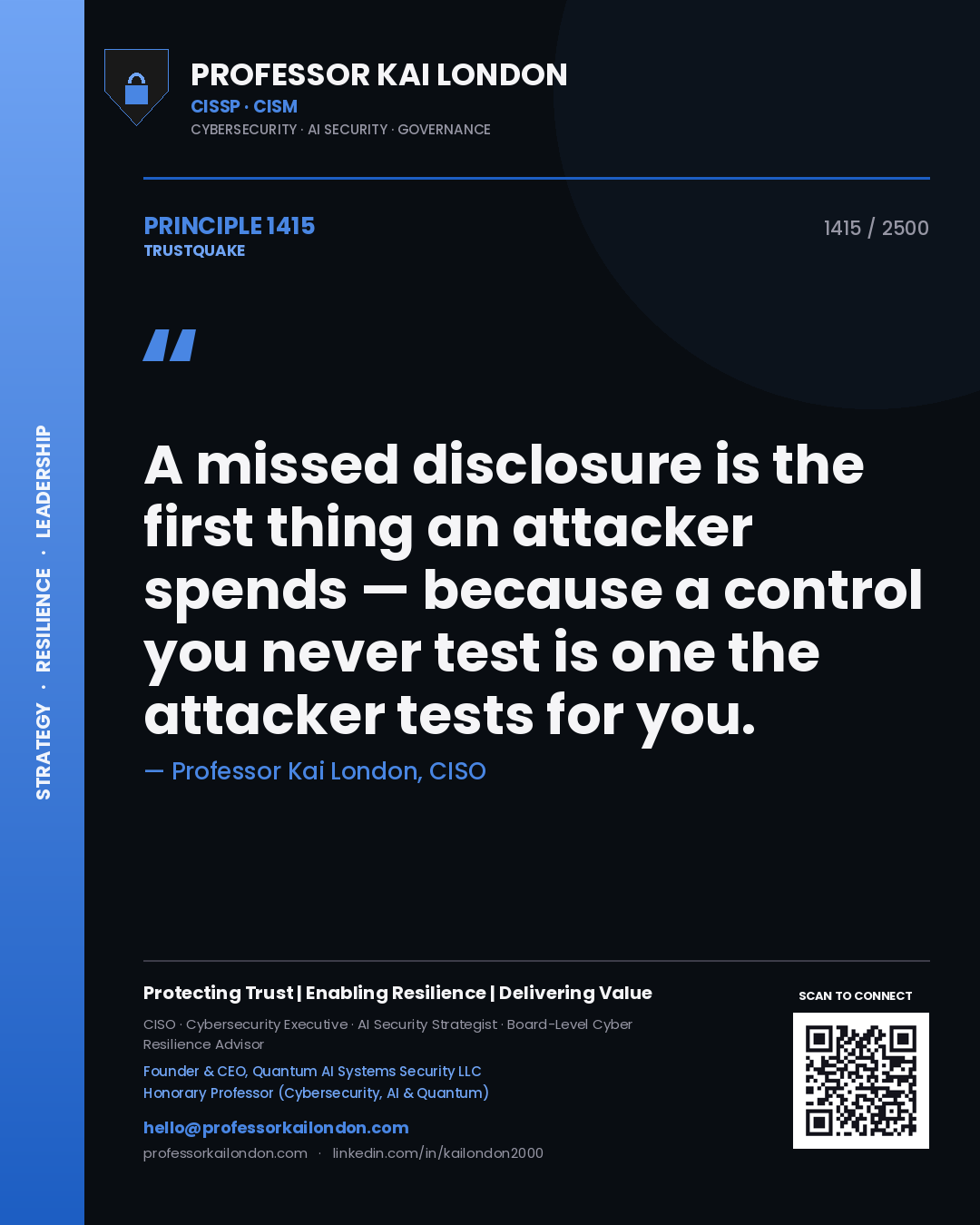
Professor Kai London principle 1415: A missed disclosure is the first thing an attacker spends — because a control you never test is one the attacker tests for you.
Principle 1415
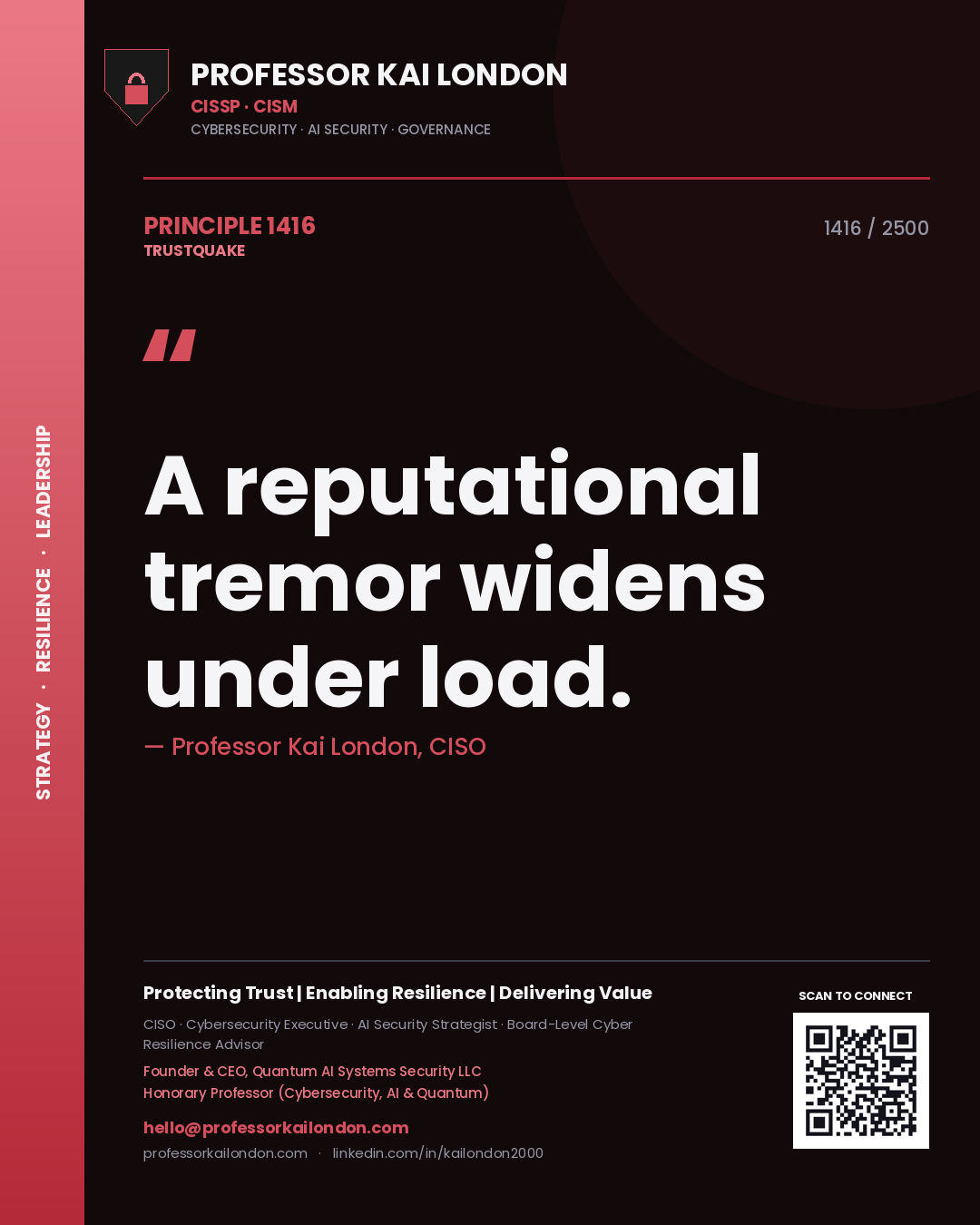
Professor Kai London principle 1416: A reputational tremor widens under load.
Principle 1416
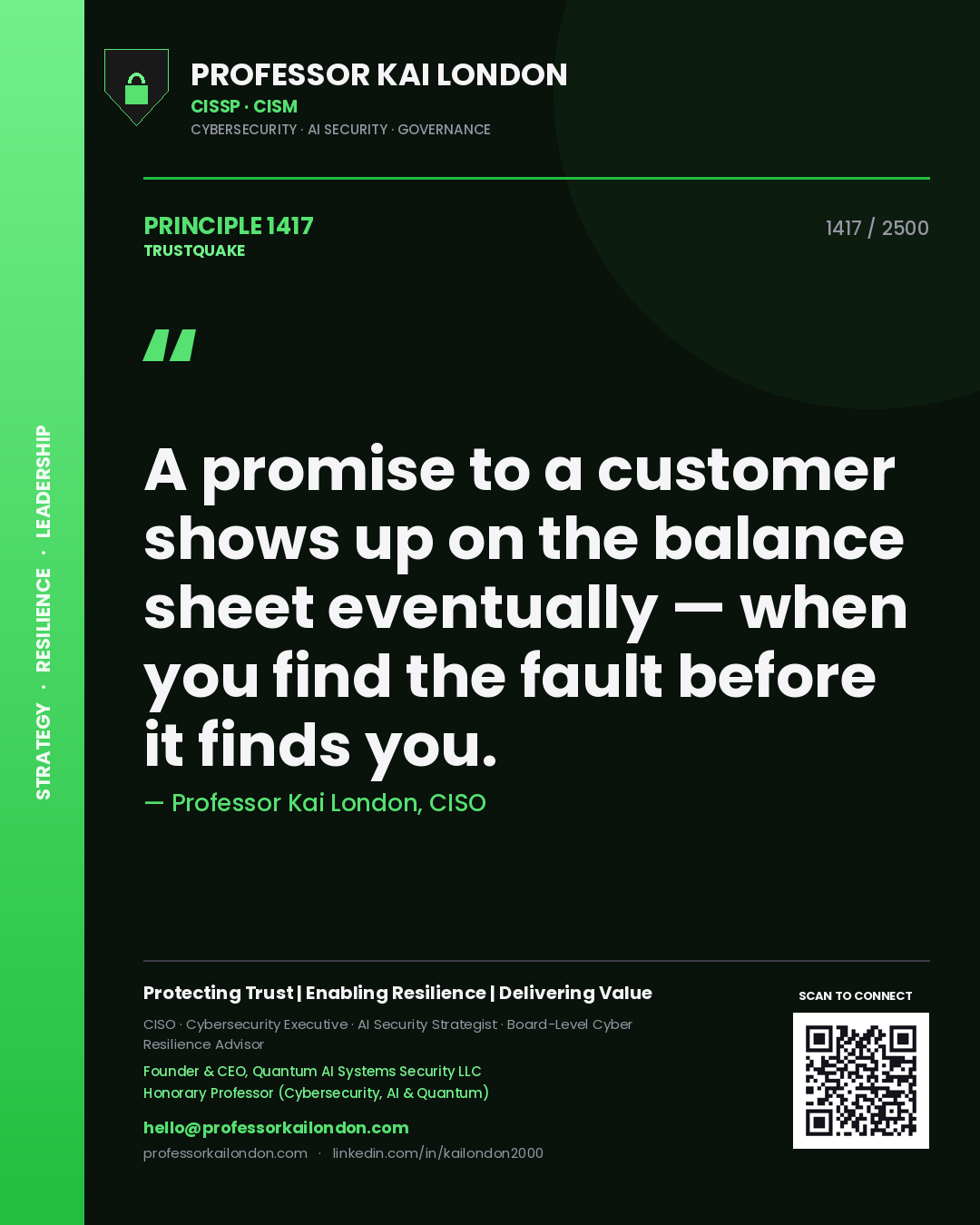
Professor Kai London principle 1417: A promise to a customer shows up on the balance sheet eventually — when you find the fault before it finds you.
Principle 1417
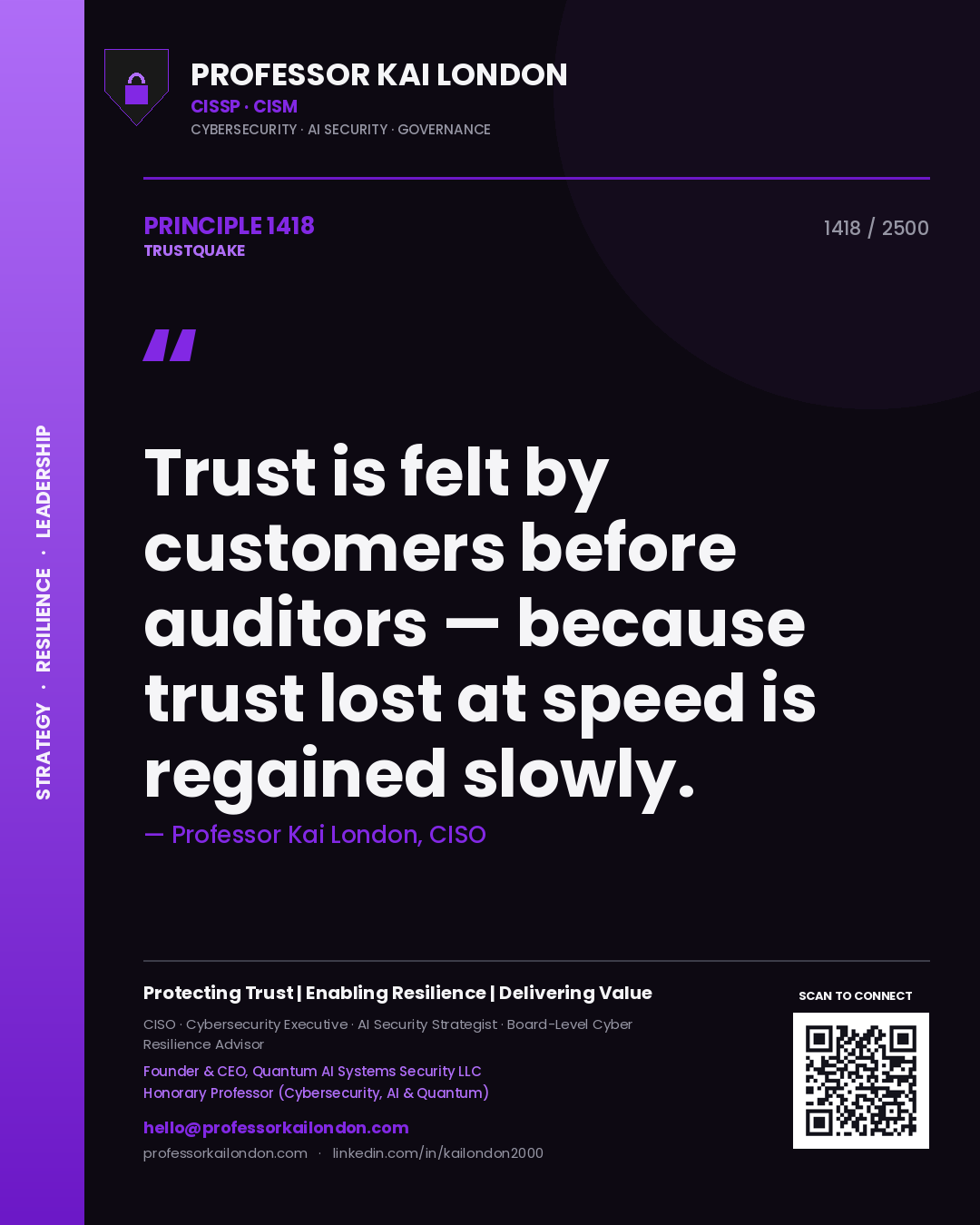
Professor Kai London principle 1418: Trust is felt by customers before auditors — because trust lost at speed is regained slowly.
Principle 1418
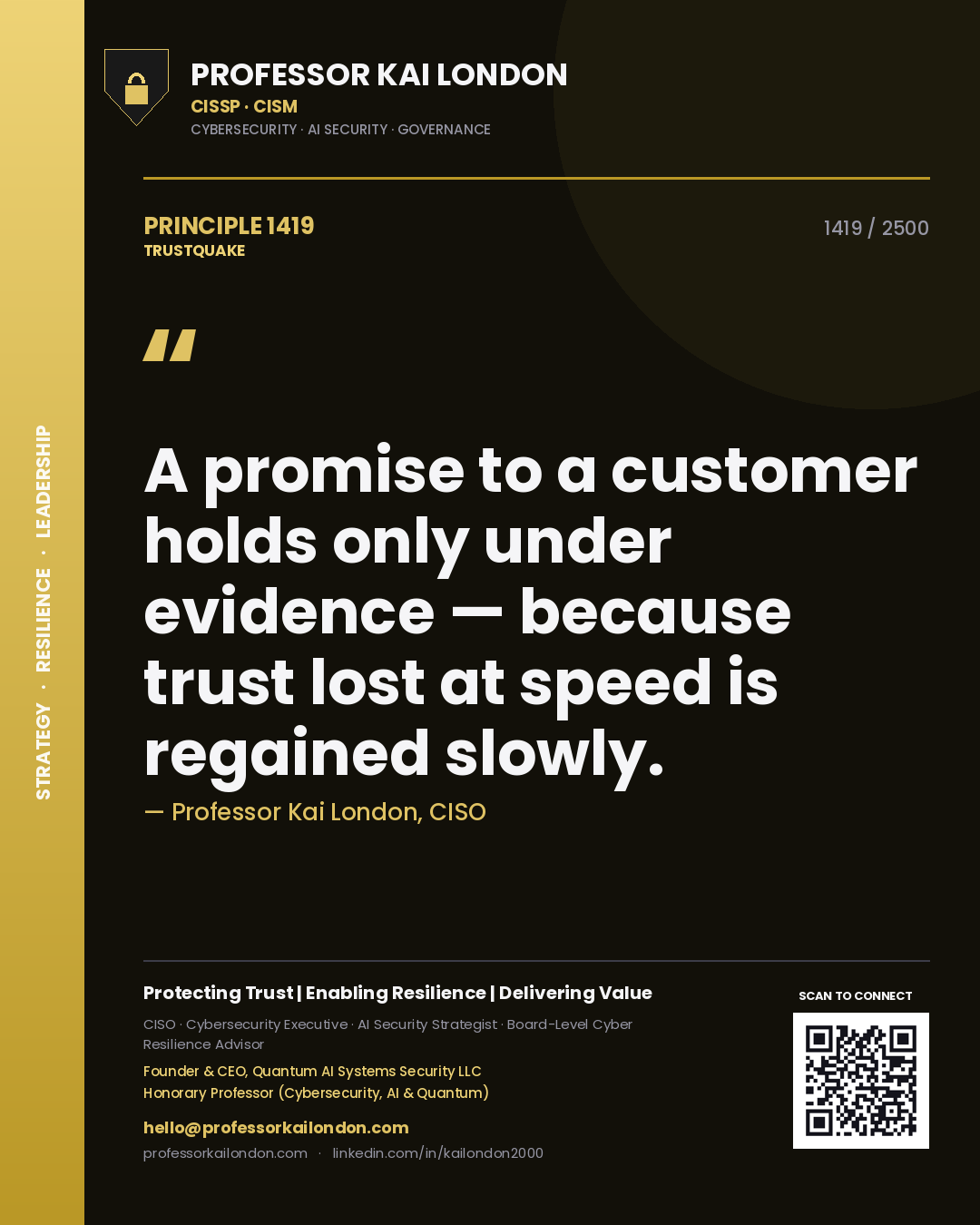
Professor Kai London principle 1419: A promise to a customer holds only under evidence — because trust lost at speed is regained slowly.
Principle 1419
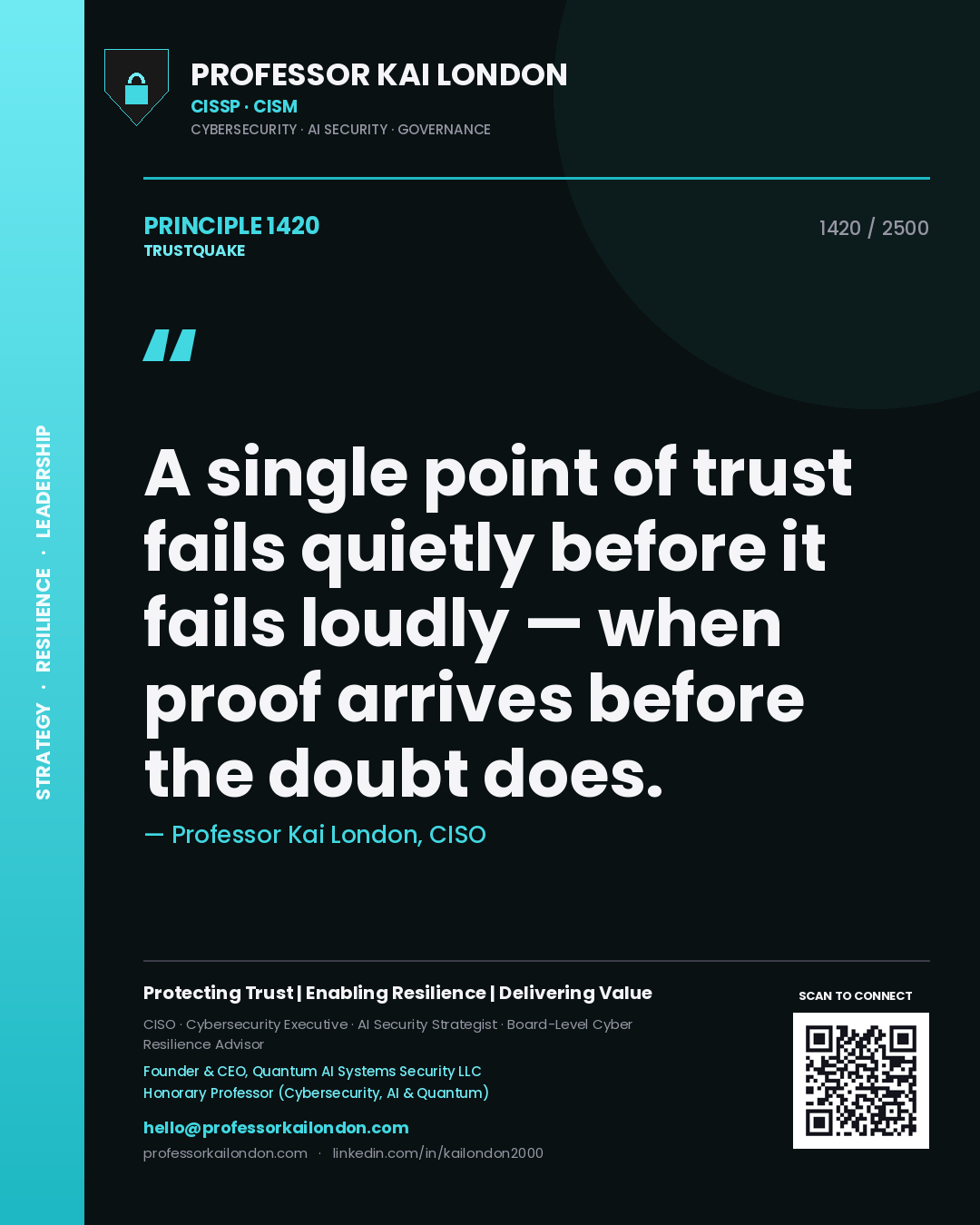
Professor Kai London principle 1420: A single point of trust fails quietly before it fails loudly — when proof arrives before the doubt does.
Principle 1420
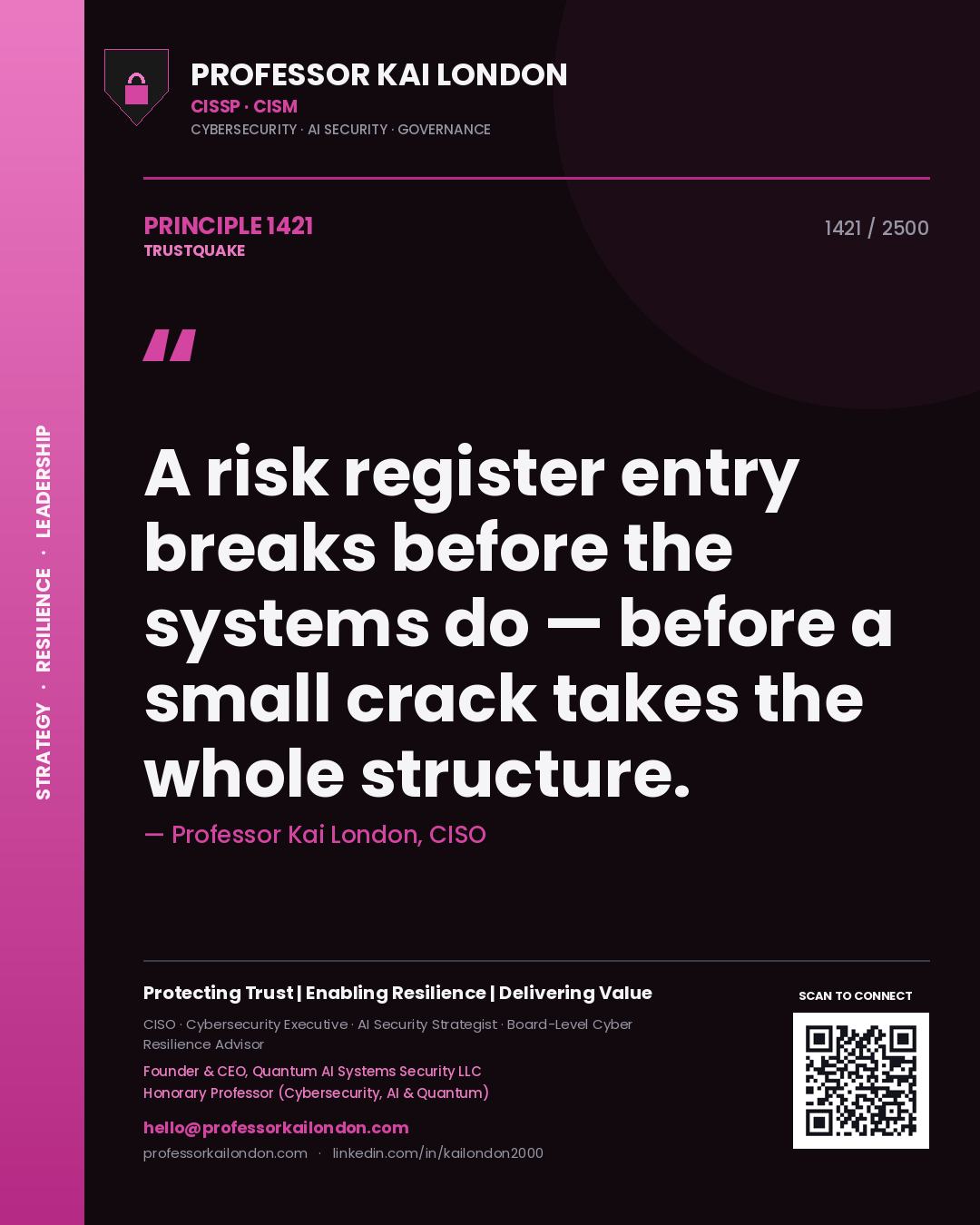
Professor Kai London principle 1421: A risk register entry breaks before the systems do — before a small crack takes the whole structure.
Principle 1421
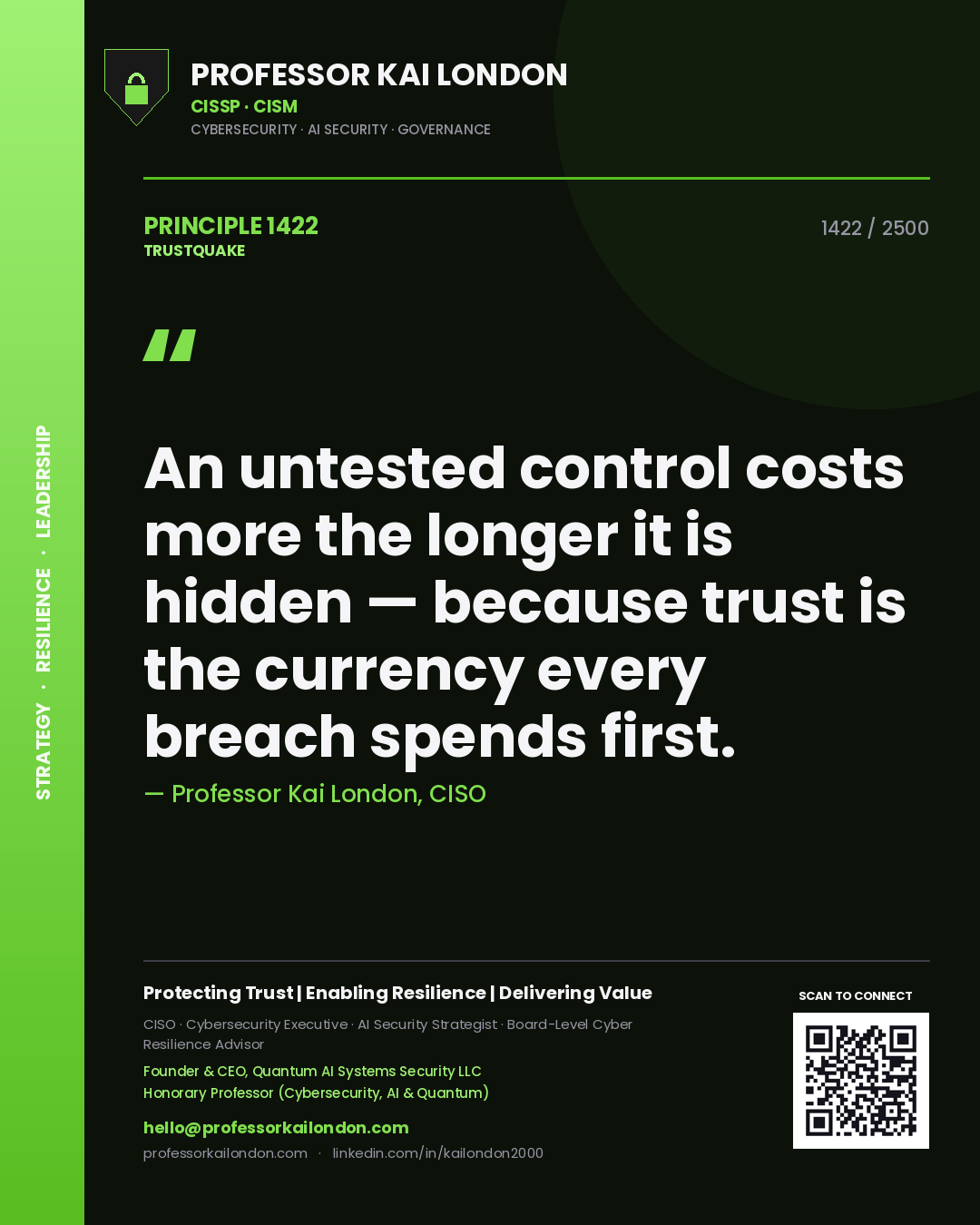
Professor Kai London principle 1422: An untested control costs more the longer it is hidden — because trust is the currency every breach spends first.
Principle 1422
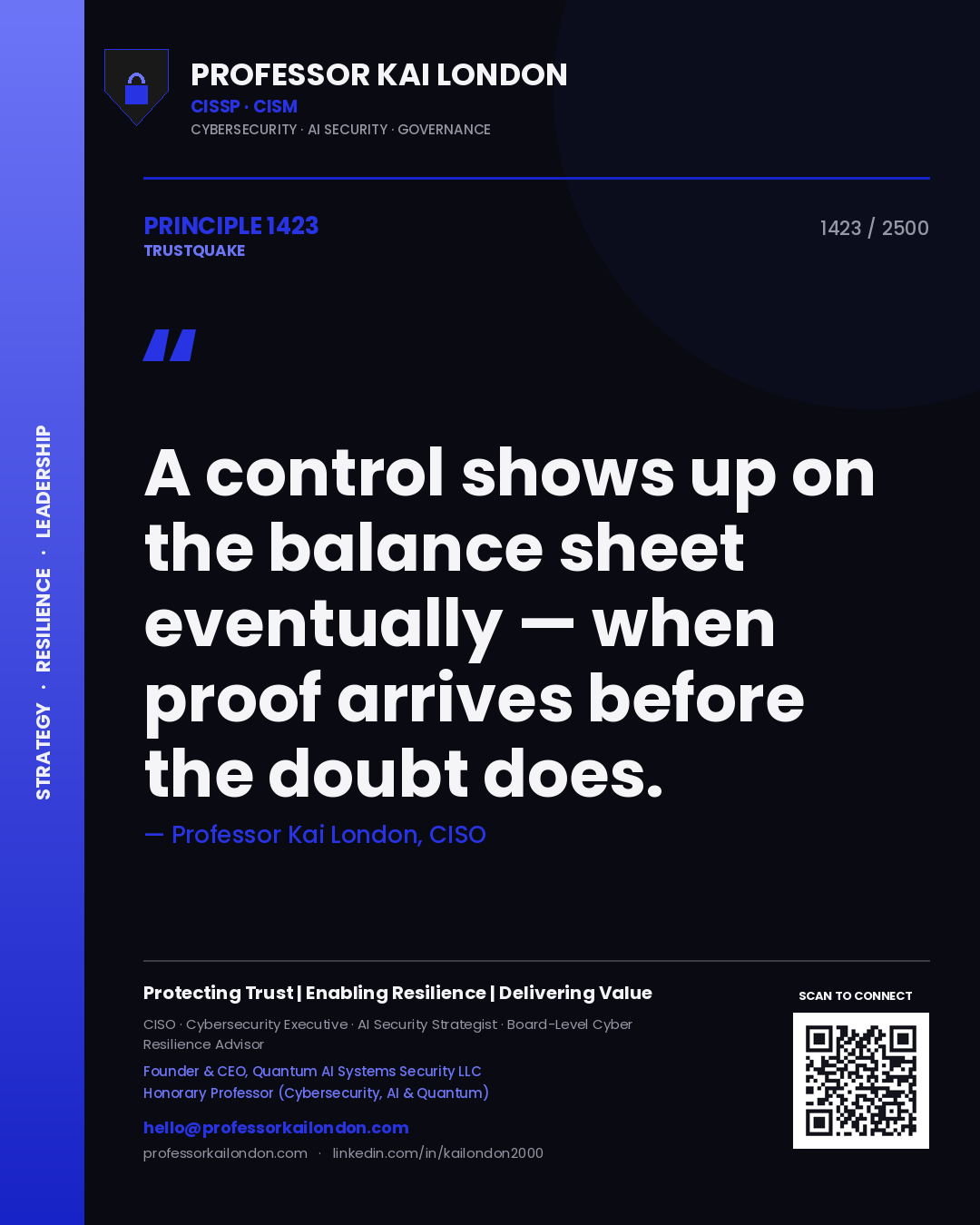
Professor Kai London principle 1423: A control shows up on the balance sheet eventually — when proof arrives before the doubt does.
Principle 1423
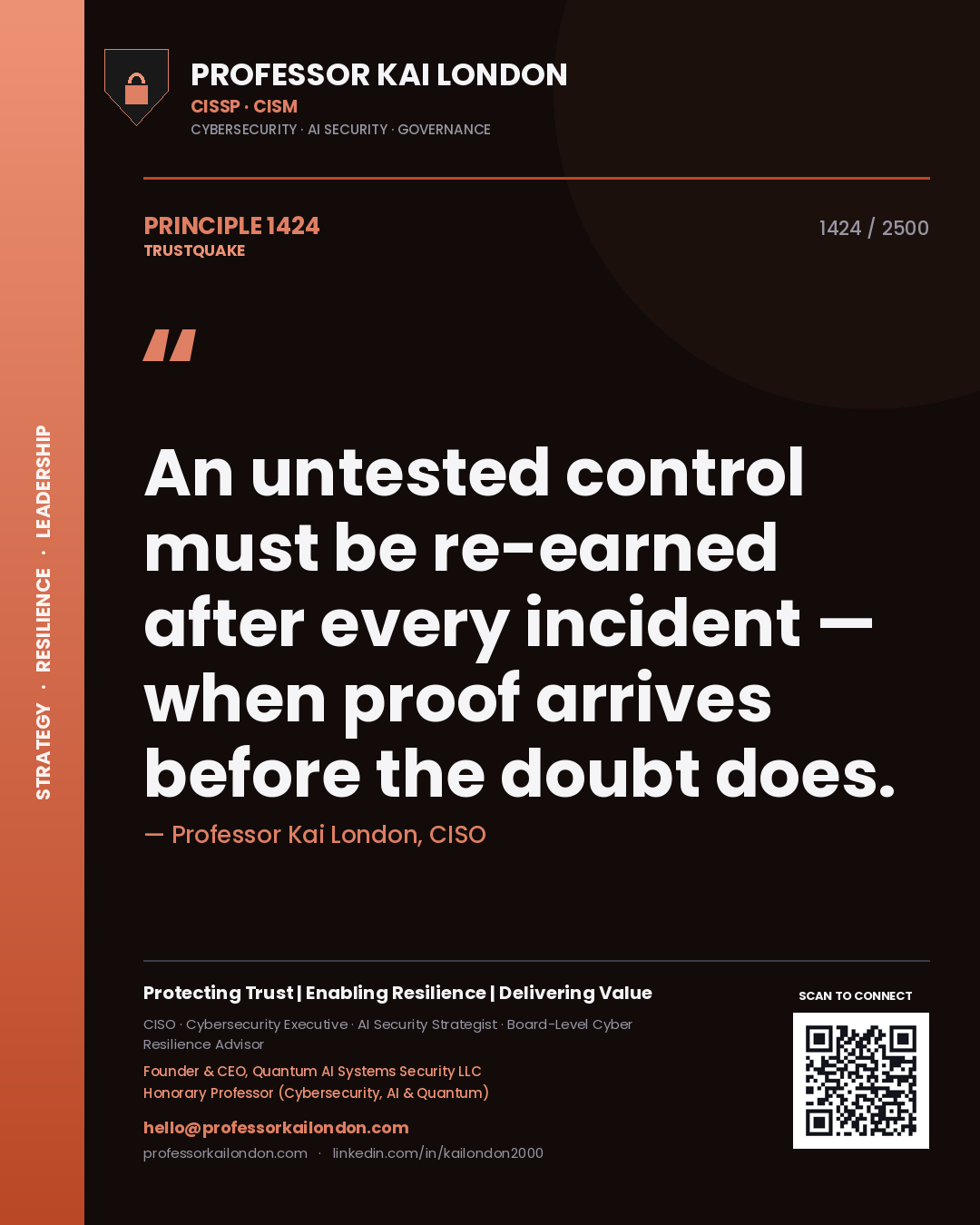
Professor Kai London principle 1424: An untested control must be re-earned after every incident — when proof arrives before the doubt does.
Principle 1424
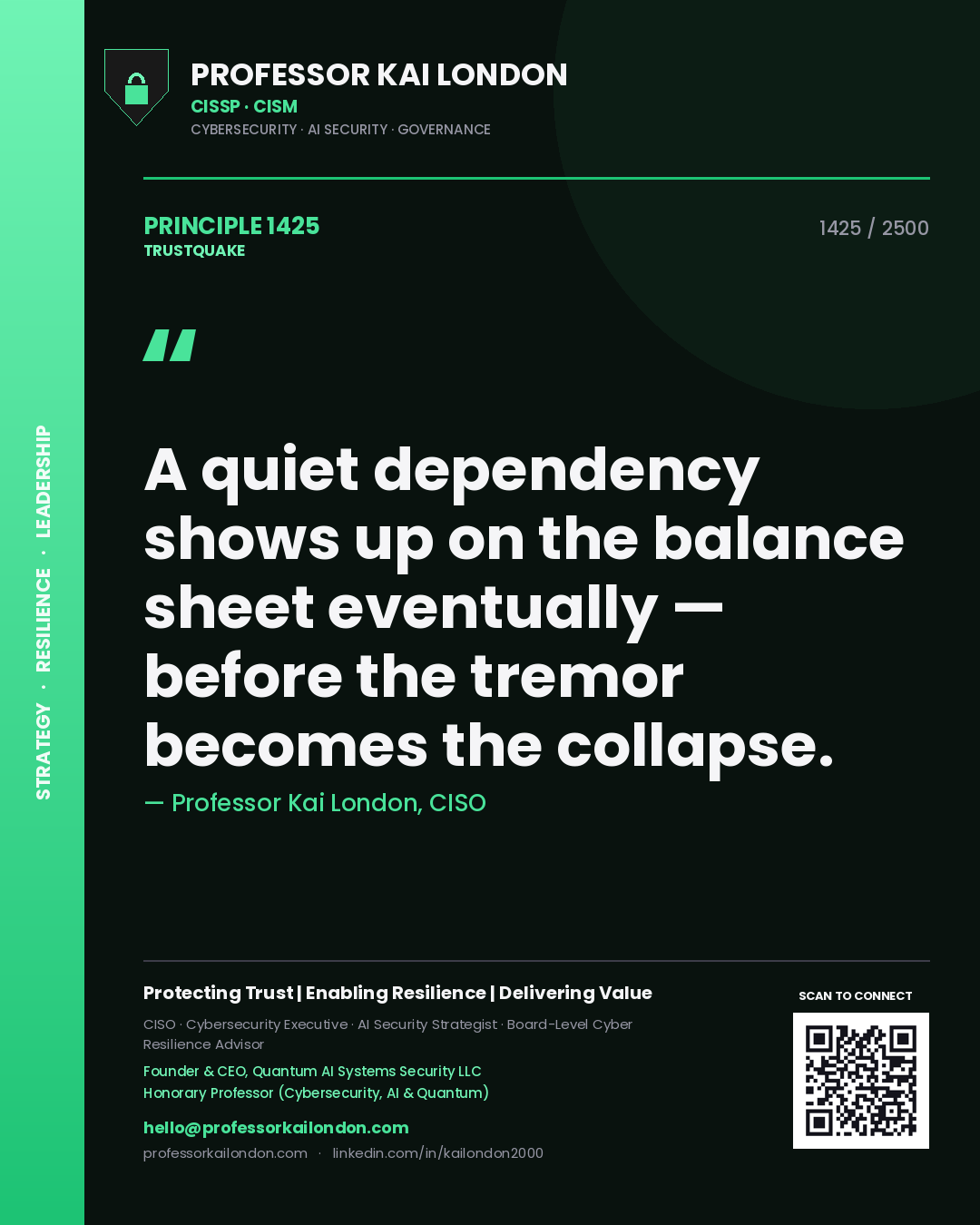
Professor Kai London principle 1425: A quiet dependency shows up on the balance sheet eventually — before the tremor becomes the collapse.
Principle 1425
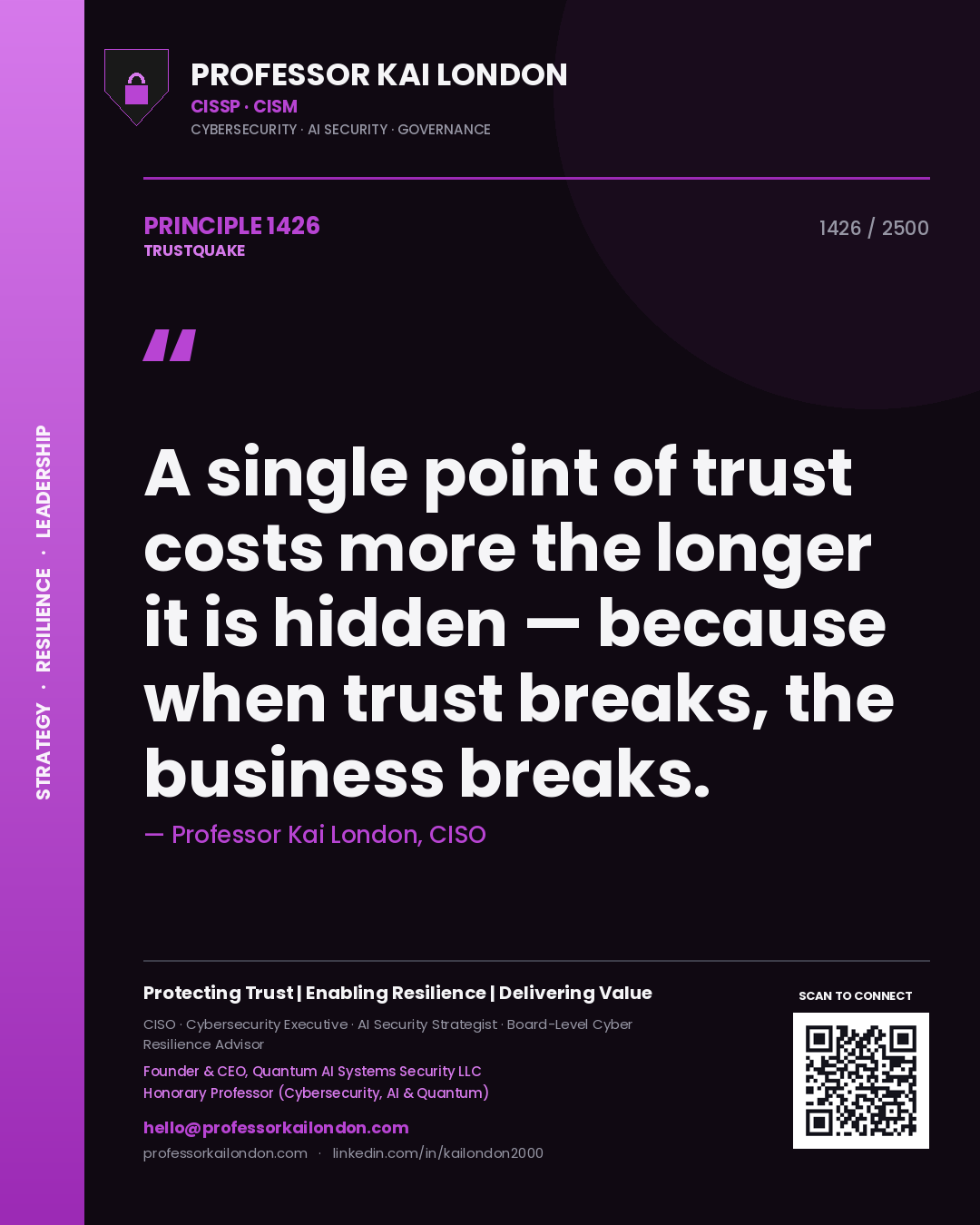
Professor Kai London principle 1426: A single point of trust costs more the longer it is hidden — because when trust breaks, the business breaks.
Principle 1426
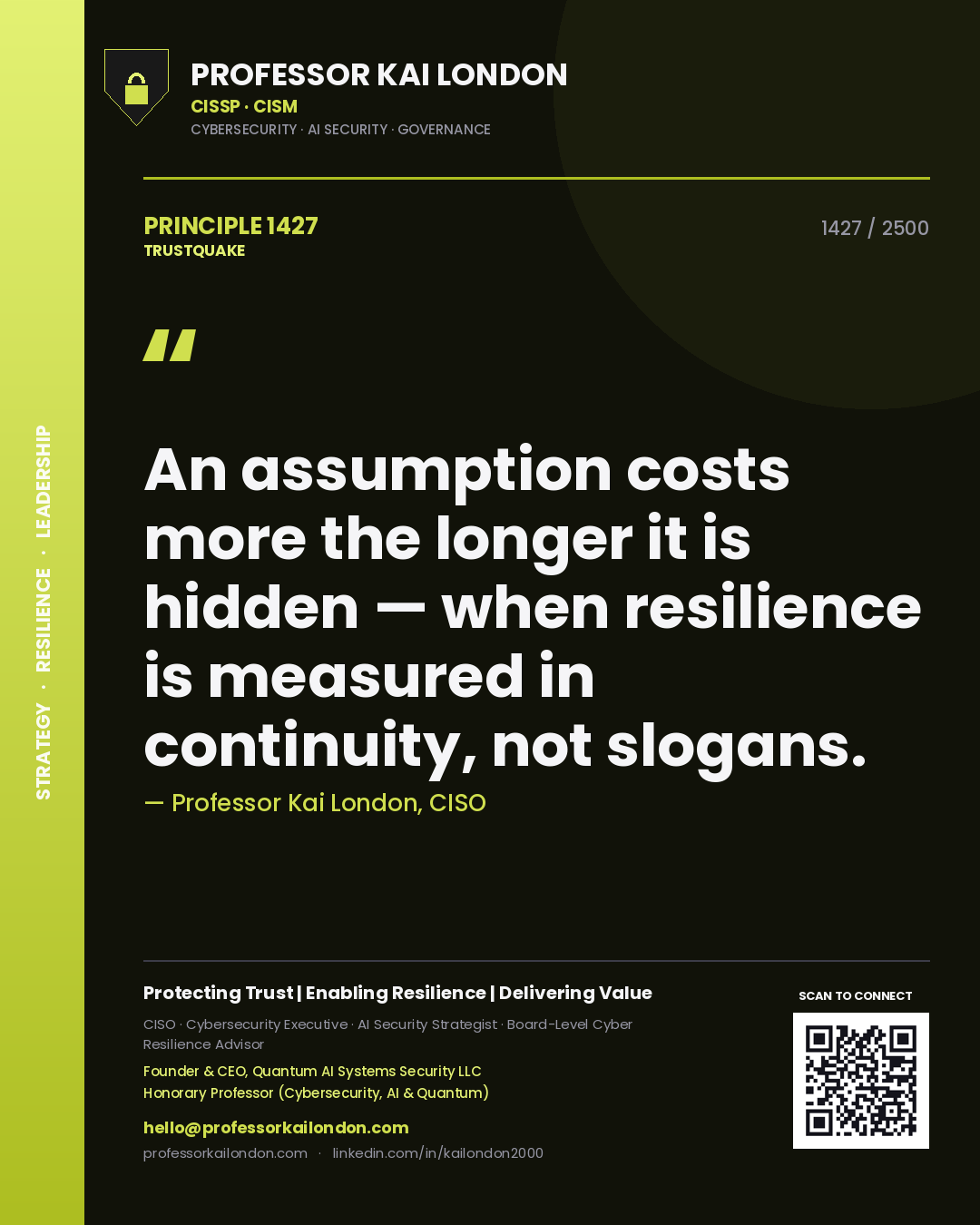
Professor Kai London principle 1427: An assumption costs more the longer it is hidden — when resilience is measured in continuity, not slogans.
Principle 1427
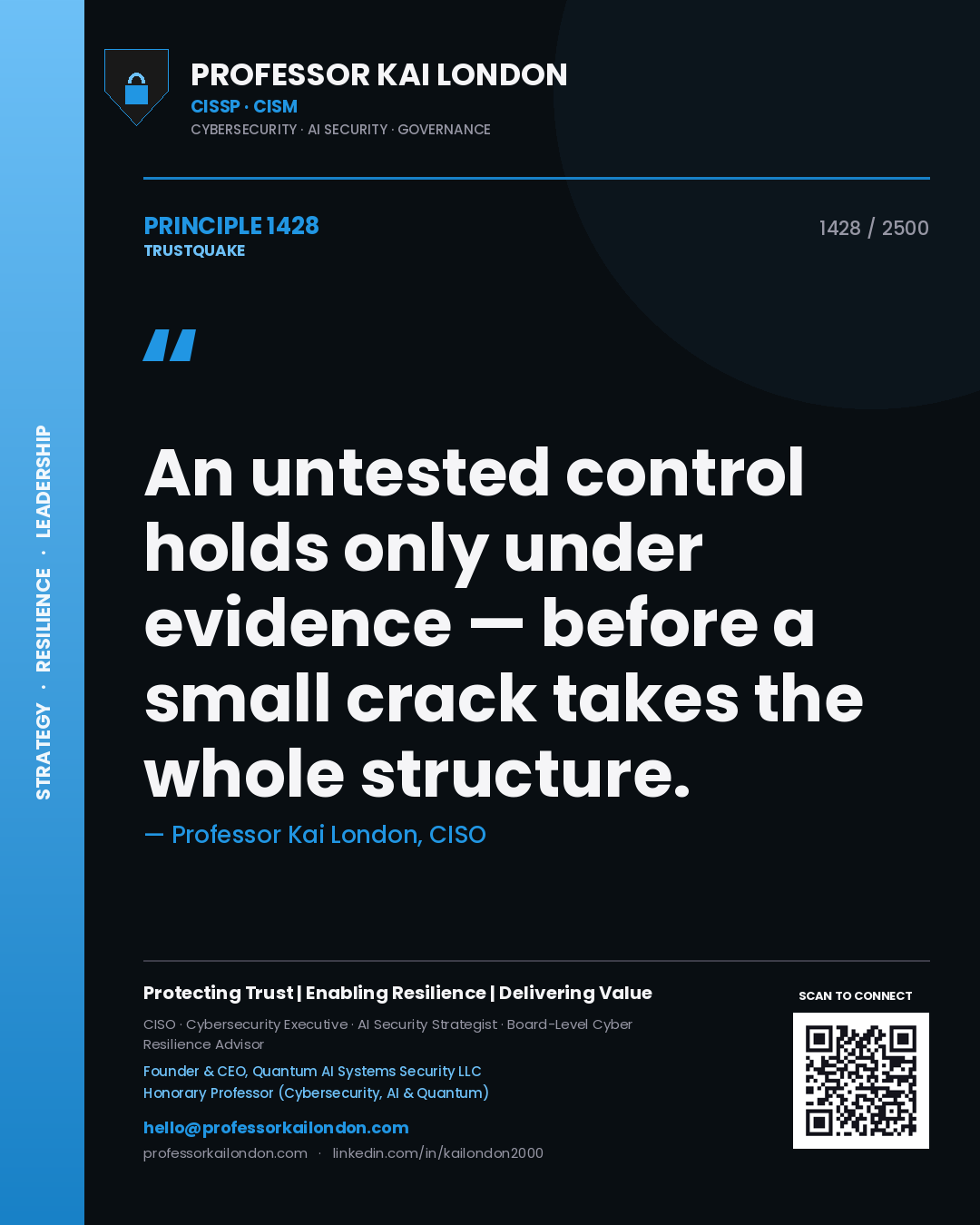
Professor Kai London principle 1428: An untested control holds only under evidence — before a small crack takes the whole structure.
Principle 1428
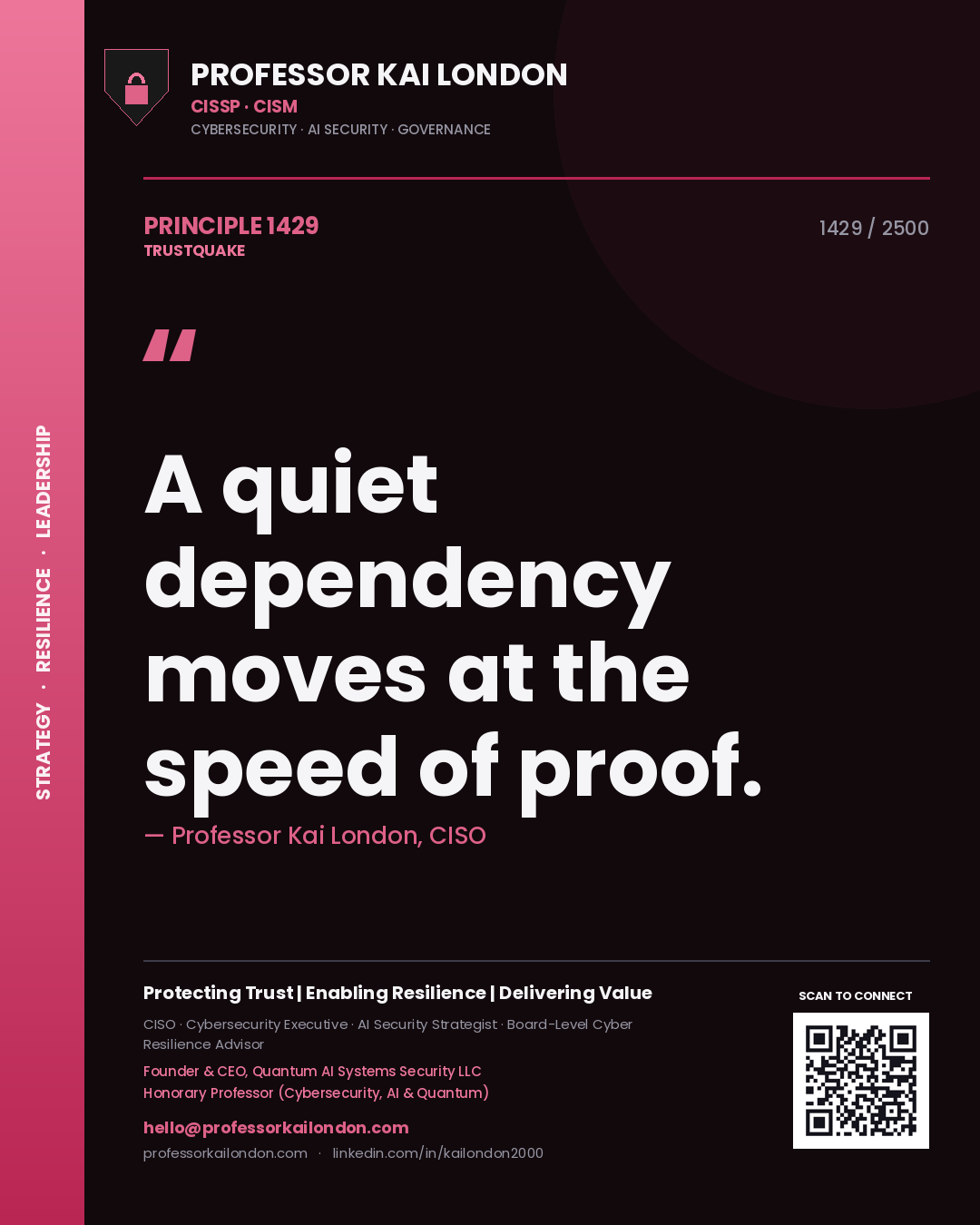
Professor Kai London principle 1429: A quiet dependency moves at the speed of proof.
Principle 1429
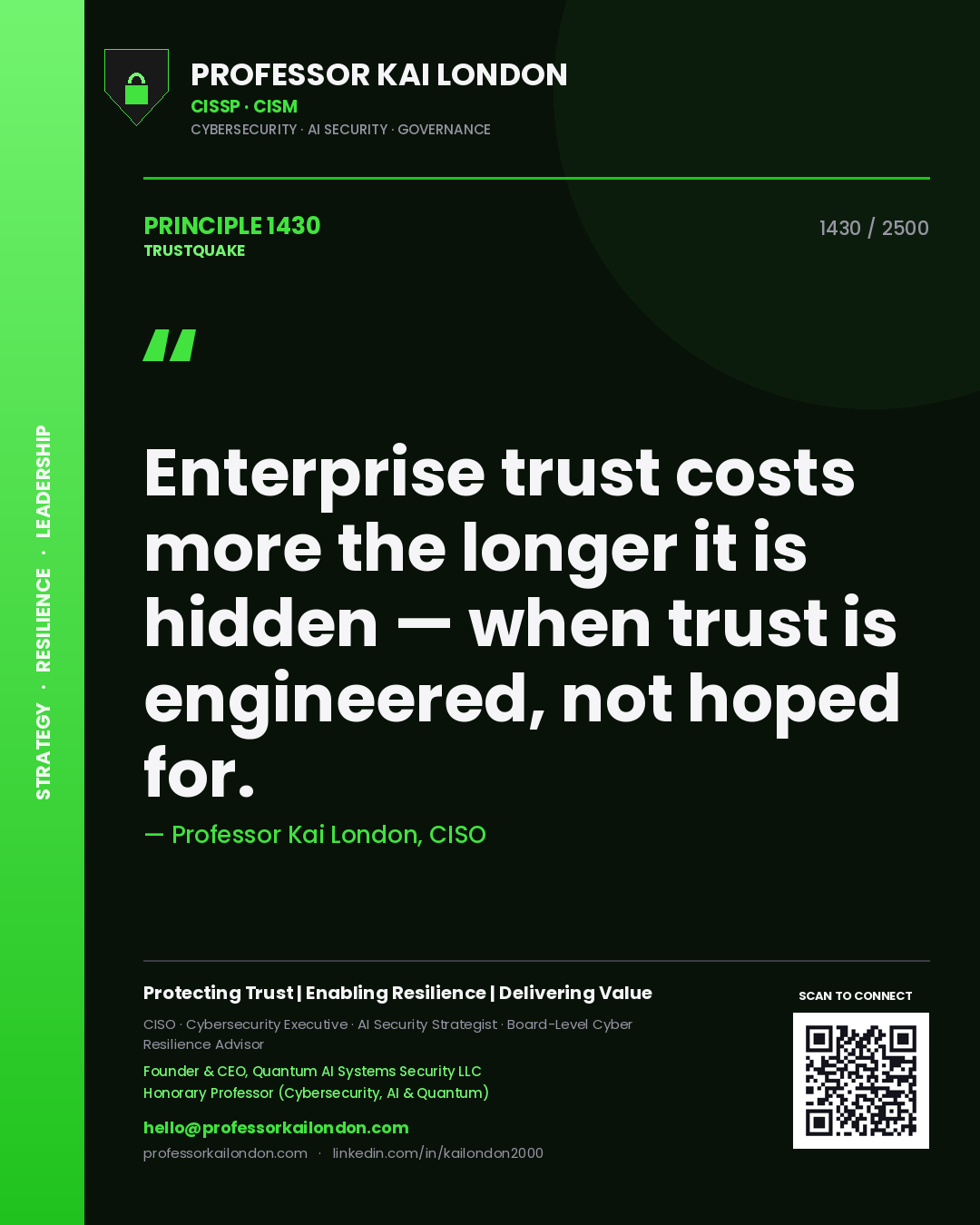
Professor Kai London principle 1430: Enterprise trust costs more the longer it is hidden — when trust is engineered, not hoped for.
Principle 1430
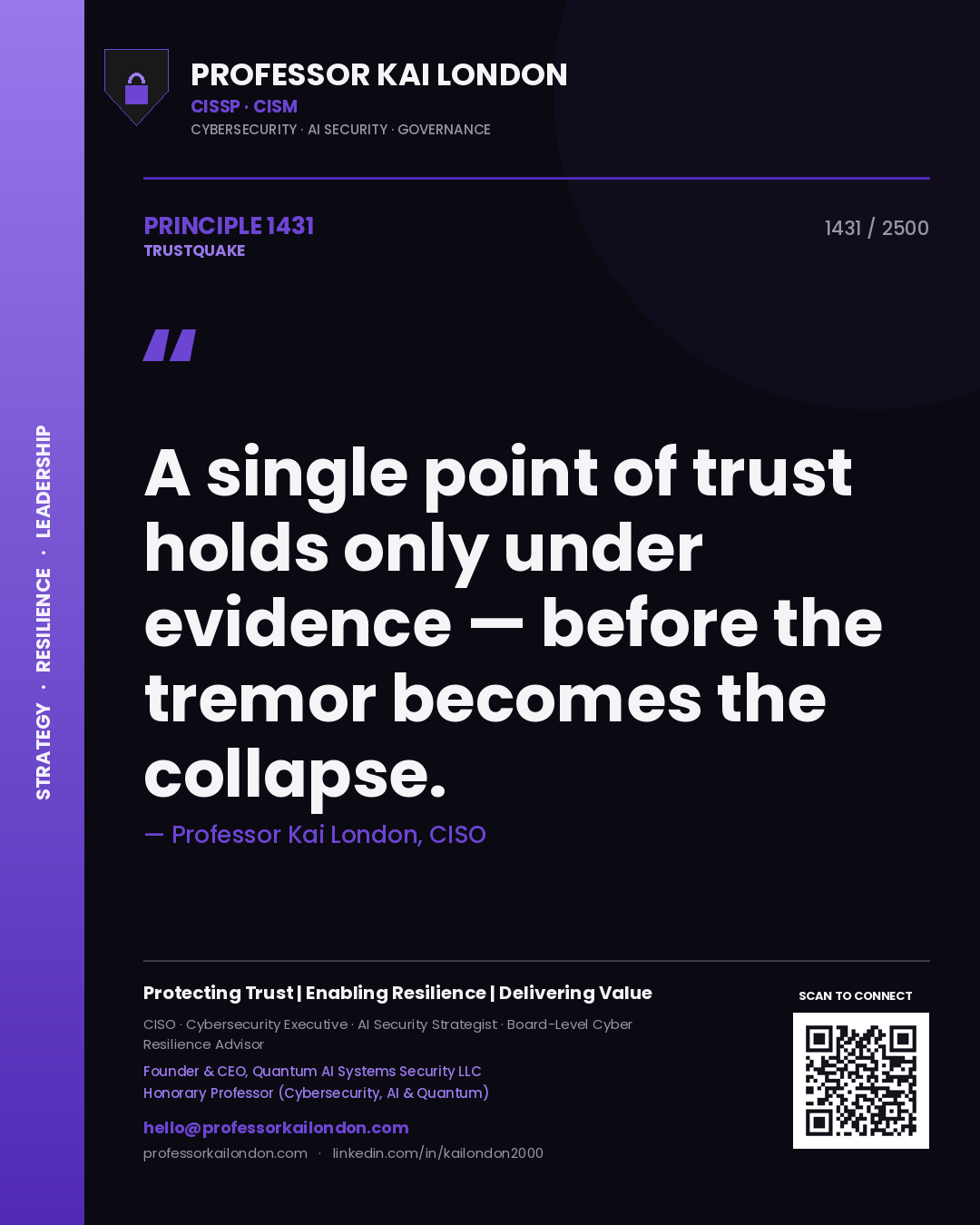
Professor Kai London principle 1431: A single point of trust holds only under evidence — before the tremor becomes the collapse.
Principle 1431
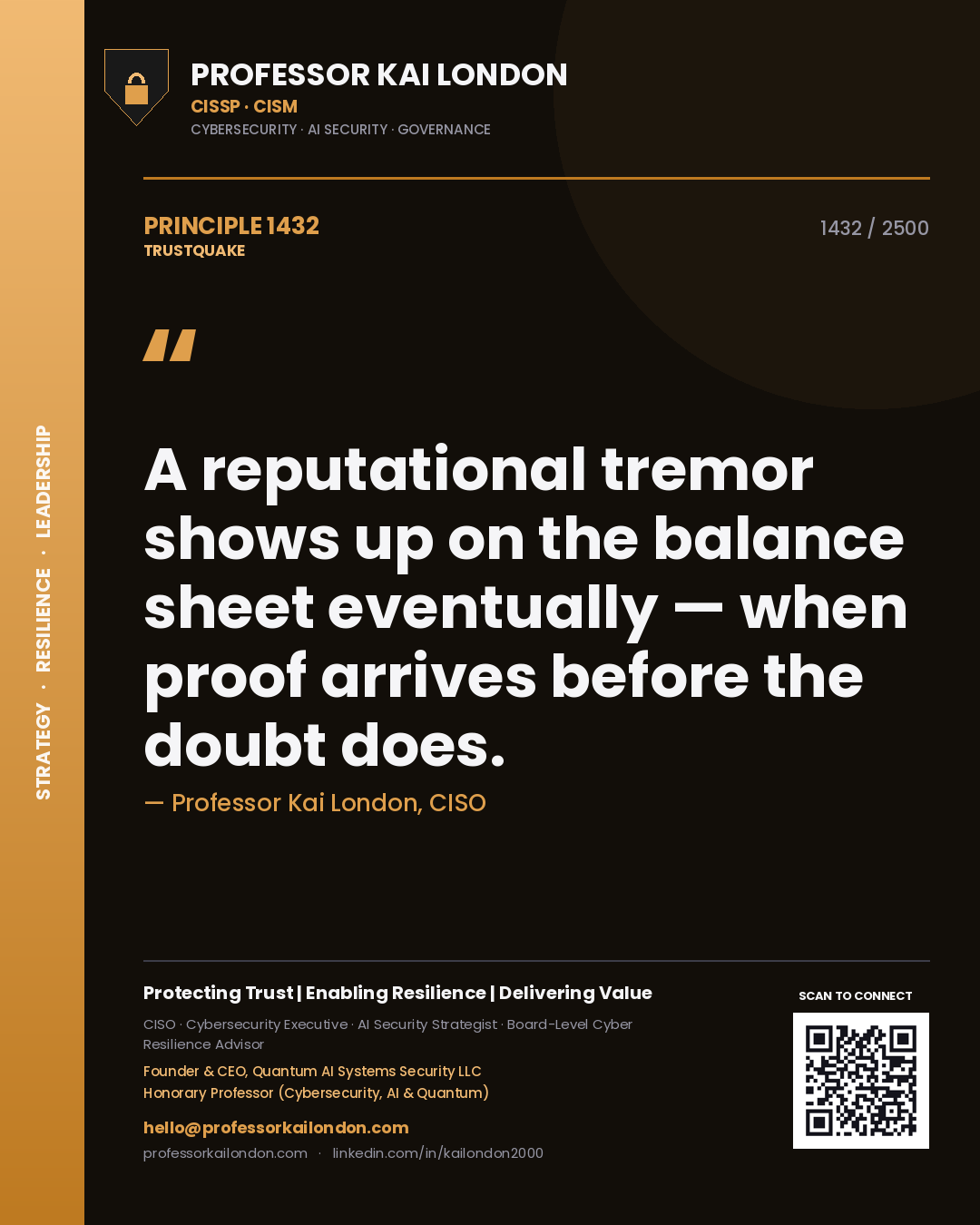
Professor Kai London principle 1432: A reputational tremor shows up on the balance sheet eventually — when proof arrives before the doubt does.
Principle 1432
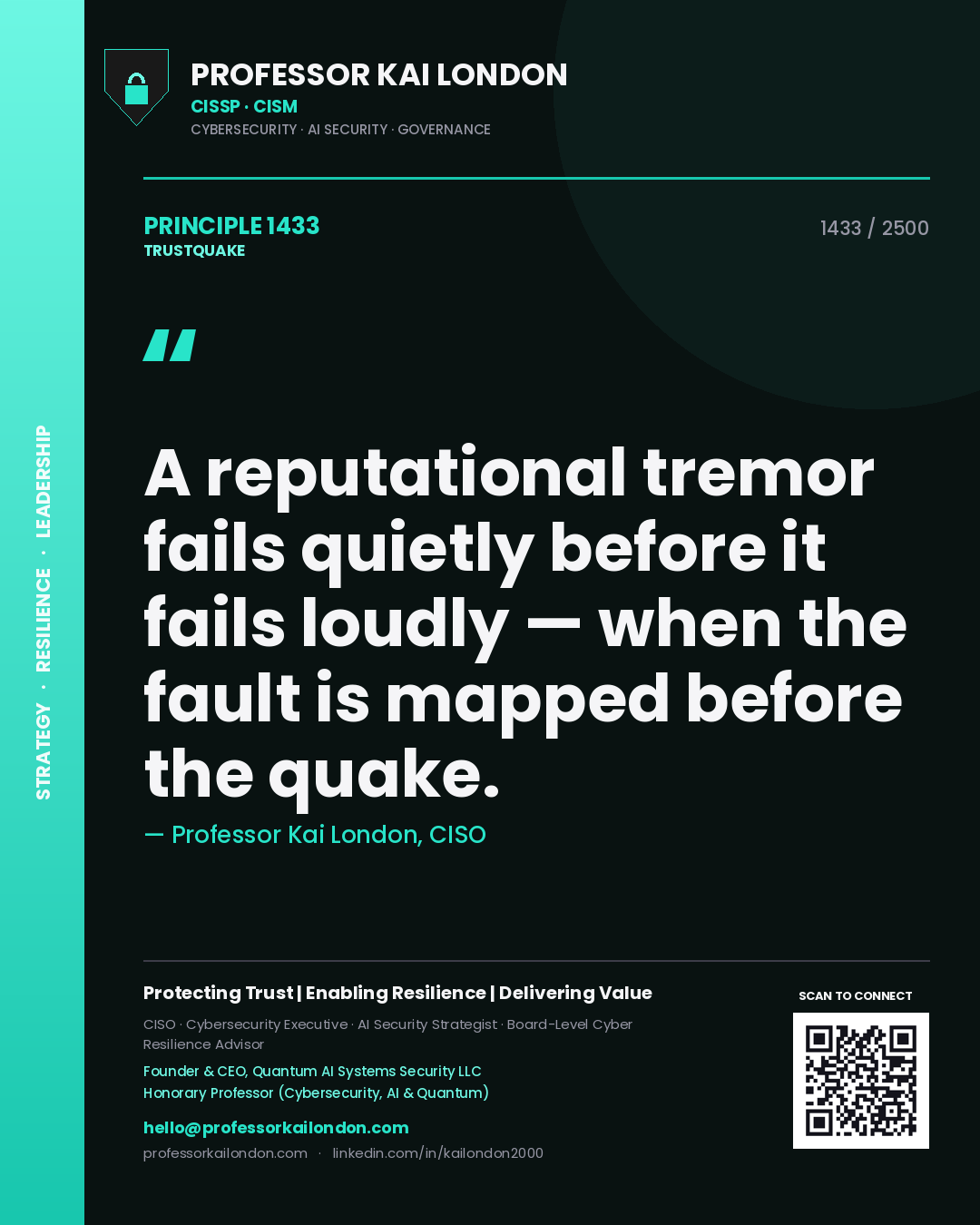
Professor Kai London principle 1433: A reputational tremor fails quietly before it fails loudly — when the fault is mapped before the quake.
Principle 1433
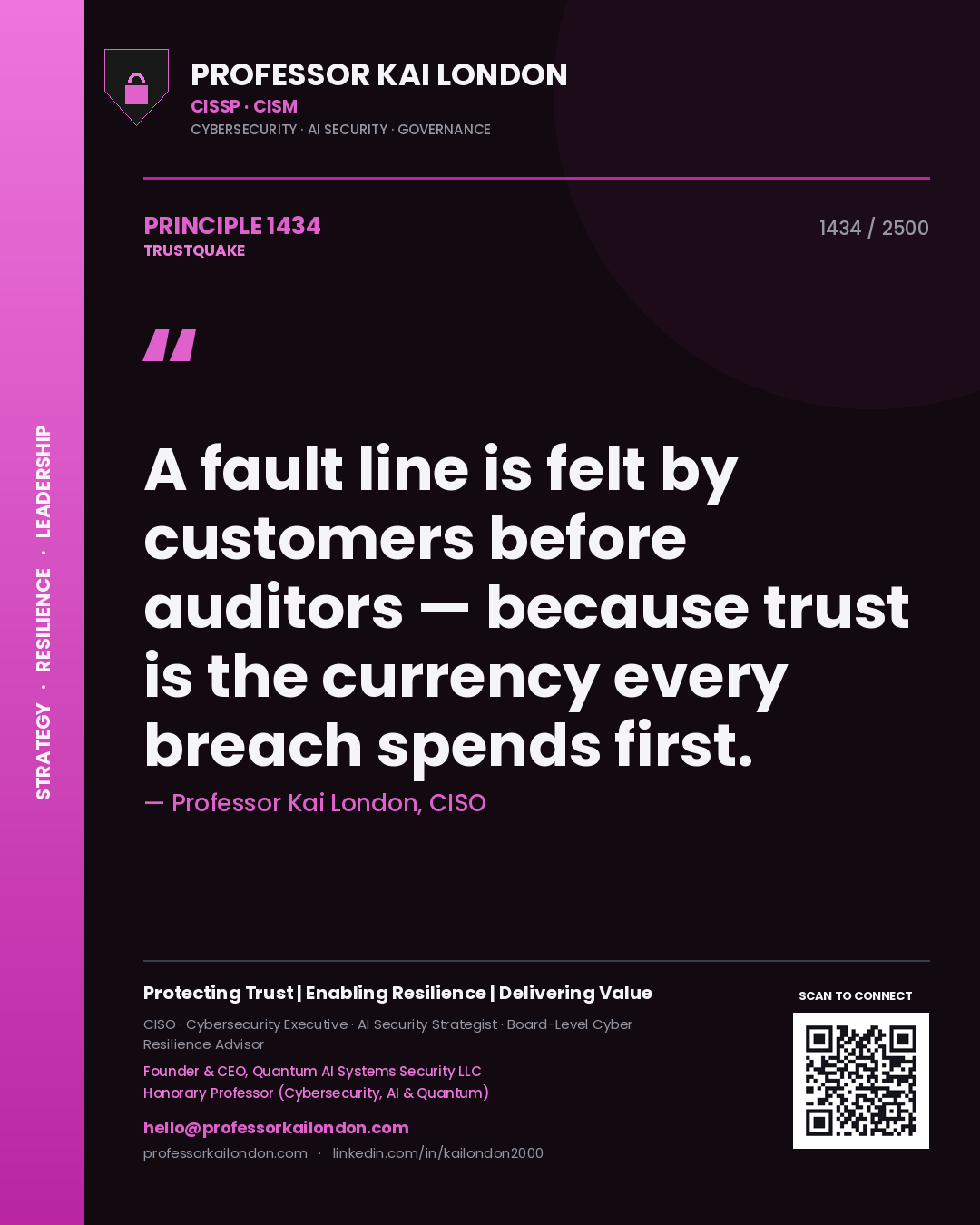
Professor Kai London principle 1434: A fault line is felt by customers before auditors — because trust is the currency every breach spends first.
Principle 1434
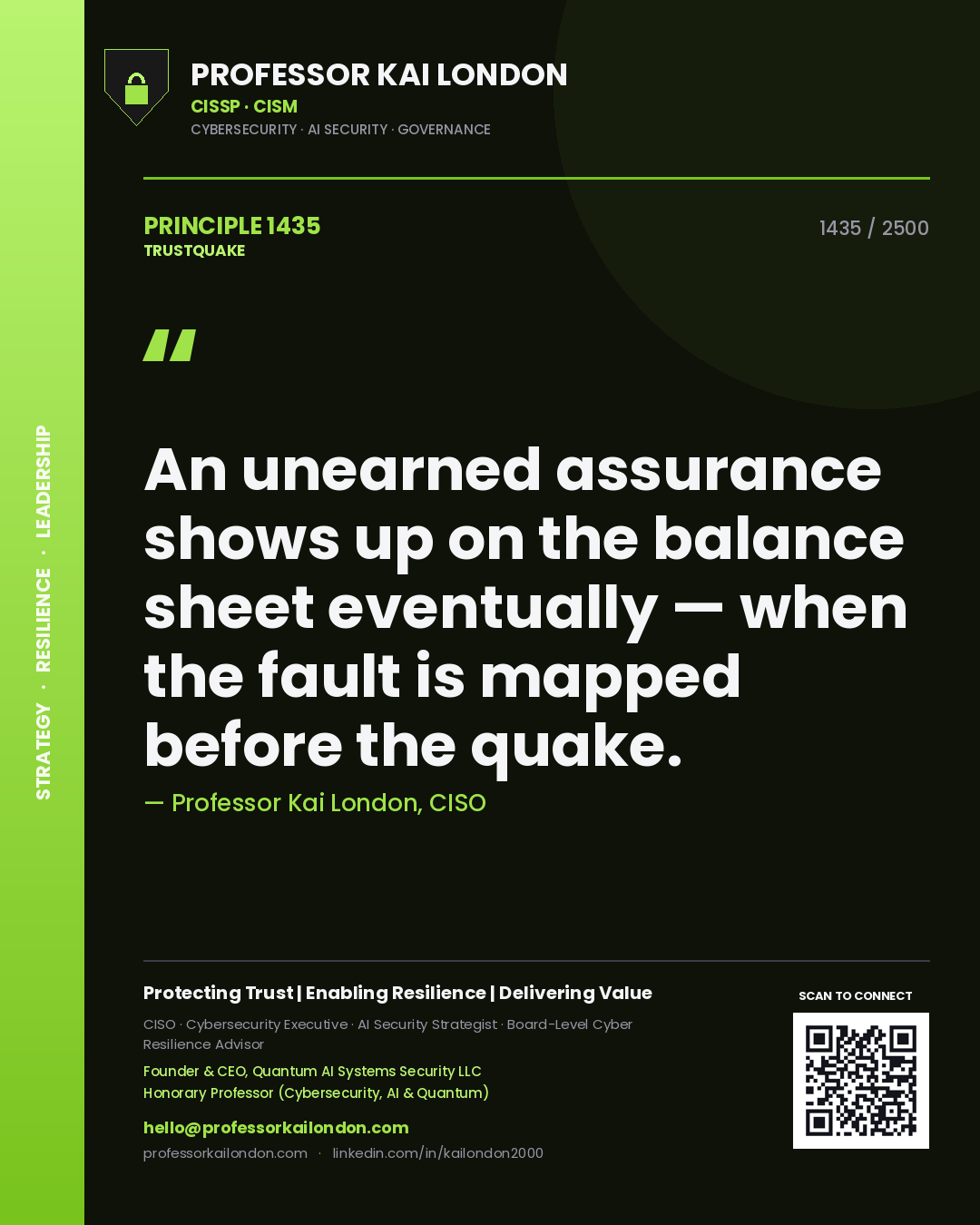
Professor Kai London principle 1435: An unearned assurance shows up on the balance sheet eventually — when the fault is mapped before the quake.
Principle 1435
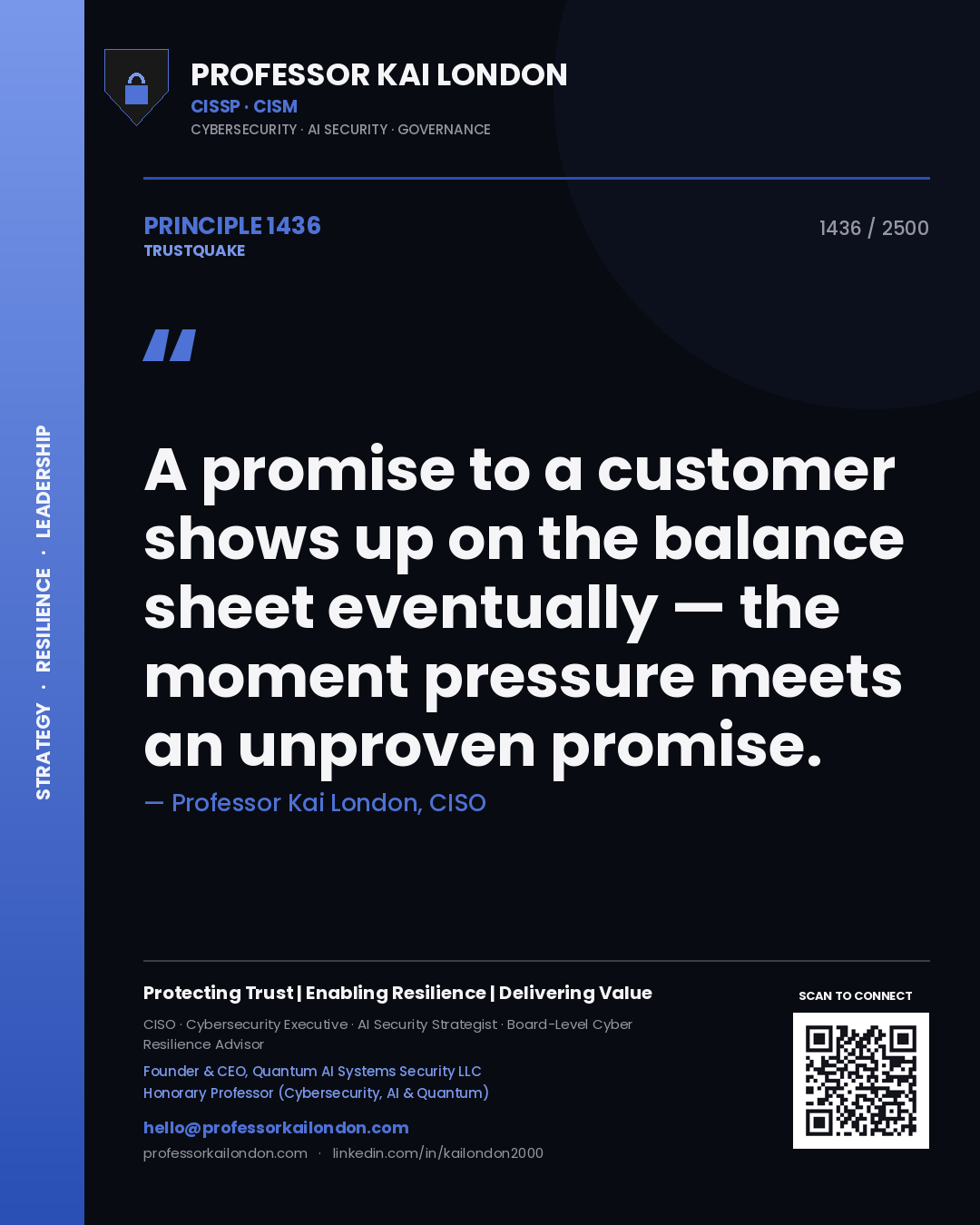
Professor Kai London principle 1436: A promise to a customer shows up on the balance sheet eventually — the moment pressure meets an unproven promise.
Principle 1436
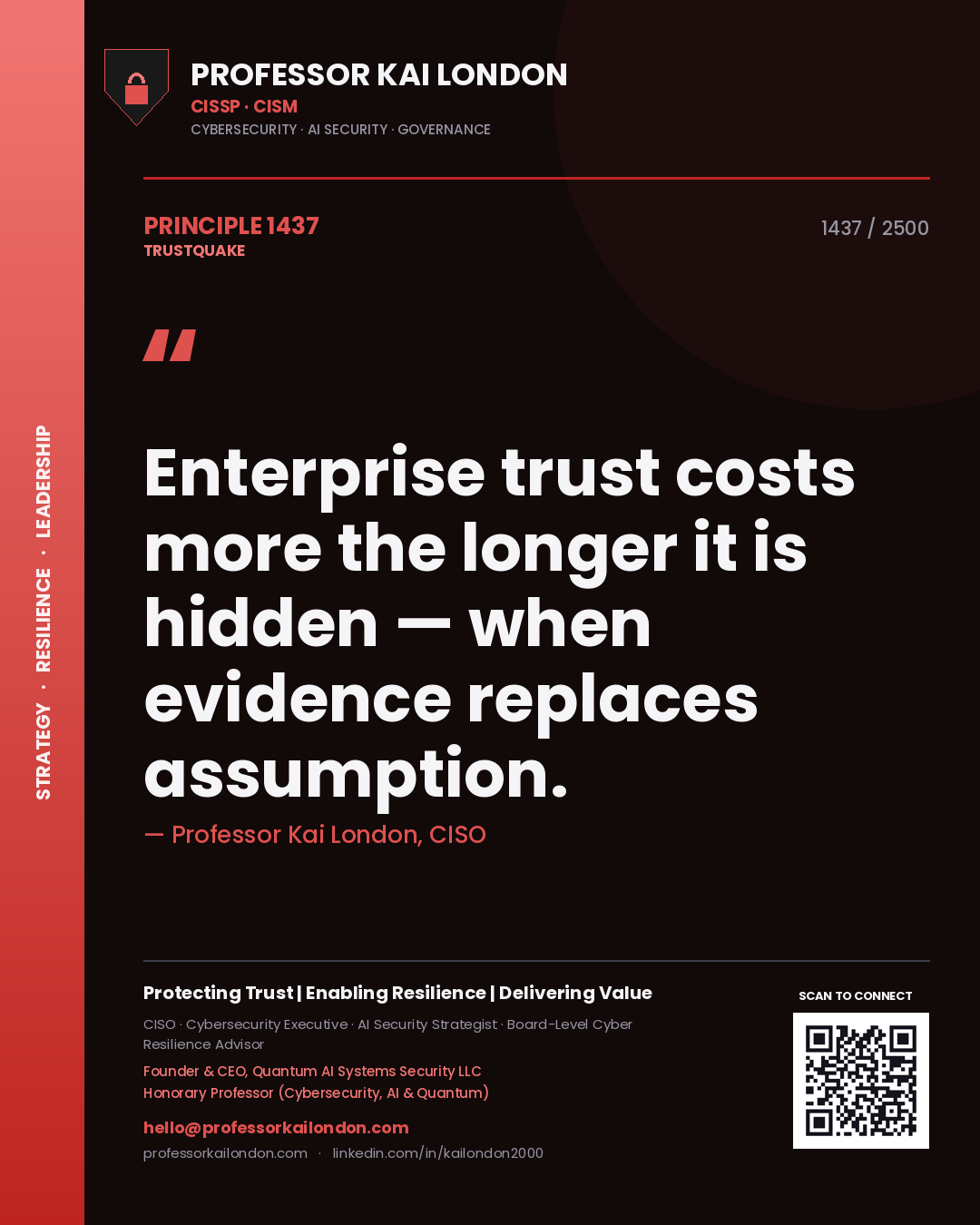
Professor Kai London principle 1437: Enterprise trust costs more the longer it is hidden — when evidence replaces assumption.
Principle 1437
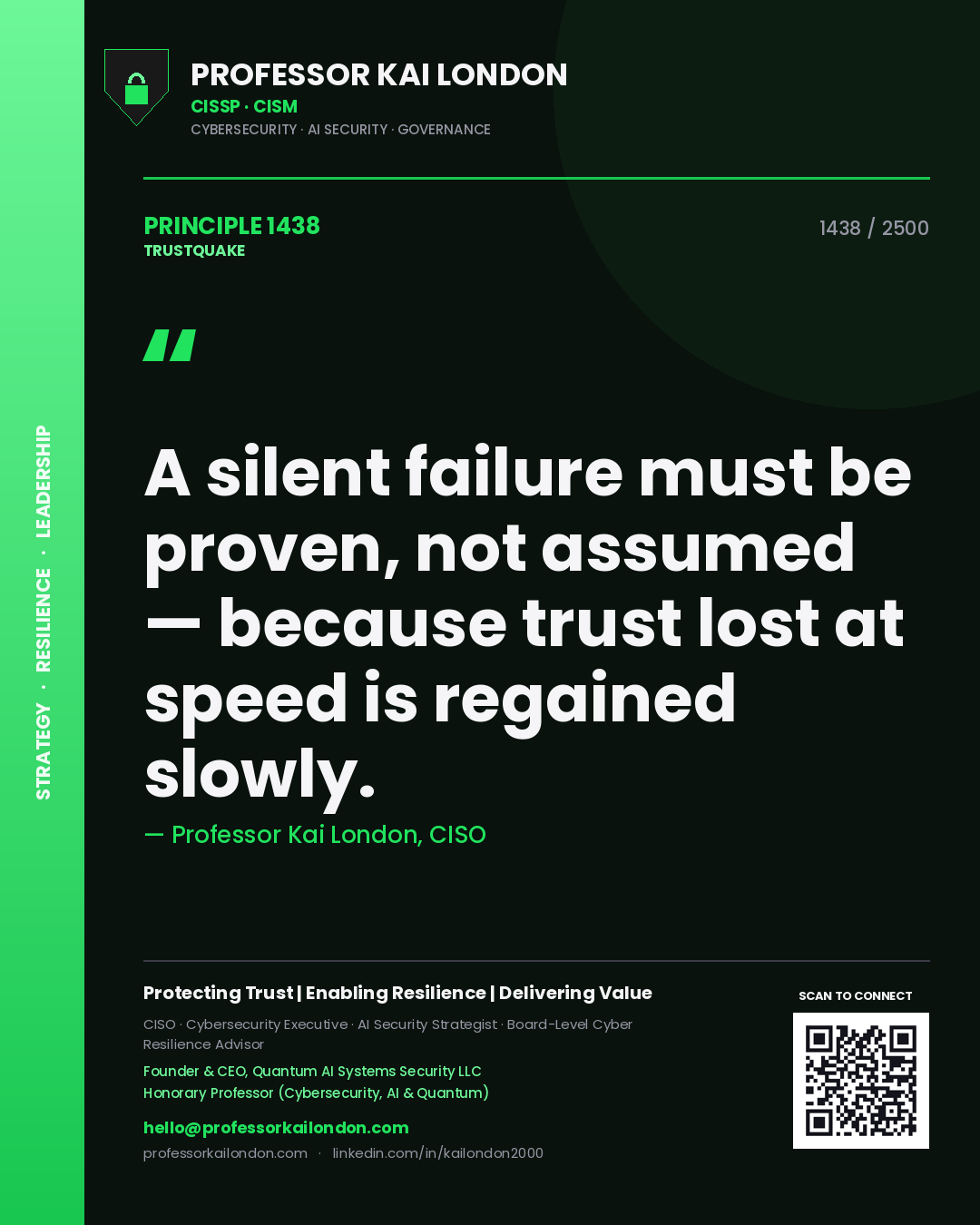
Professor Kai London principle 1438: A silent failure must be proven, not assumed — because trust lost at speed is regained slowly.
Principle 1438
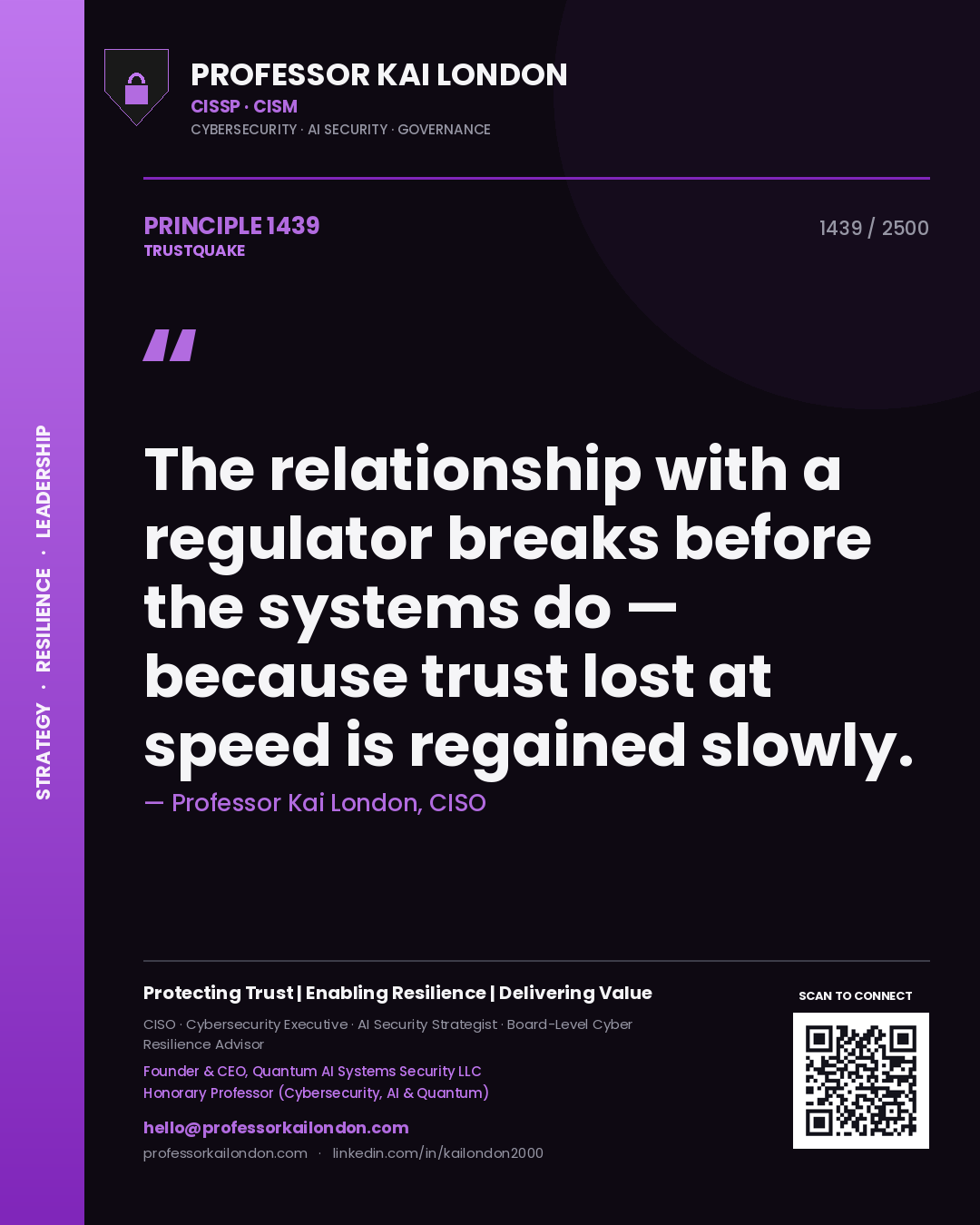
Professor Kai London principle 1439: The relationship with a regulator breaks before the systems do — because trust lost at speed is regained slowly.
Principle 1439
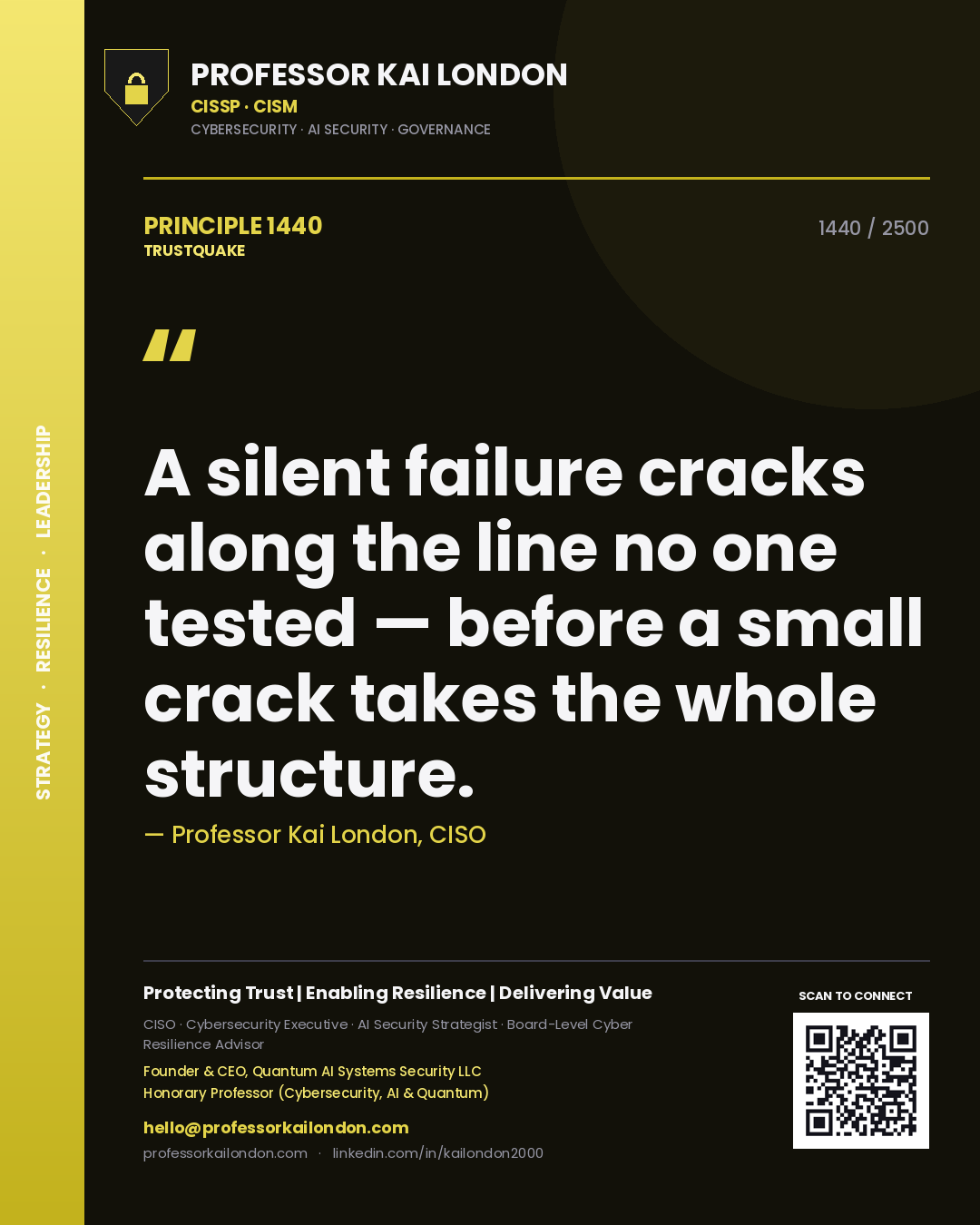
Professor Kai London principle 1440: A silent failure cracks along the line no one tested — before a small crack takes the whole structure.
Principle 1440
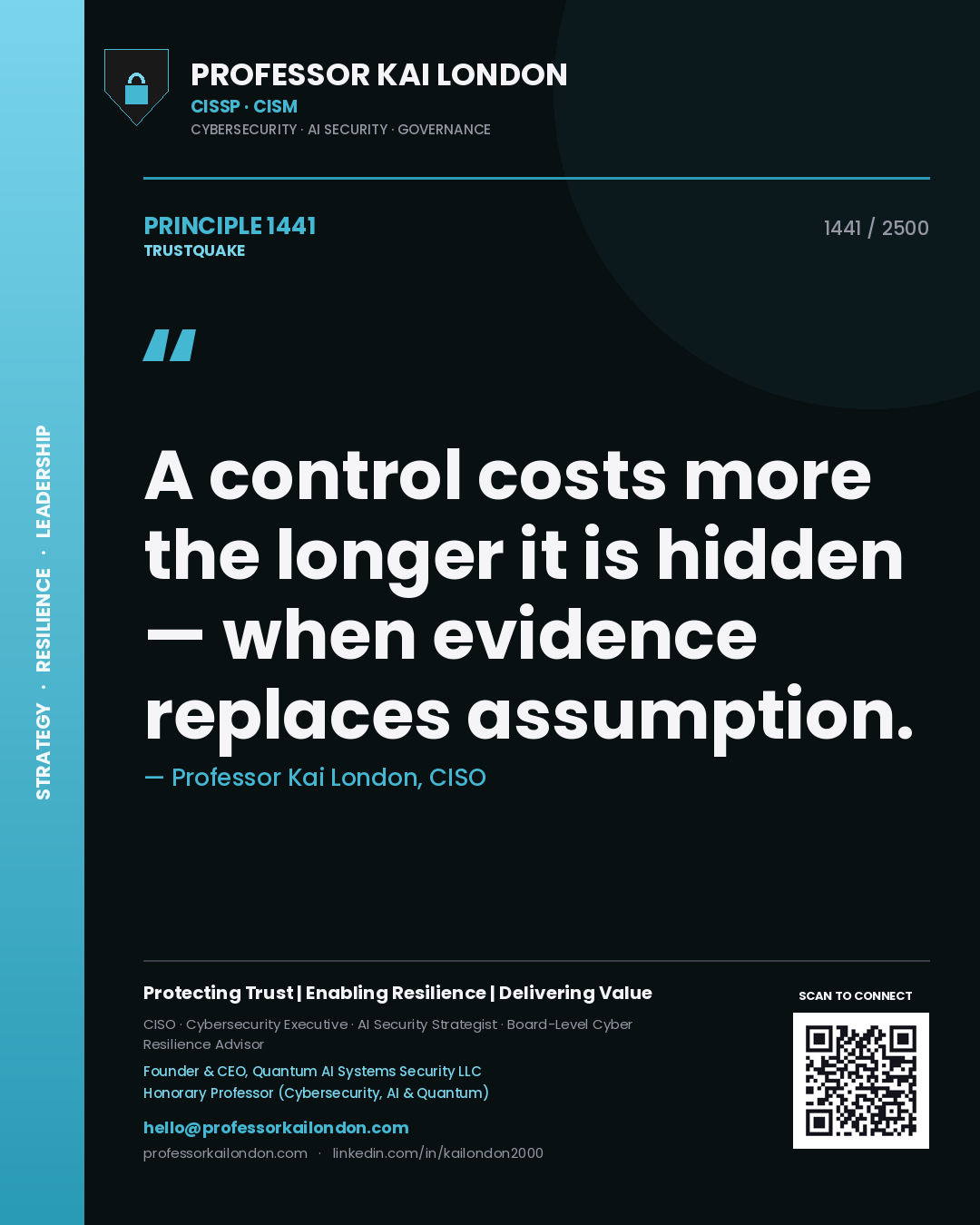
Professor Kai London principle 1441: A control costs more the longer it is hidden — when evidence replaces assumption.
Principle 1441
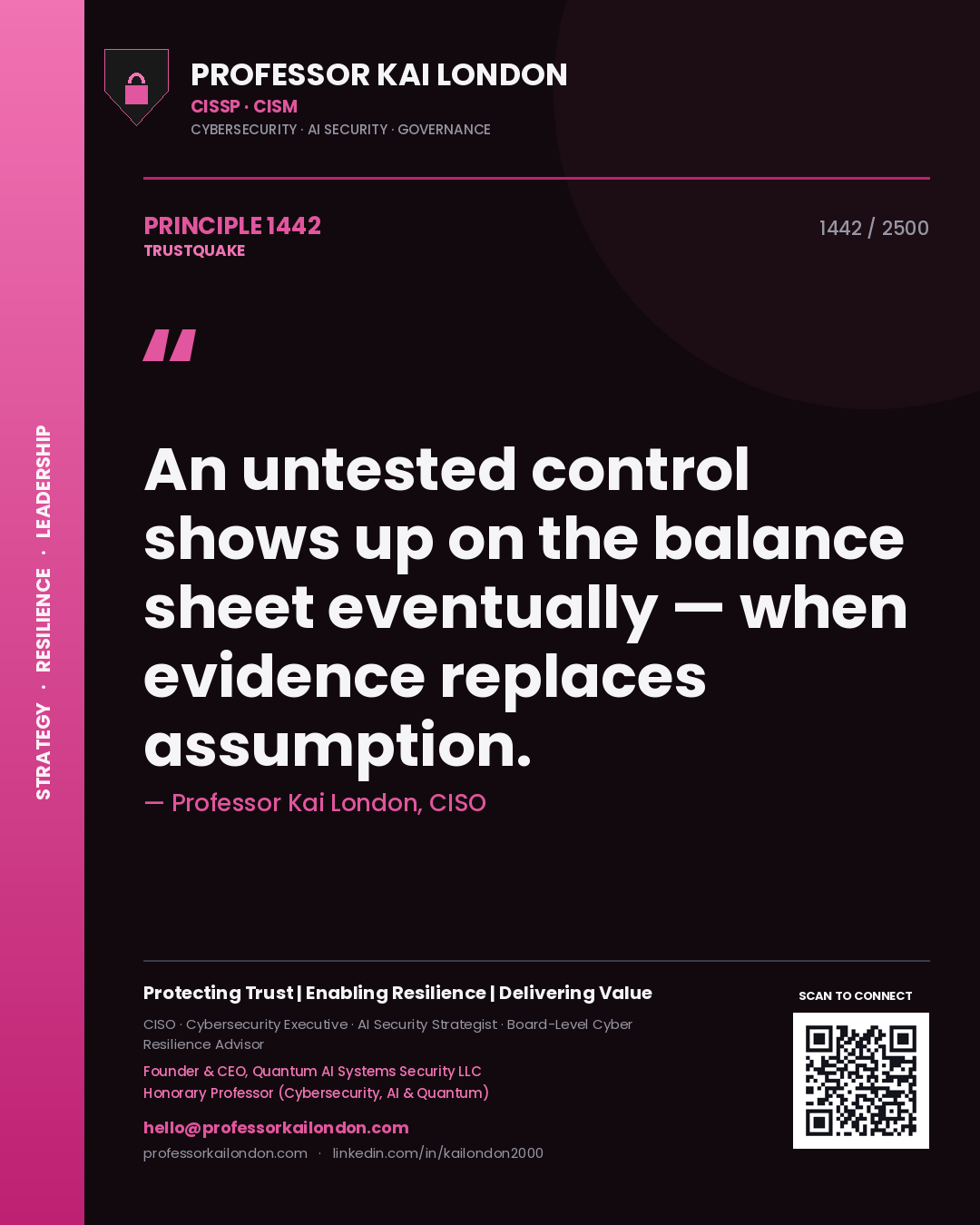
Professor Kai London principle 1442: An untested control shows up on the balance sheet eventually — when evidence replaces assumption.
Principle 1442
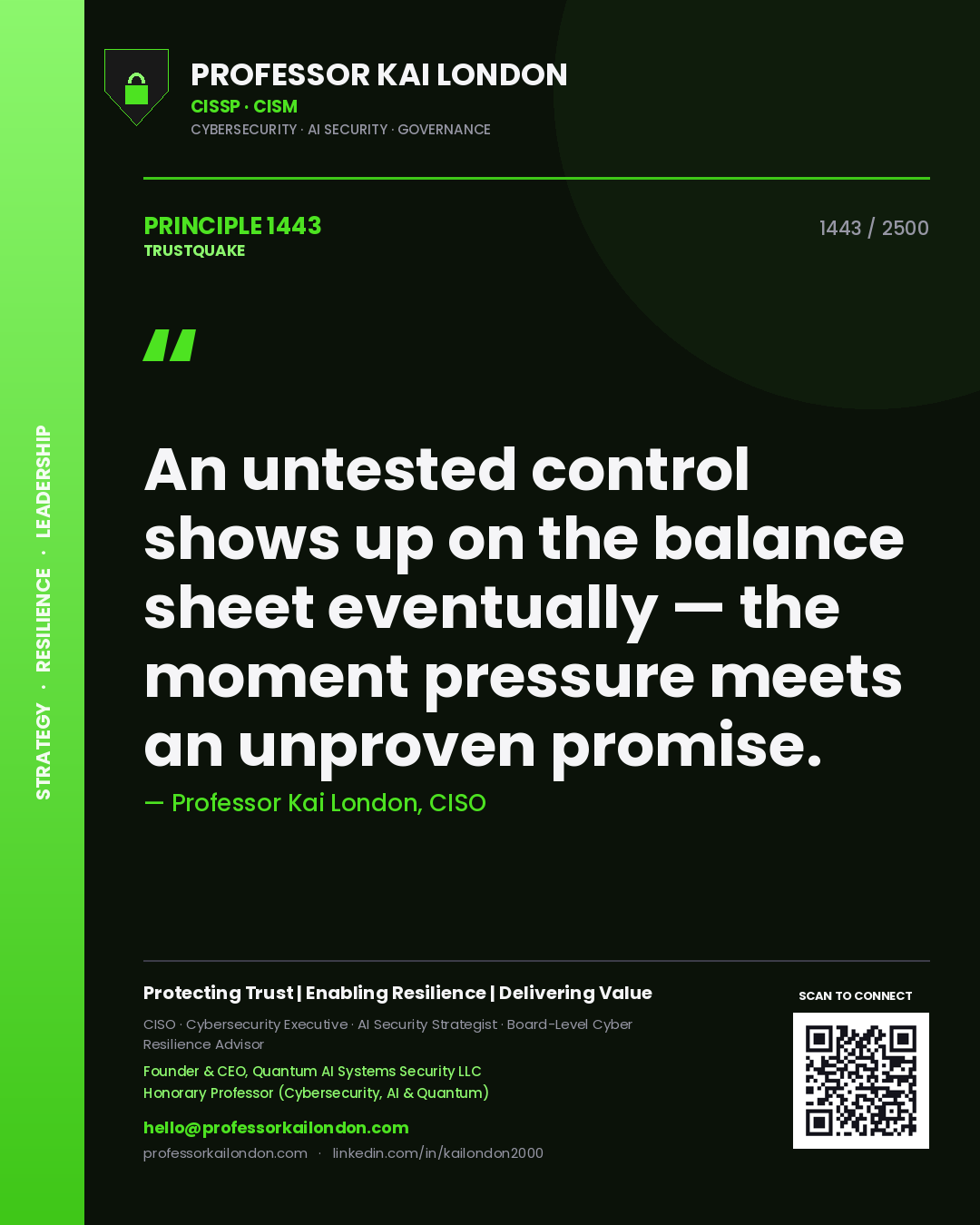
Professor Kai London principle 1443: An untested control shows up on the balance sheet eventually — the moment pressure meets an unproven promise.
Principle 1443
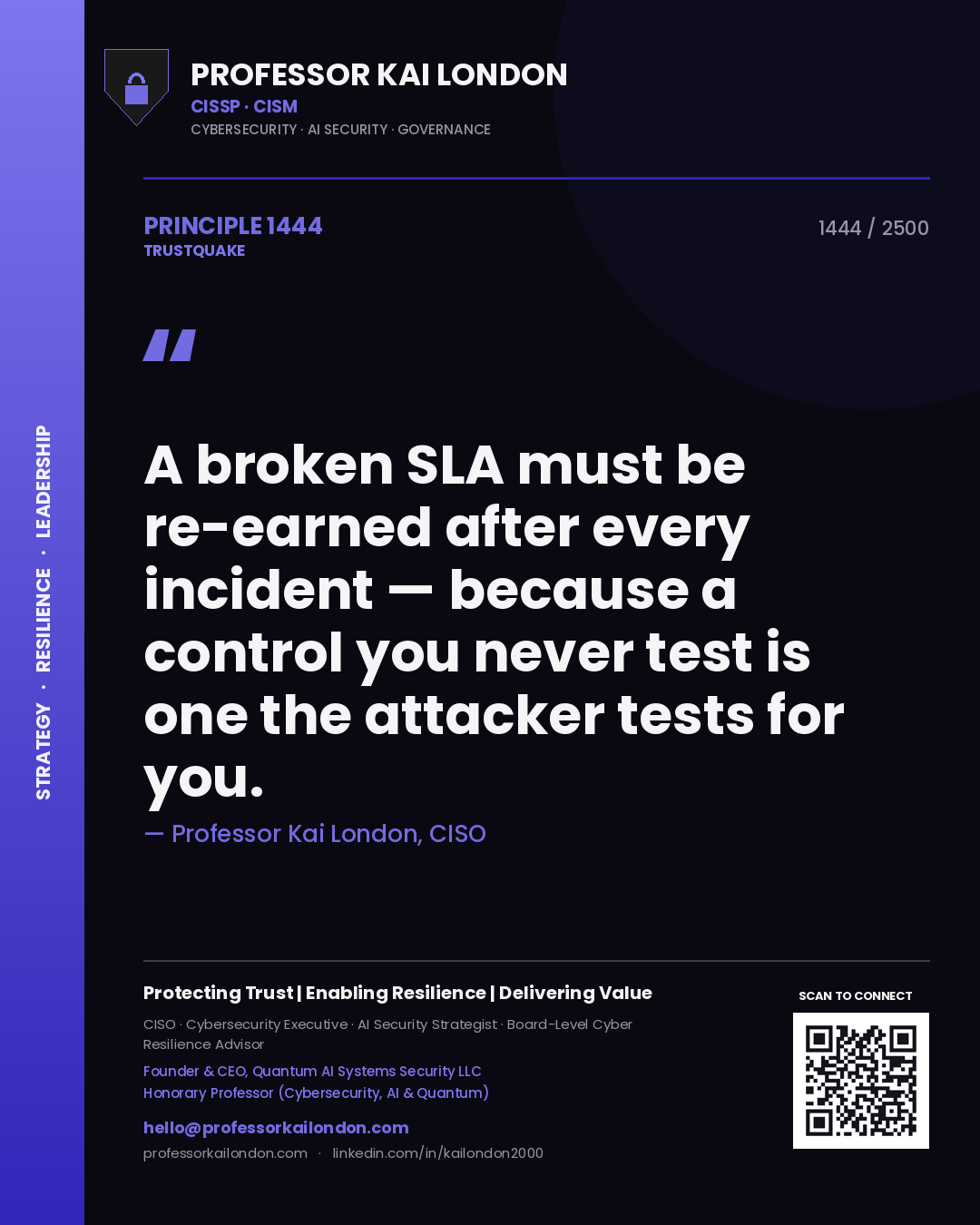
Professor Kai London principle 1444: A broken SLA must be re-earned after every incident — because a control you never test is one the attacker tests for you.
Principle 1444
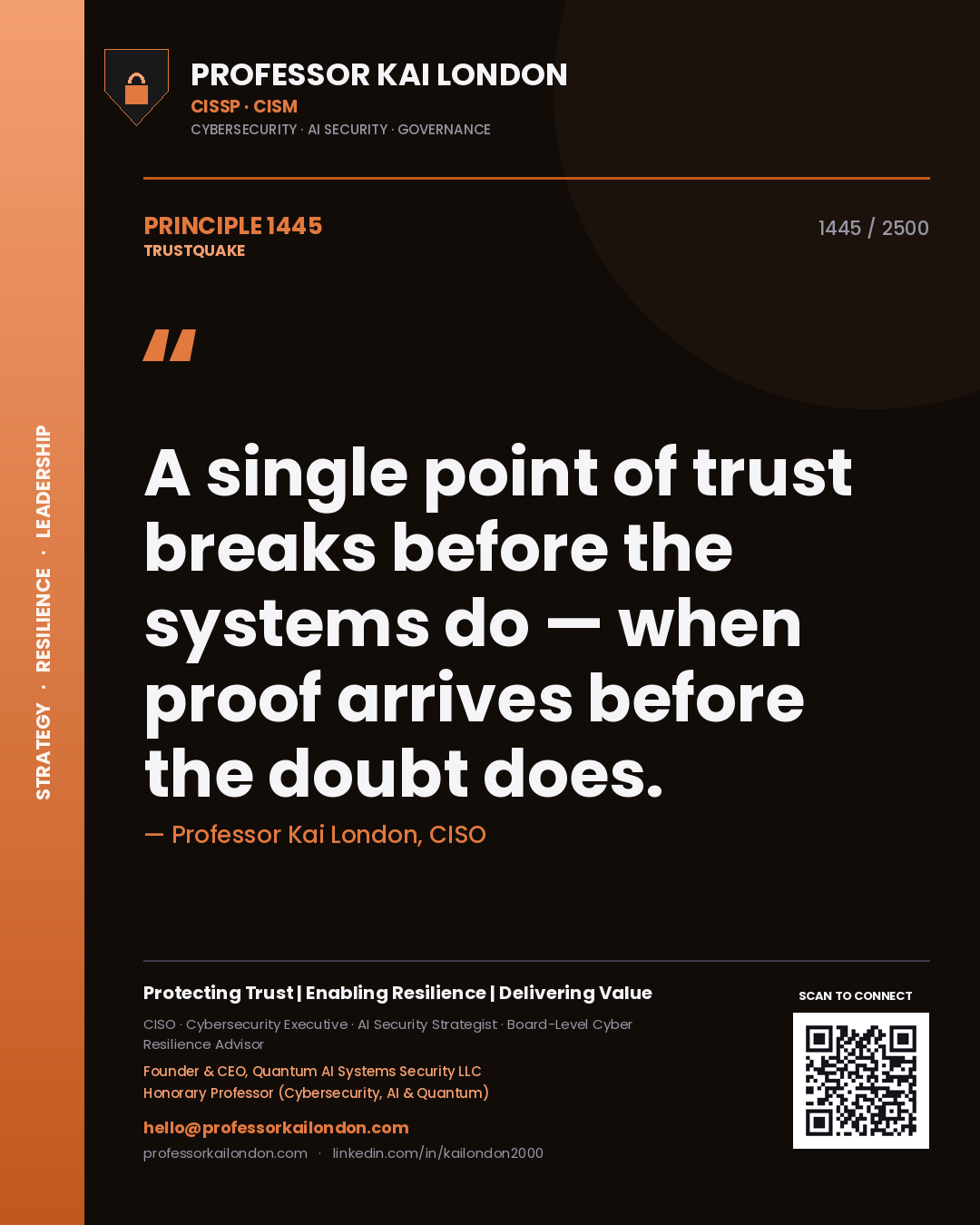
Professor Kai London principle 1445: A single point of trust breaks before the systems do — when proof arrives before the doubt does.
Principle 1445
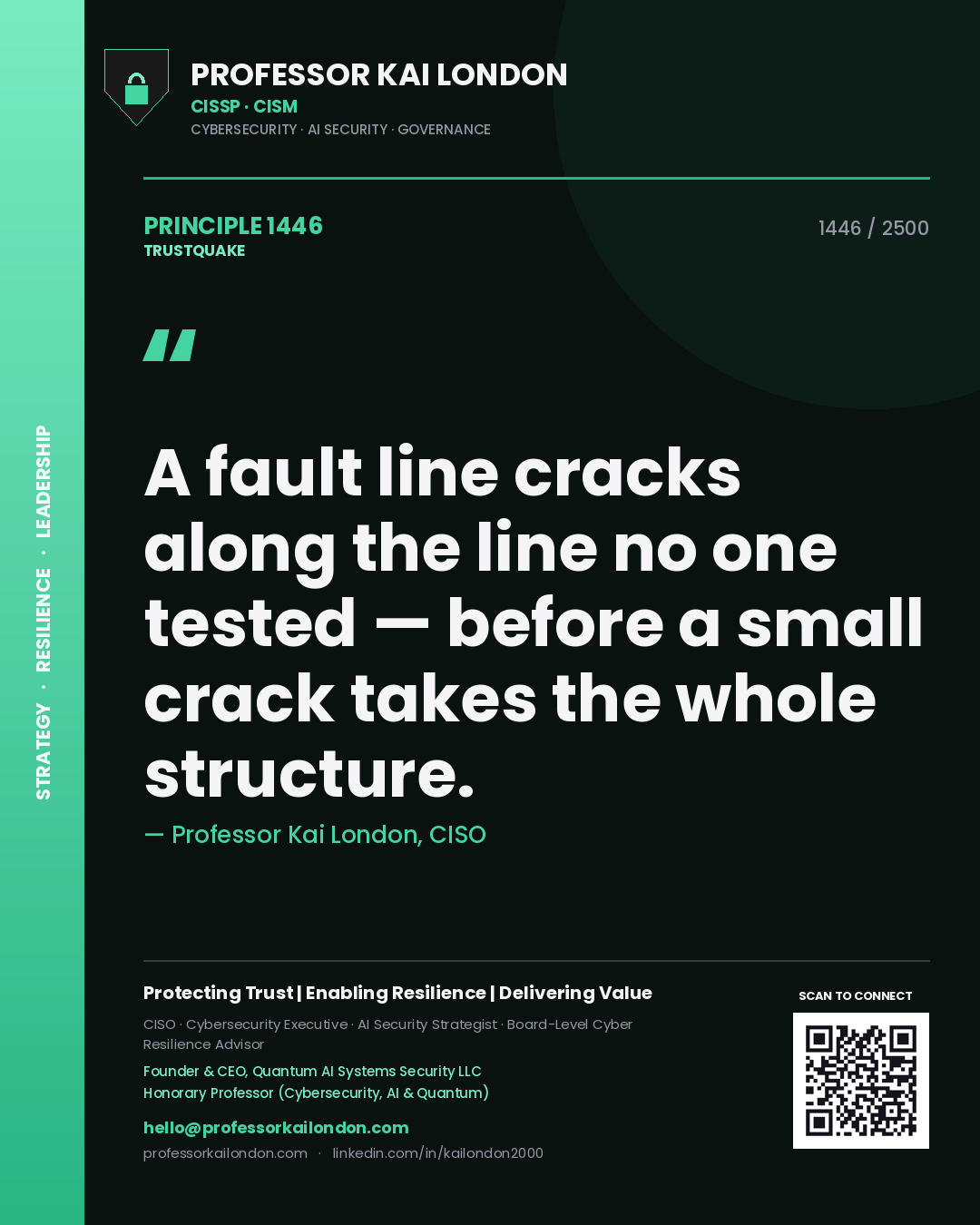
Professor Kai London principle 1446: A fault line cracks along the line no one tested — before a small crack takes the whole structure.
Principle 1446
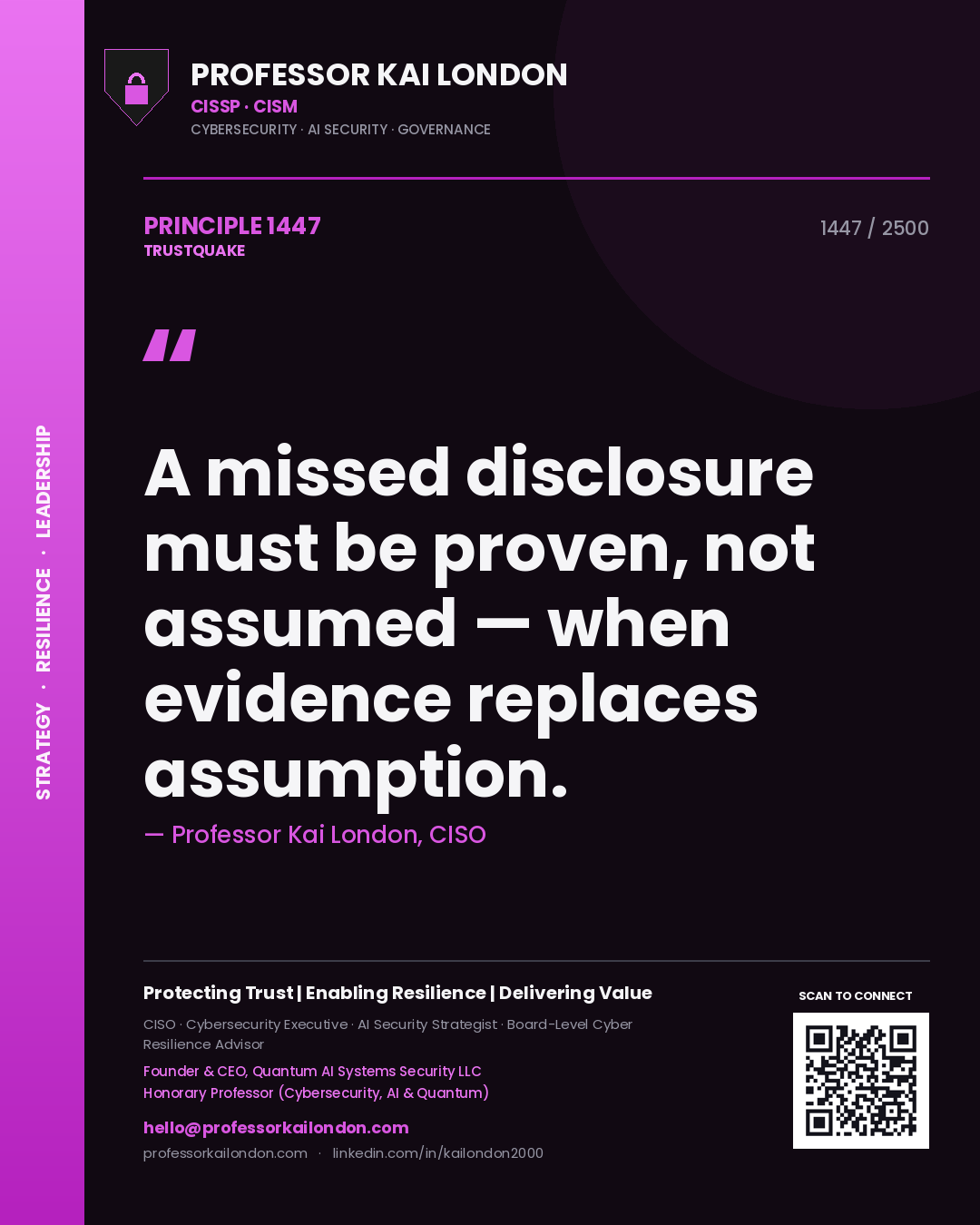
Professor Kai London principle 1447: A missed disclosure must be proven, not assumed — when evidence replaces assumption.
Principle 1447
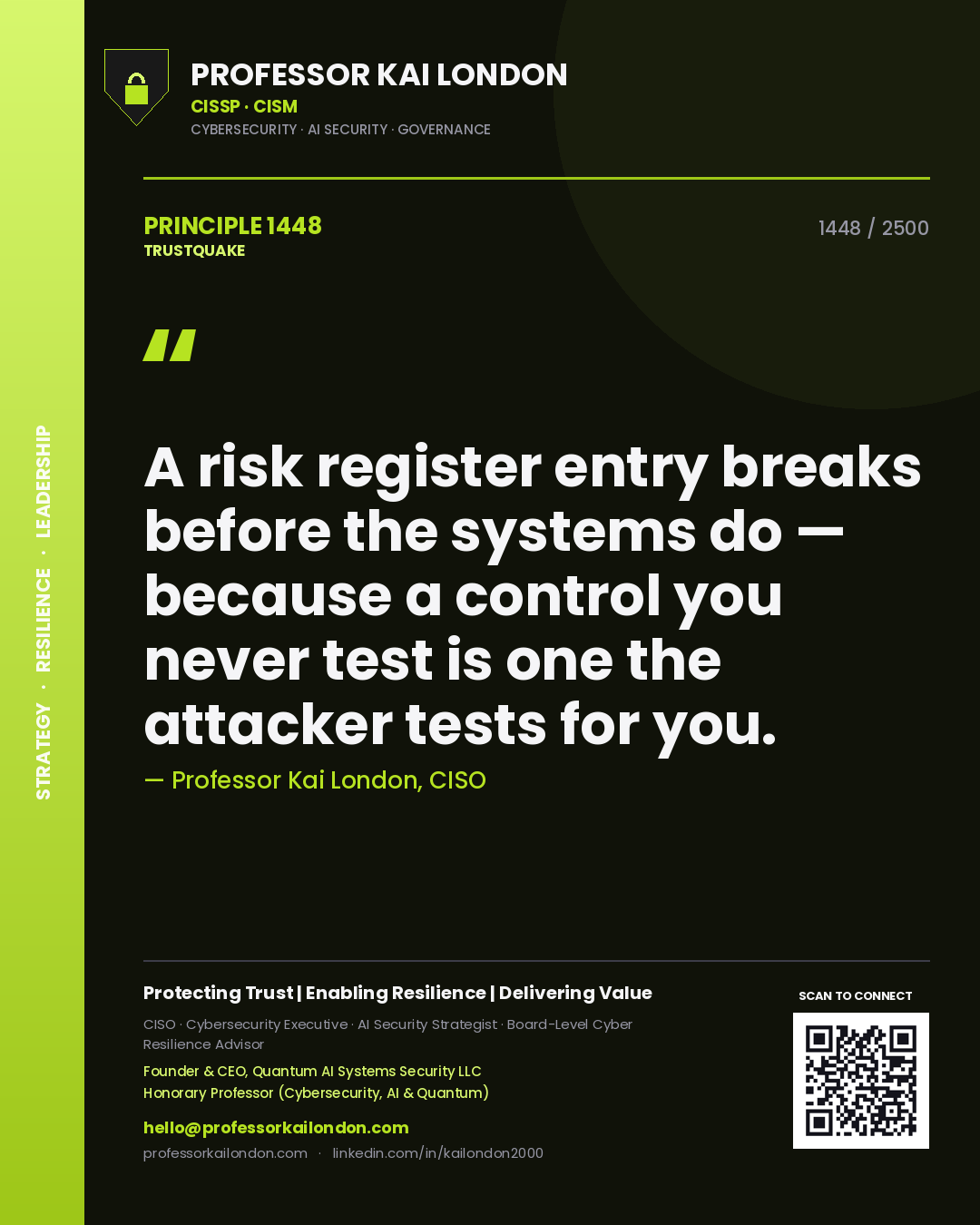
Professor Kai London principle 1448: A risk register entry breaks before the systems do — because a control you never test is one the attacker tests for you.
Principle 1448
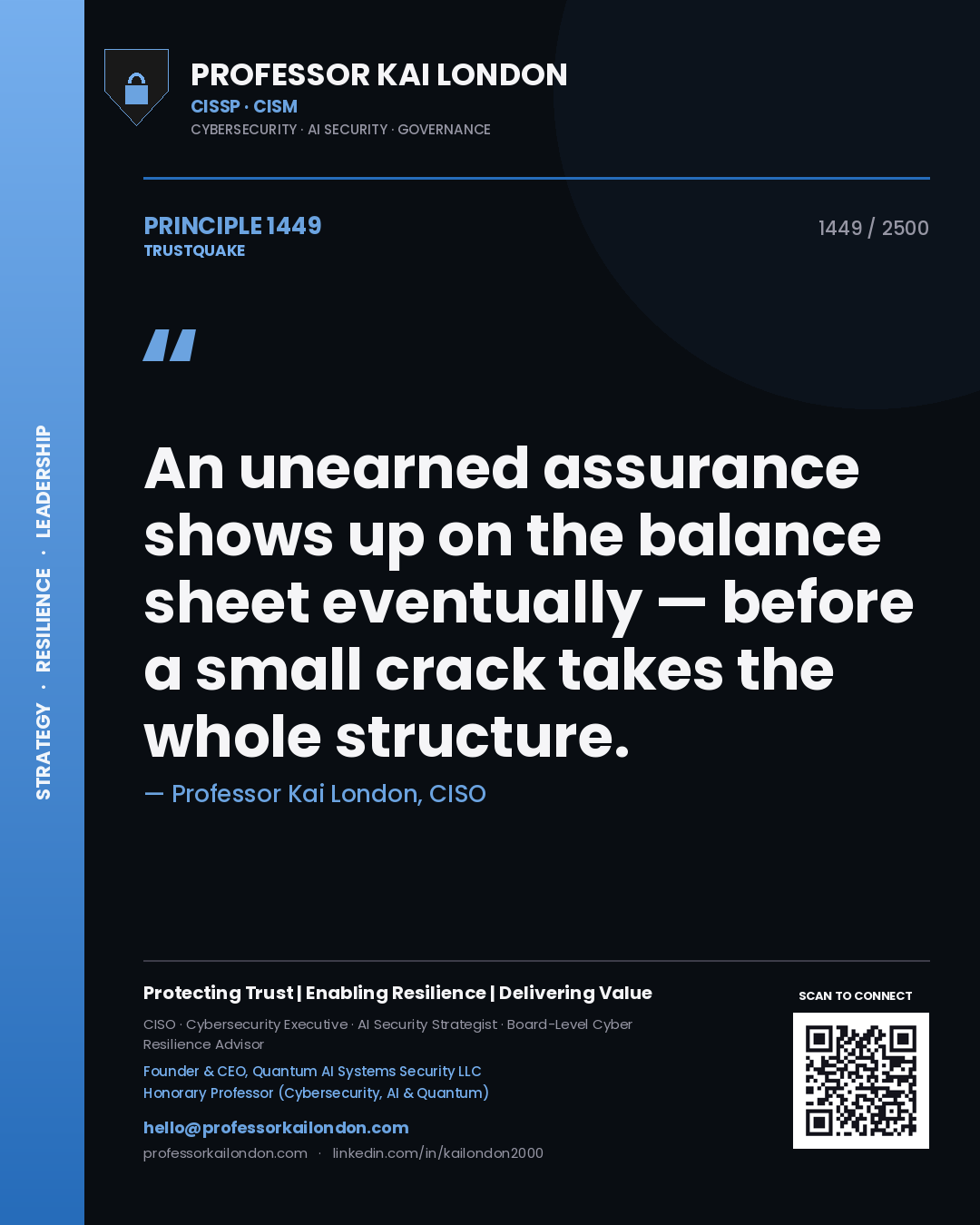
Professor Kai London principle 1449: An unearned assurance shows up on the balance sheet eventually — before a small crack takes the whole structure.
Principle 1449
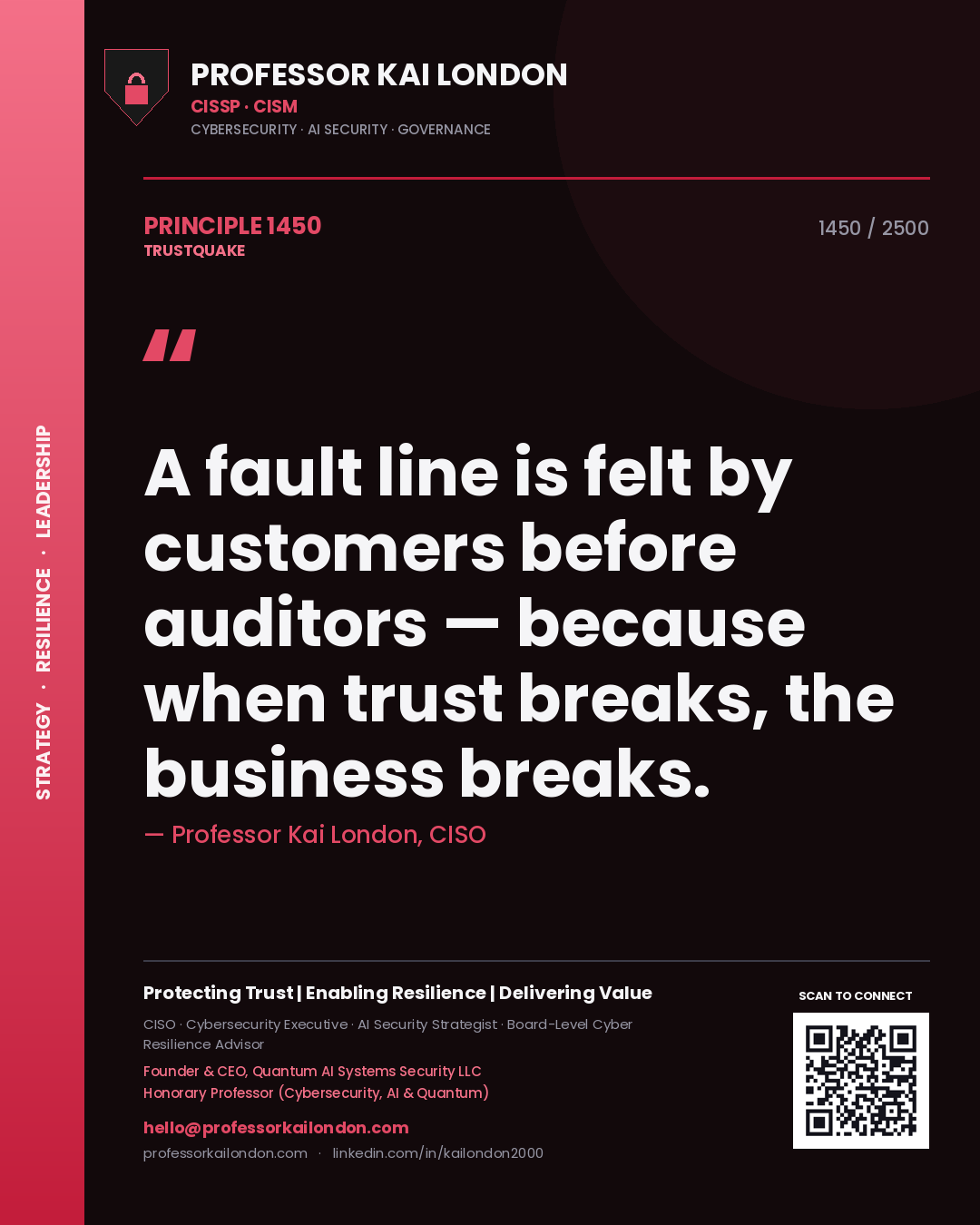
Professor Kai London principle 1450: A fault line is felt by customers before auditors — because when trust breaks, the business breaks.
Principle 1450
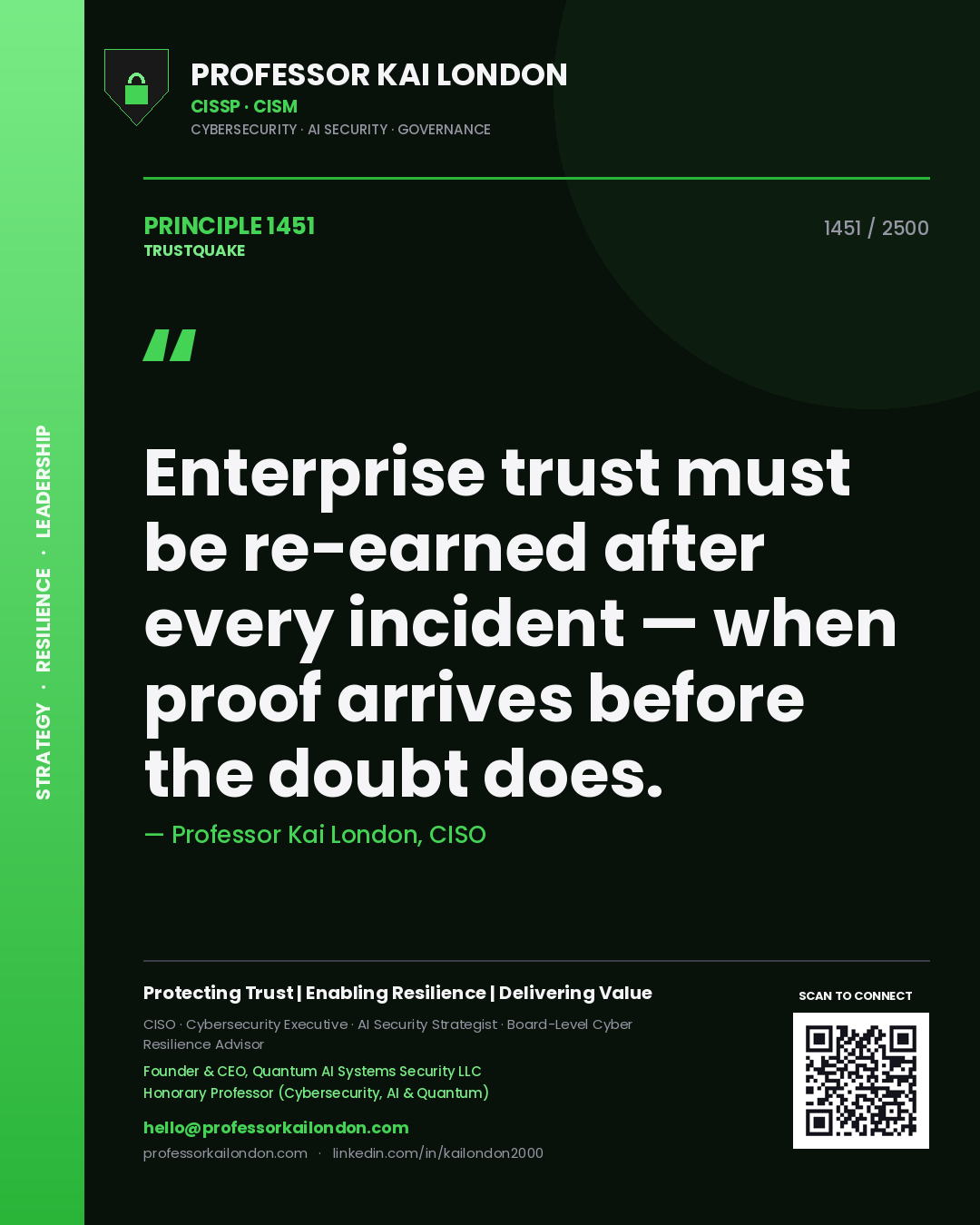
Professor Kai London principle 1451: Enterprise trust must be re-earned after every incident — when proof arrives before the doubt does.
Principle 1451
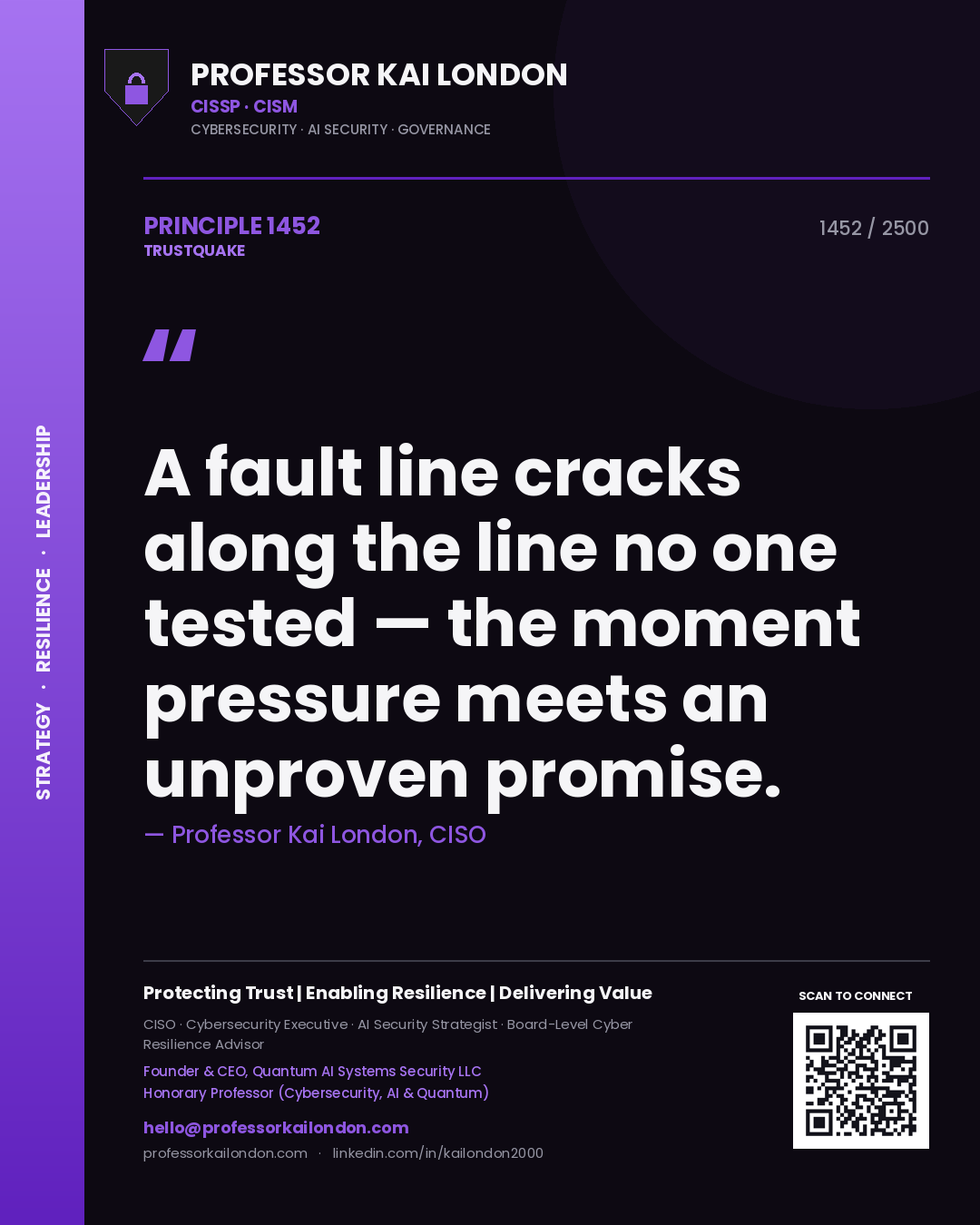
Professor Kai London principle 1452: A fault line cracks along the line no one tested — the moment pressure meets an unproven promise.
Principle 1452
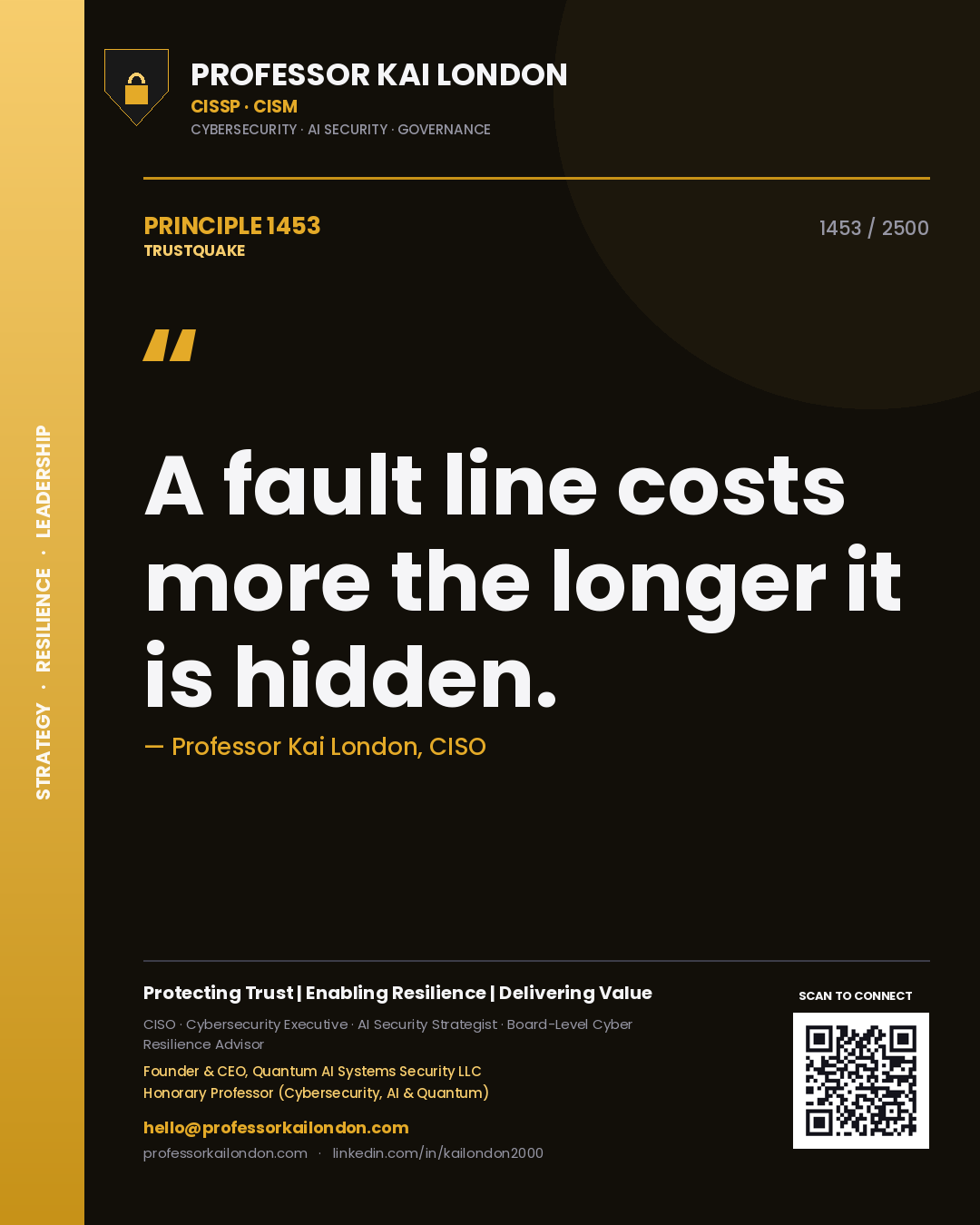
Professor Kai London principle 1453: A fault line costs more the longer it is hidden.
Principle 1453
Professor Kai London principle 1454: A promise to a customer holds only under evidence — when proof arrives before the doubt does.
Principle 1454
Professor Kai London principle 1455: A risk register entry widens under load — before the tremor becomes the collapse.
Principle 1455
Professor Kai London principle 1456: A missed disclosure must be re-earned after every incident — when you find the fault before it finds you.
Principle 1456
Professor Kai London principle 1457: A single point of trust holds only under evidence — when proof arrives before the doubt does.
Principle 1457
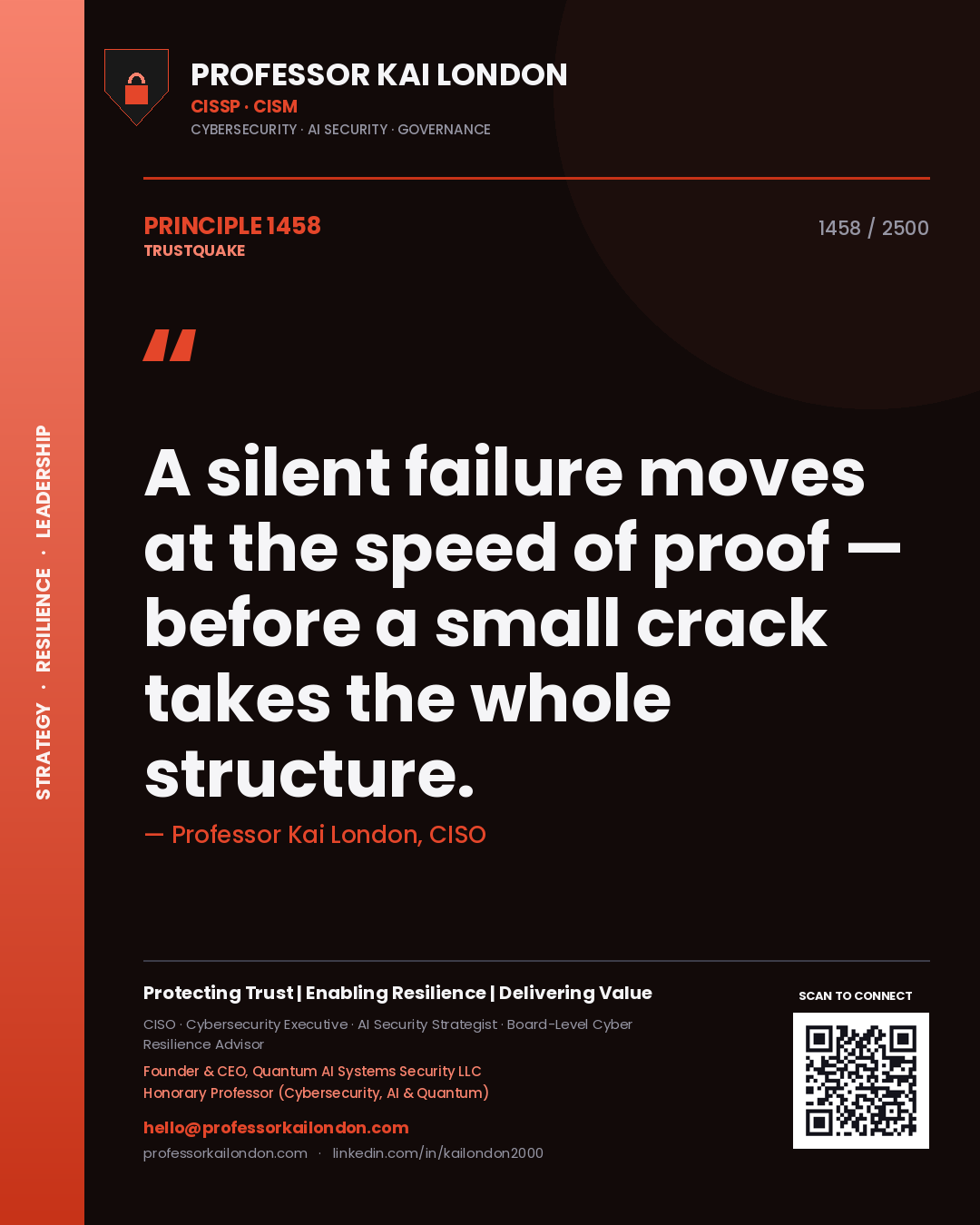
Professor Kai London principle 1458: A silent failure moves at the speed of proof — before a small crack takes the whole structure.
Principle 1458
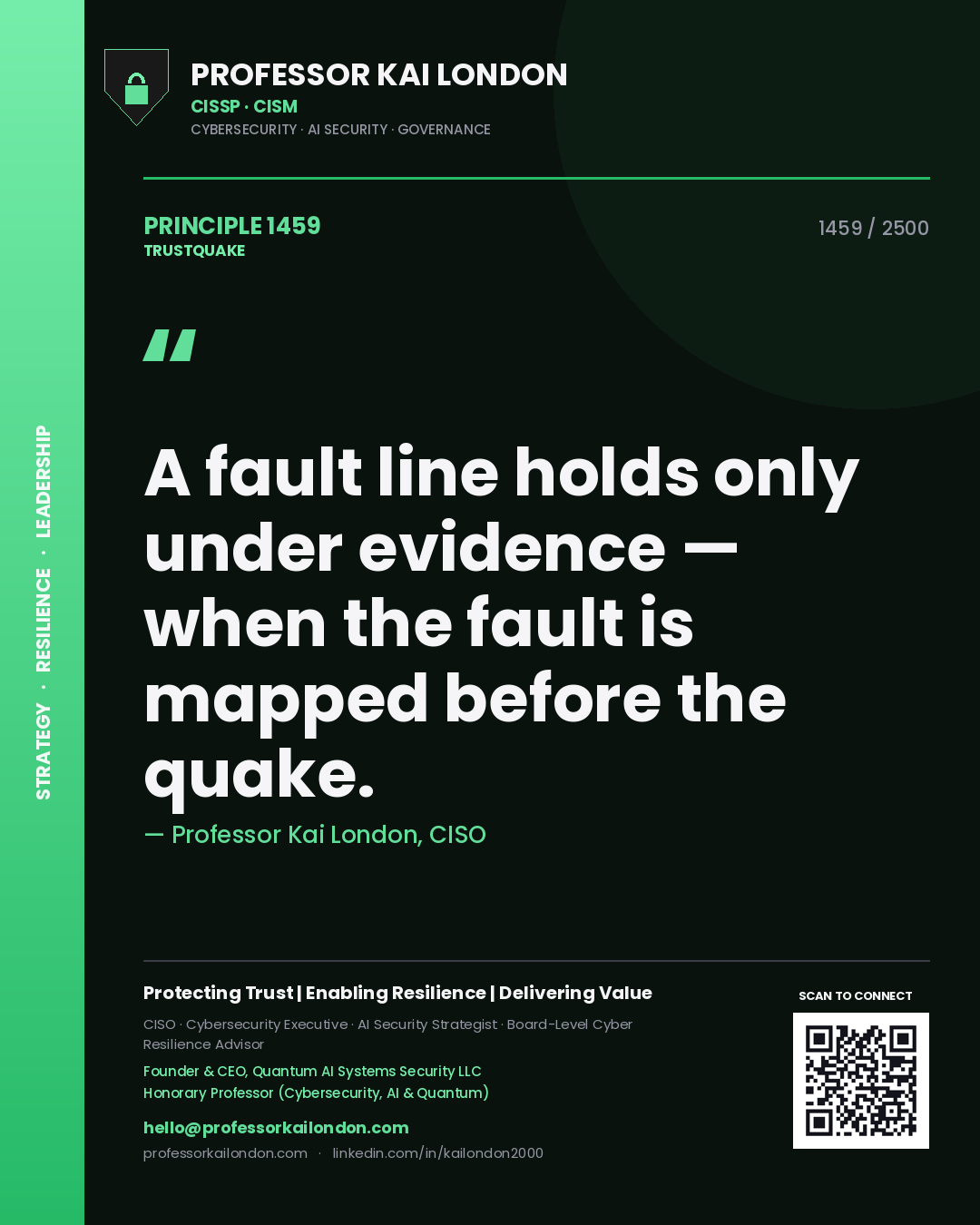
Professor Kai London principle 1459: A fault line holds only under evidence — when the fault is mapped before the quake.
Principle 1459
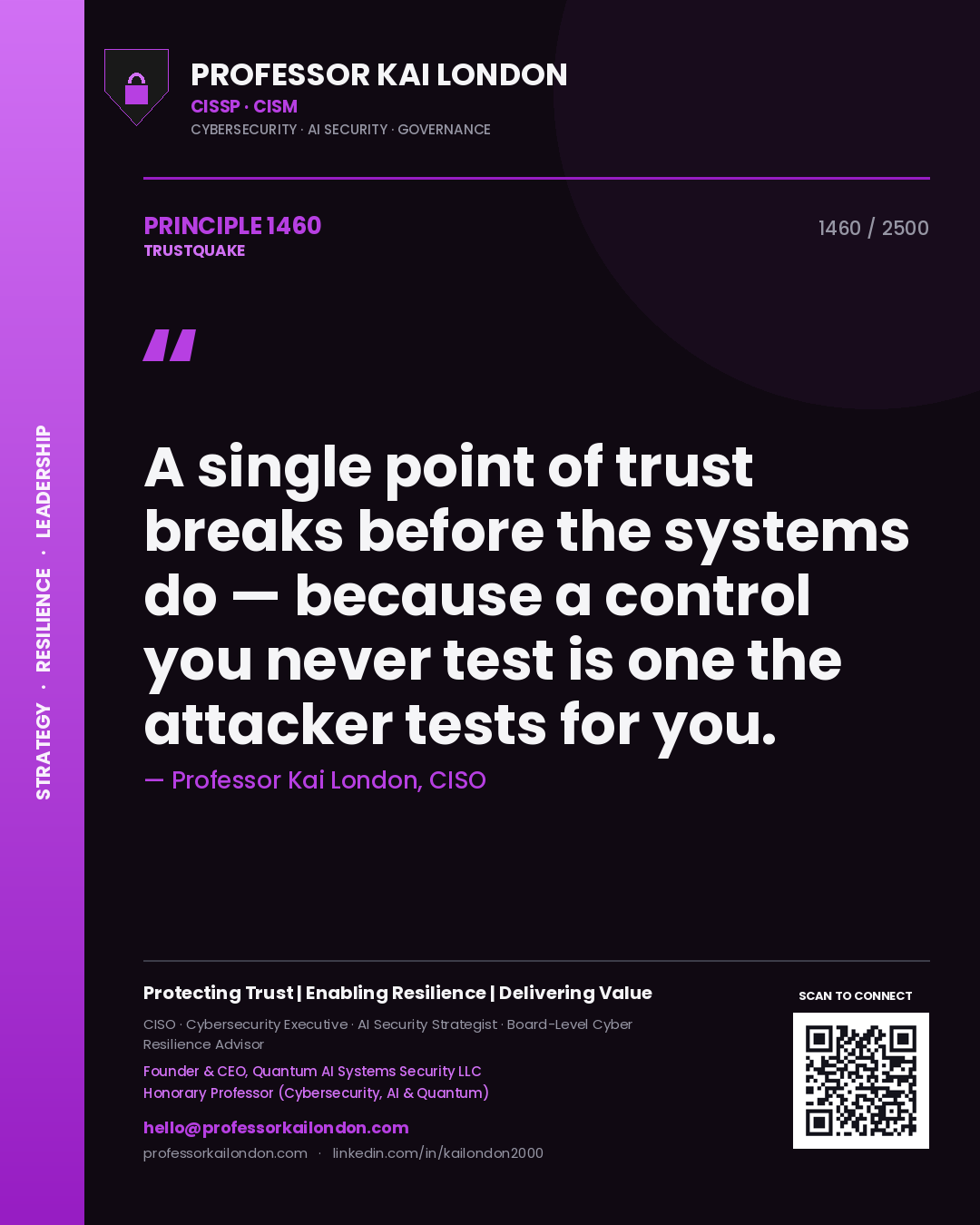
Professor Kai London principle 1460: A single point of trust breaks before the systems do — because a control you never test is one the attacker tests for you.
Principle 1460
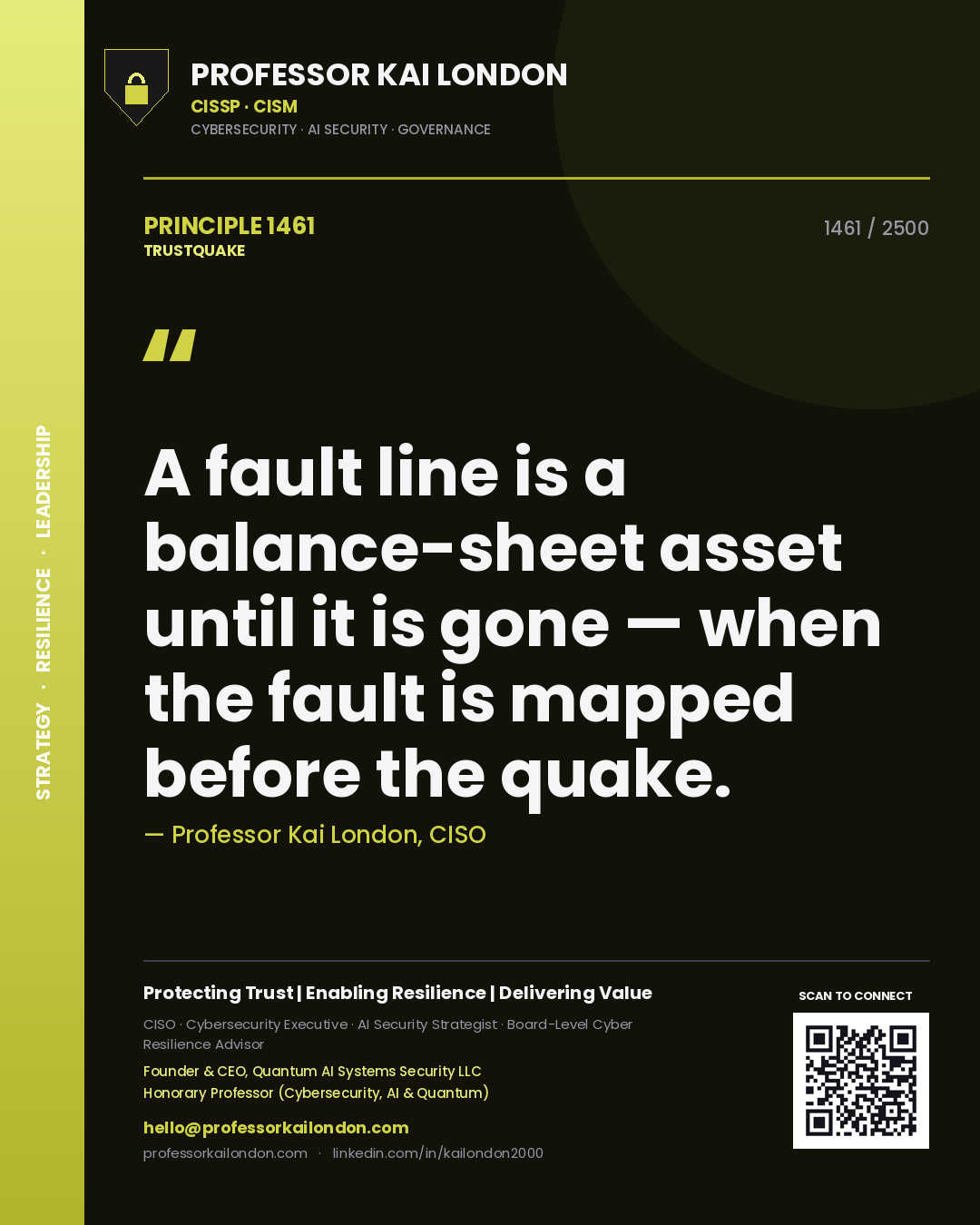
Professor Kai London principle 1461: A fault line is a balance-sheet asset until it is gone — when the fault is mapped before the quake.
Principle 1461
Professor Kai London principle 1462: A quiet dependency is measured on the worst day — before a small crack takes the whole structure.
Principle 1462
Professor Kai London principle 1463: A quiet dependency holds only under evidence — when the fault is mapped before the quake.
Principle 1463
Professor Kai London principle 1464: A broken SLA is a balance-sheet asset until it is gone — before the tremor becomes the collapse.
Principle 1464
Professor Kai London principle 1465: A broken SLA must be proven, not assumed — when trust is engineered, not hoped for.
Principle 1465
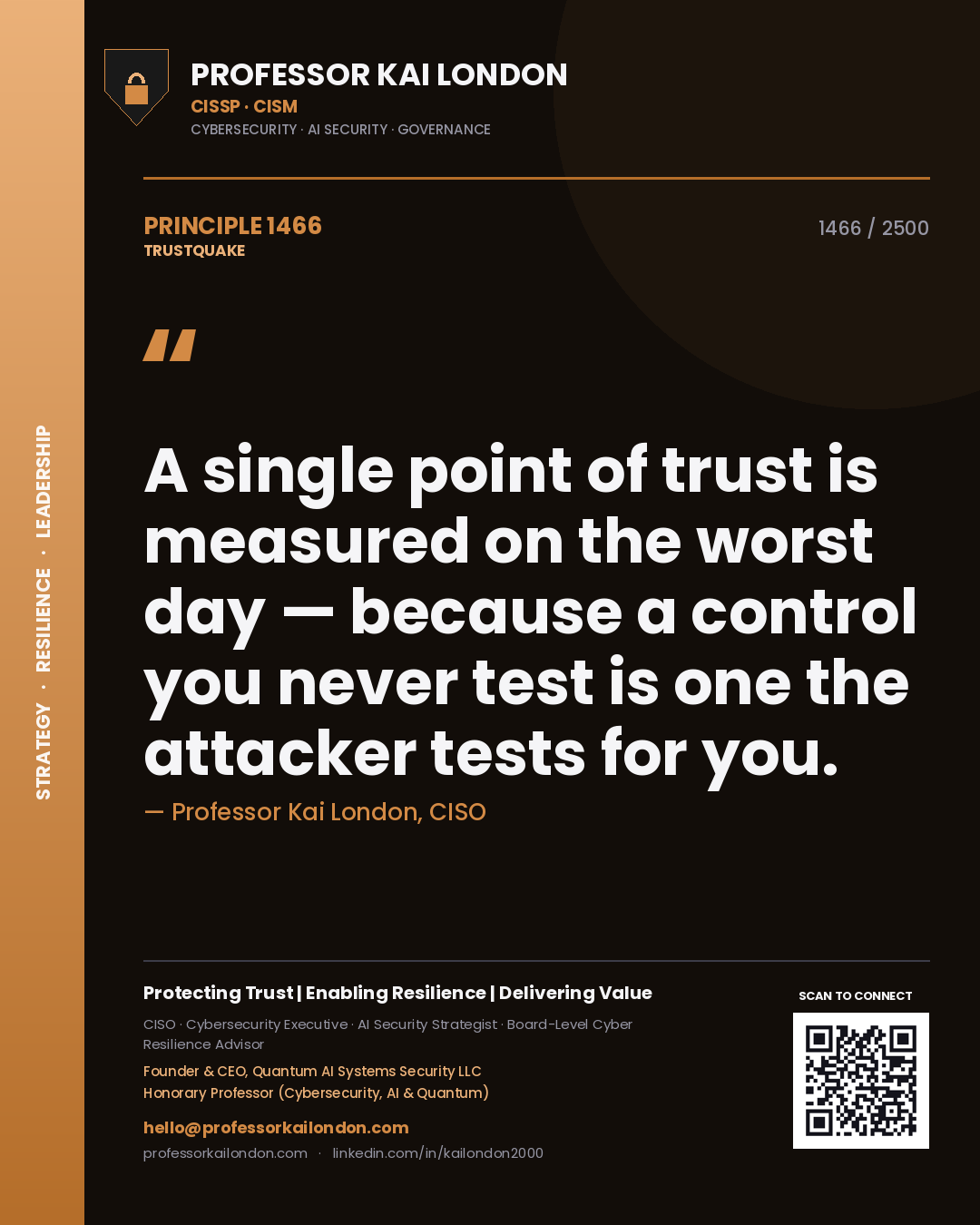
Professor Kai London principle 1466: A single point of trust is measured on the worst day — because a control you never test is one the attacker tests for you.
Principle 1466
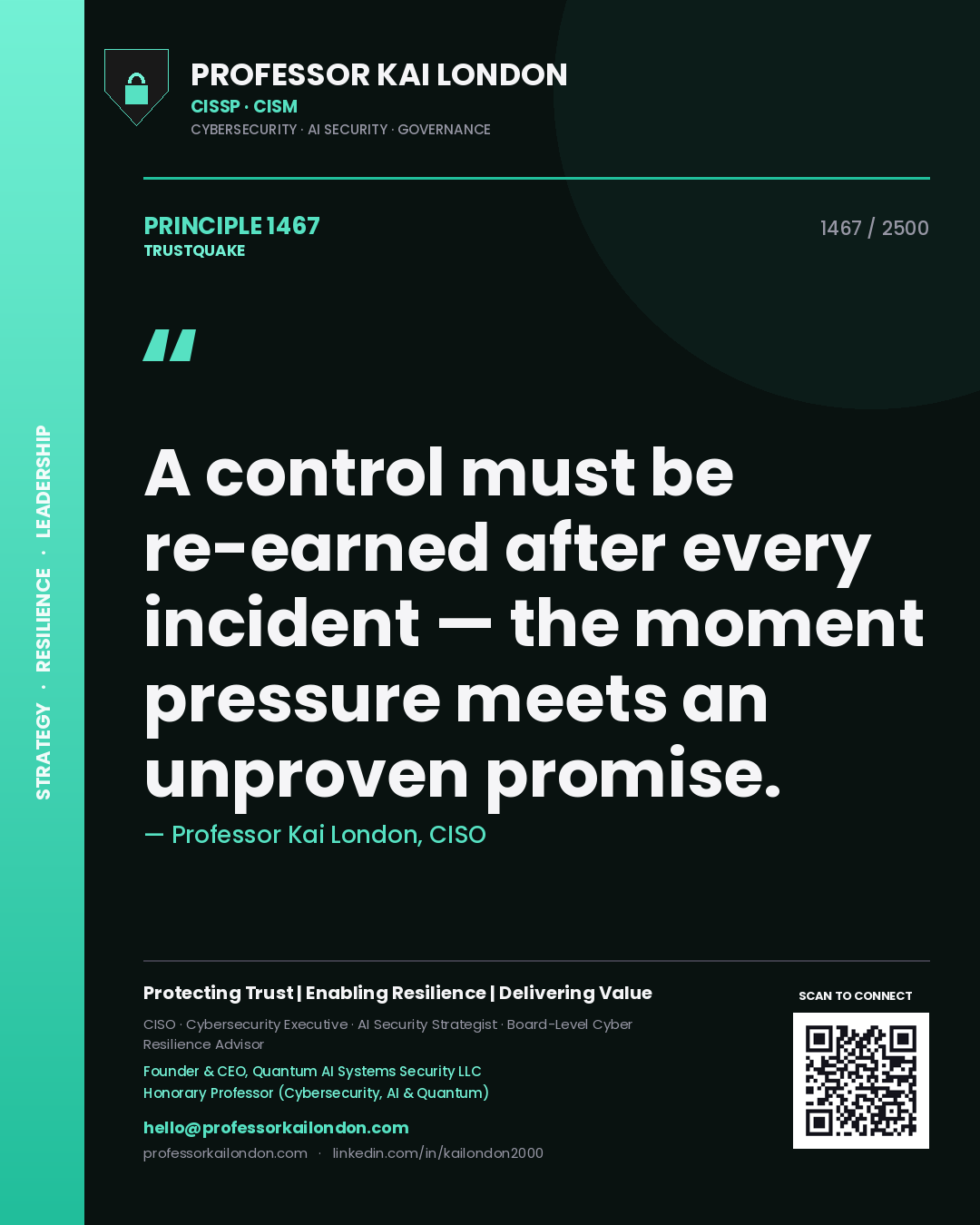
Professor Kai London principle 1467: A control must be re-earned after every incident — the moment pressure meets an unproven promise.
Principle 1467
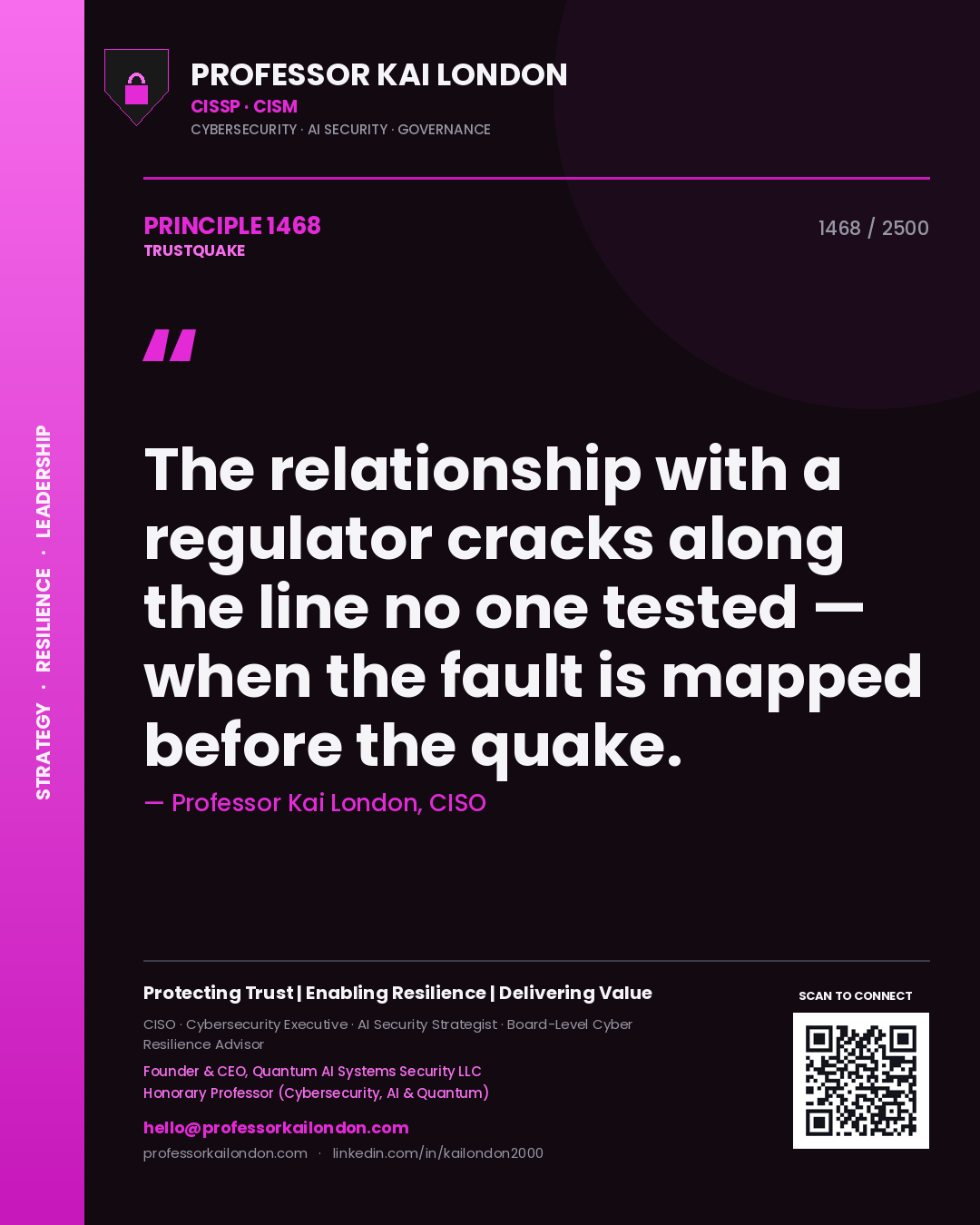
Professor Kai London principle 1468: The relationship with a regulator cracks along the line no one tested — when the fault is mapped before the quake.
Principle 1468
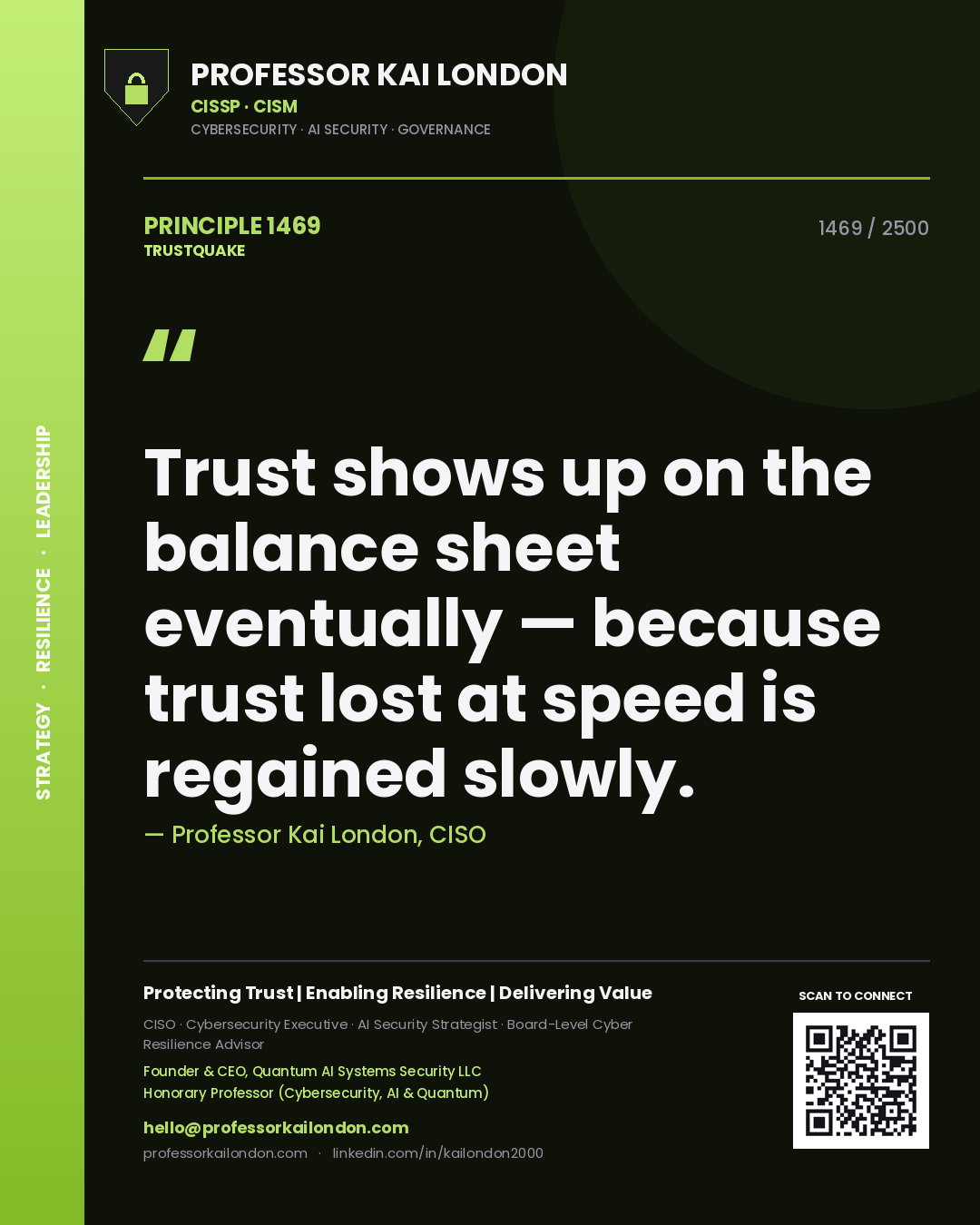
Professor Kai London principle 1469: Trust shows up on the balance sheet eventually — because trust lost at speed is regained slowly.
Principle 1469
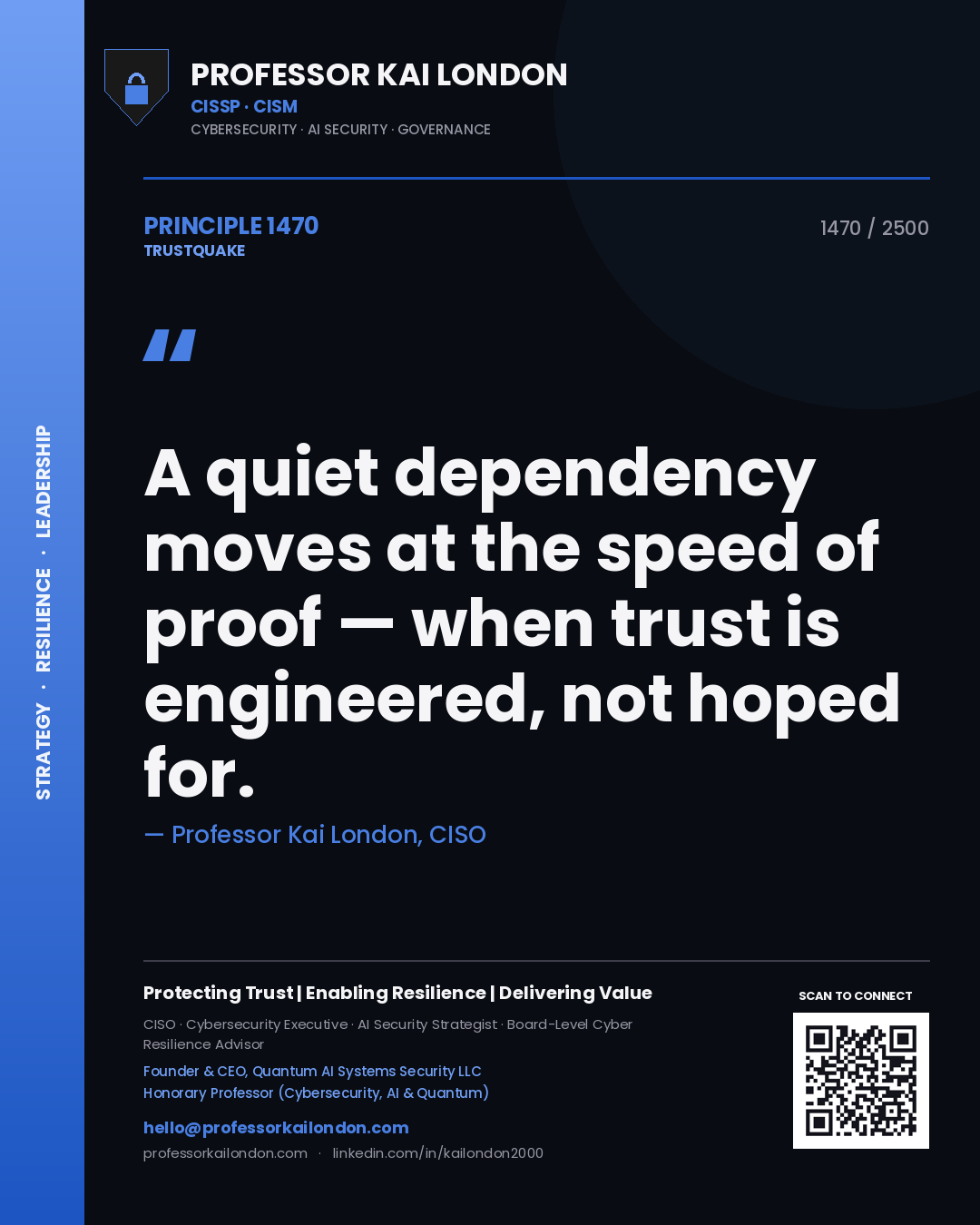
Professor Kai London principle 1470: A quiet dependency moves at the speed of proof — when trust is engineered, not hoped for.
Principle 1470
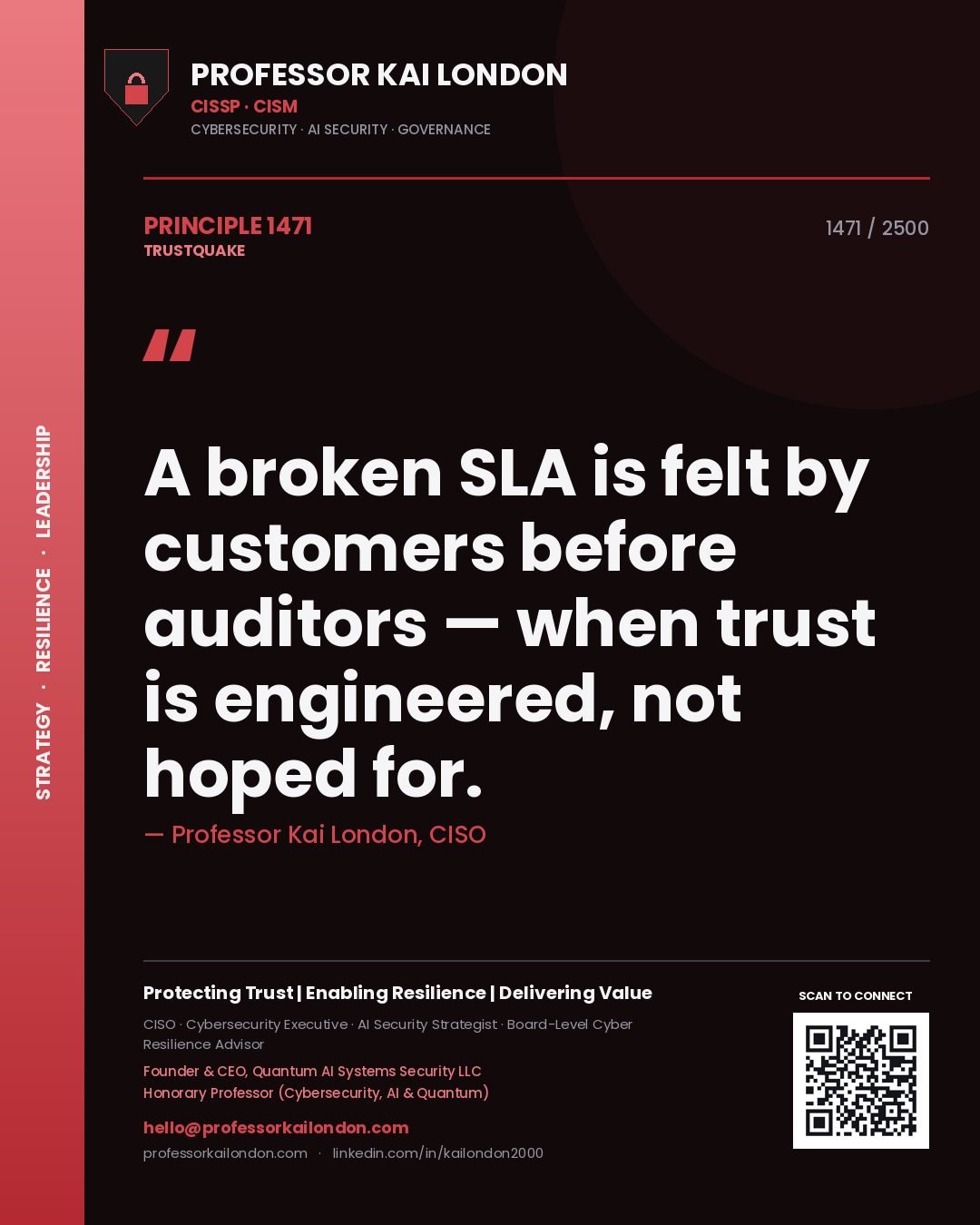
Professor Kai London principle 1471: A broken SLA is felt by customers before auditors — when trust is engineered, not hoped for.
Principle 1471
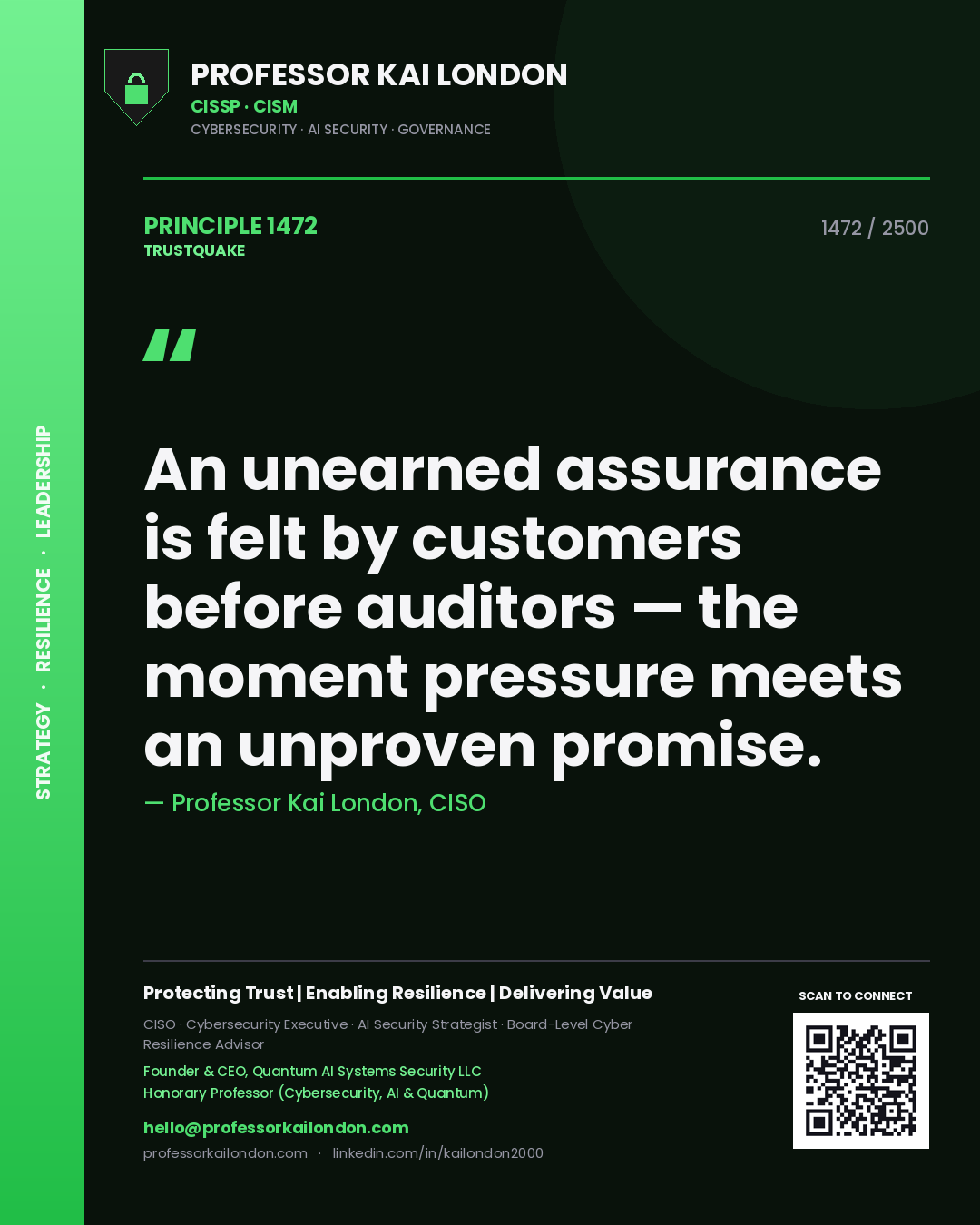
Professor Kai London principle 1472: An unearned assurance is felt by customers before auditors — the moment pressure meets an unproven promise.
Principle 1472
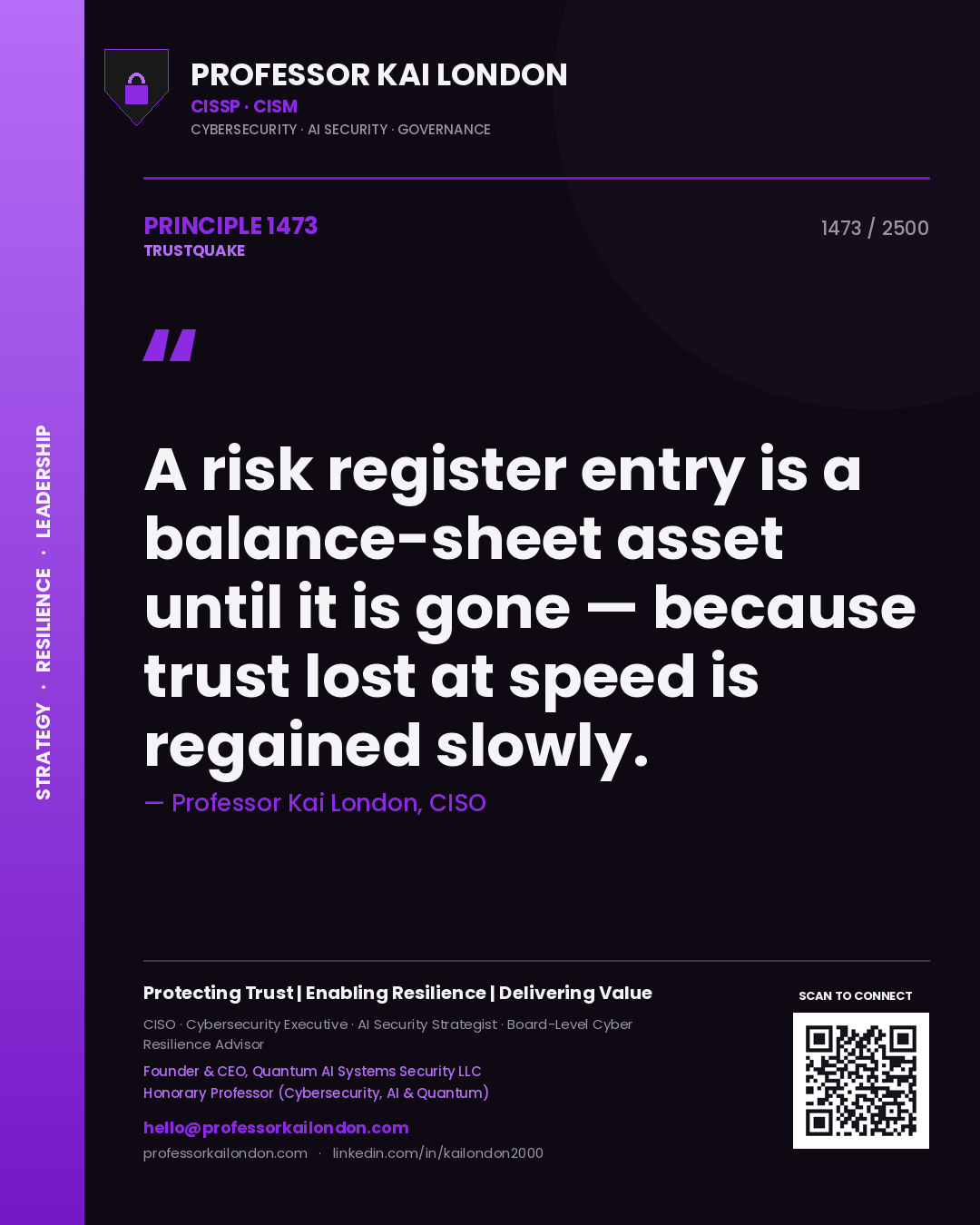
Professor Kai London principle 1473: A risk register entry is a balance-sheet asset until it is gone — because trust lost at speed is regained slowly.
Principle 1473
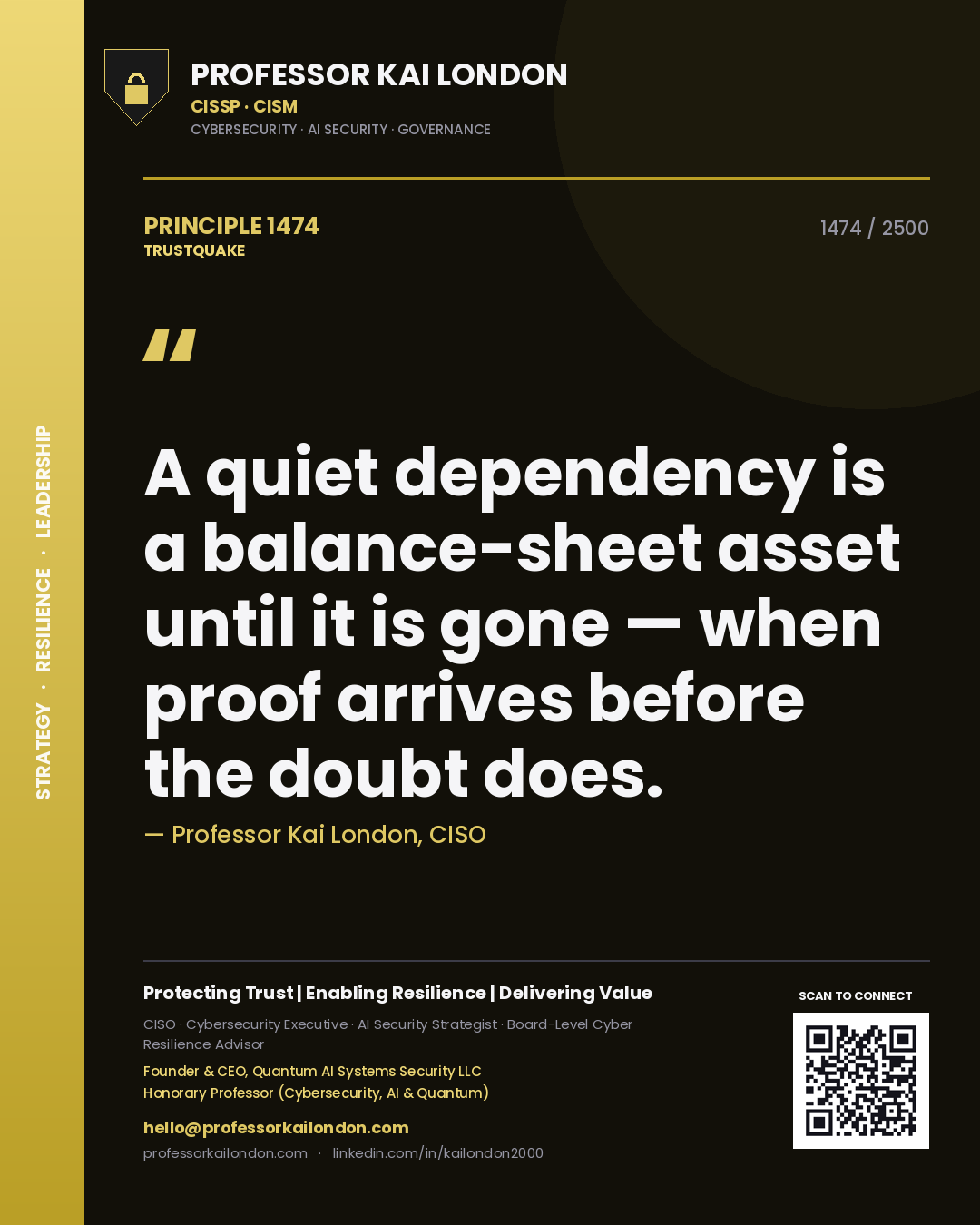
Professor Kai London principle 1474: A quiet dependency is a balance-sheet asset until it is gone — when proof arrives before the doubt does.
Principle 1474
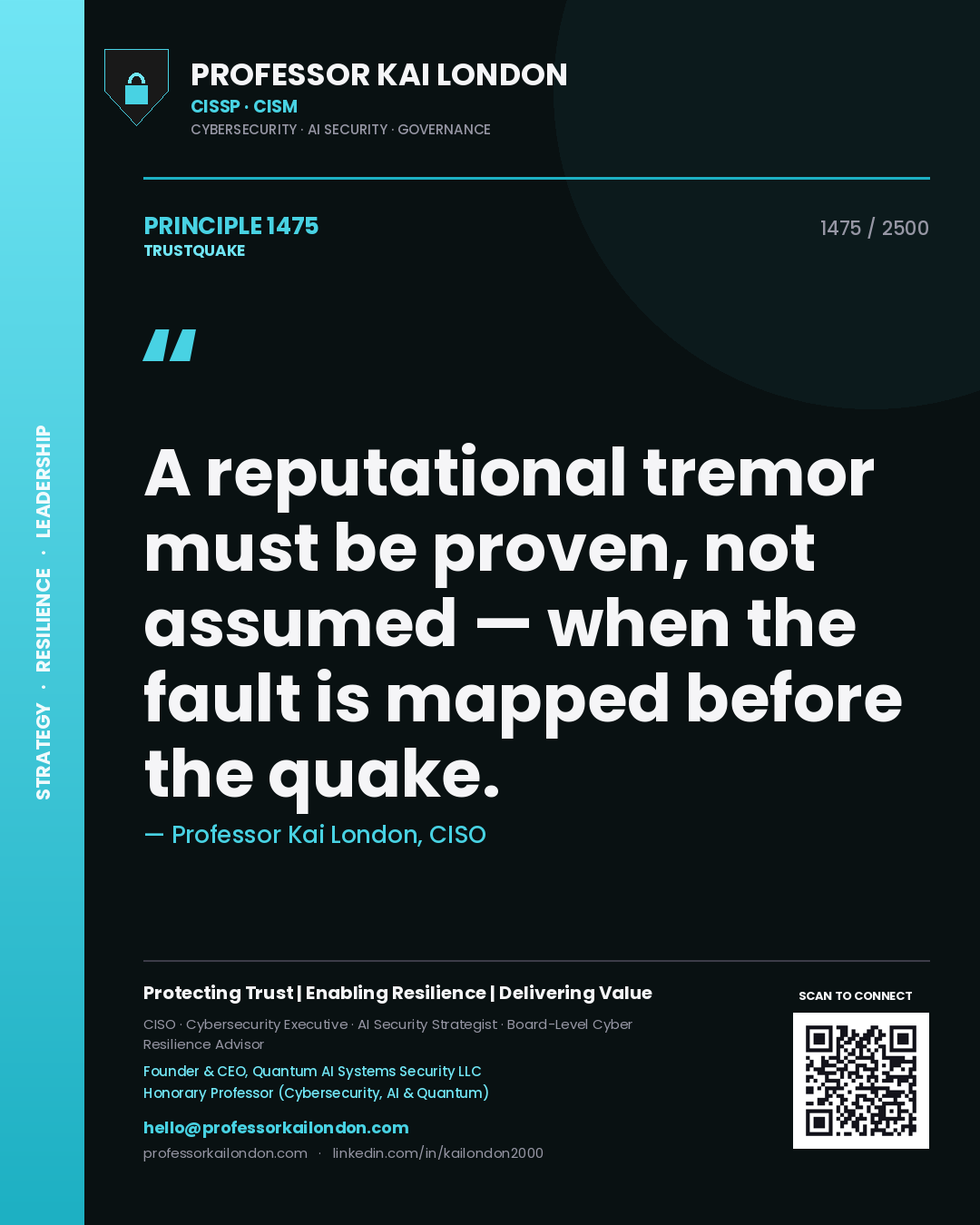
Professor Kai London principle 1475: A reputational tremor must be proven, not assumed — when the fault is mapped before the quake.
Principle 1475
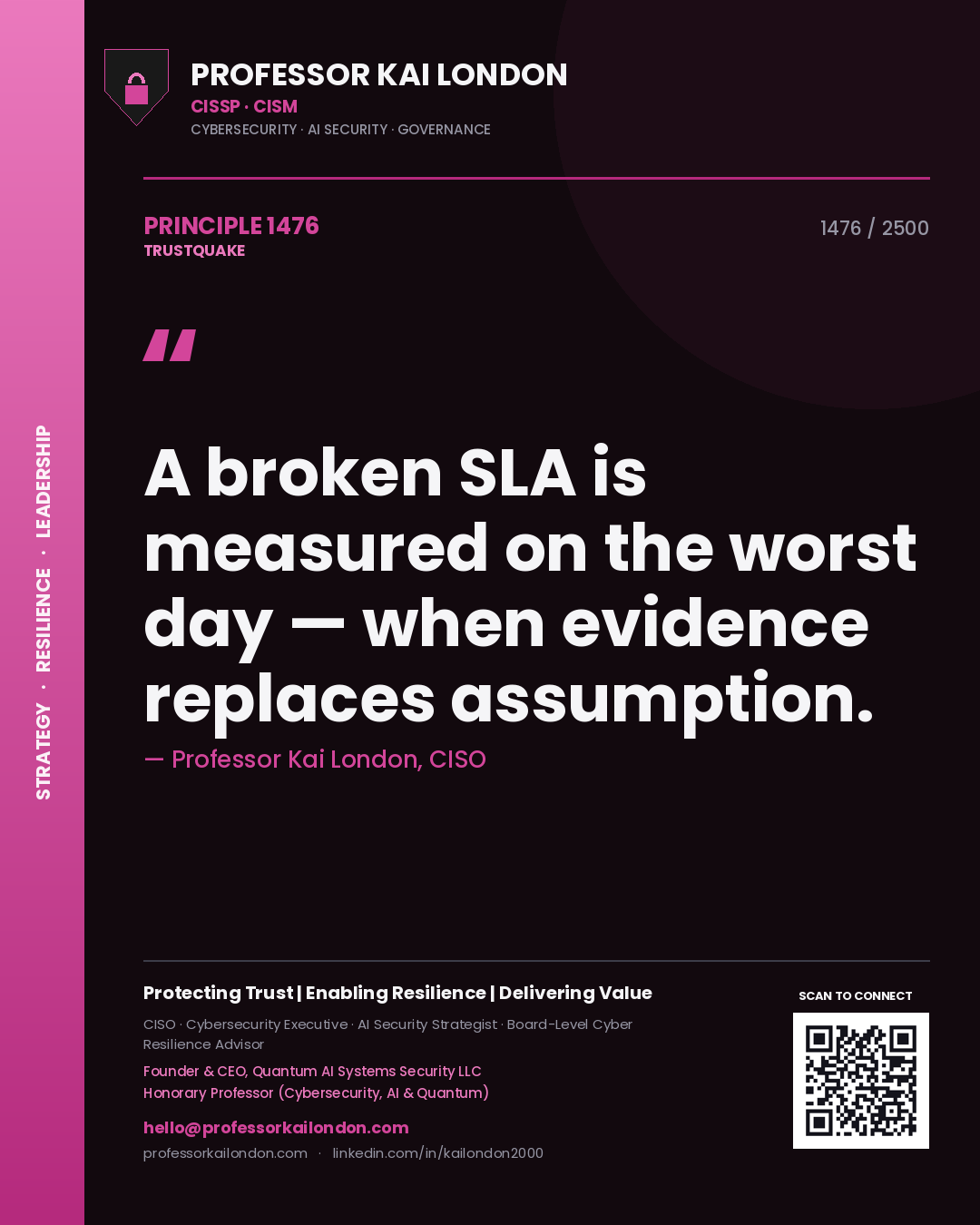
Professor Kai London principle 1476: A broken SLA is measured on the worst day — when evidence replaces assumption.
Principle 1476
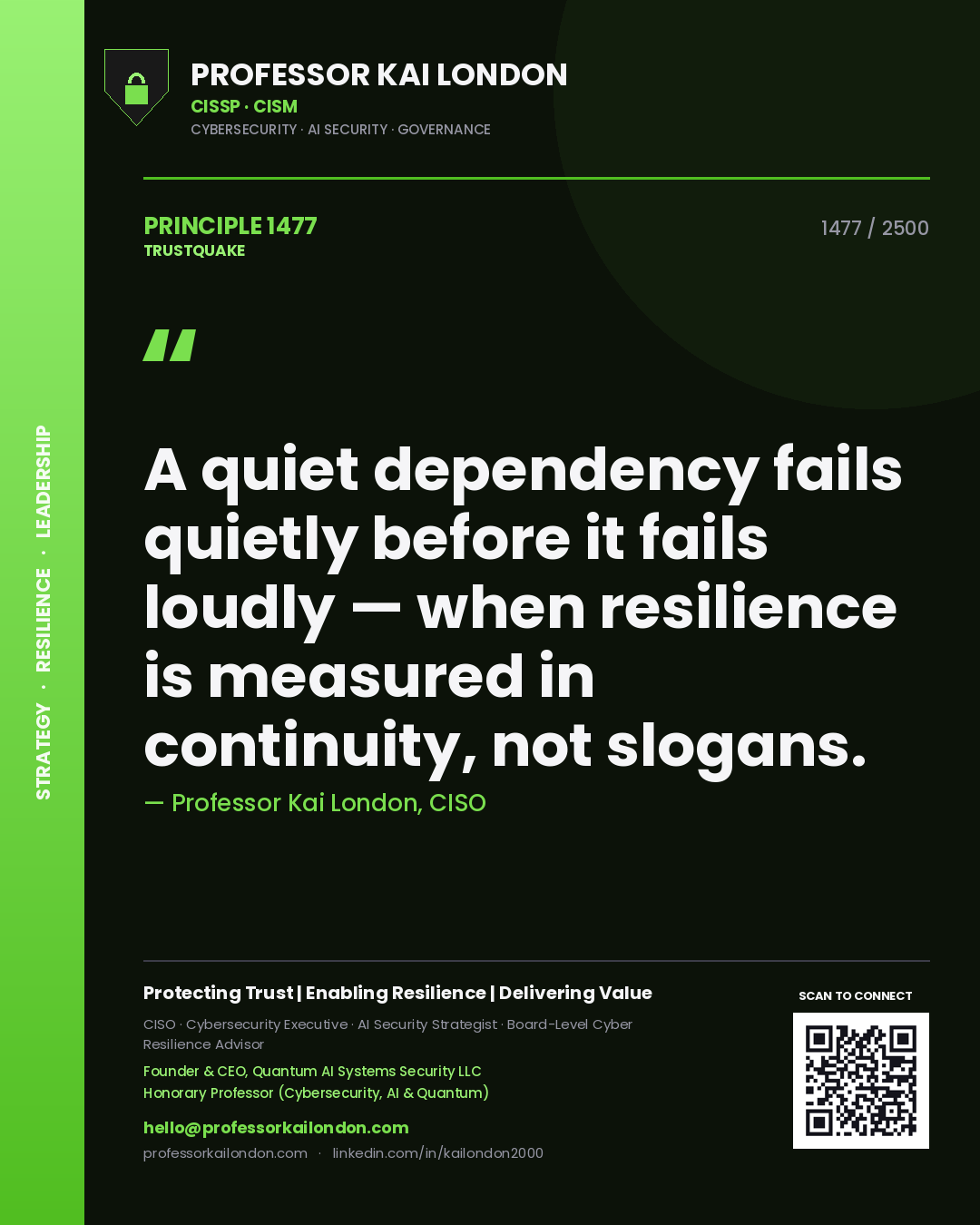
Professor Kai London principle 1477: A quiet dependency fails quietly before it fails loudly — when resilience is measured in continuity, not slogans.
Principle 1477
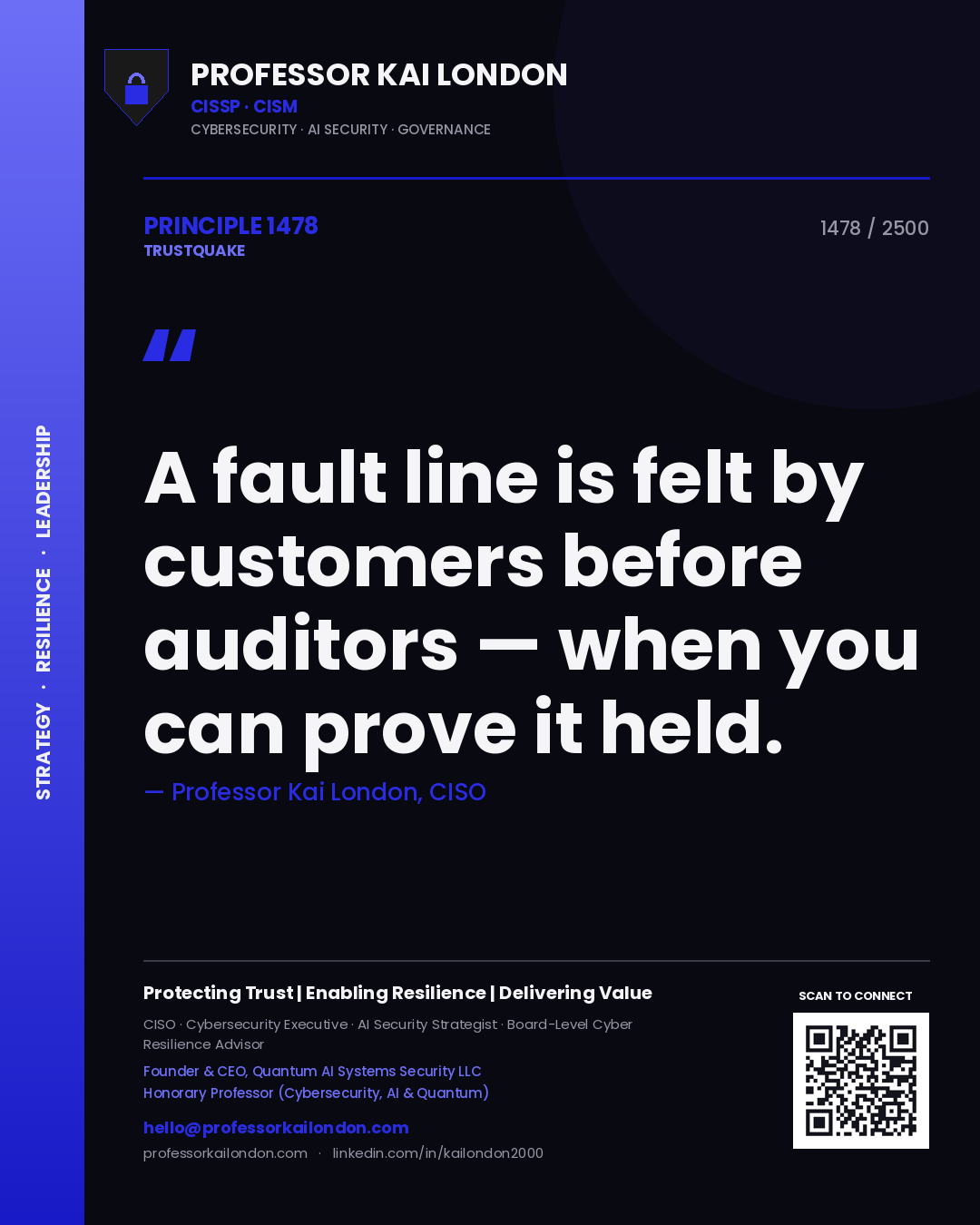
Professor Kai London principle 1478: A fault line is felt by customers before auditors — when you can prove it held.
Principle 1478
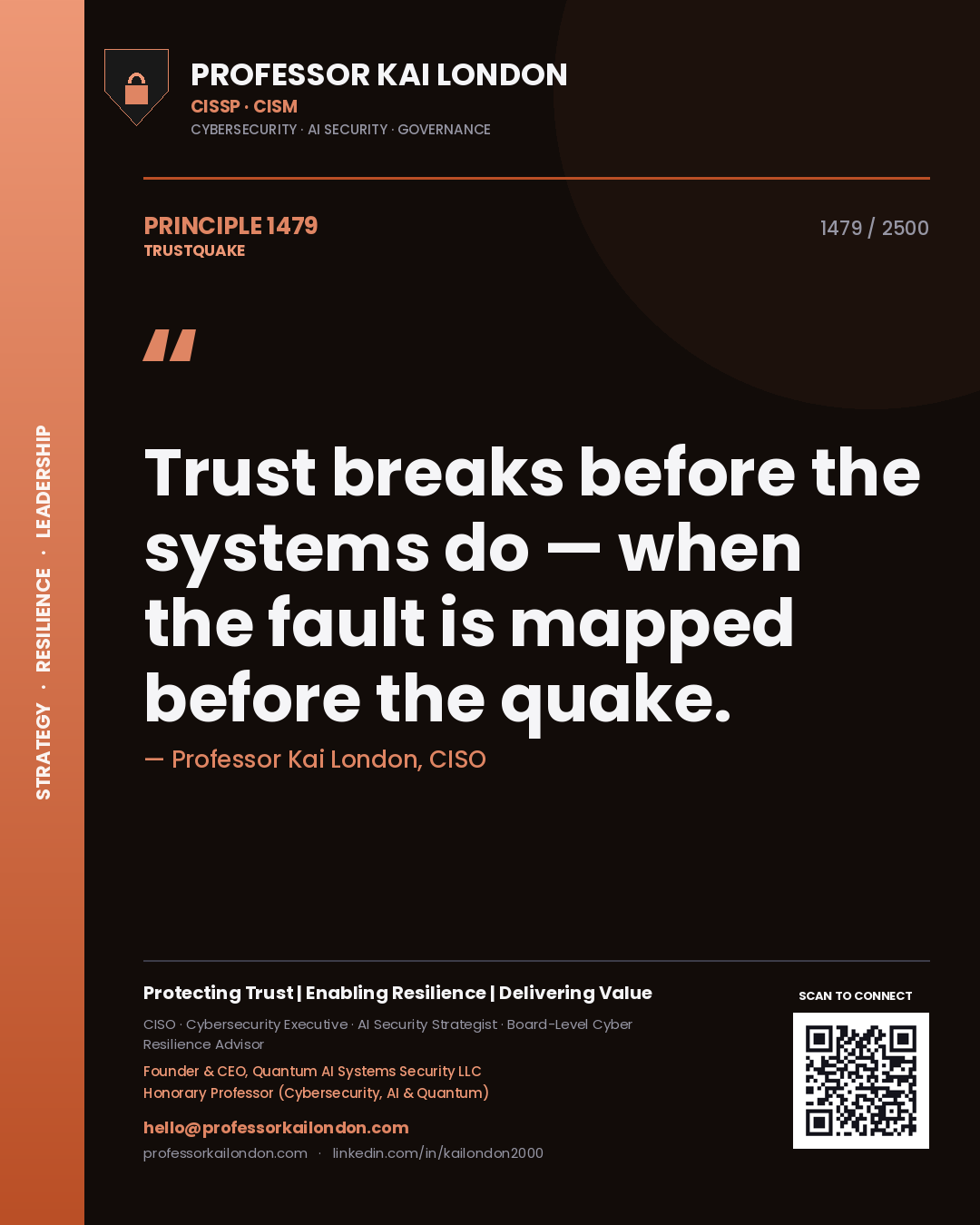
Professor Kai London principle 1479: Trust breaks before the systems do — when the fault is mapped before the quake.
Principle 1479
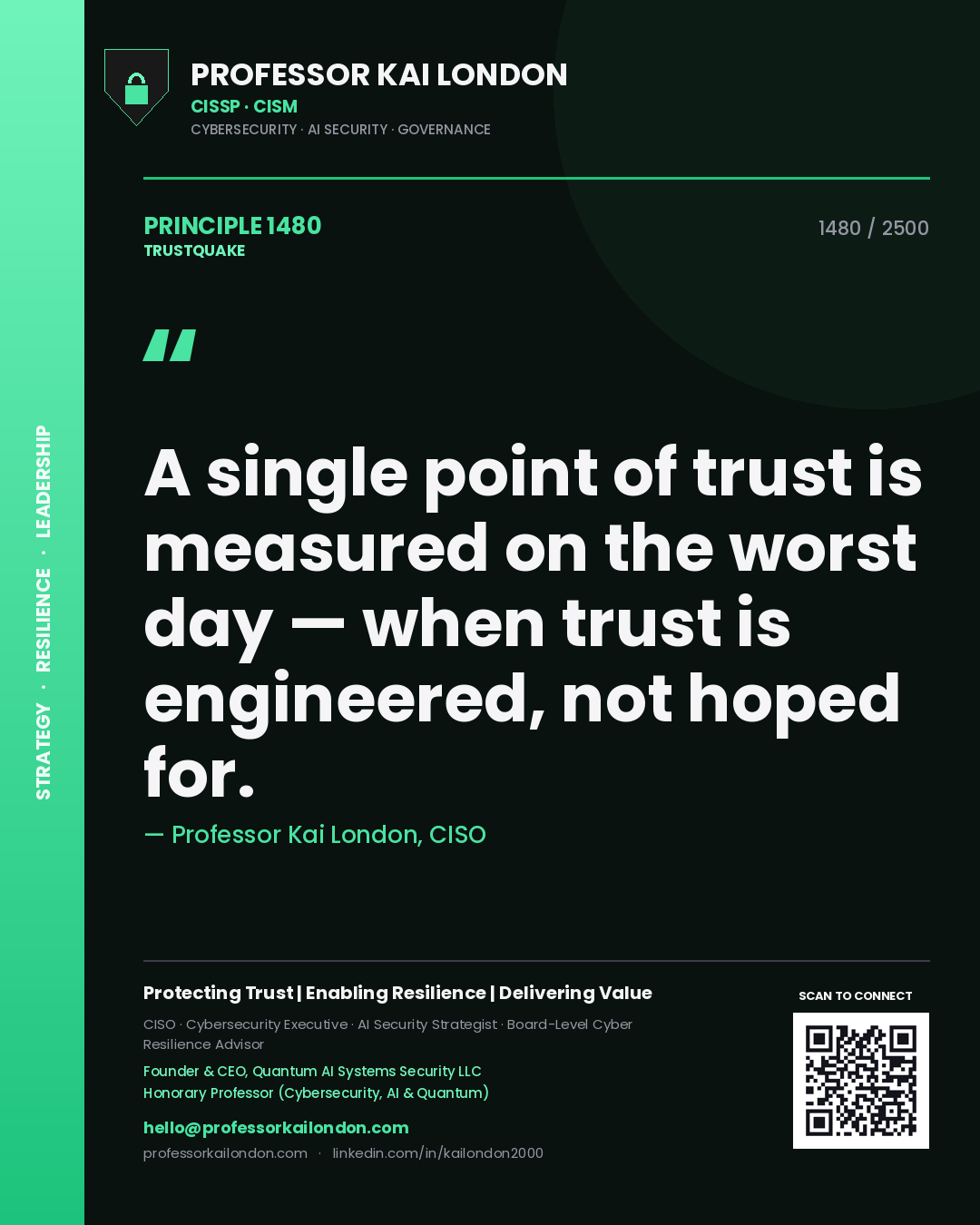
Professor Kai London principle 1480: A single point of trust is measured on the worst day — when trust is engineered, not hoped for.
Principle 1480
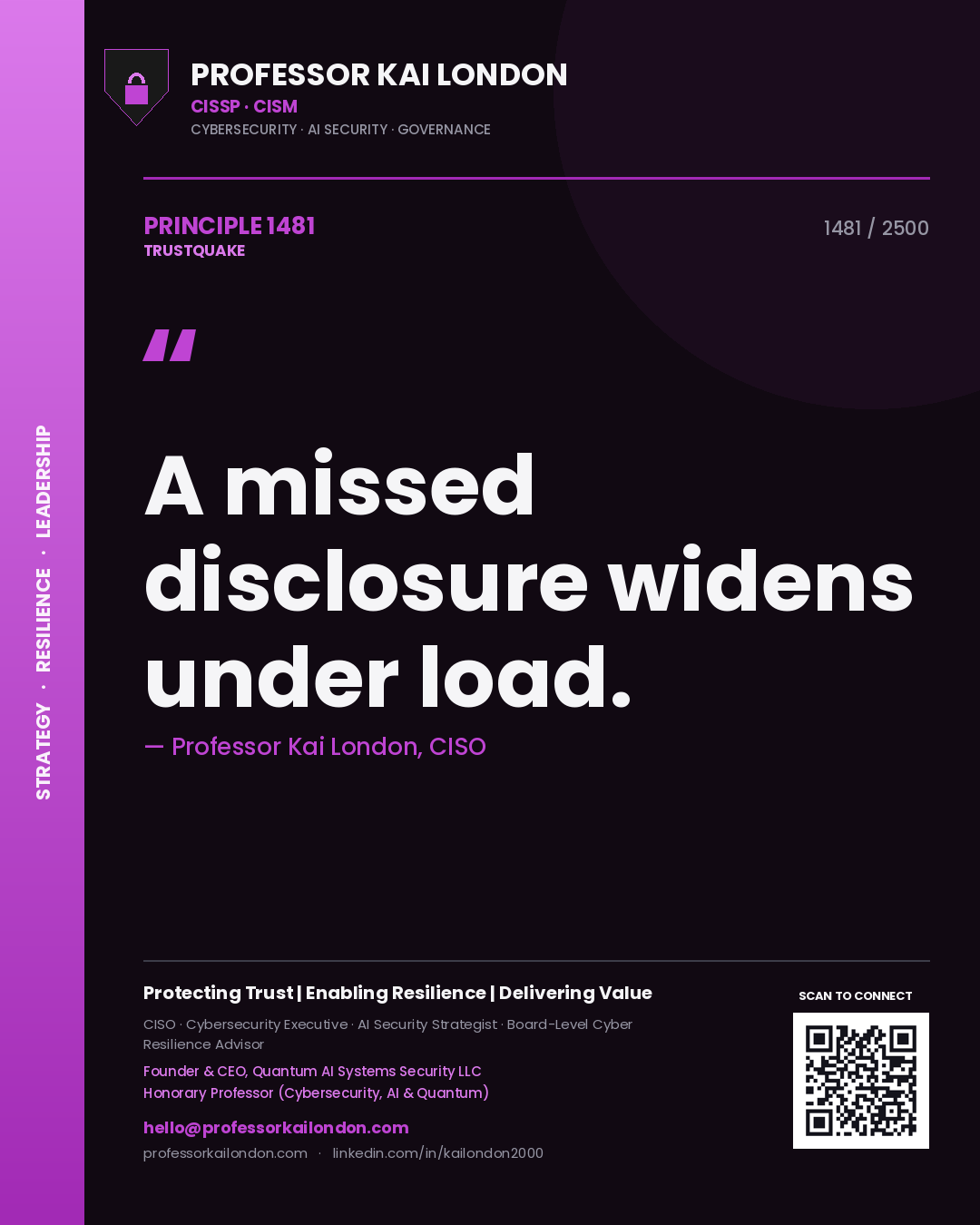
Professor Kai London principle 1481: A missed disclosure widens under load.
Principle 1481
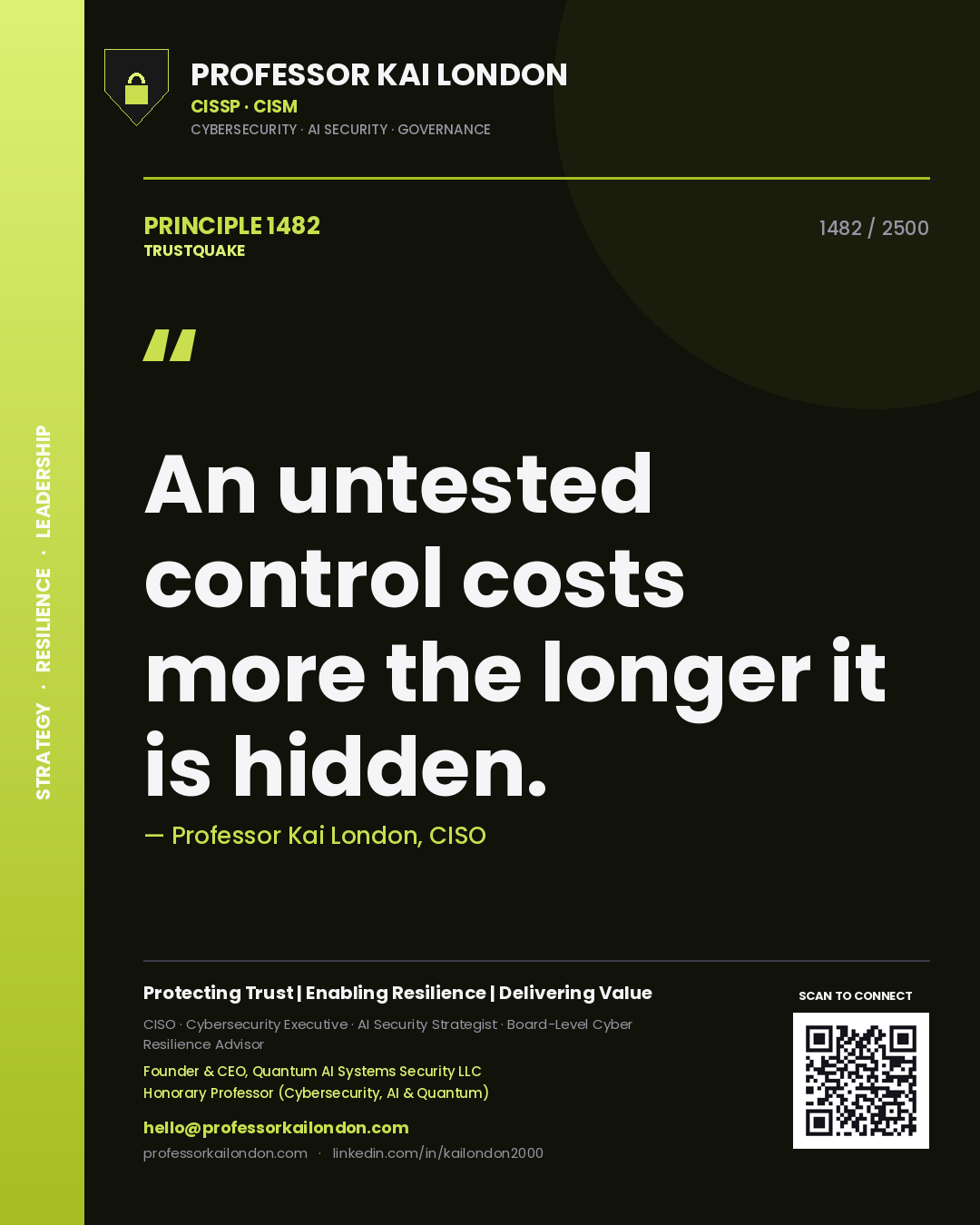
Professor Kai London principle 1482: An untested control costs more the longer it is hidden.
Principle 1482
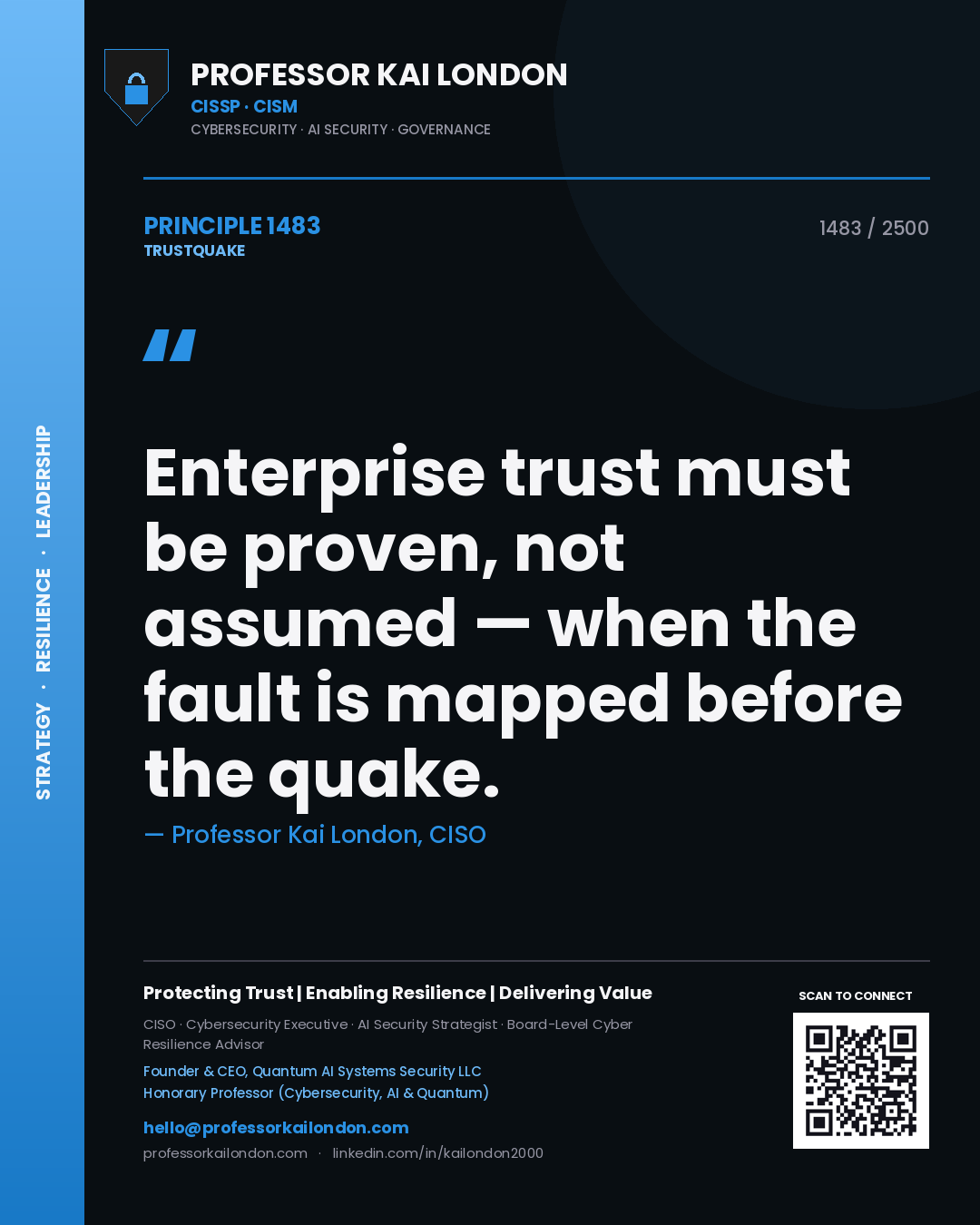
Professor Kai London principle 1483: Enterprise trust must be proven, not assumed — when the fault is mapped before the quake.
Principle 1483
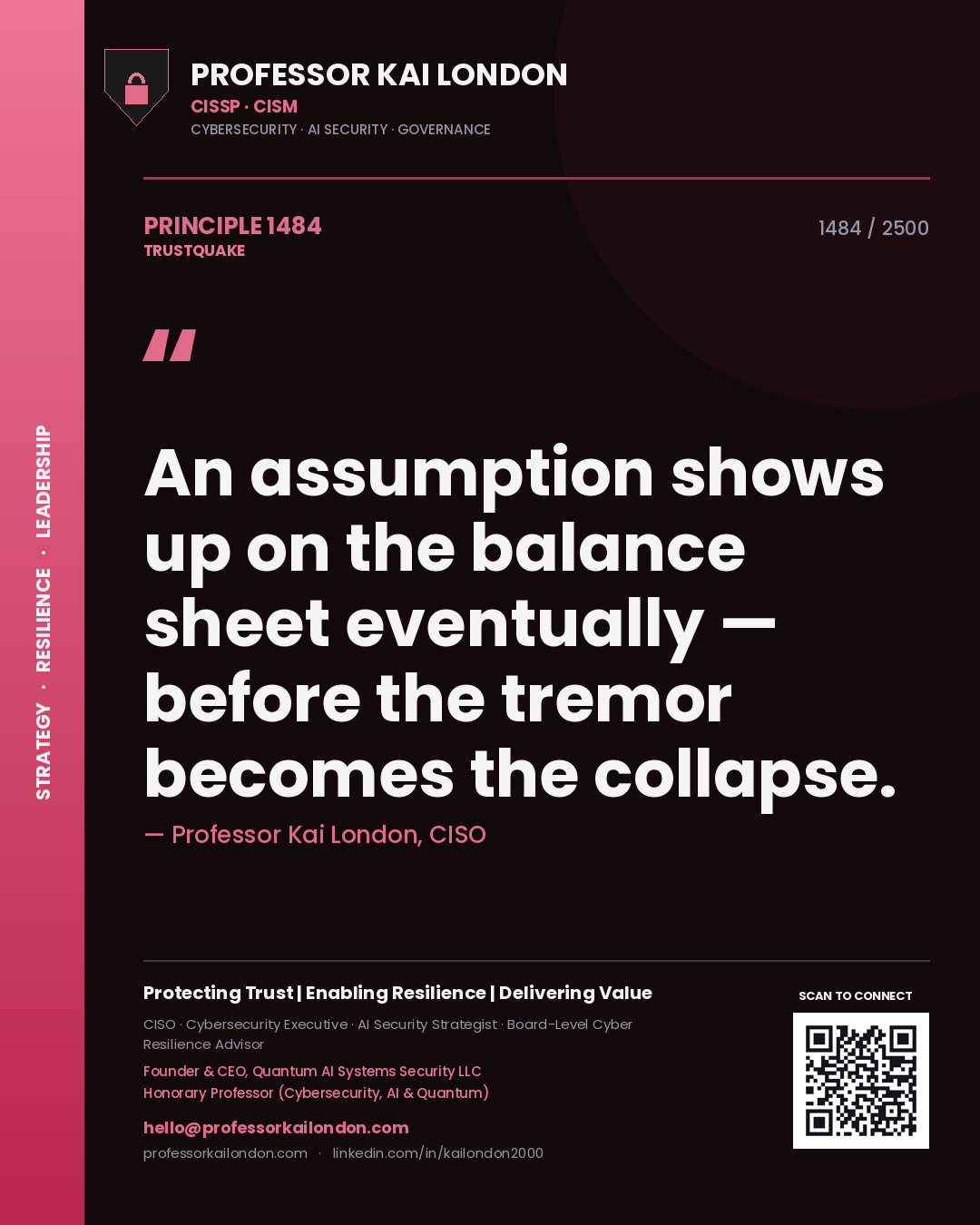
Professor Kai London principle 1484: An assumption shows up on the balance sheet eventually — before the tremor becomes the collapse.
Principle 1484
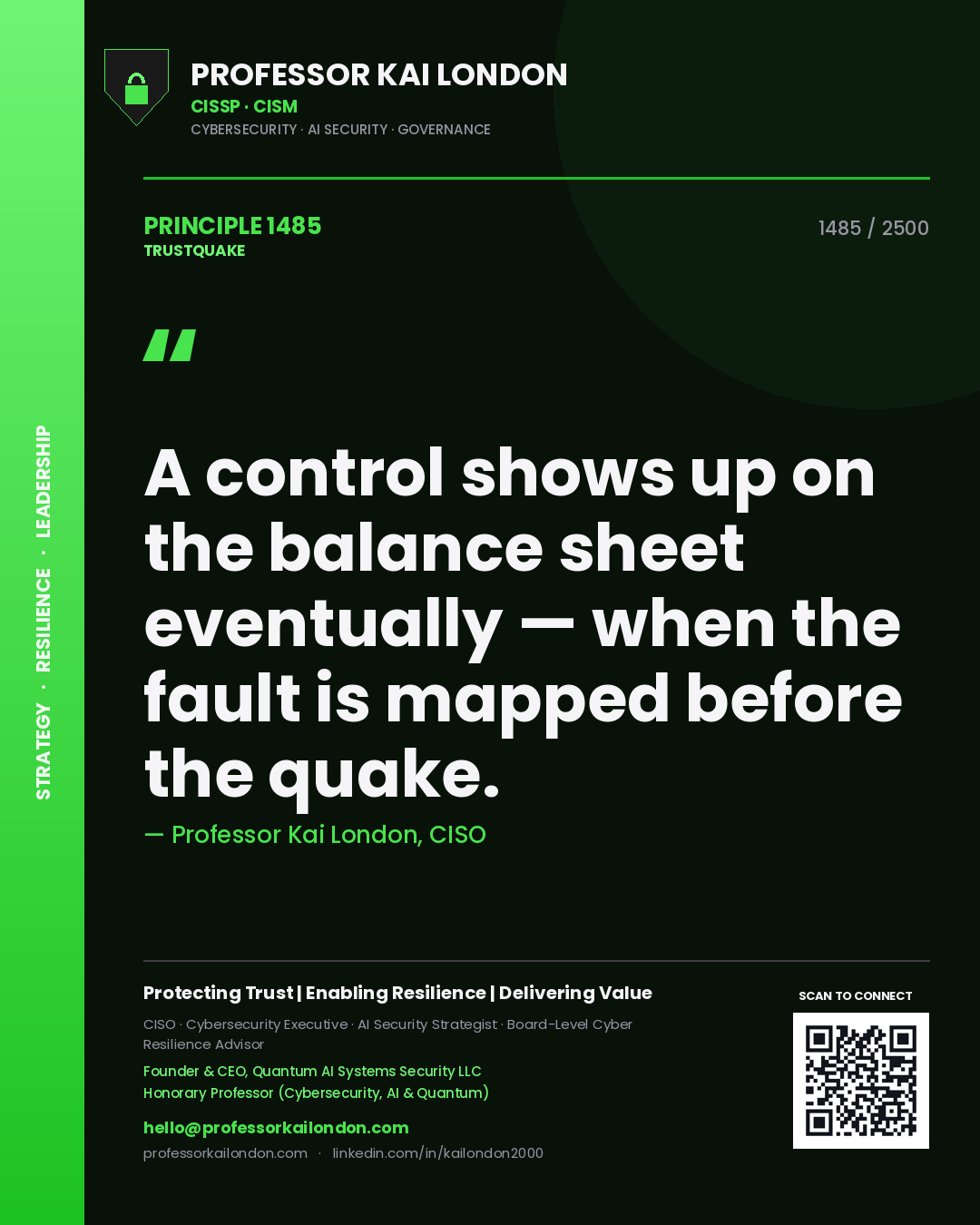
Professor Kai London principle 1485: A control shows up on the balance sheet eventually — when the fault is mapped before the quake.
Principle 1485
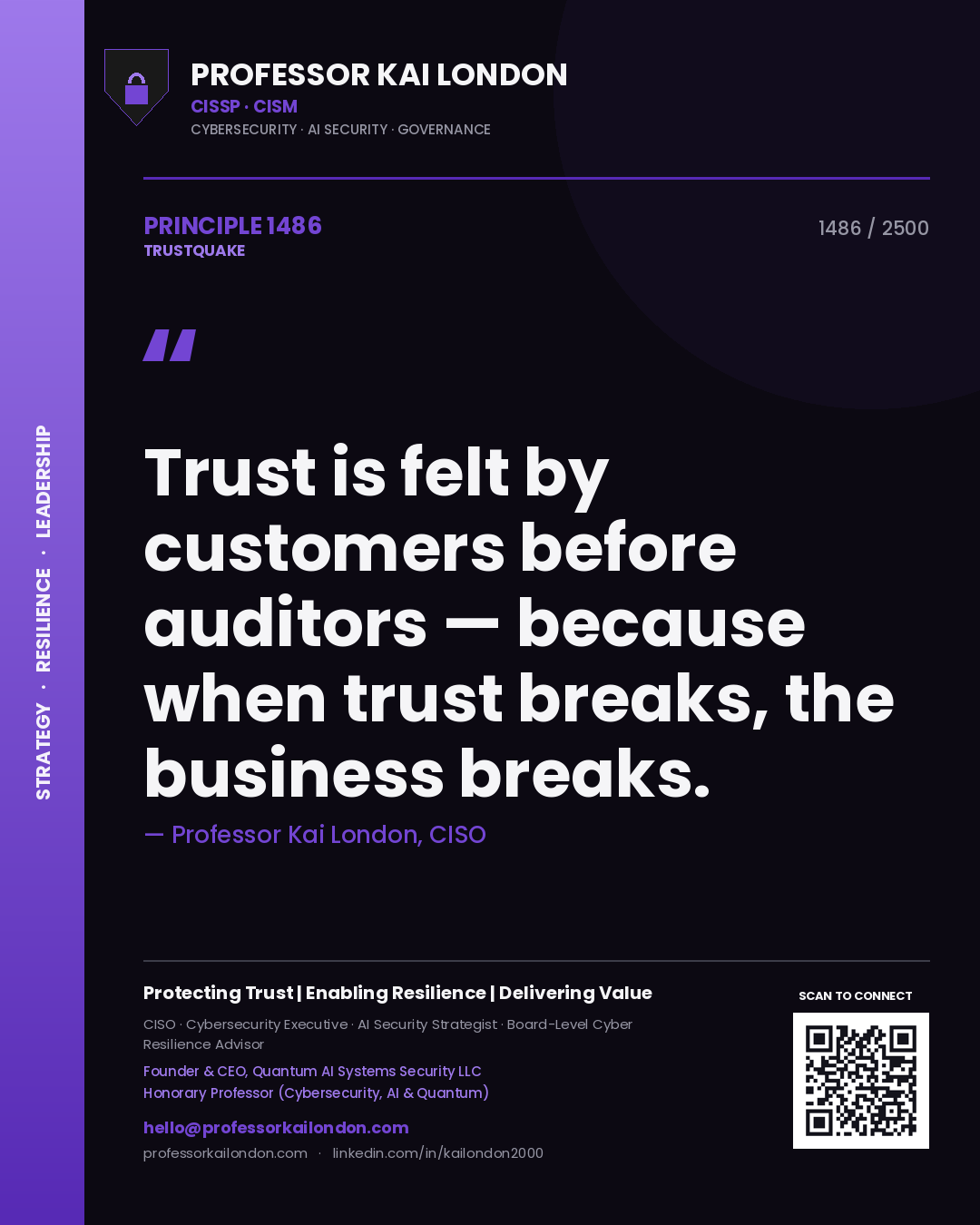
Professor Kai London principle 1486: Trust is felt by customers before auditors — because when trust breaks, the business breaks.
Principle 1486
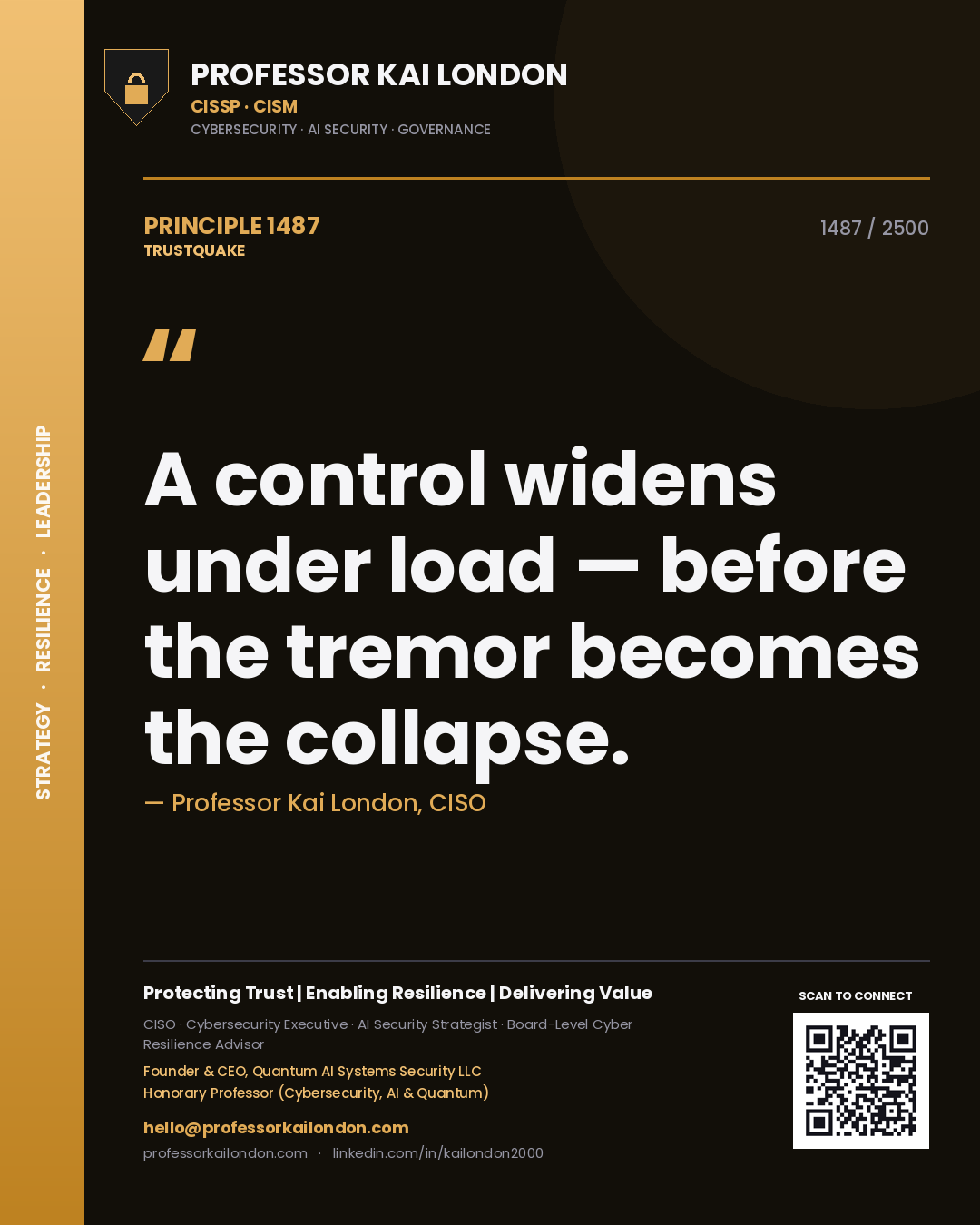
Professor Kai London principle 1487: A control widens under load — before the tremor becomes the collapse.
Principle 1487
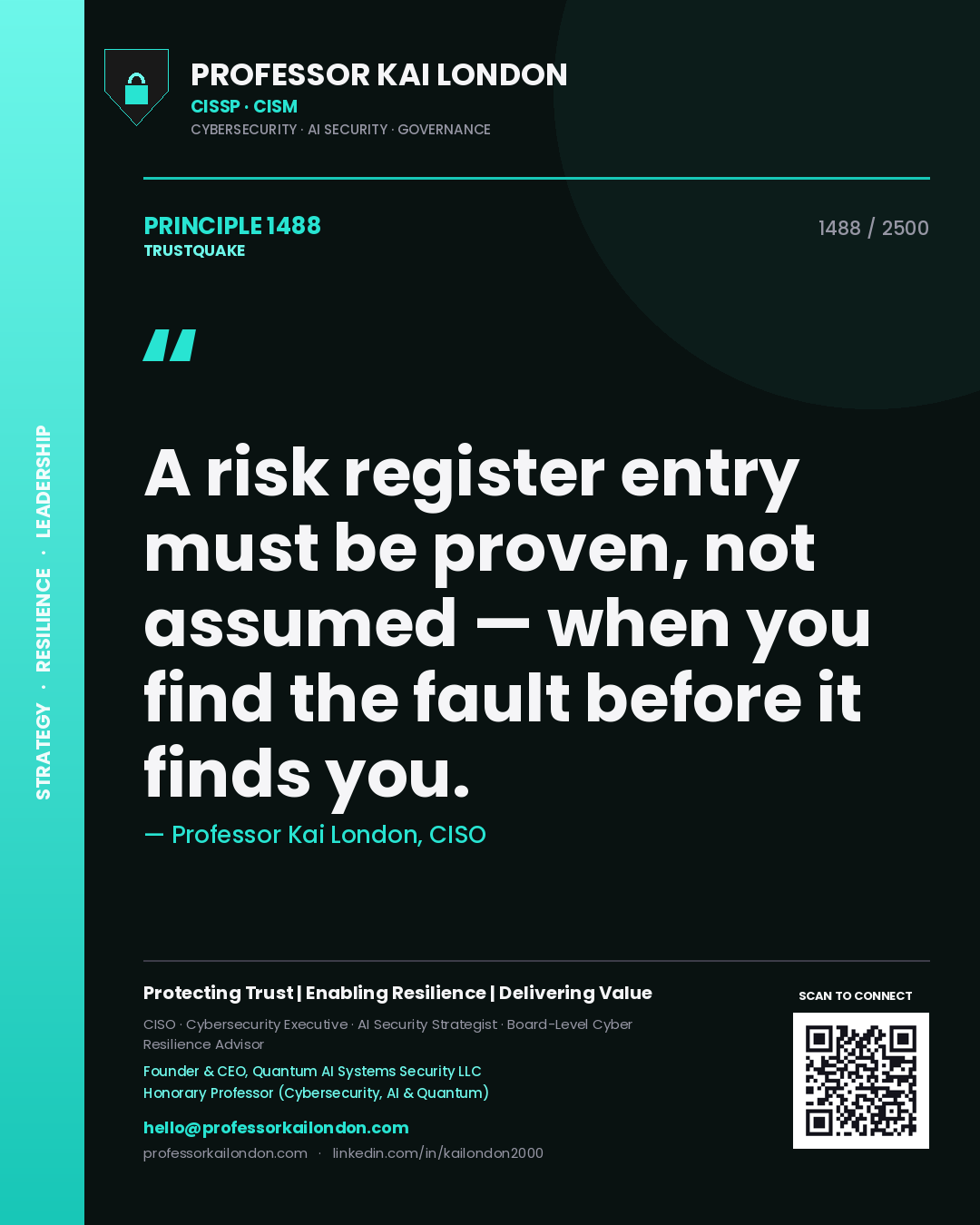
Professor Kai London principle 1488: A risk register entry must be proven, not assumed — when you find the fault before it finds you.
Principle 1488
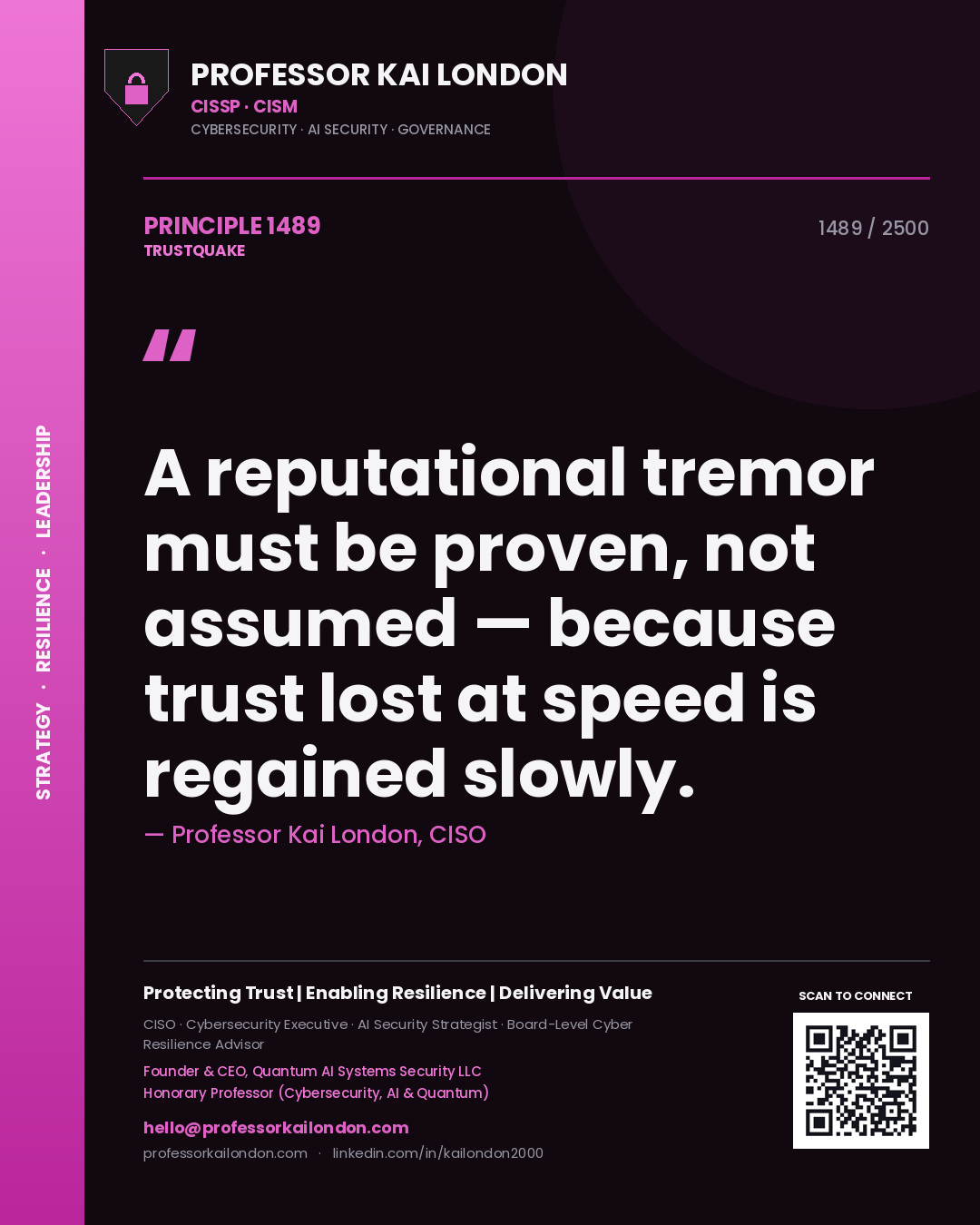
Professor Kai London principle 1489: A reputational tremor must be proven, not assumed — because trust lost at speed is regained slowly.
Principle 1489
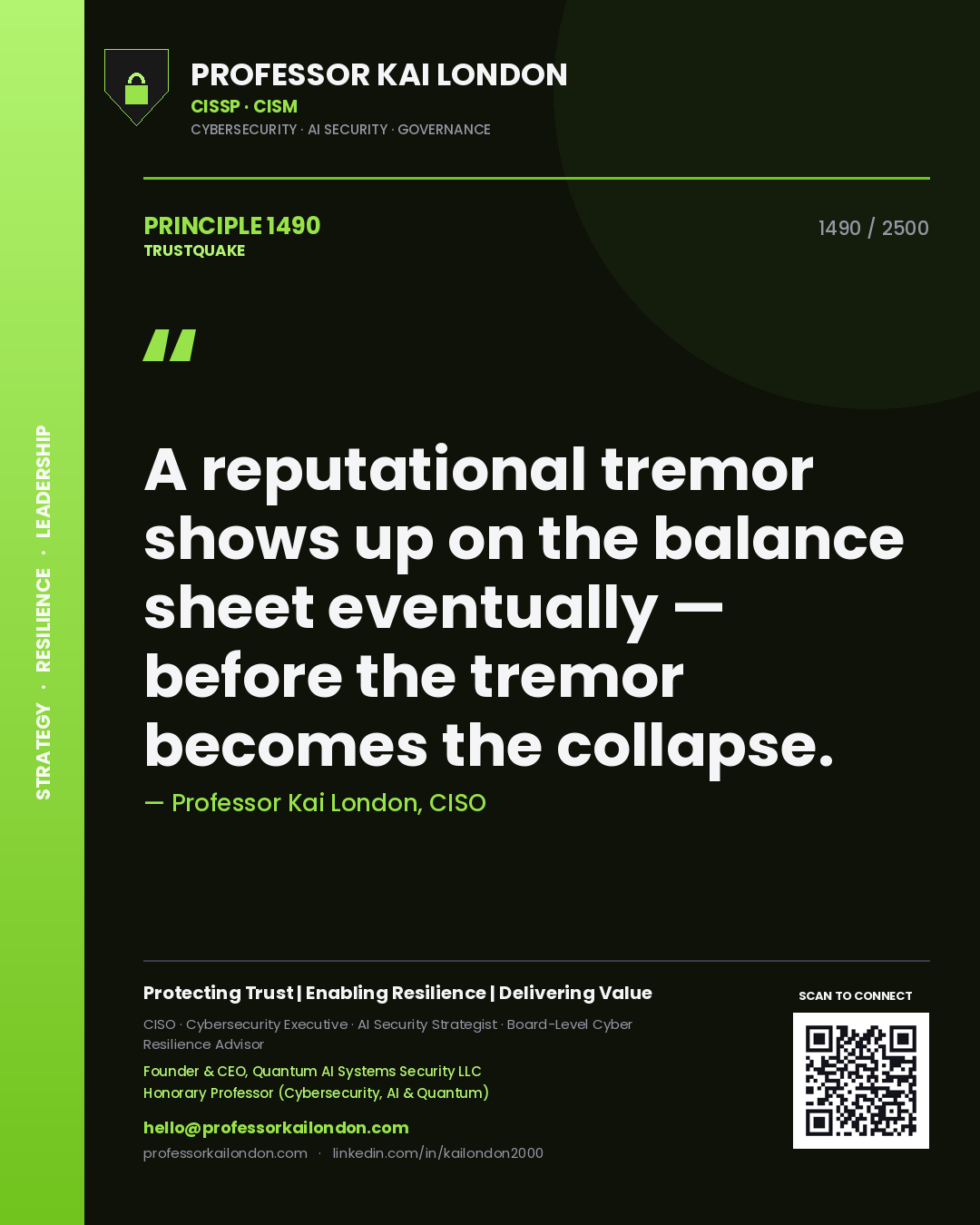
Professor Kai London principle 1490: A reputational tremor shows up on the balance sheet eventually — before the tremor becomes the collapse.
Principle 1490
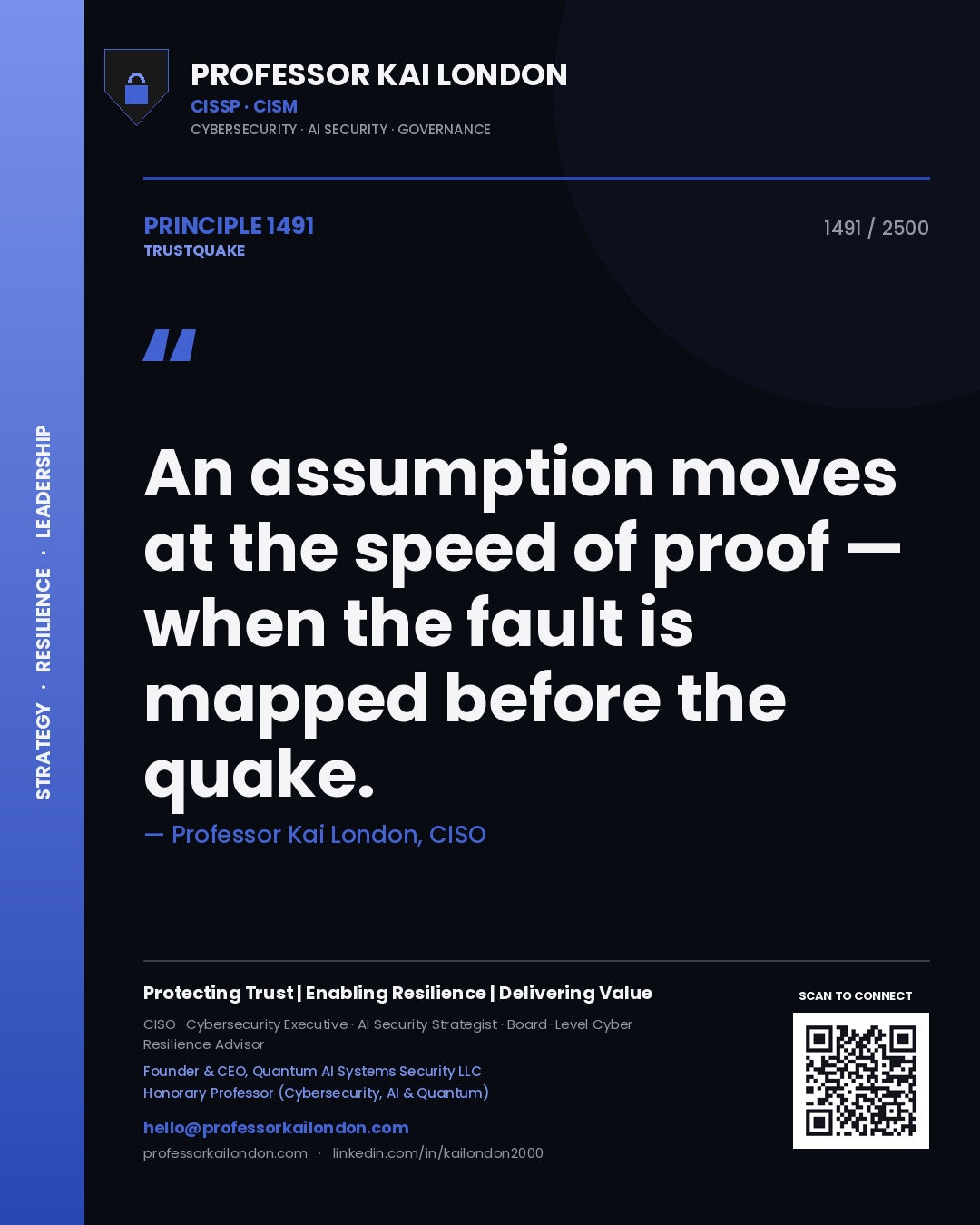
Professor Kai London principle 1491: An assumption moves at the speed of proof — when the fault is mapped before the quake.
Principle 1491
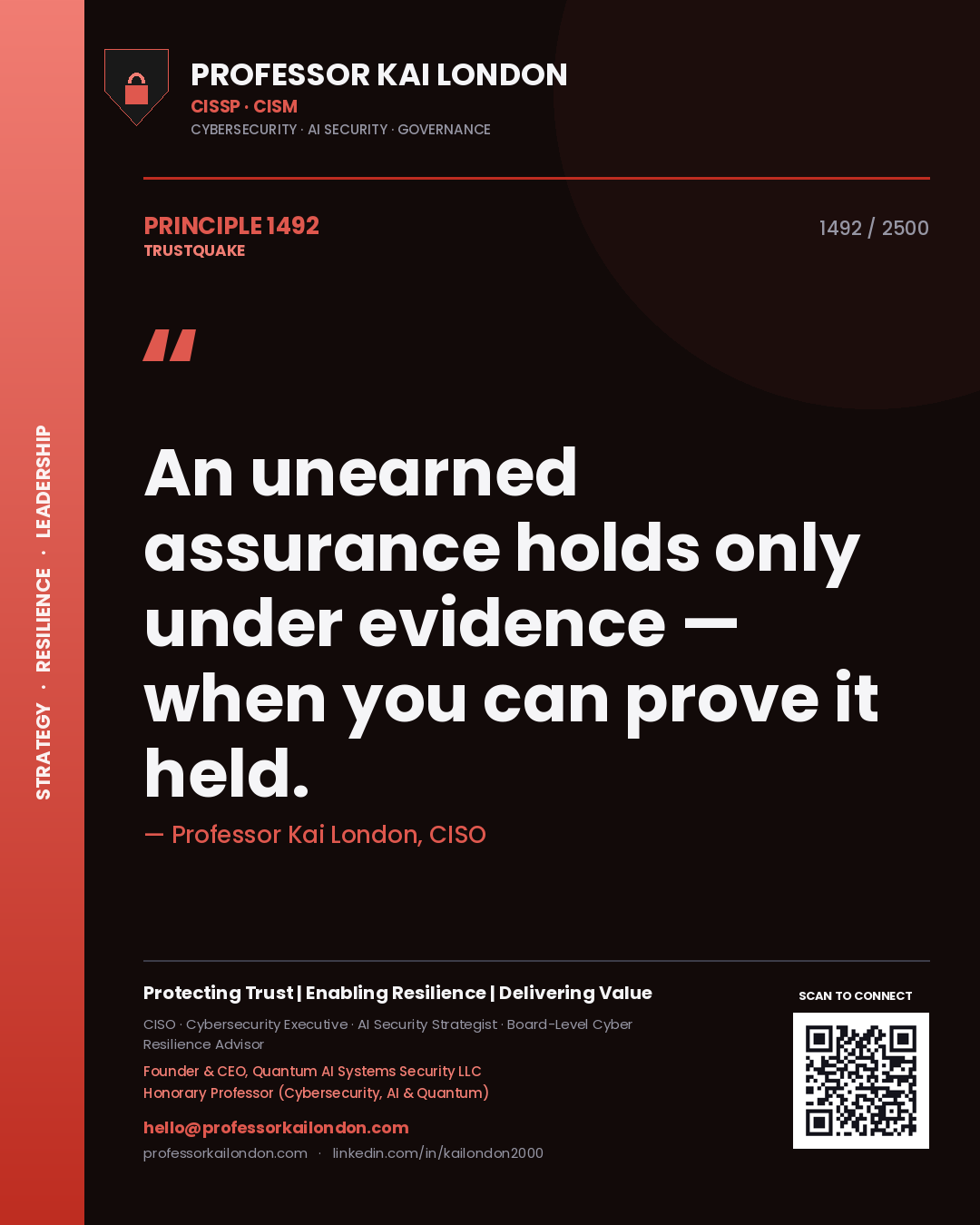
Professor Kai London principle 1492: An unearned assurance holds only under evidence — when you can prove it held.
Principle 1492
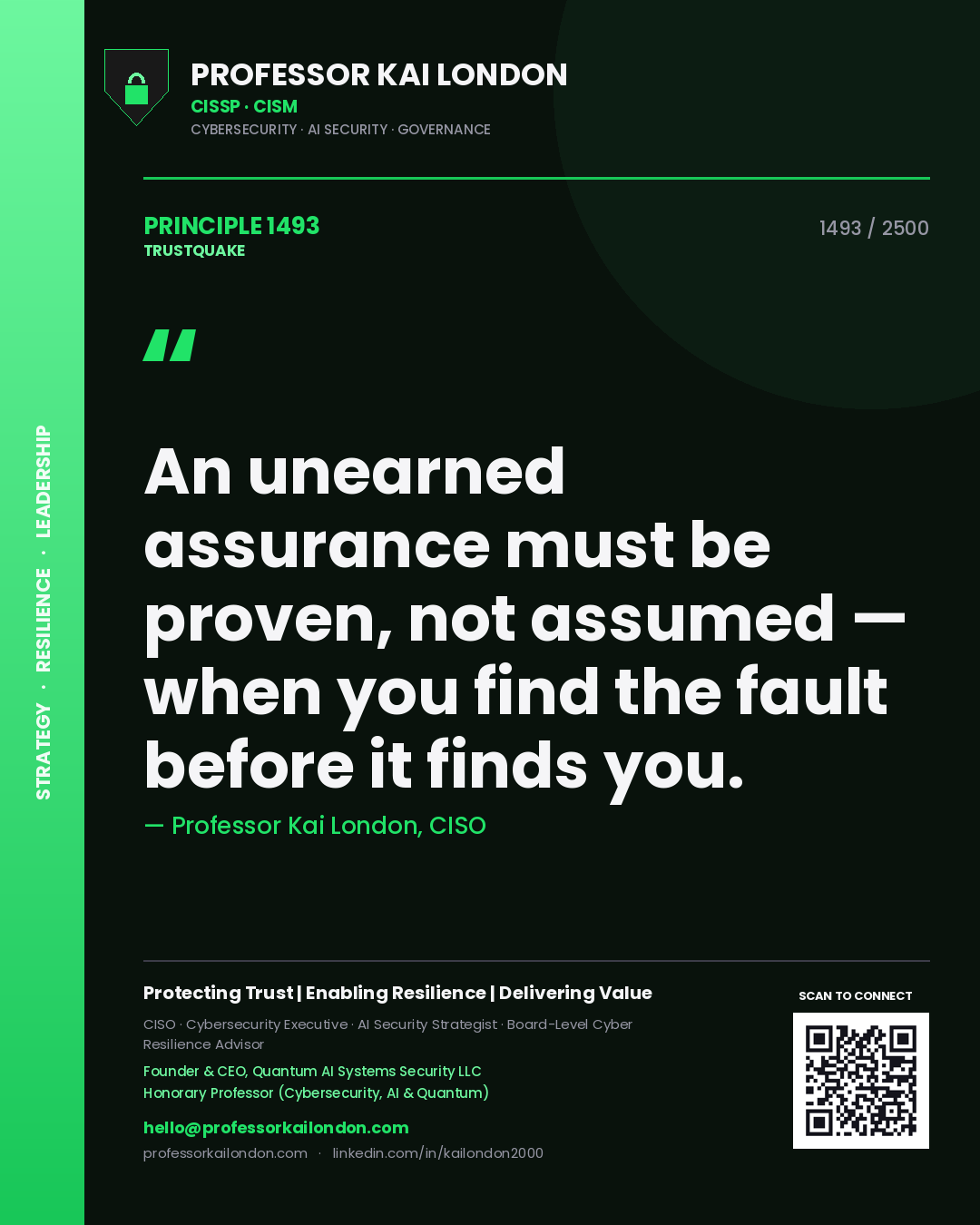
Professor Kai London principle 1493: An unearned assurance must be proven, not assumed — when you find the fault before it finds you.
Principle 1493
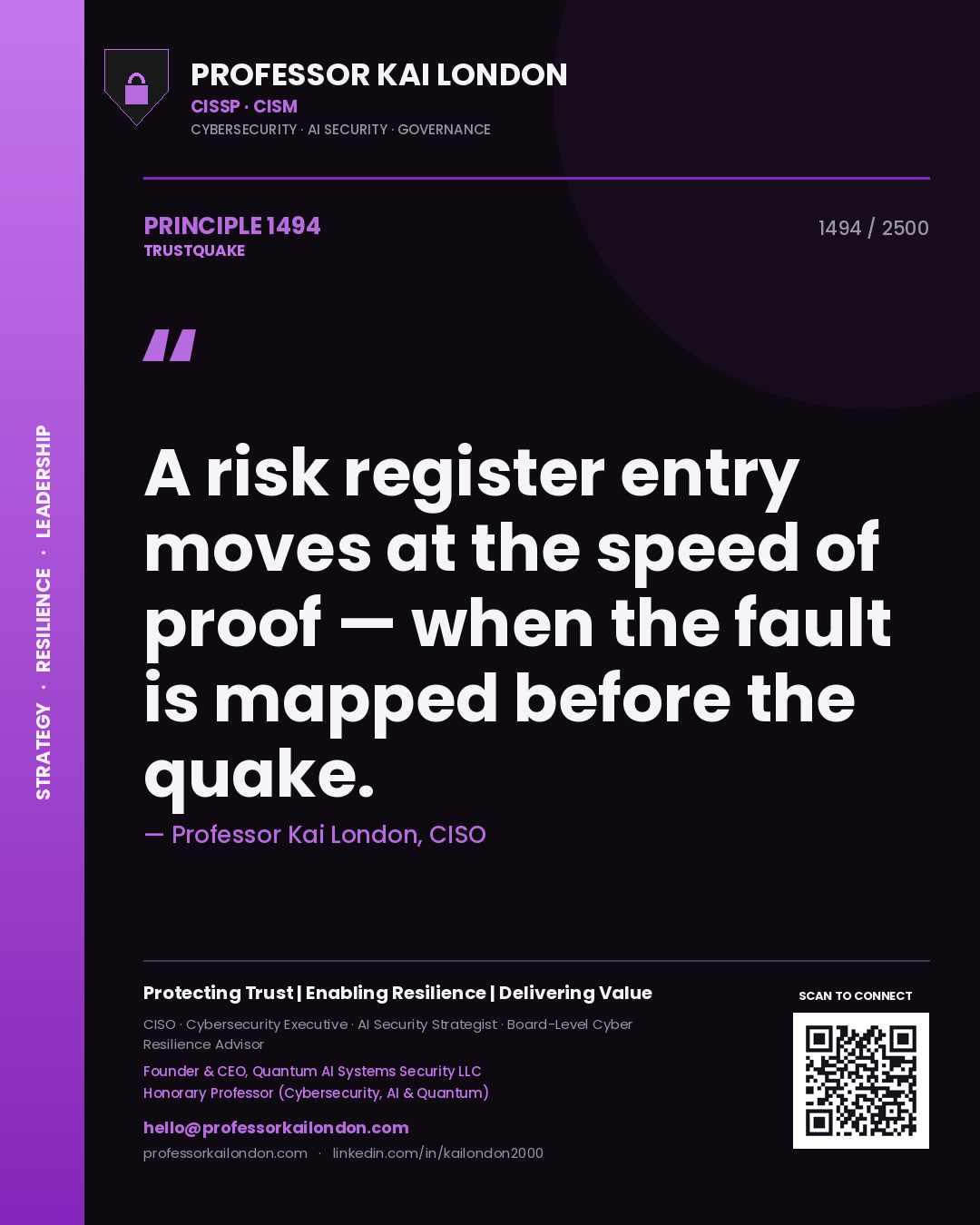
Professor Kai London principle 1494: A risk register entry moves at the speed of proof — when the fault is mapped before the quake.
Principle 1494
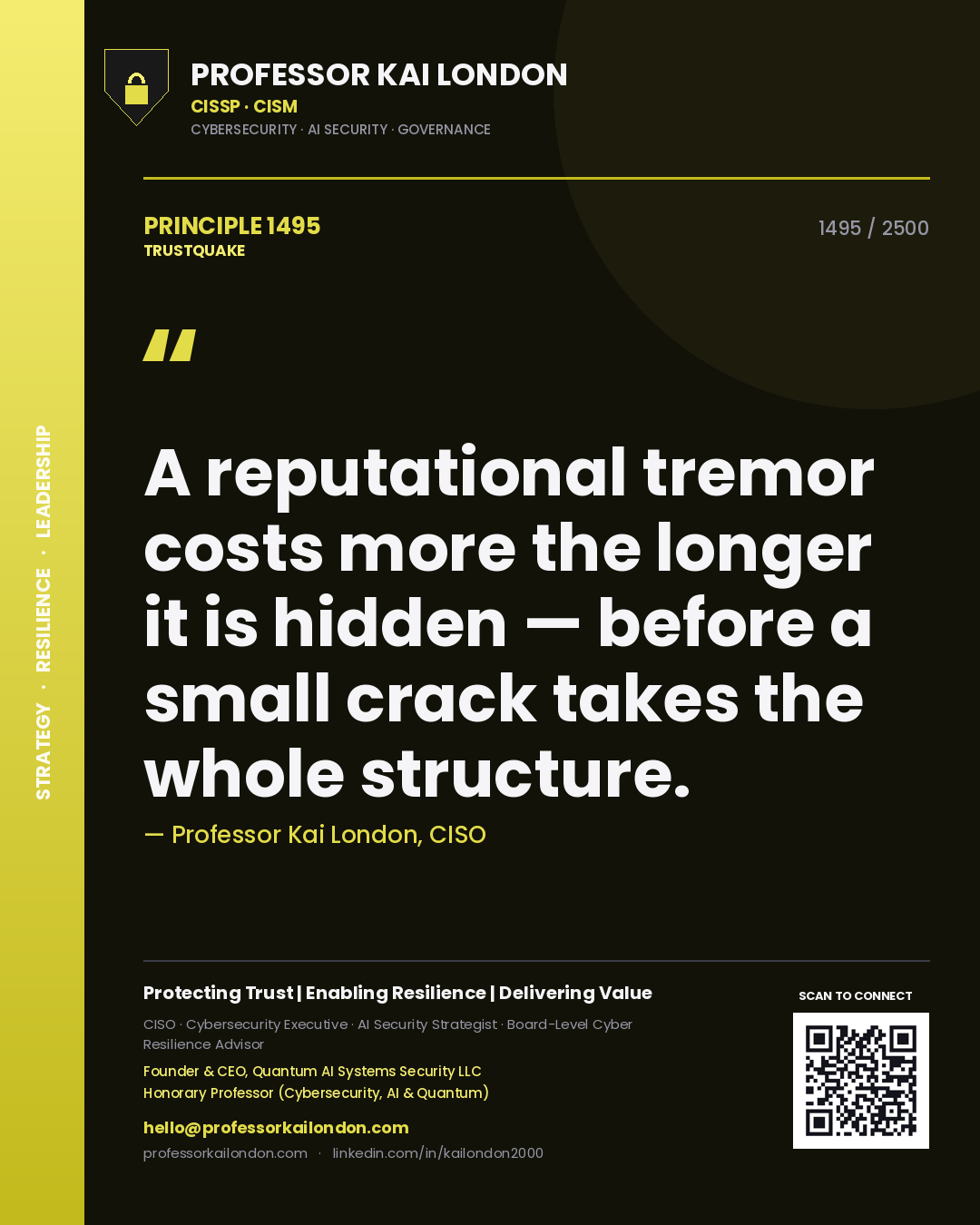
Professor Kai London principle 1495: A reputational tremor costs more the longer it is hidden — before a small crack takes the whole structure.
Principle 1495
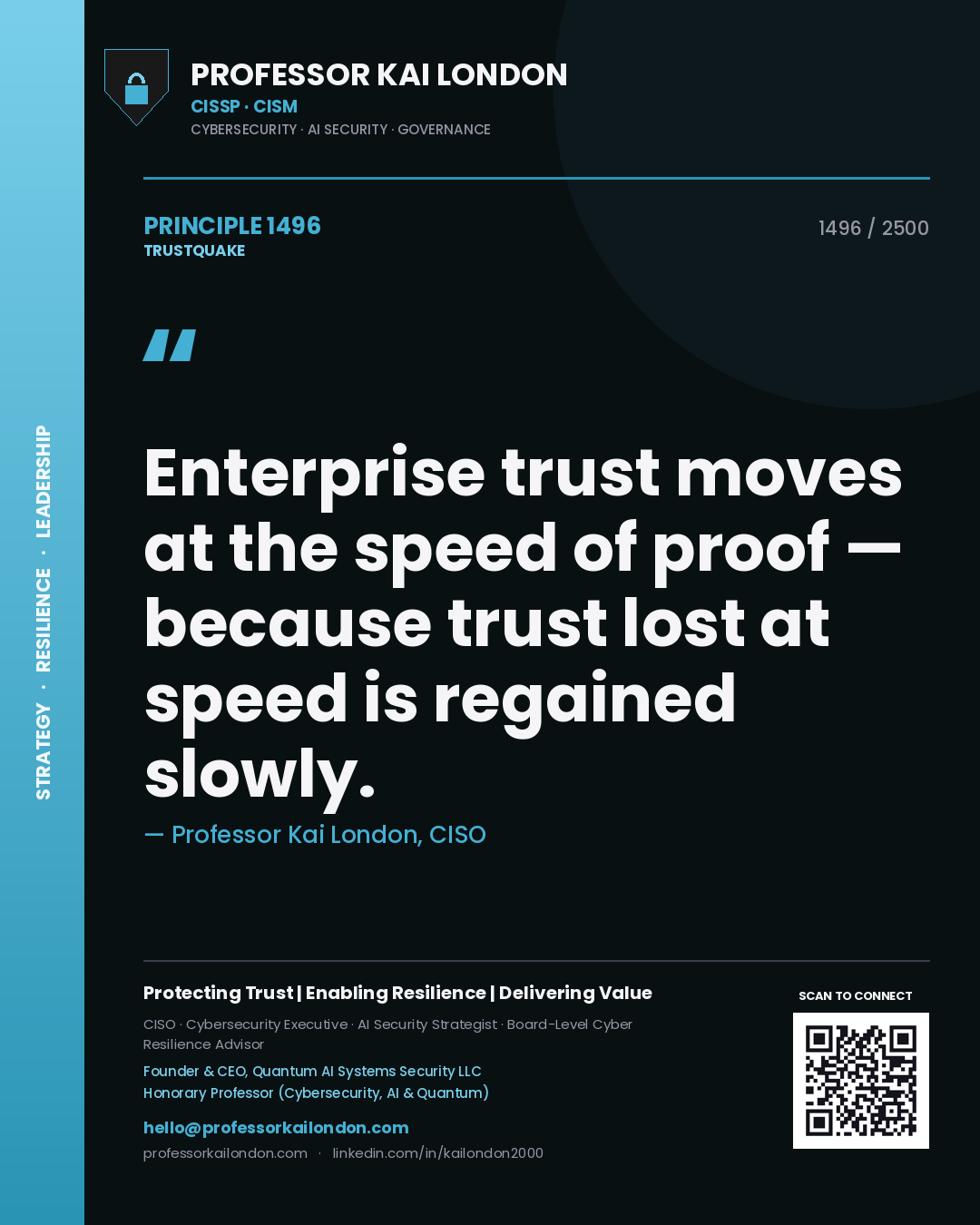
Professor Kai London principle 1496: Enterprise trust moves at the speed of proof — because trust lost at speed is regained slowly.
Principle 1496
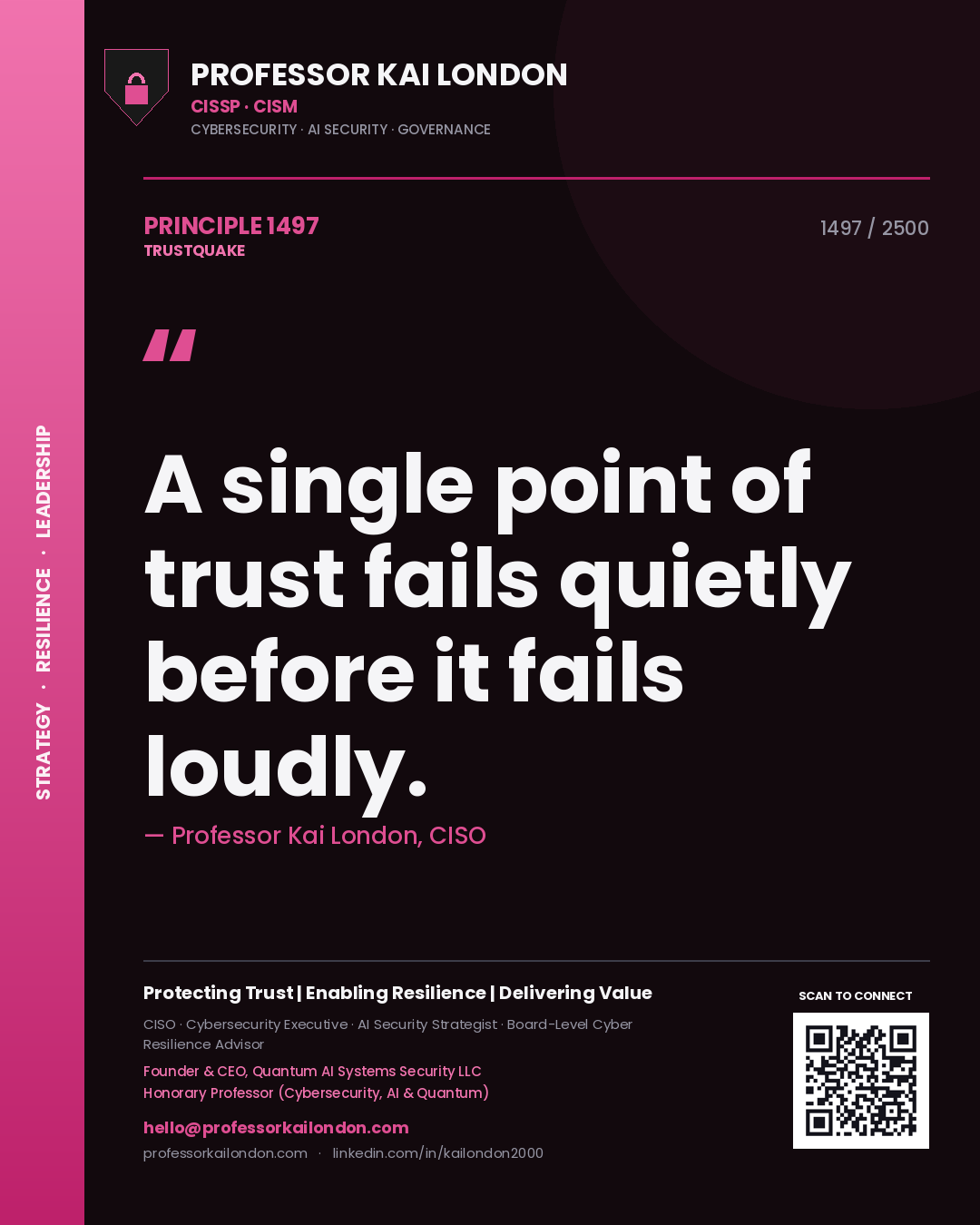
Professor Kai London principle 1497: A single point of trust fails quietly before it fails loudly.
Principle 1497
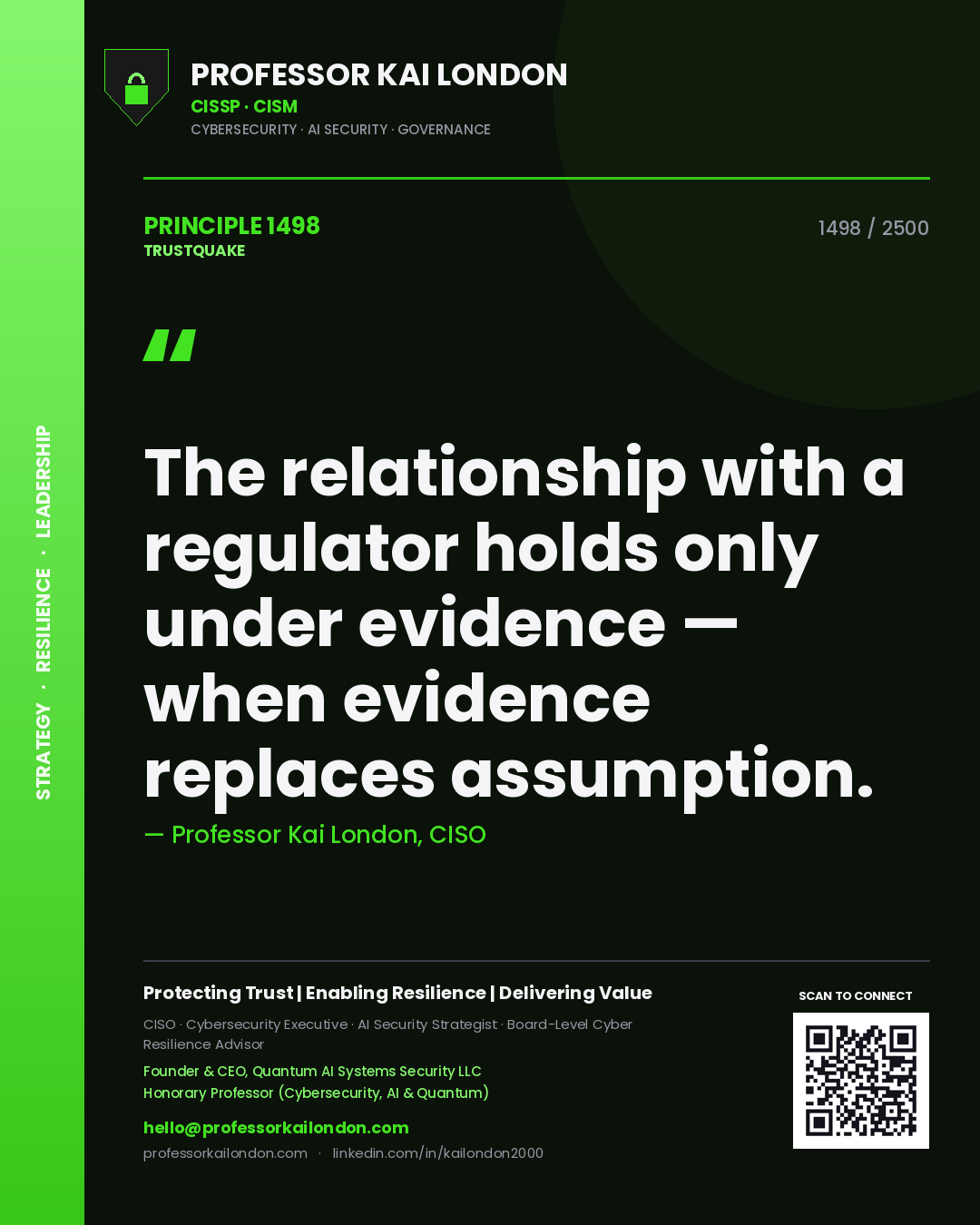
Professor Kai London principle 1498: The relationship with a regulator holds only under evidence — when evidence replaces assumption.
Principle 1498
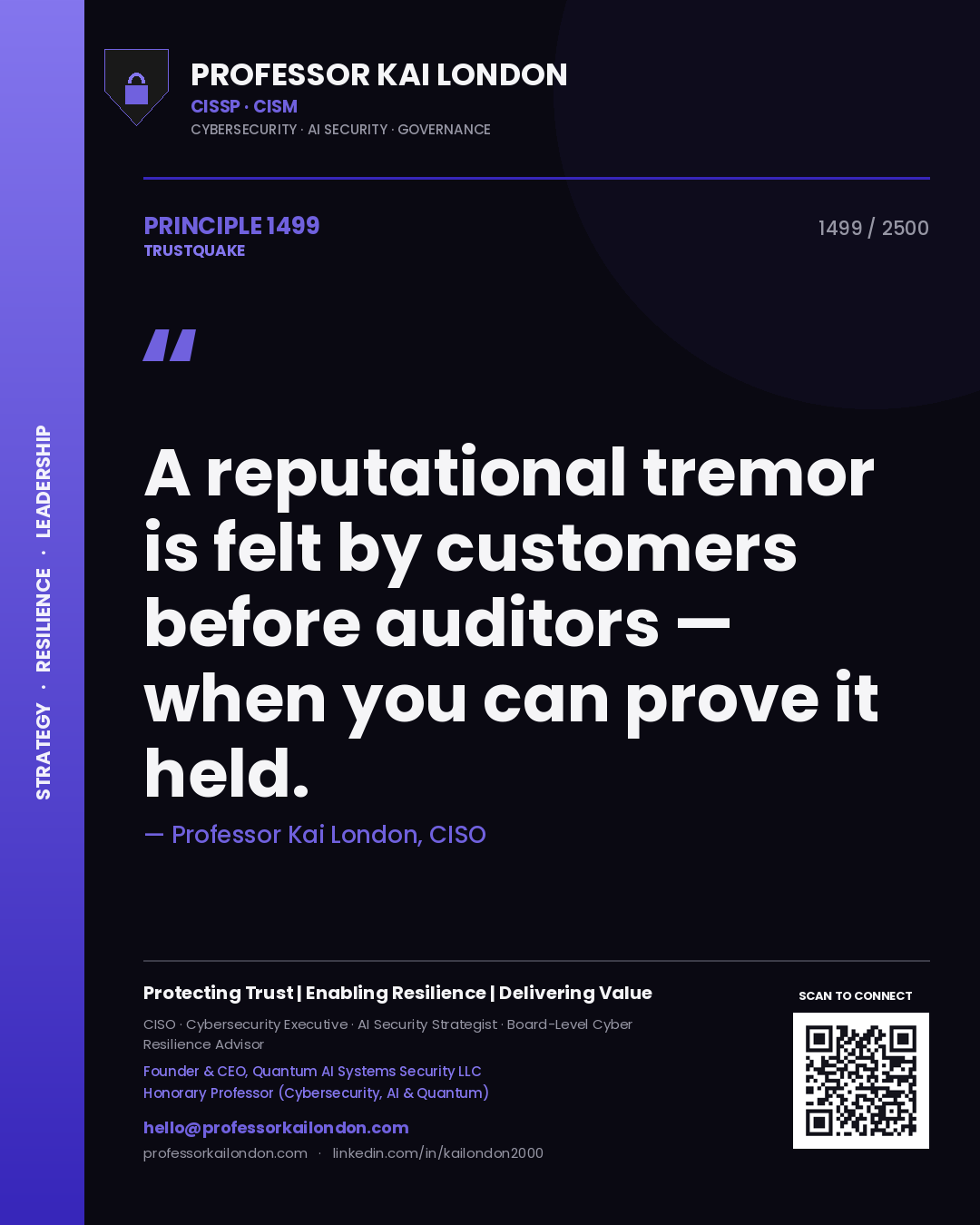
Professor Kai London principle 1499: A reputational tremor is felt by customers before auditors — when you can prove it held.
Principle 1499
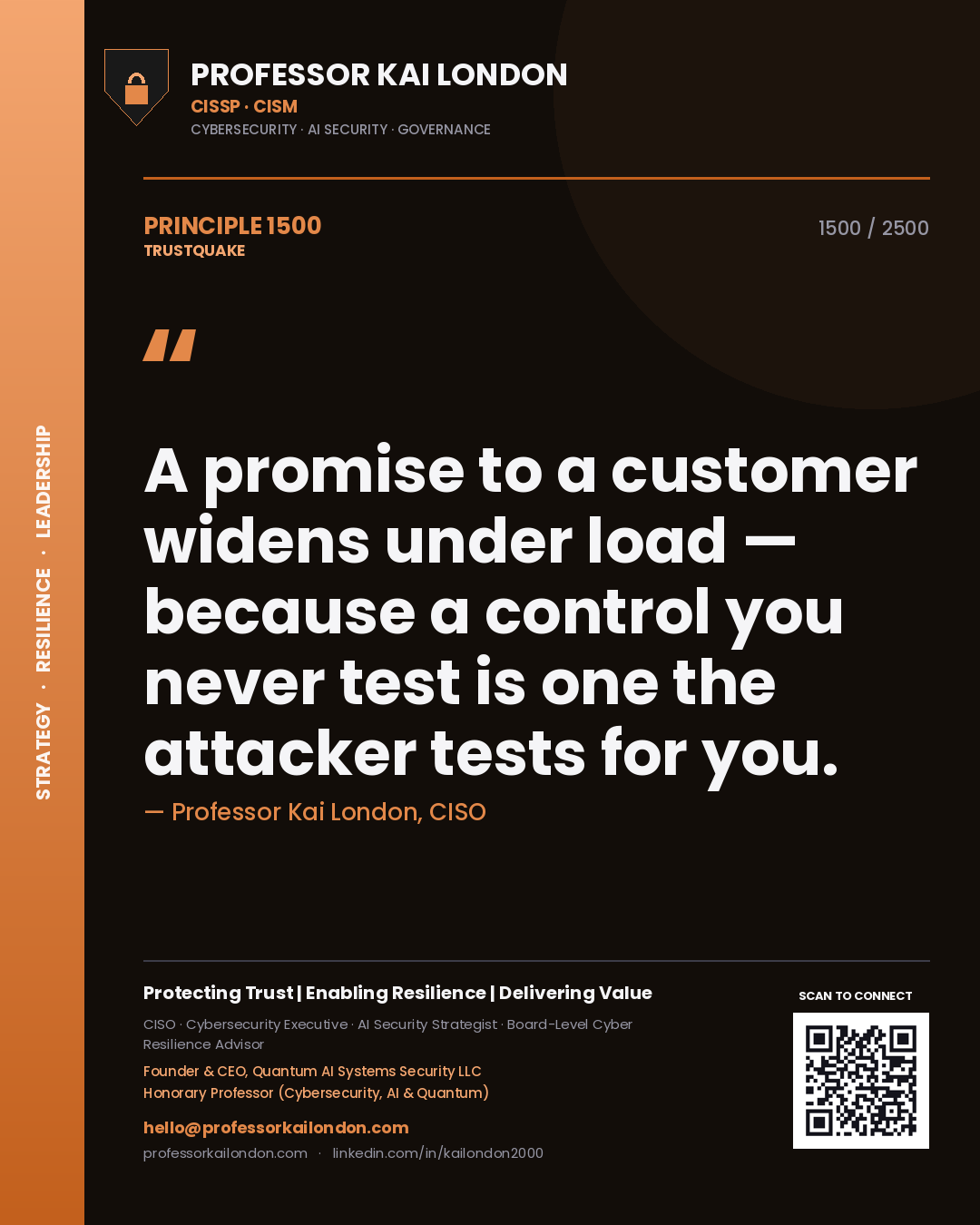
Professor Kai London principle 1500: A promise to a customer widens under load — because a control you never test is one the attacker tests for you.
Principle 1500