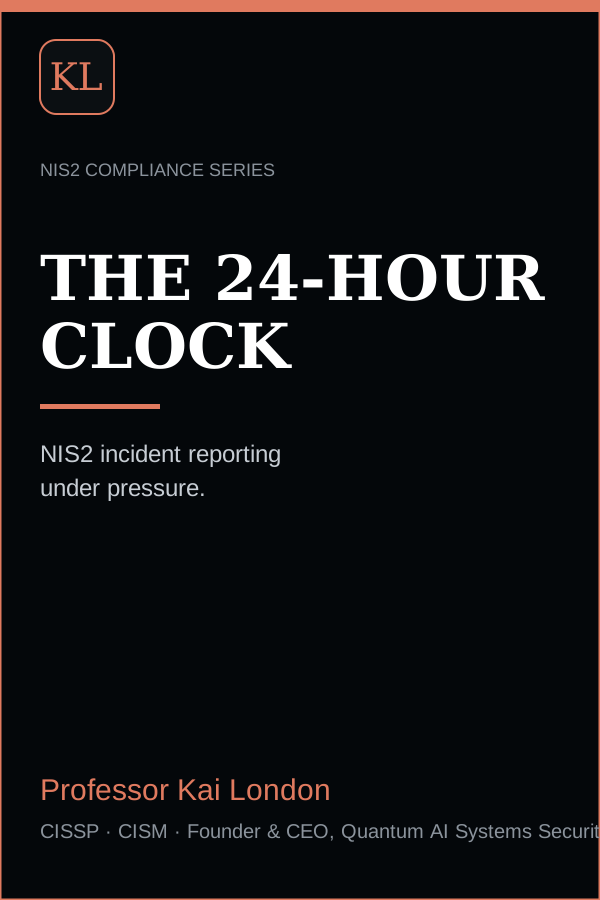
The 24-Hour Clock
NIS2 incident reporting under pressure — the clock starts before you know what happened.
Amazon ↗Quantum AI Systems Security is a deep-tech venture founded and led by Professor Kai London — built where quantum computing, artificial intelligence, and cybersecurity meet. Its work is to anticipate the next generation of threat and engineer the defences that outlast it: post-quantum resilience, AI-aware security, and architectures that stay trustworthy as the technology landscape shifts beneath them.
The venture
Quantum AI Systems Security exists for a moment few organisations are ready for: the point at which quantum computing and artificial intelligence stop being adjacent disciplines and start rewriting the rules of cybersecurity together. The venture treats that convergence not as a distant scenario but as a design constraint for the systems being built today.
Its founding premise is post-quantum resilience — the discipline of making cryptography, data, and architecture robust against adversaries armed with quantum capability and AI at scale. That means mapping where today's protections will fail, charting a path to quantum-safe foundations, and embedding security that holds as the technology underneath it keeps moving.
Two things have changed that calculus. Enterprises are now running fleets of autonomous AI agents — many of them unregistered, over-permissioned and leaving no usable audit trail — which makes agent identity the fastest-growing attack surface on the estate. And the regulatory floor has risen: DORA supervised, NIS2 enforced, Cyber Resilience Act reporting duties live since September 2026, and EU AI Act transparency obligations applying now, with high-risk requirements sequenced for 2027 and 2028.
The work draws on Professor Kai London's standing across the field: Founder & CEO of Quantum AI Systems Security LLC, a CISO and board cyber security advisor with 25+ years across Banking, Aviation, Defence, Government, and Critical National Infrastructure, and an Honorary Professor in Cybersecurity, AI & Quantum Computing and Researcher at UCL. Research depth and operational reality, applied to the same problem.
For partners, clients, investors, and collaborators in deep-tech security, the invitation is simple: build the defences of the next era before its threats arrive.
Foundations & standing
The venture's work sits on a rigorous base of security, AI-governance, and resilience frameworks — credentials and standards held by its founder and applied across every engagement.
Areas of focus
Six domains at the heart of post-quantum, agent-aware security — each chosen because the threat is arriving faster than most defences are evolving. Industry surveys in 2026 suggest only around one in eight organisations has post-quantum cryptography in production.
Cryptographic discovery, inventory and agility — a sequenced route to quantum-safe foundations while there is still runway before the 2030 deprecation of RSA-2048 and P-256.
Migrating to the finalised NIST PQC standards, with FIPS 140-2 validations now moved to the Historical list and validation baselines shifting underneath existing estates.
Governing autonomous agents before they govern you — agent identity, scoped permissions and audit trails for fleets that grow faster than the controls around them. Mapped to the EU AI Act, ISO 42001 and the NIST AI RMF.
Designing to NIST 800-207 principles, with verification and least privilege built into systems facing a more capable threat — machine and agent identities included.
Continuity and recovery for critical systems — including IEC 62443 discipline for OT and industrial control estates, under live NIS2 and CRA obligations.
Research-led exploration at the quantum, AI, and cyber frontier — turning emerging science into defensible security.
The organisations that thrive through the quantum and AI transition will be the ones that started securing for it early — engineering resilience as a foundation, not retrofitting it under pressure.
Leadership
Quantum AI Systems Security is led by a founder whose career spans research, the boardroom, and the operational front line of cyber security.
From the library
Practitioner handbooks on NIS2, the EU AI Act, OT security and Zero Trust — part of a catalogue of 2,000+ premium books, with 300+ more on the way.
NIS2 incident reporting under pressure — the clock starts before you know what happened.
Amazon ↗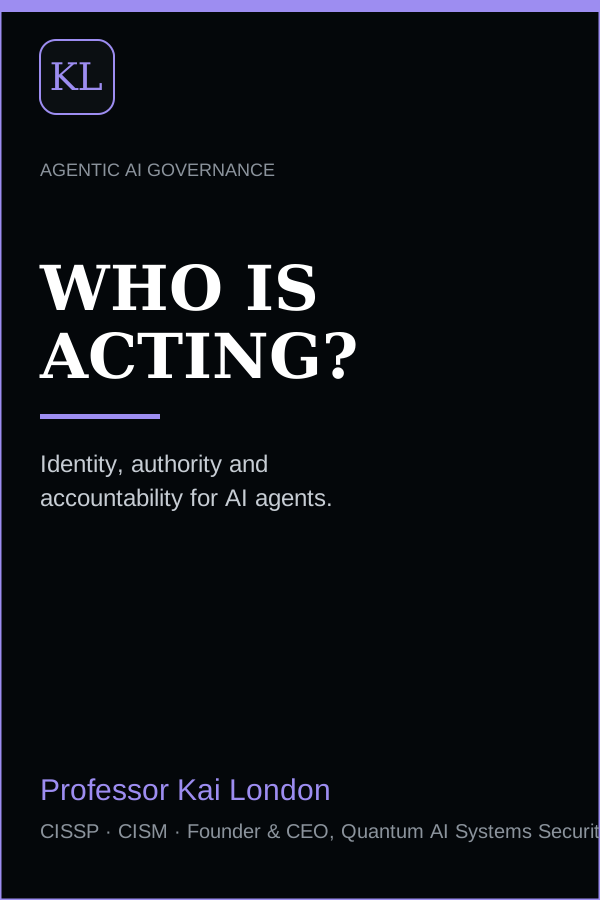
Identity, authority and accountability for AI agents operating inside the enterprise.
Amazon ↗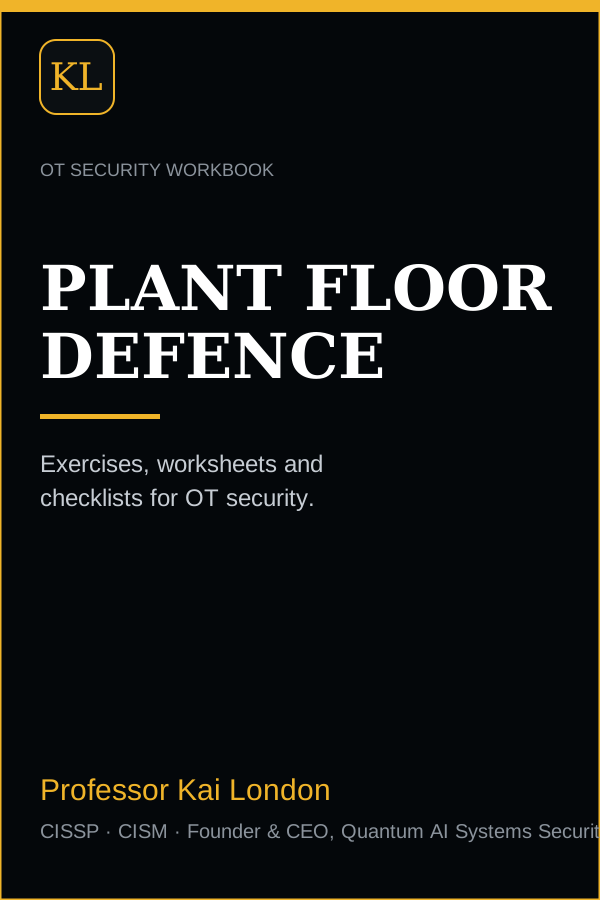
The OT security workbook — exercises, templates and assessments for industrial teams.
Amazon ↗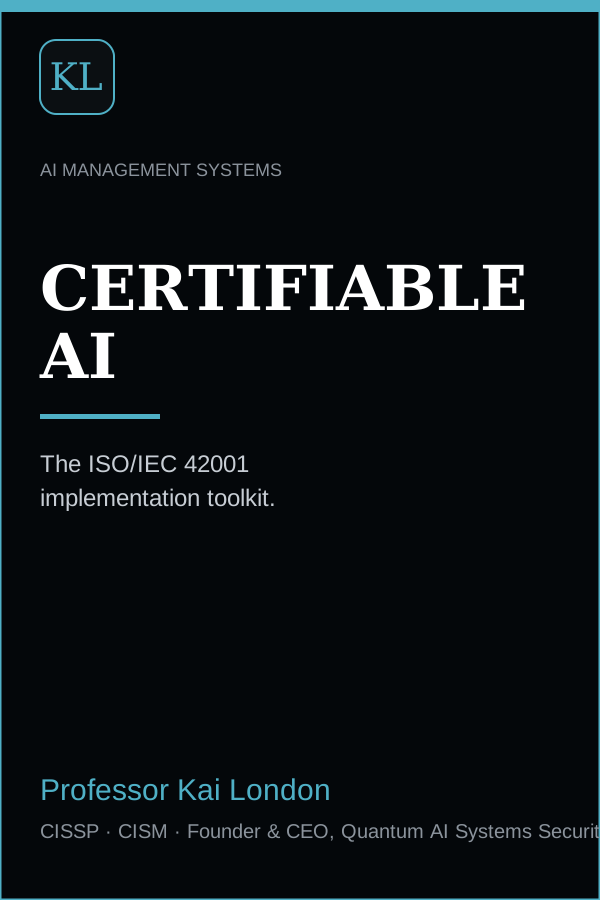
The ISO/IEC 42001 implementation toolkit — from gap analysis to certification evidence.
Amazon ↗
Zero Trust architecture for operational technology, without breaking the process.
Amazon ↗
Cyber Resilience Act vulnerability and incident reporting for products with digital elements.
Amazon ↗Get in touch
For partnership, client, investment, or research collaboration on post-quantum resilience and next-generation security, the best place to connect is LinkedIn.