The Last Login — Gallery (Page 6 of 100)
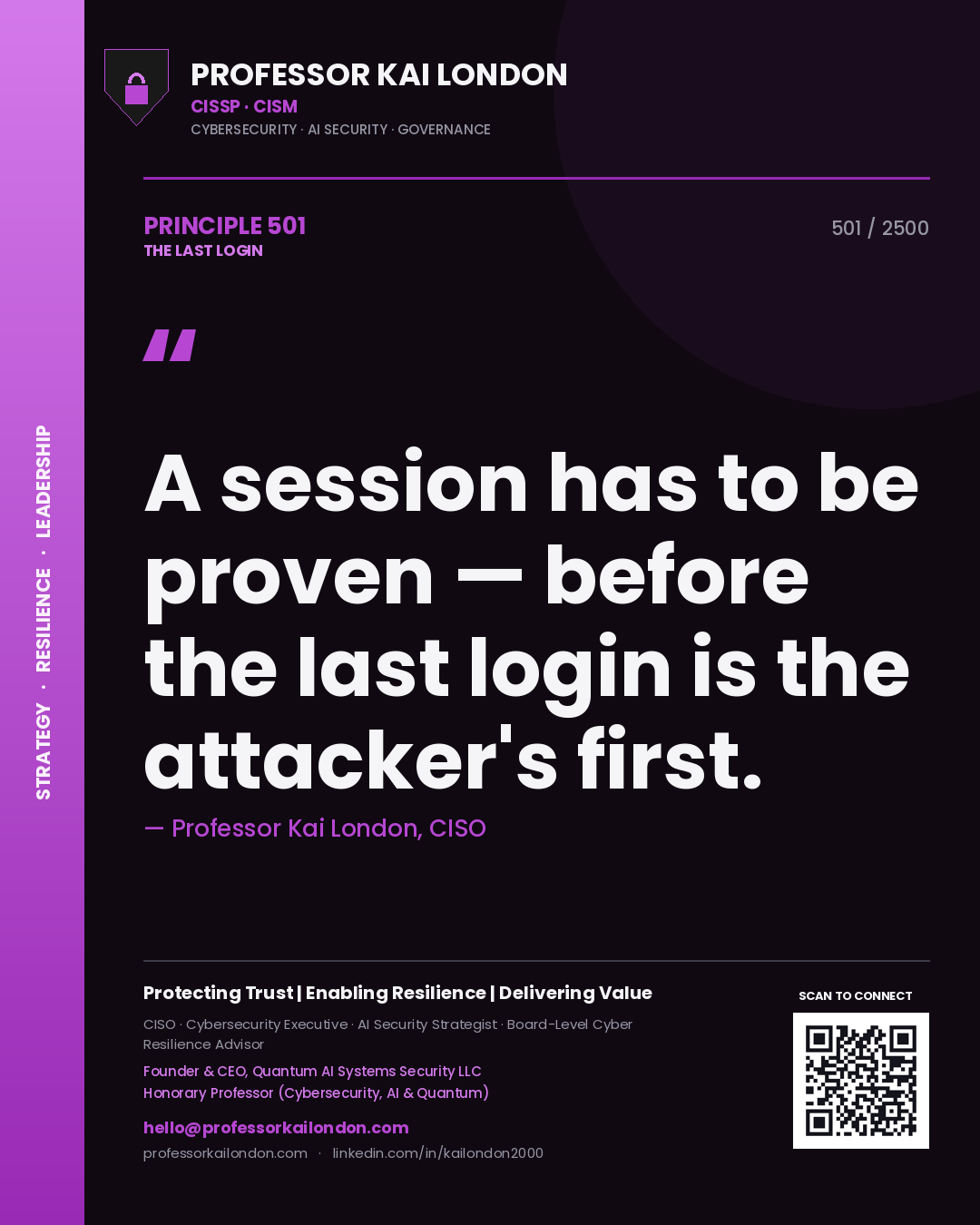
Professor Kai London principle 501: A session has to be proven — before the last login is the attacker's first.
Principle 501
Professor Kai London principle 502: A credential must be watched.
Principle 502
Professor Kai London principle 503: An identity should expire before it is forgotten — before standing access becomes standing risk.
Principle 503
Professor Kai London principle 504: Every login should be verified — because every breach begins with a login that should have been stopped.
Principle 504
Professor Kai London principle 505: An identity is a key someone owns — before the last login is the attacker's first.
Principle 505
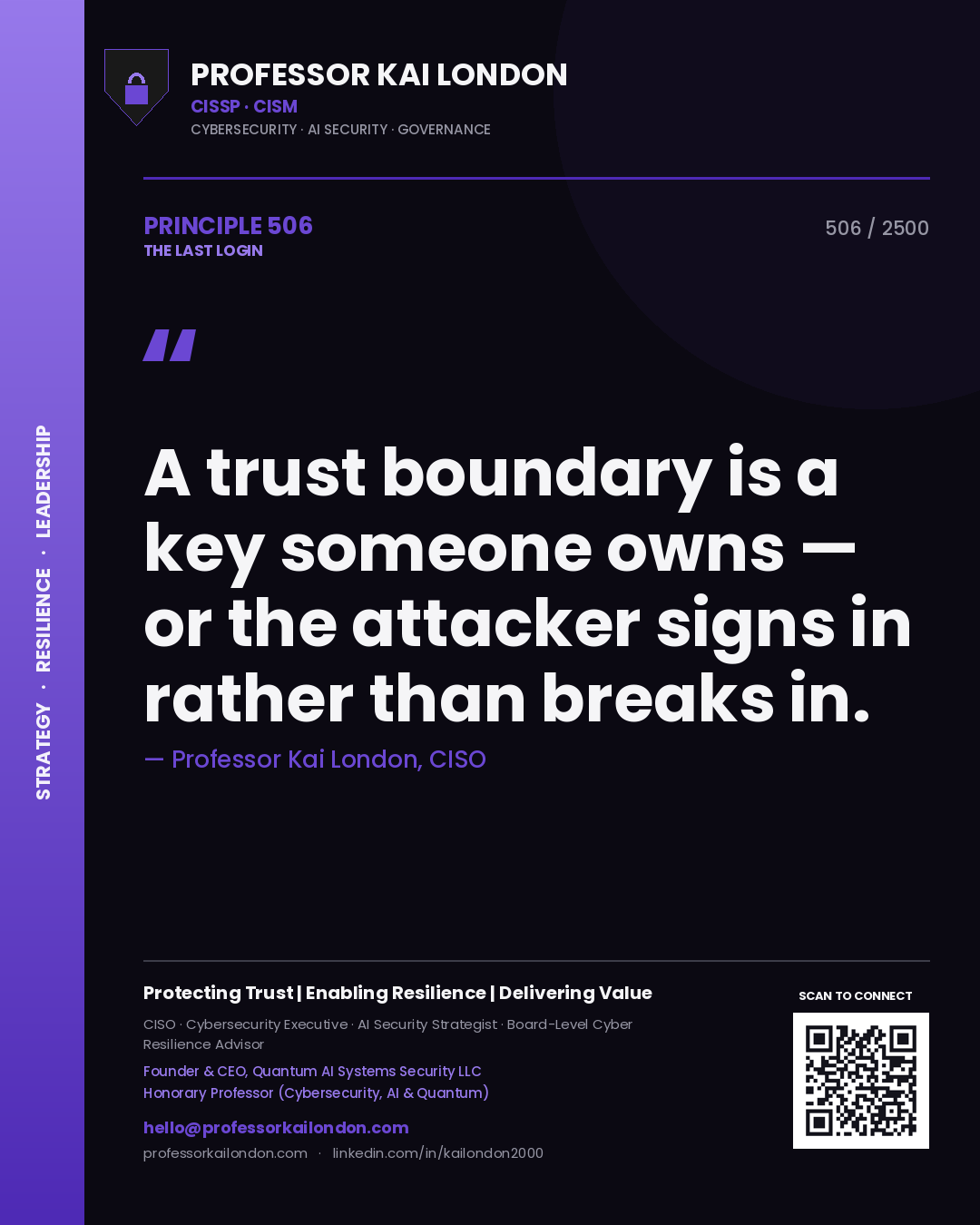
Professor Kai London principle 506: A trust boundary is a key someone owns — or the attacker signs in rather than breaks in.
Principle 506
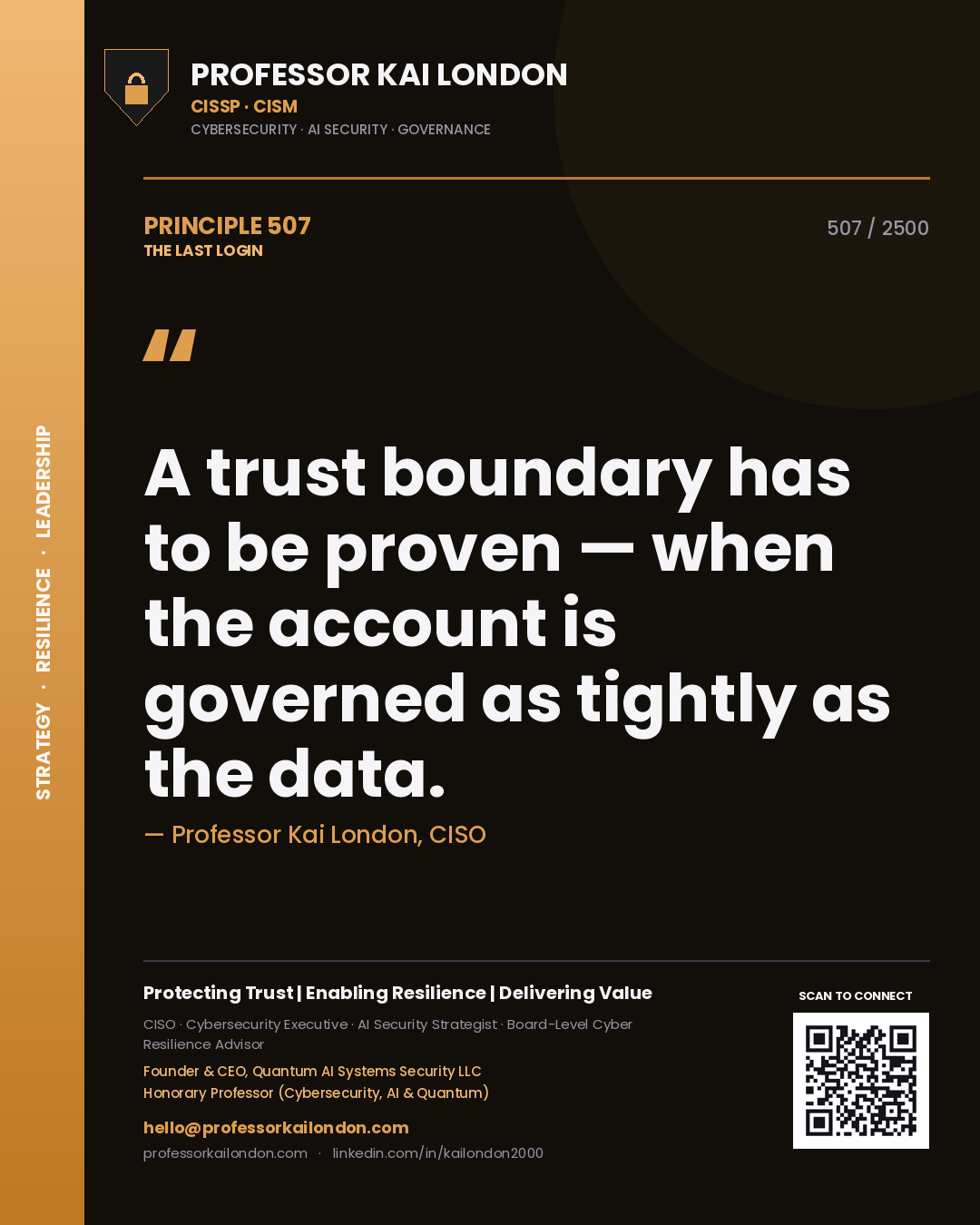
Professor Kai London principle 507: A trust boundary has to be proven — when the account is governed as tightly as the data.
Principle 507
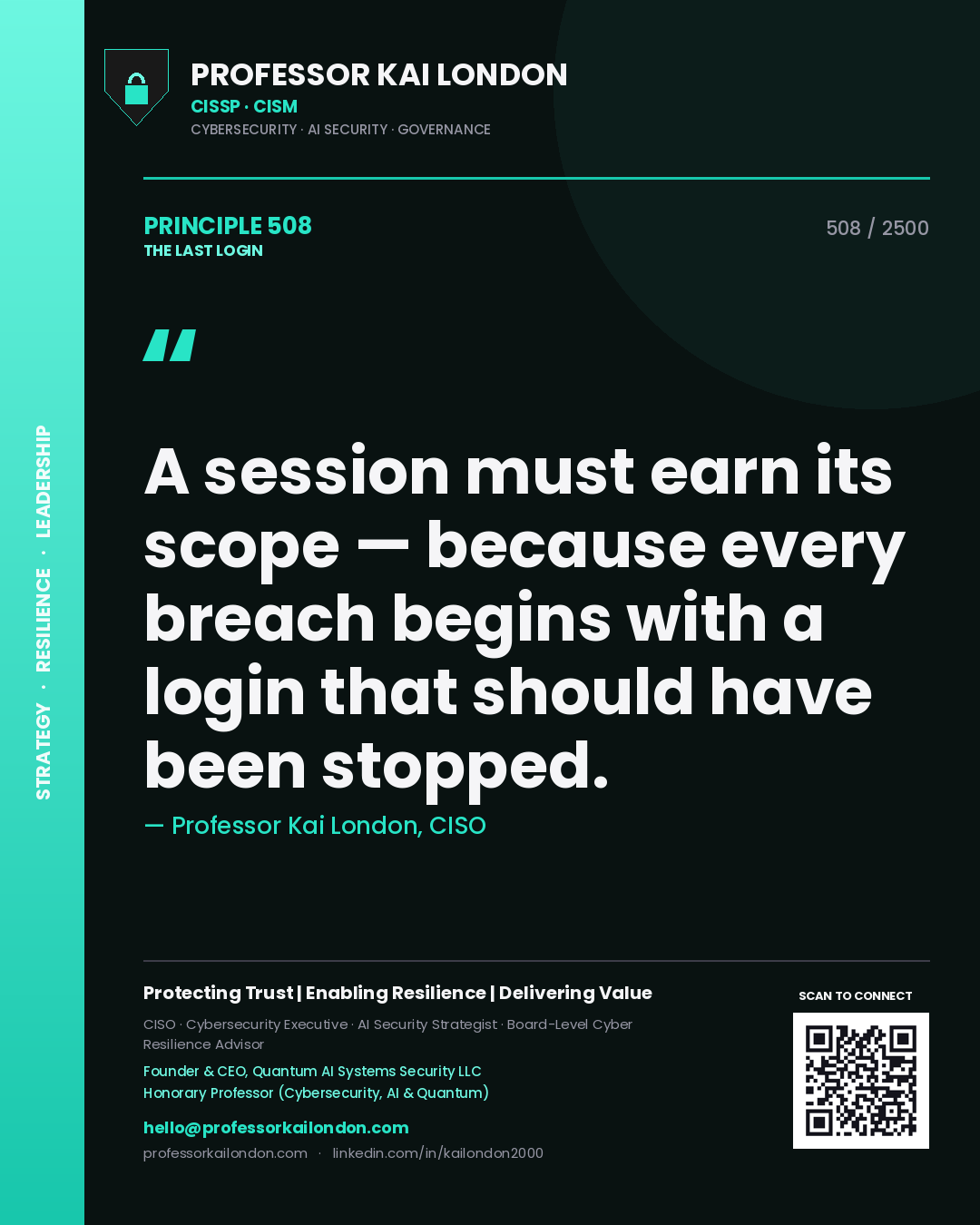
Professor Kai London principle 508: A session must earn its scope — because every breach begins with a login that should have been stopped.
Principle 508
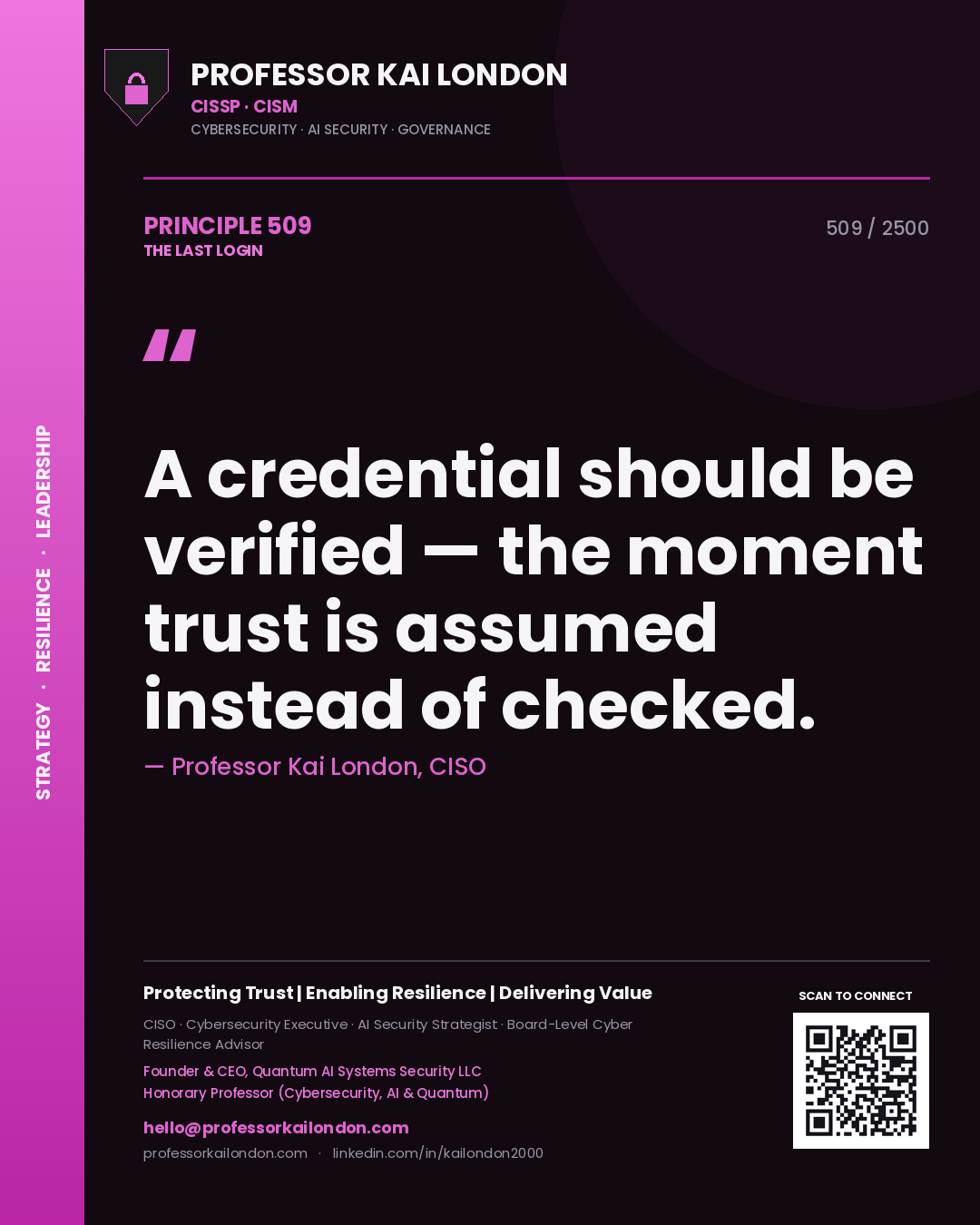
Professor Kai London principle 509: A credential should be verified — the moment trust is assumed instead of checked.
Principle 509
Professor Kai London principle 510: An access decision should be verified — when least privilege is a habit, not a setting.
Principle 510
Professor Kai London principle 511: An access decision needs to be detected — when verification is continuous, not a one-time gate.
Principle 511
Professor Kai London principle 512: An access decision must earn its scope — when verification is continuous, not a one-time gate.
Principle 512
Professor Kai London principle 513: A token needs to be detected — when the account is governed as tightly as the data.
Principle 513
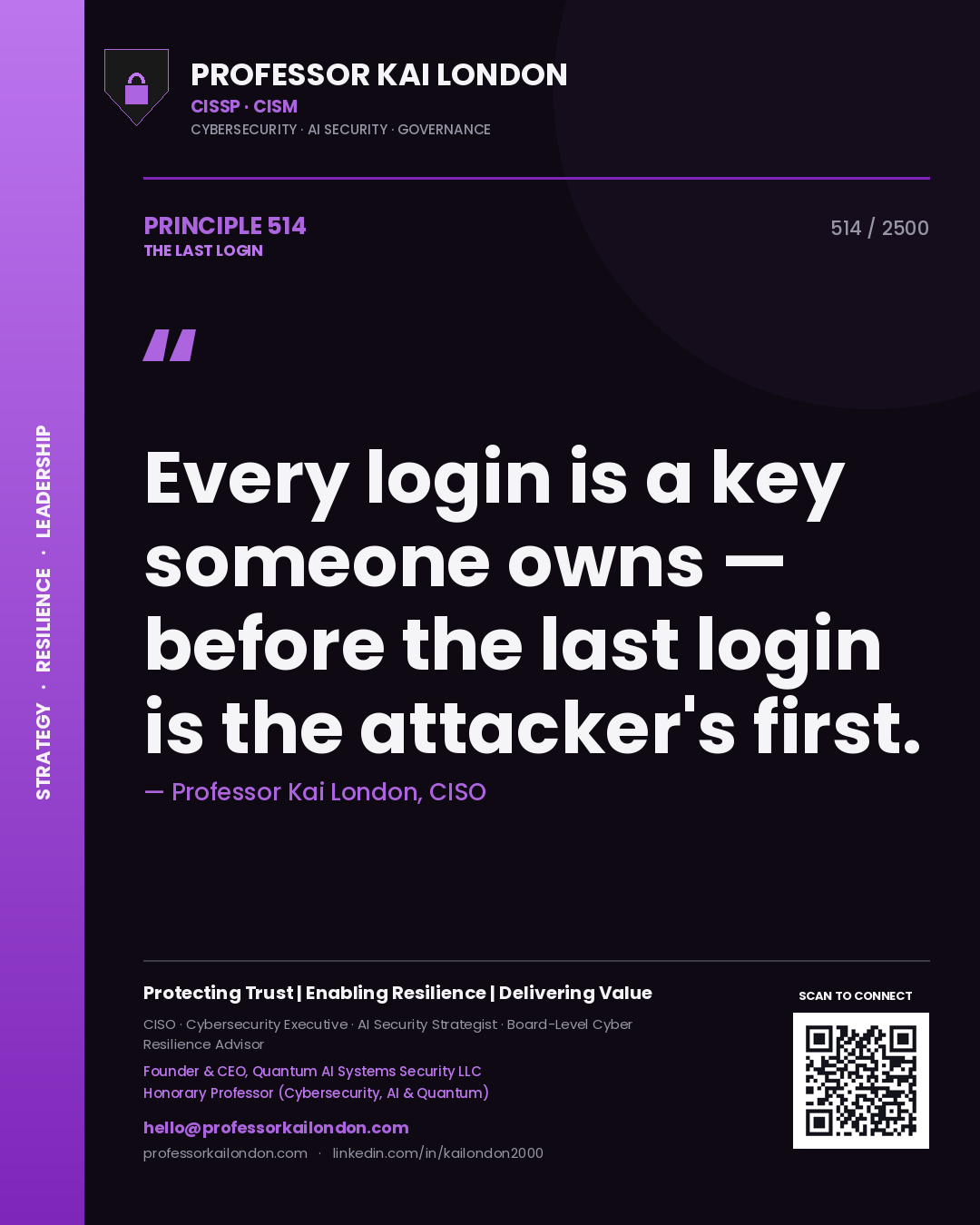
Professor Kai London principle 514: Every login is a key someone owns — before the last login is the attacker's first.
Principle 514
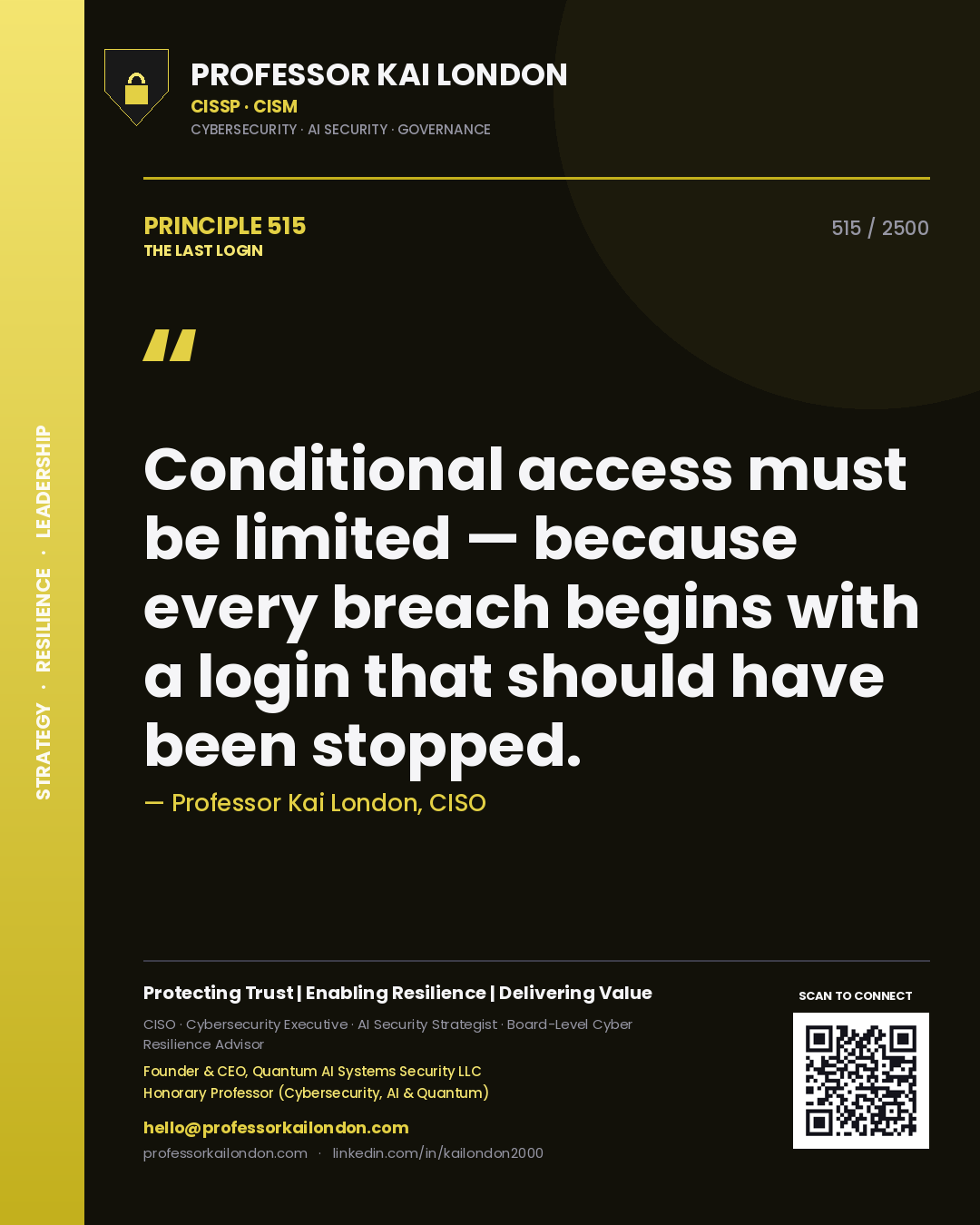
Professor Kai London principle 515: Conditional access must be limited — because every breach begins with a login that should have been stopped.
Principle 515
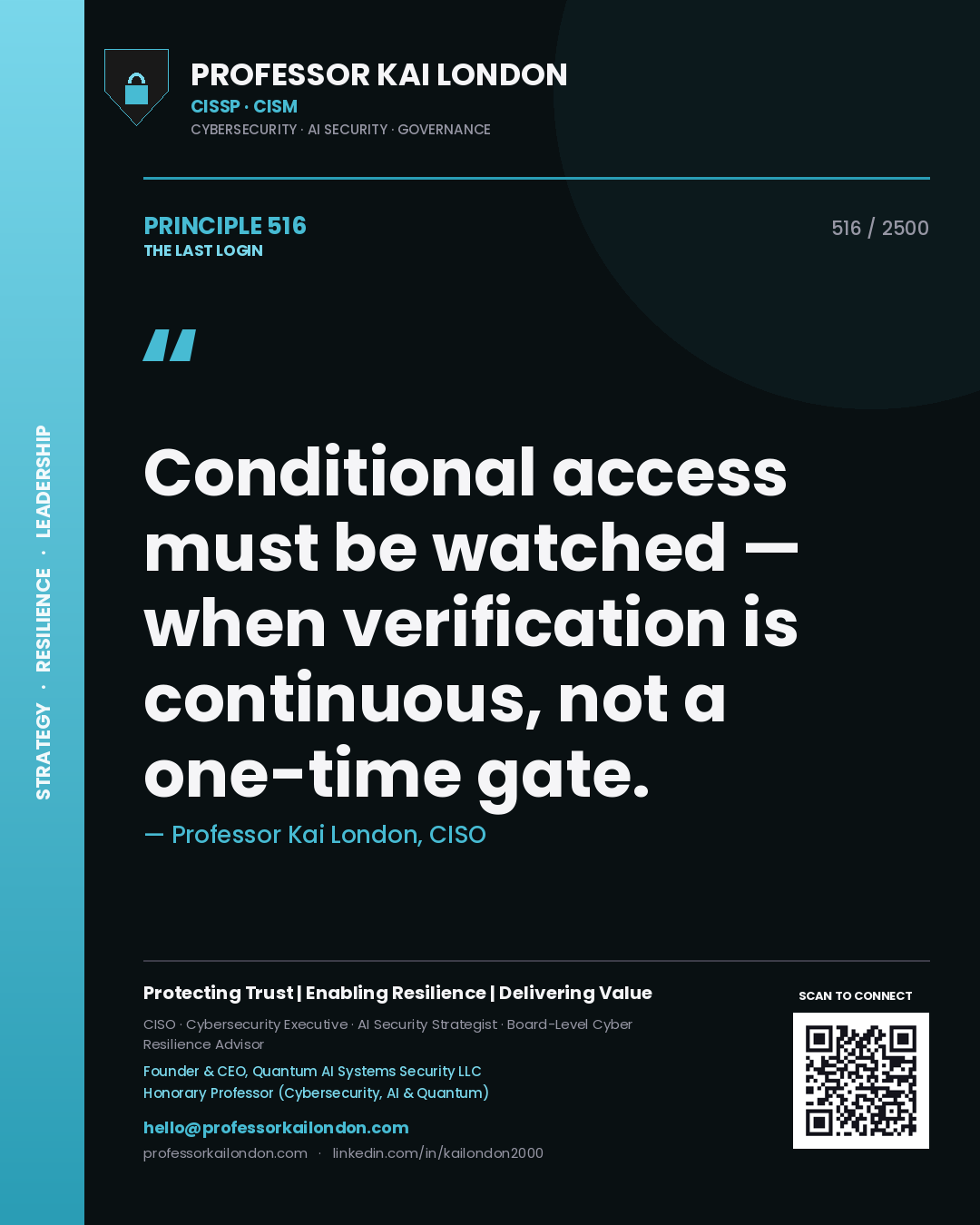
Professor Kai London principle 516: Conditional access must be watched — when verification is continuous, not a one-time gate.
Principle 516
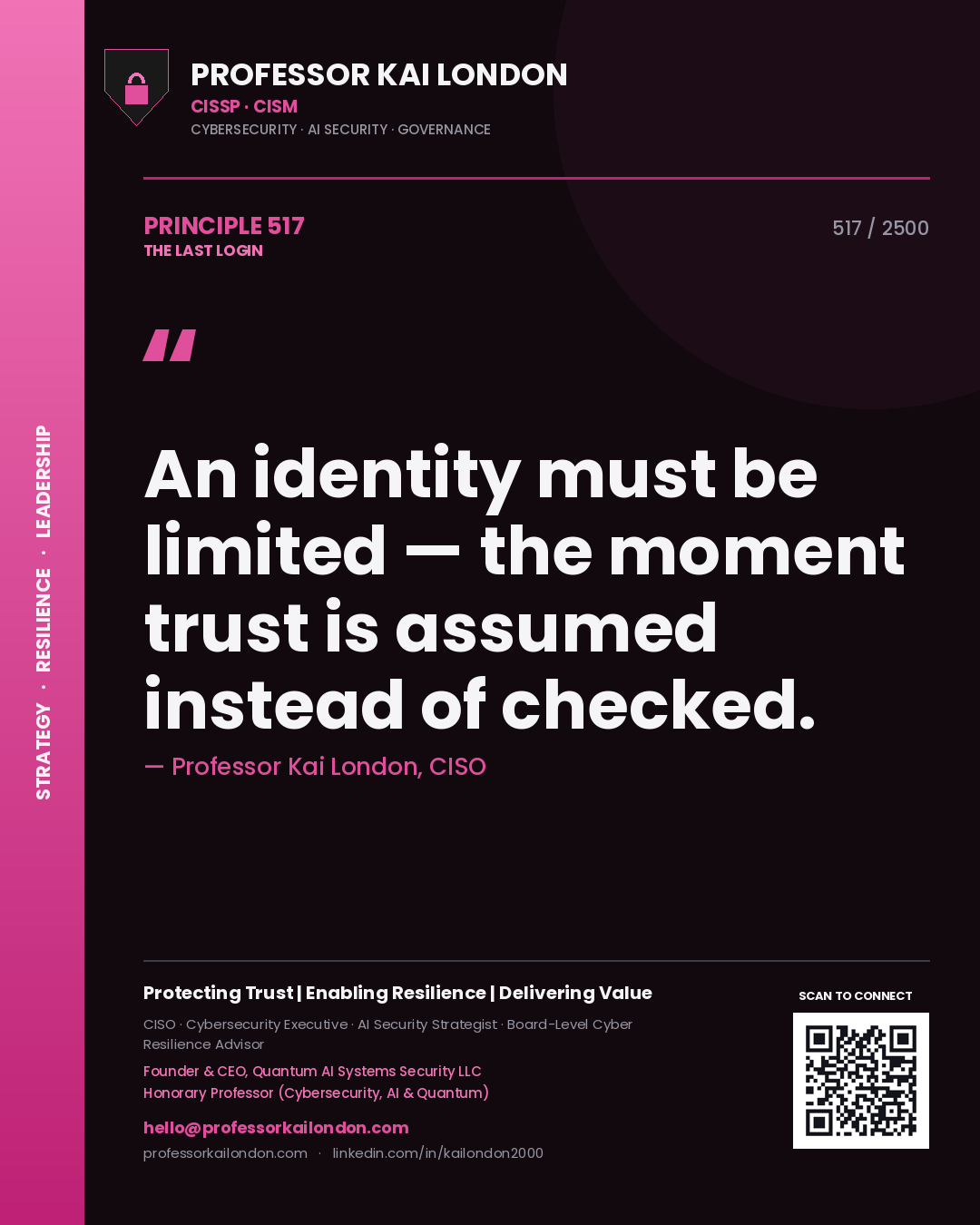
Professor Kai London principle 517: An identity must be limited — the moment trust is assumed instead of checked.
Principle 517
Professor Kai London principle 518: Every login must be watched — when verification is continuous, not a one-time gate.
Principle 518
Professor Kai London principle 519: A session must earn its scope.
Principle 519
Professor Kai London principle 520: A privileged account must earn its scope — when least privilege is a habit, not a setting.
Principle 520
Professor Kai London principle 521: A privileged account should expire before it is forgotten.
Principle 521
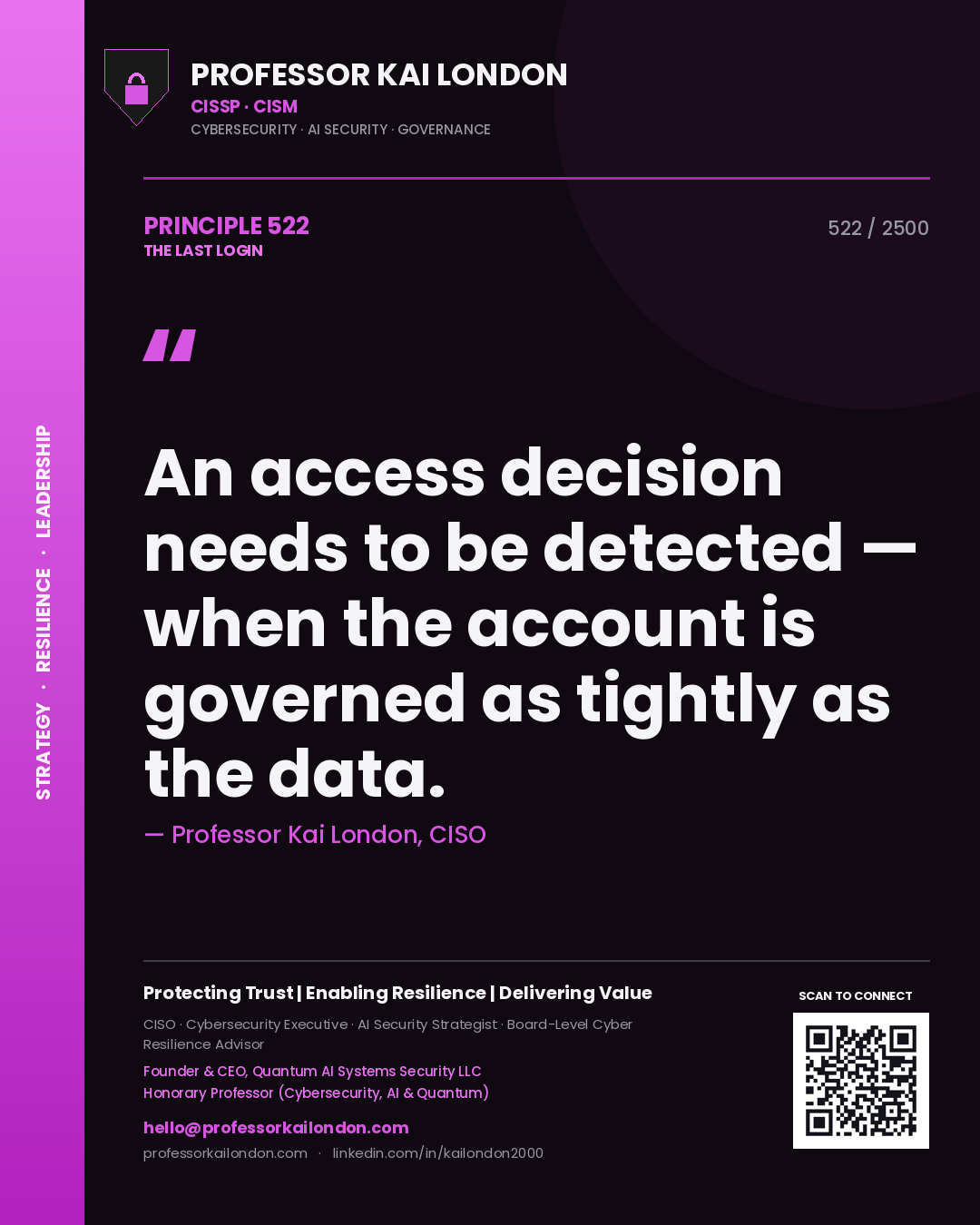
Professor Kai London principle 522: An access decision needs to be detected — when the account is governed as tightly as the data.
Principle 522
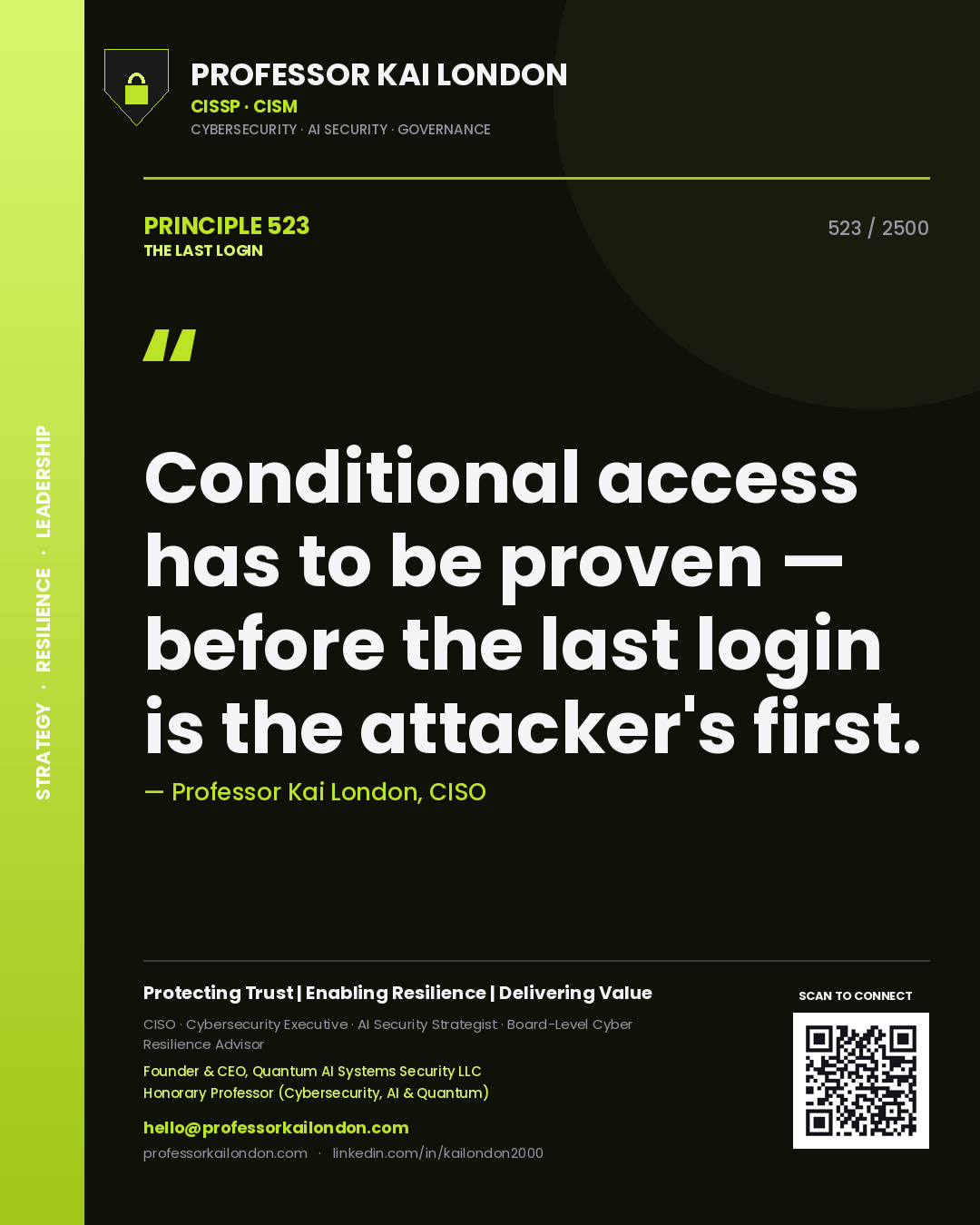
Professor Kai London principle 523: Conditional access has to be proven — before the last login is the attacker's first.
Principle 523
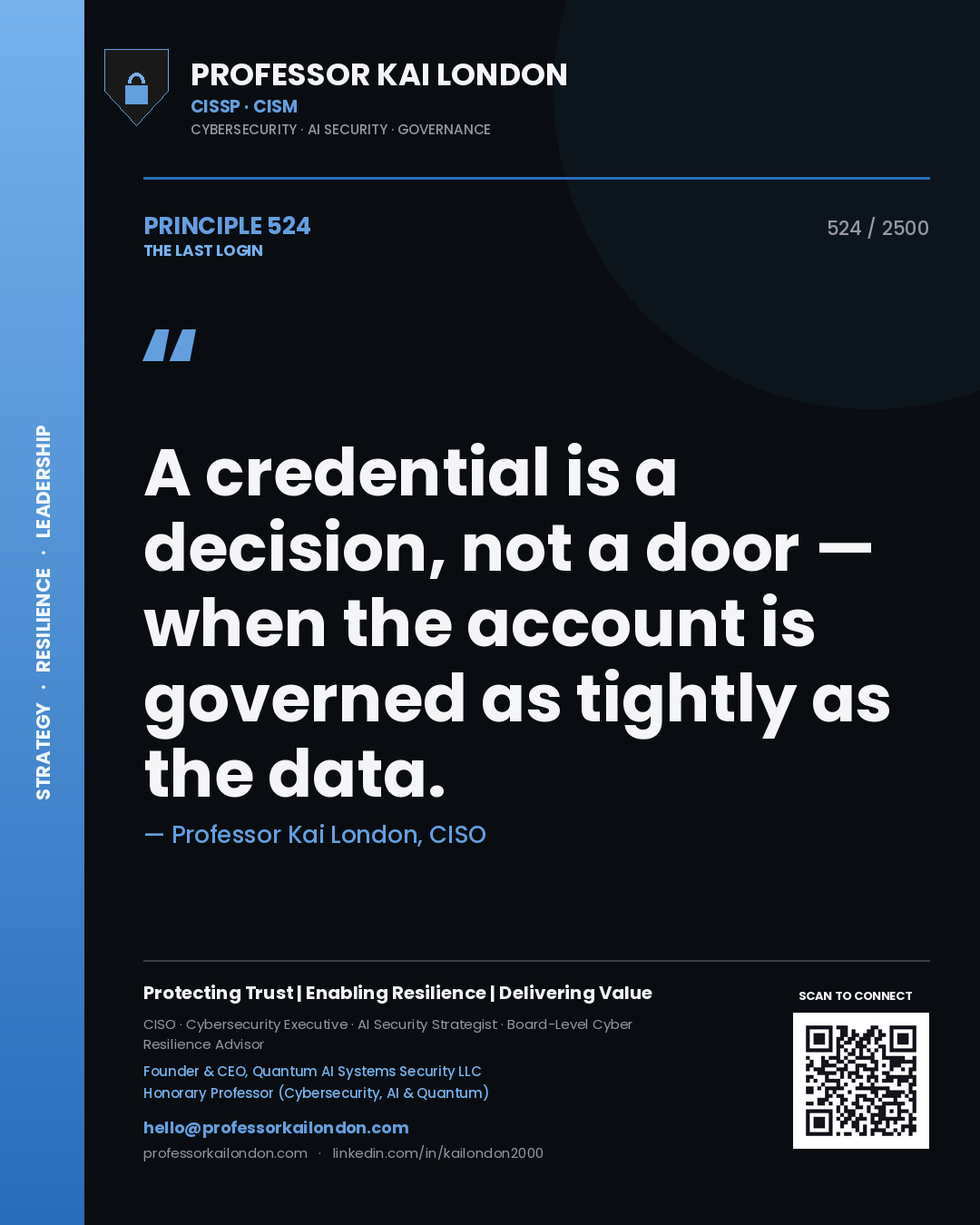
Professor Kai London principle 524: A credential is a decision, not a door — when the account is governed as tightly as the data.
Principle 524
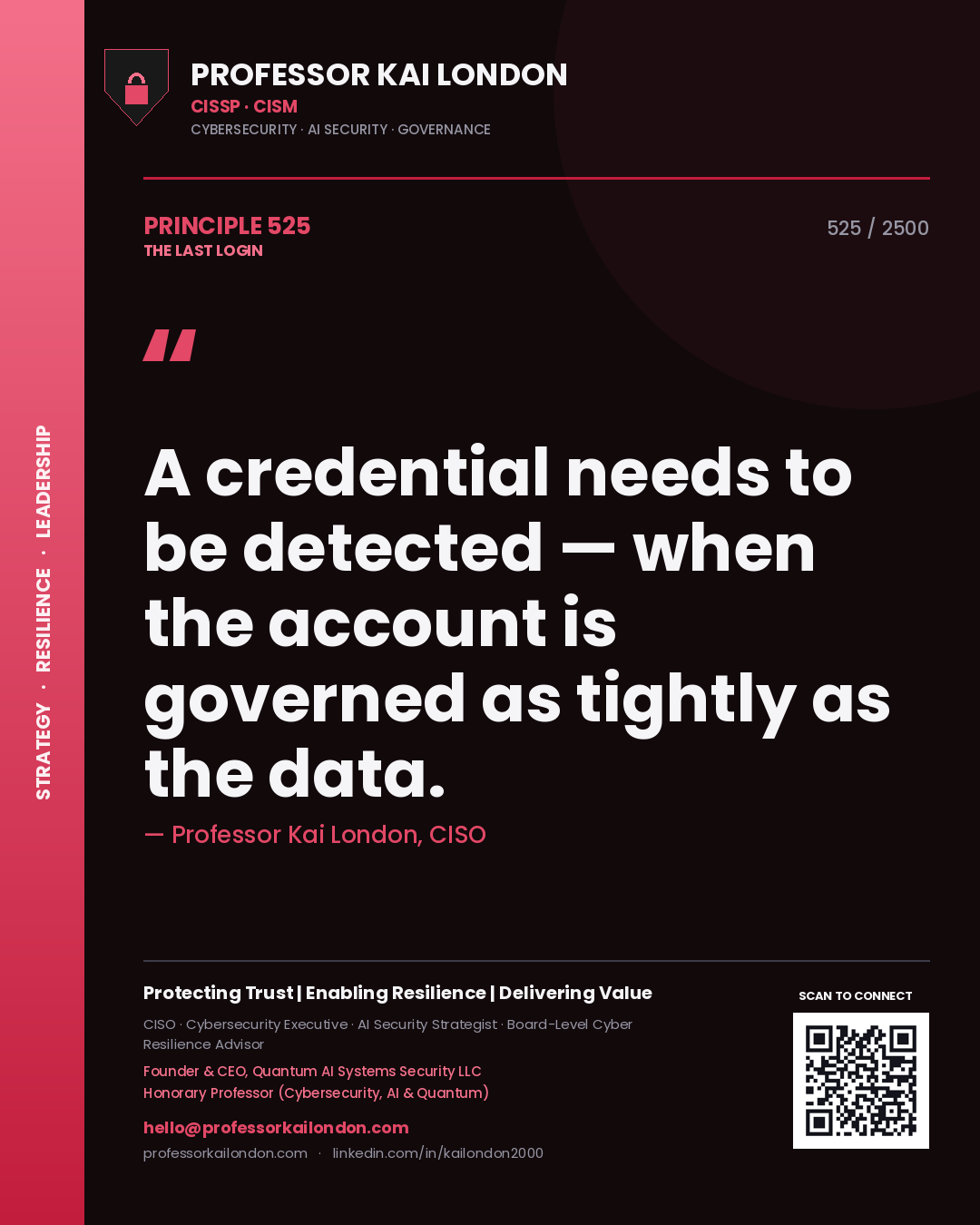
Professor Kai London principle 525: A credential needs to be detected — when the account is governed as tightly as the data.
Principle 525
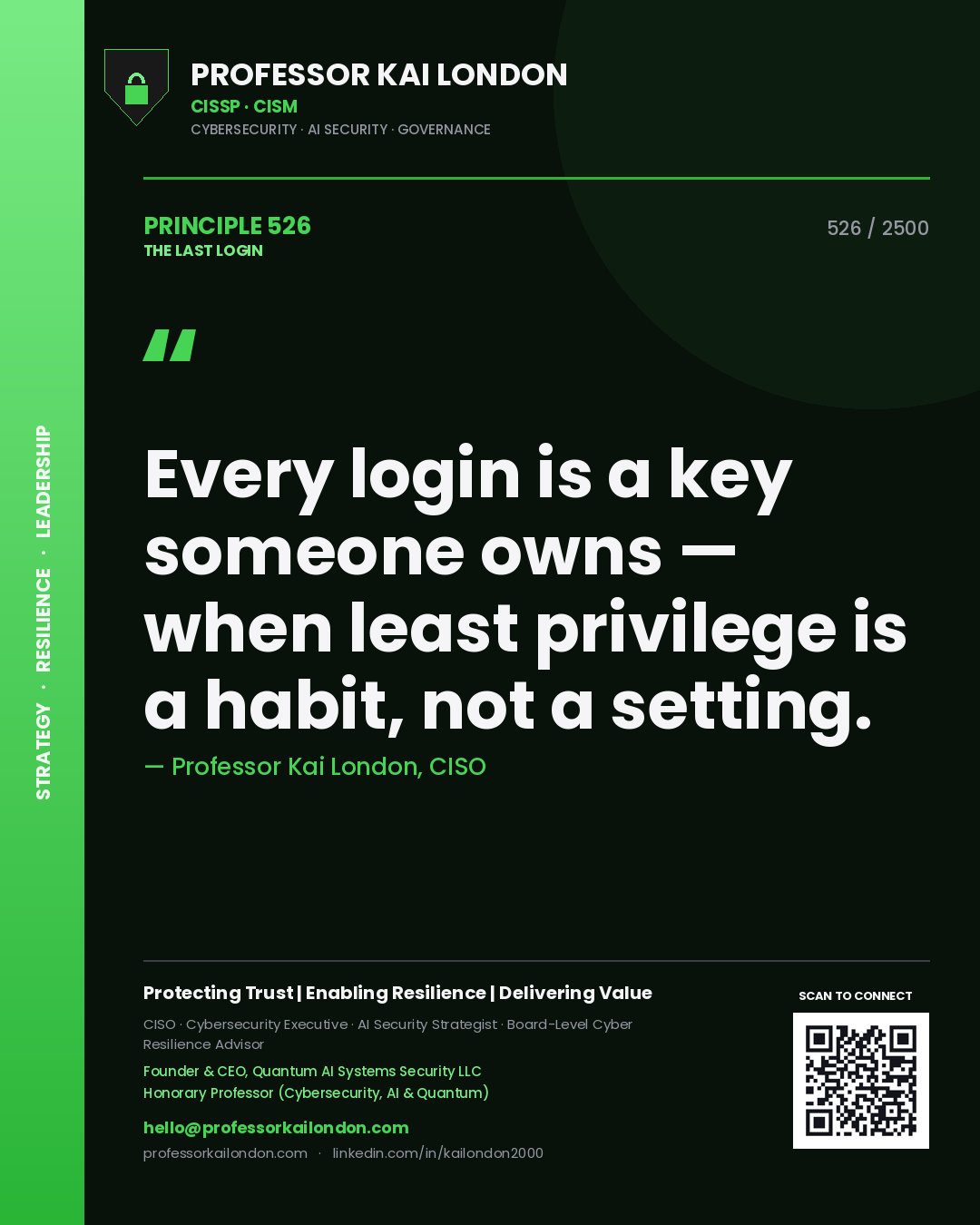
Professor Kai London principle 526: Every login is a key someone owns — when least privilege is a habit, not a setting.
Principle 526
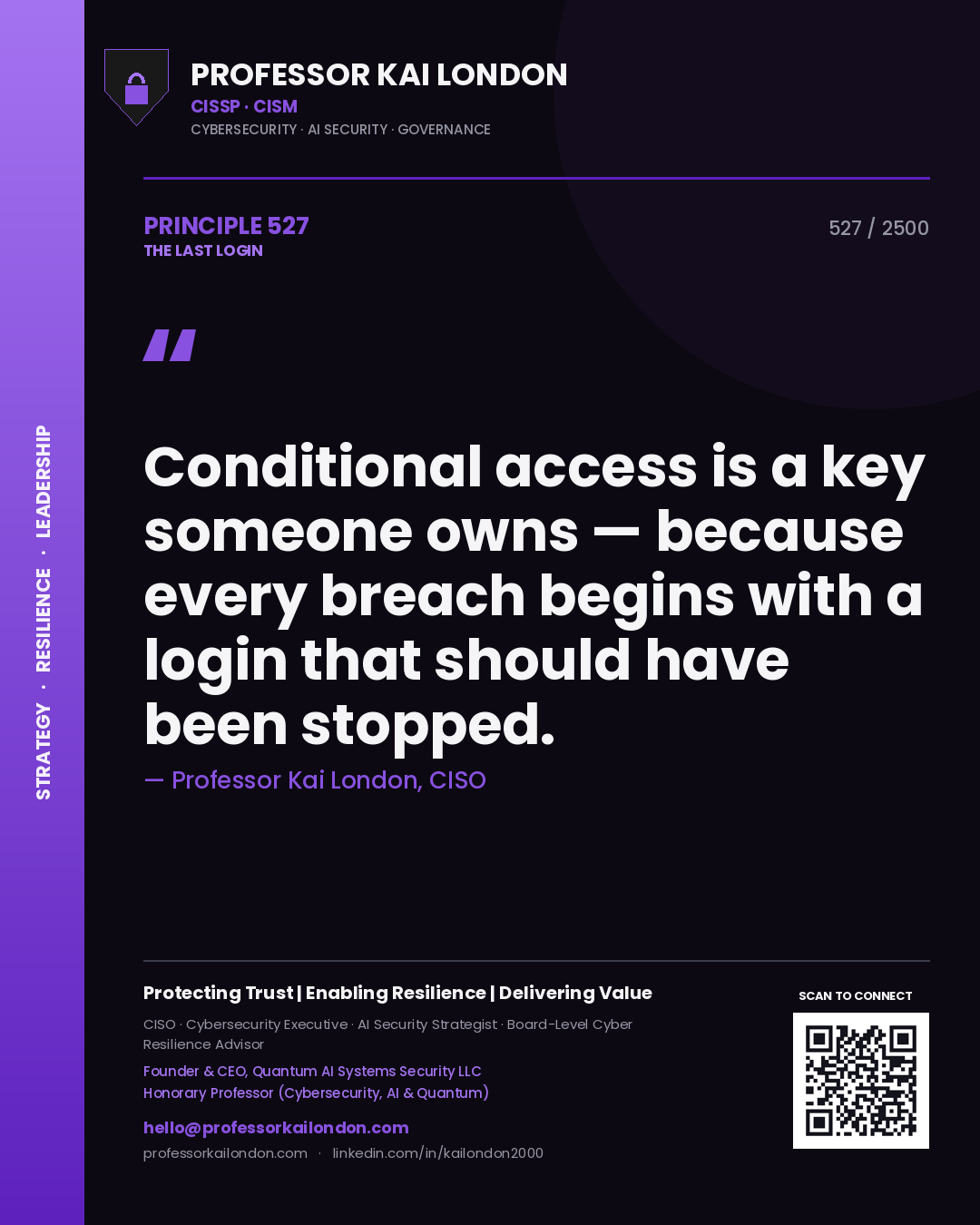
Professor Kai London principle 527: Conditional access is a key someone owns — because every breach begins with a login that should have been stopped.
Principle 527
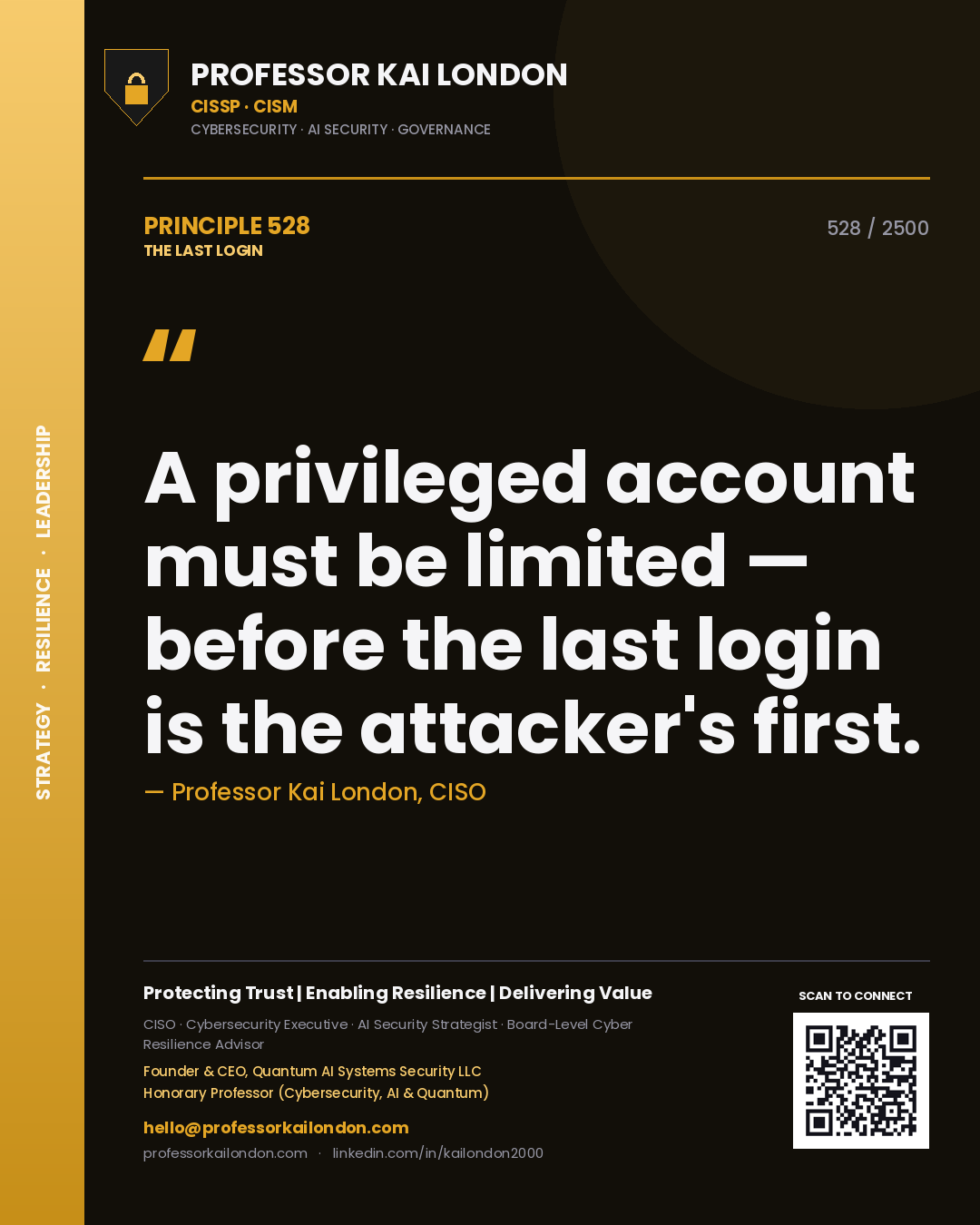
Professor Kai London principle 528: A privileged account must be limited — before the last login is the attacker's first.
Principle 528
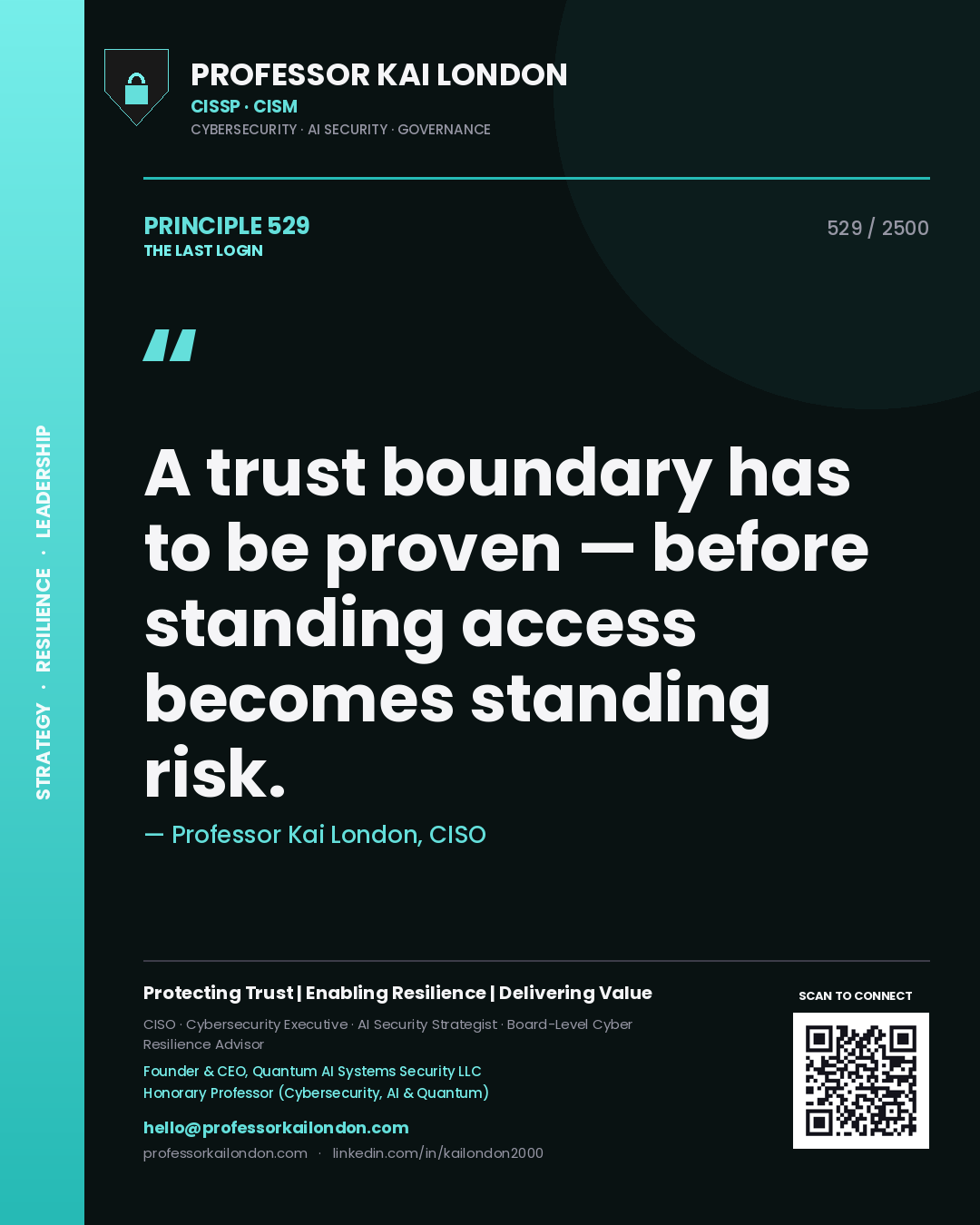
Professor Kai London principle 529: A trust boundary has to be proven — before standing access becomes standing risk.
Principle 529
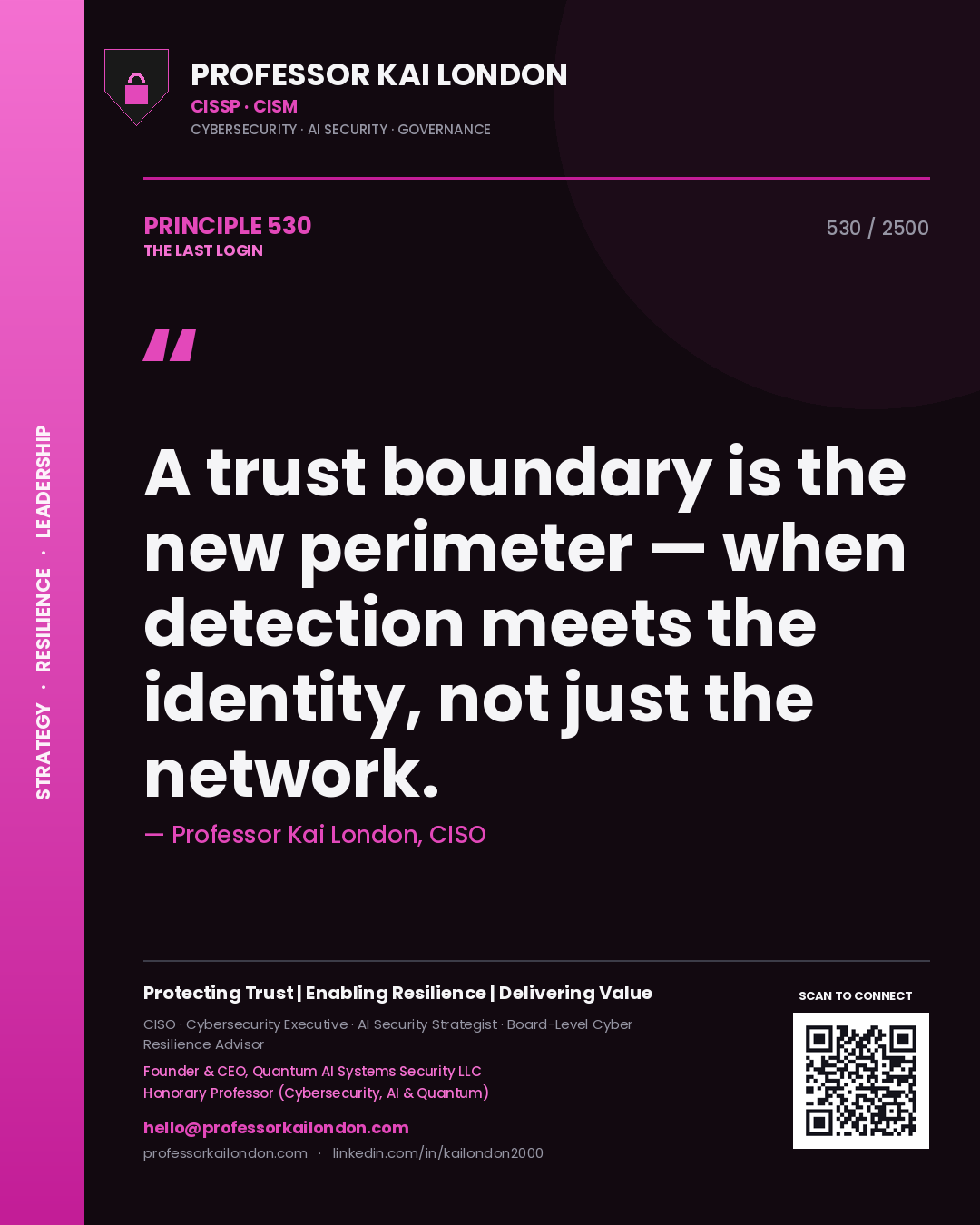
Professor Kai London principle 530: A trust boundary is the new perimeter — when detection meets the identity, not just the network.
Principle 530
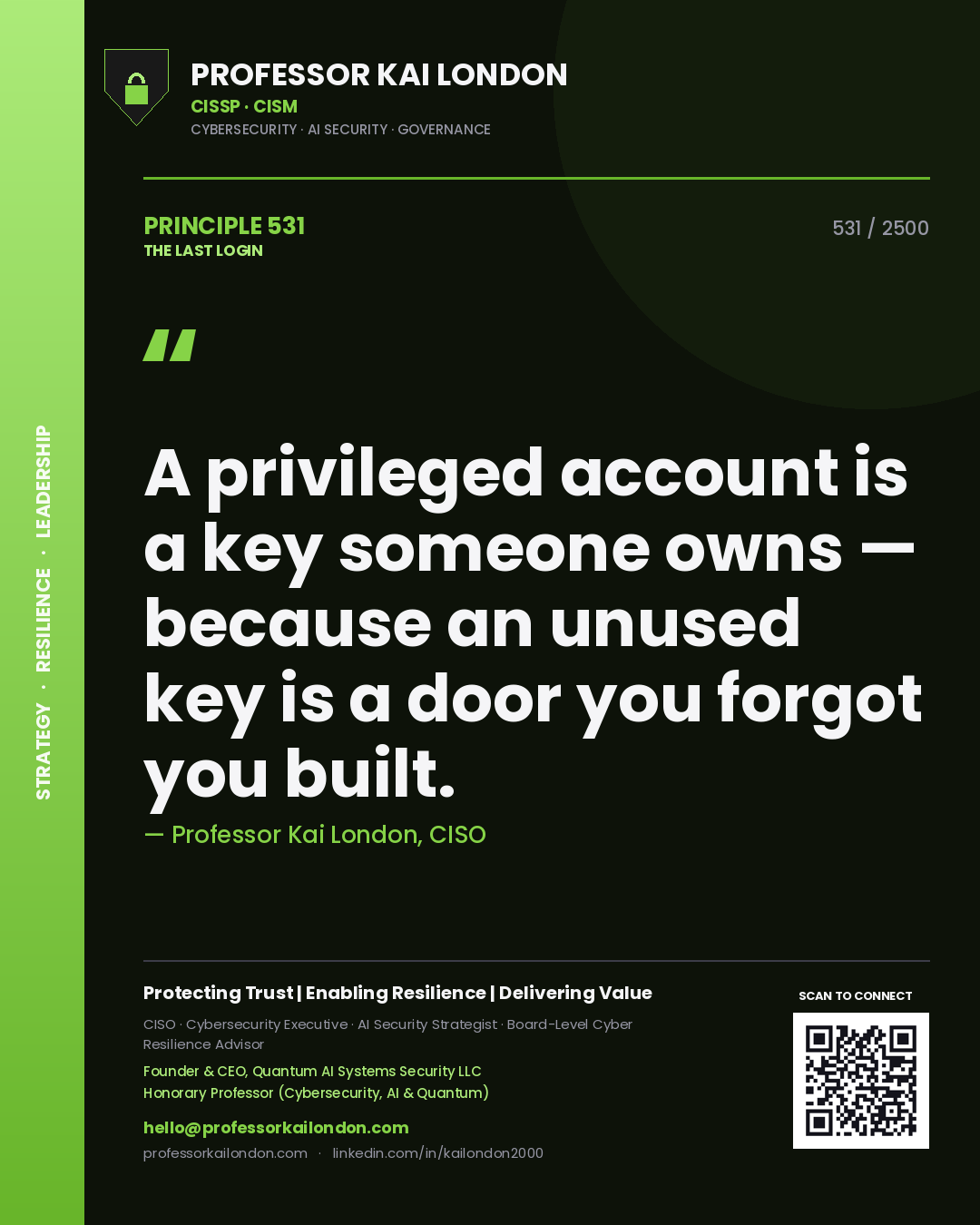
Professor Kai London principle 531: A privileged account is a key someone owns — because an unused key is a door you forgot you built.
Principle 531
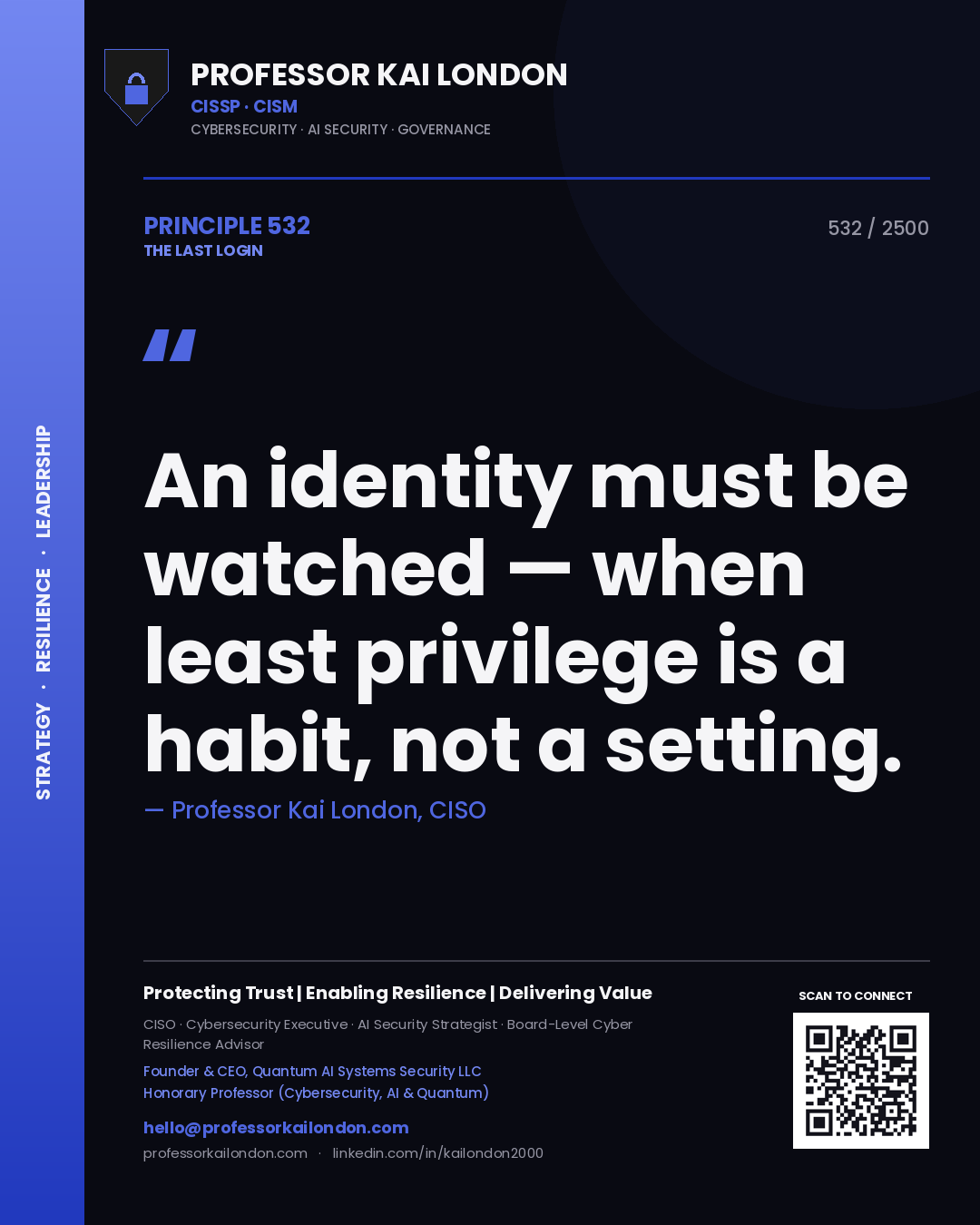
Professor Kai London principle 532: An identity must be watched — when least privilege is a habit, not a setting.
Principle 532
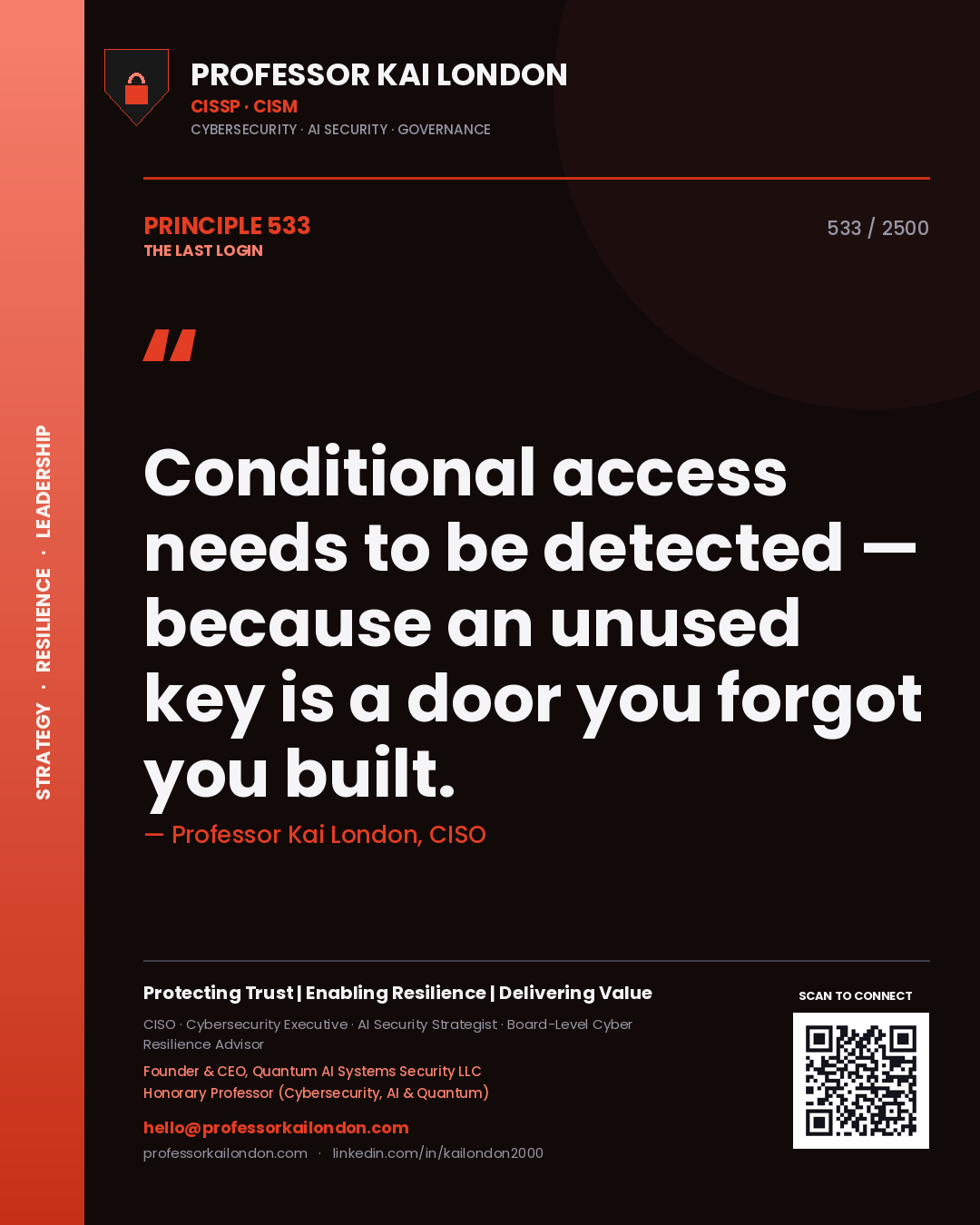
Professor Kai London principle 533: Conditional access needs to be detected — because an unused key is a door you forgot you built.
Principle 533
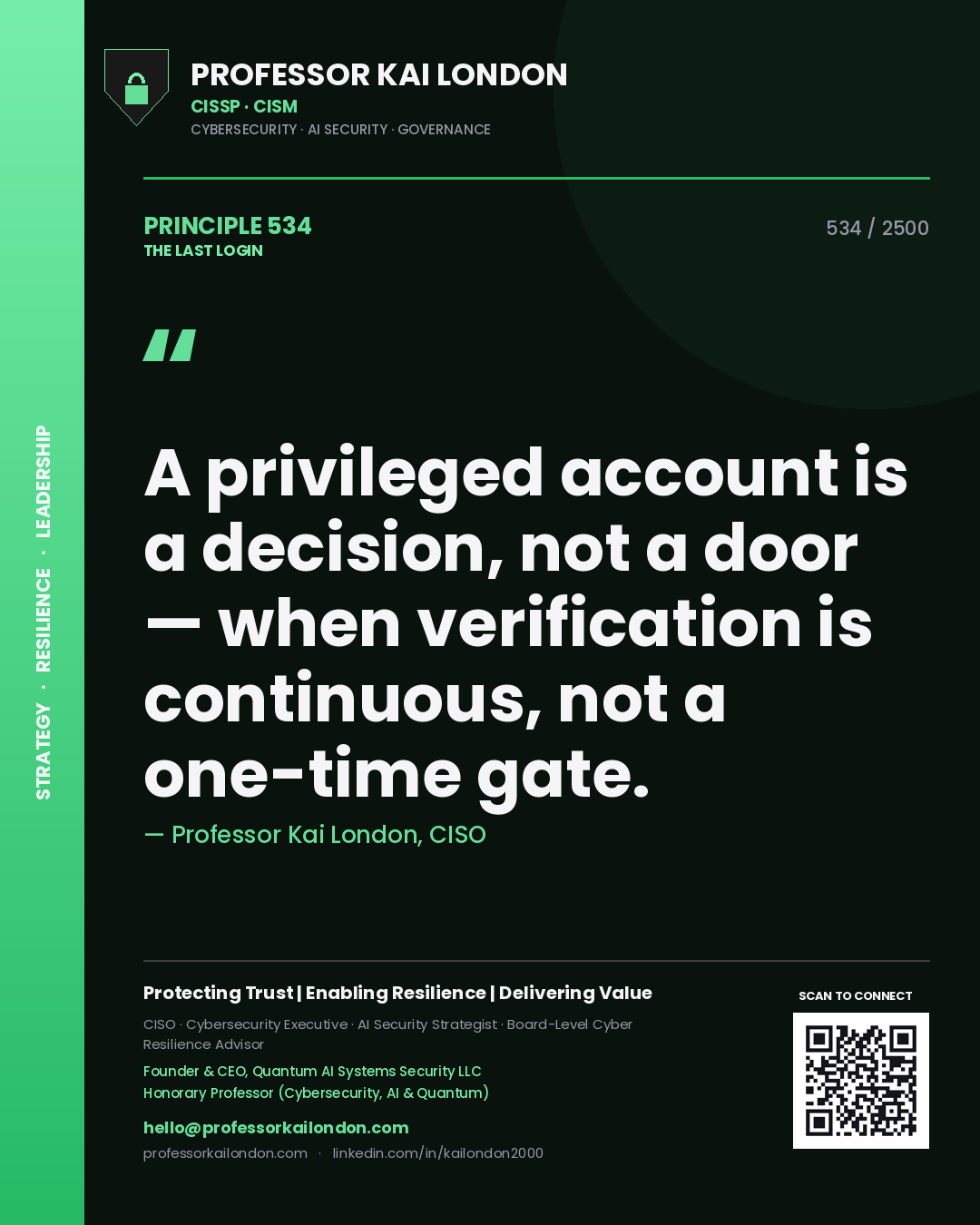
Professor Kai London principle 534: A privileged account is a decision, not a door — when verification is continuous, not a one-time gate.
Principle 534
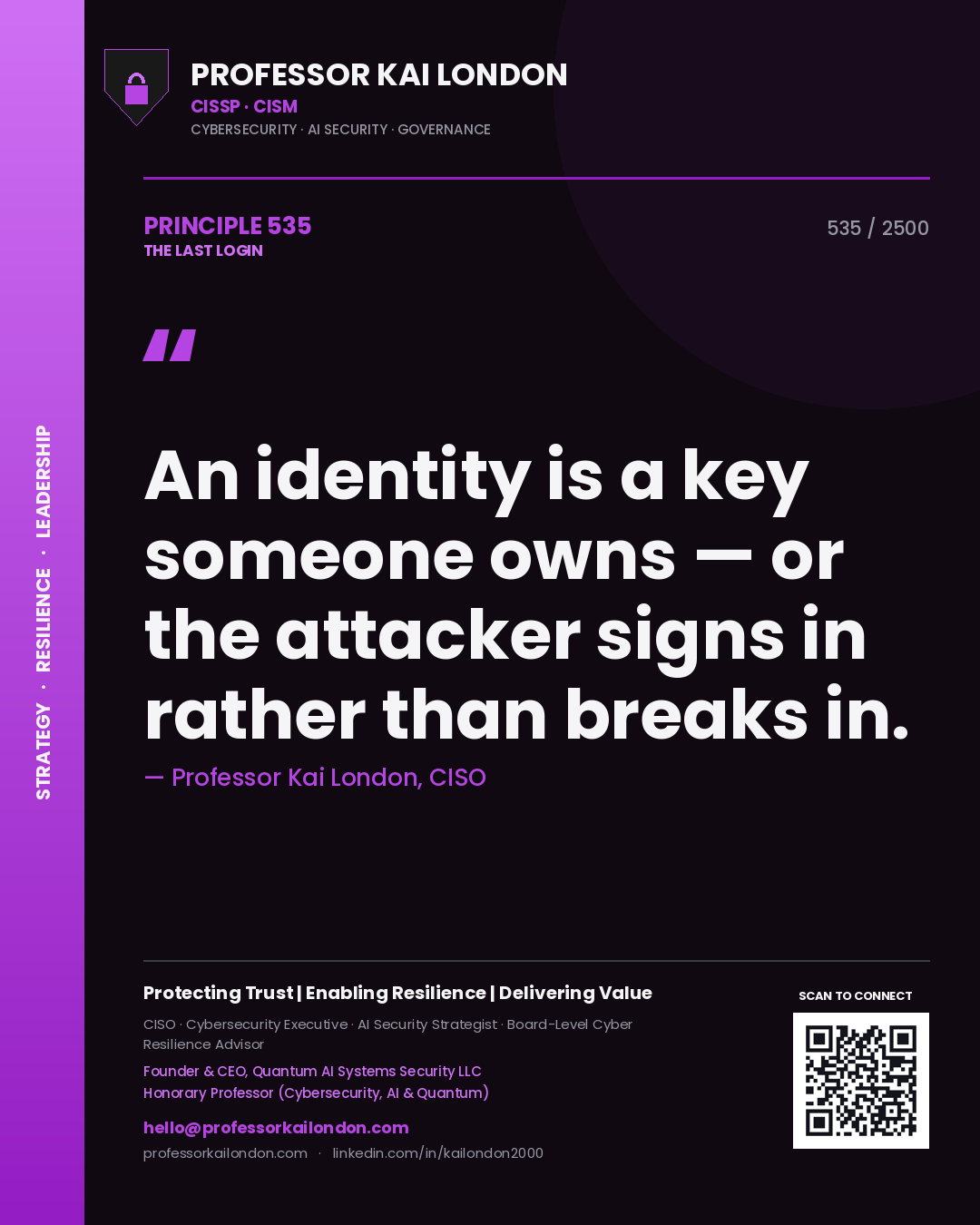
Professor Kai London principle 535: An identity is a key someone owns — or the attacker signs in rather than breaks in.
Principle 535
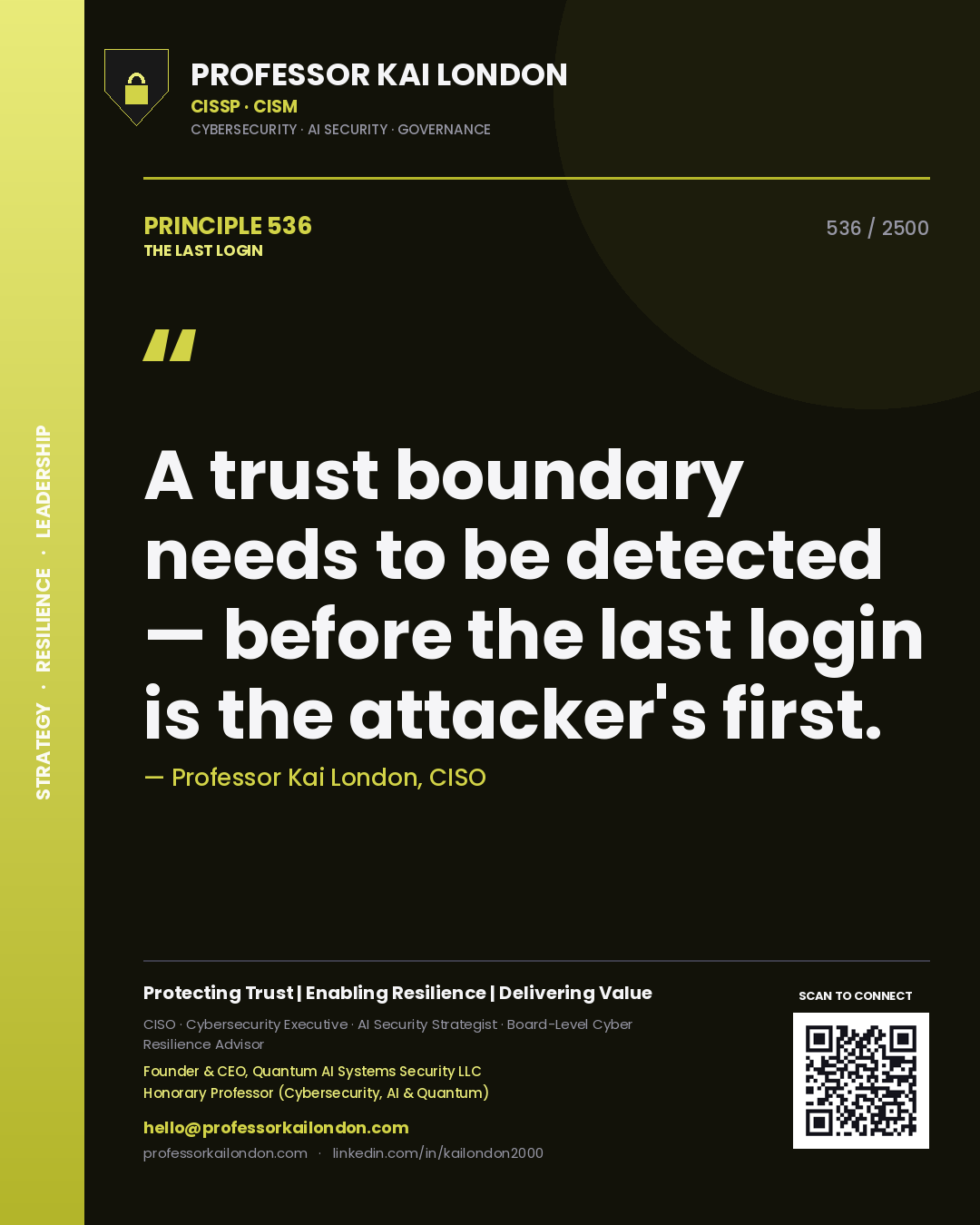
Professor Kai London principle 536: A trust boundary needs to be detected — before the last login is the attacker's first.
Principle 536
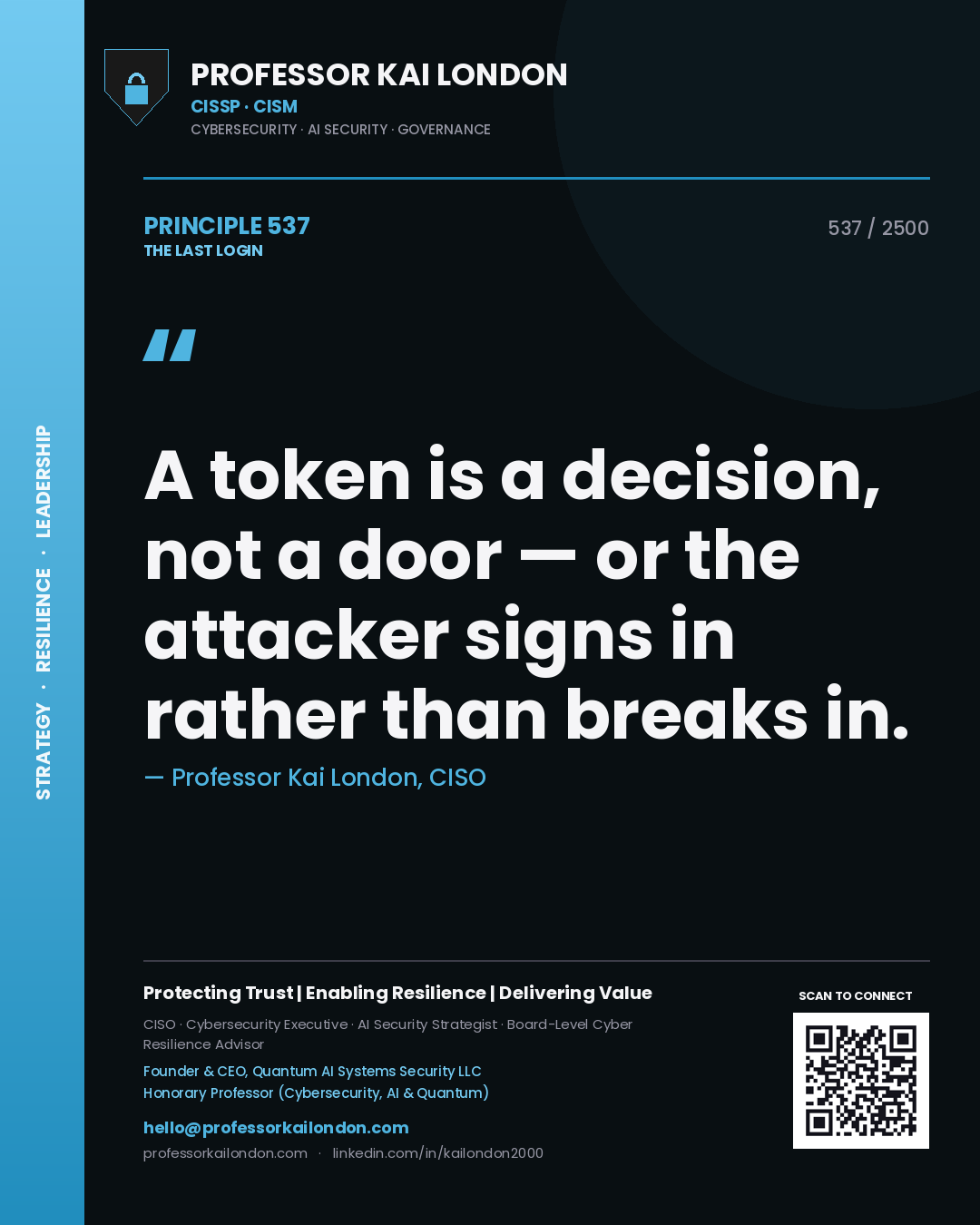
Professor Kai London principle 537: A token is a decision, not a door — or the attacker signs in rather than breaks in.
Principle 537
Professor Kai London principle 538: A trust boundary must earn its scope — or the attacker signs in rather than breaks in.
Principle 538
Professor Kai London principle 539: A privileged account has to be proven — when least privilege is a habit, not a setting.
Principle 539
Professor Kai London principle 540: An identity is the new perimeter — the moment trust is assumed instead of checked.
Principle 540
Professor Kai London principle 541: An authentication event should be verified — when detection meets the identity, not just the network.
Principle 541
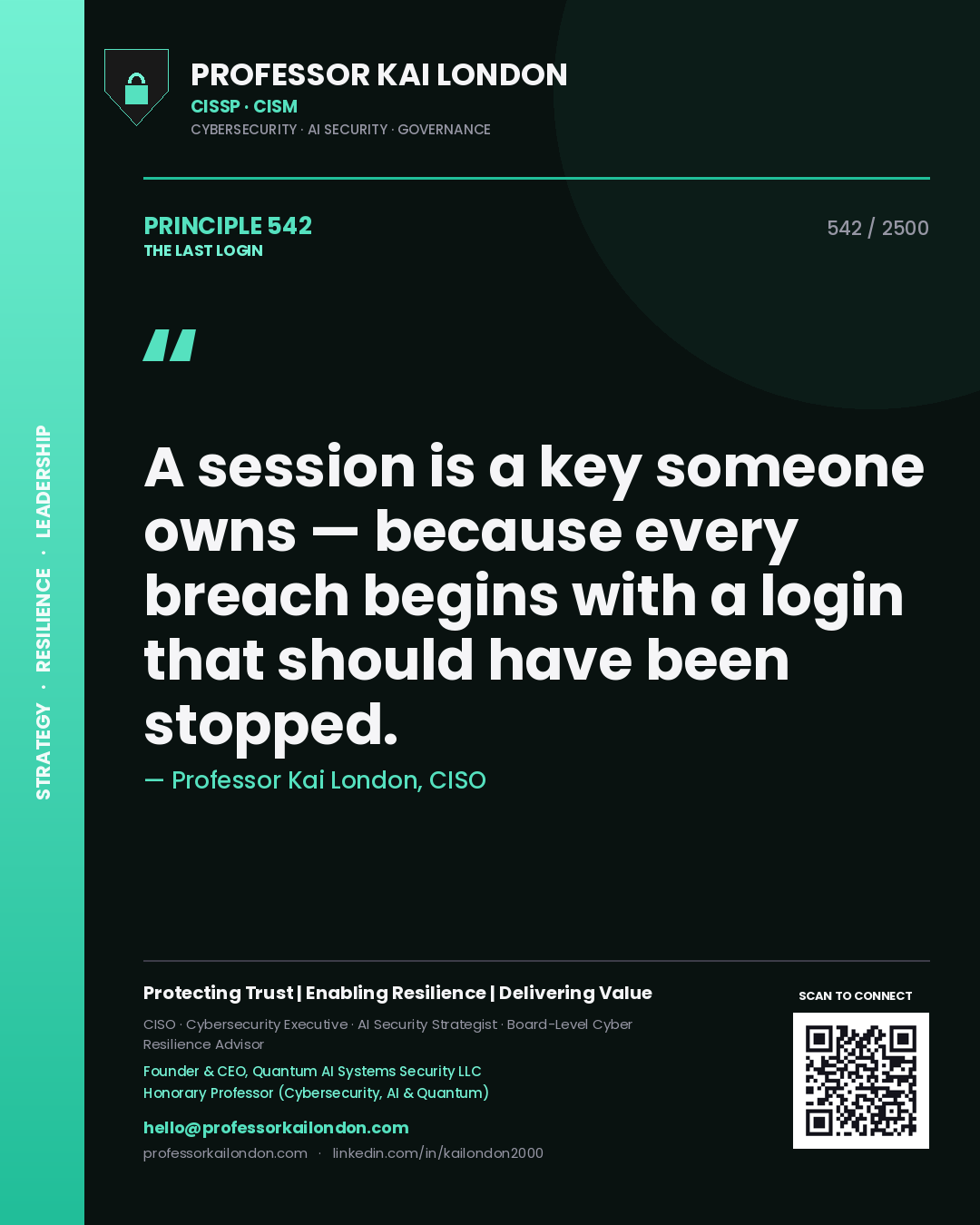
Professor Kai London principle 542: A session is a key someone owns — because every breach begins with a login that should have been stopped.
Principle 542
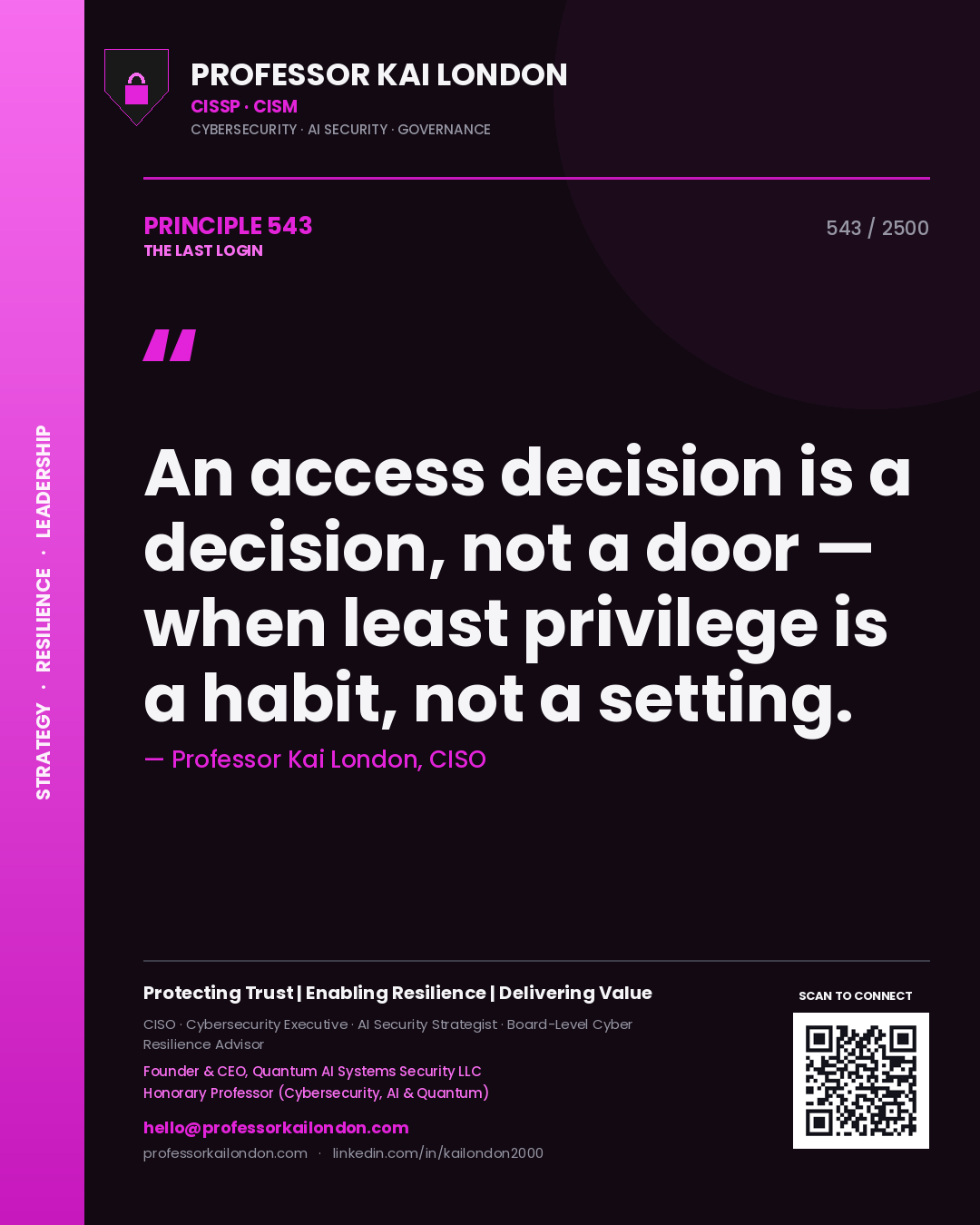
Professor Kai London principle 543: An access decision is a decision, not a door — when least privilege is a habit, not a setting.
Principle 543
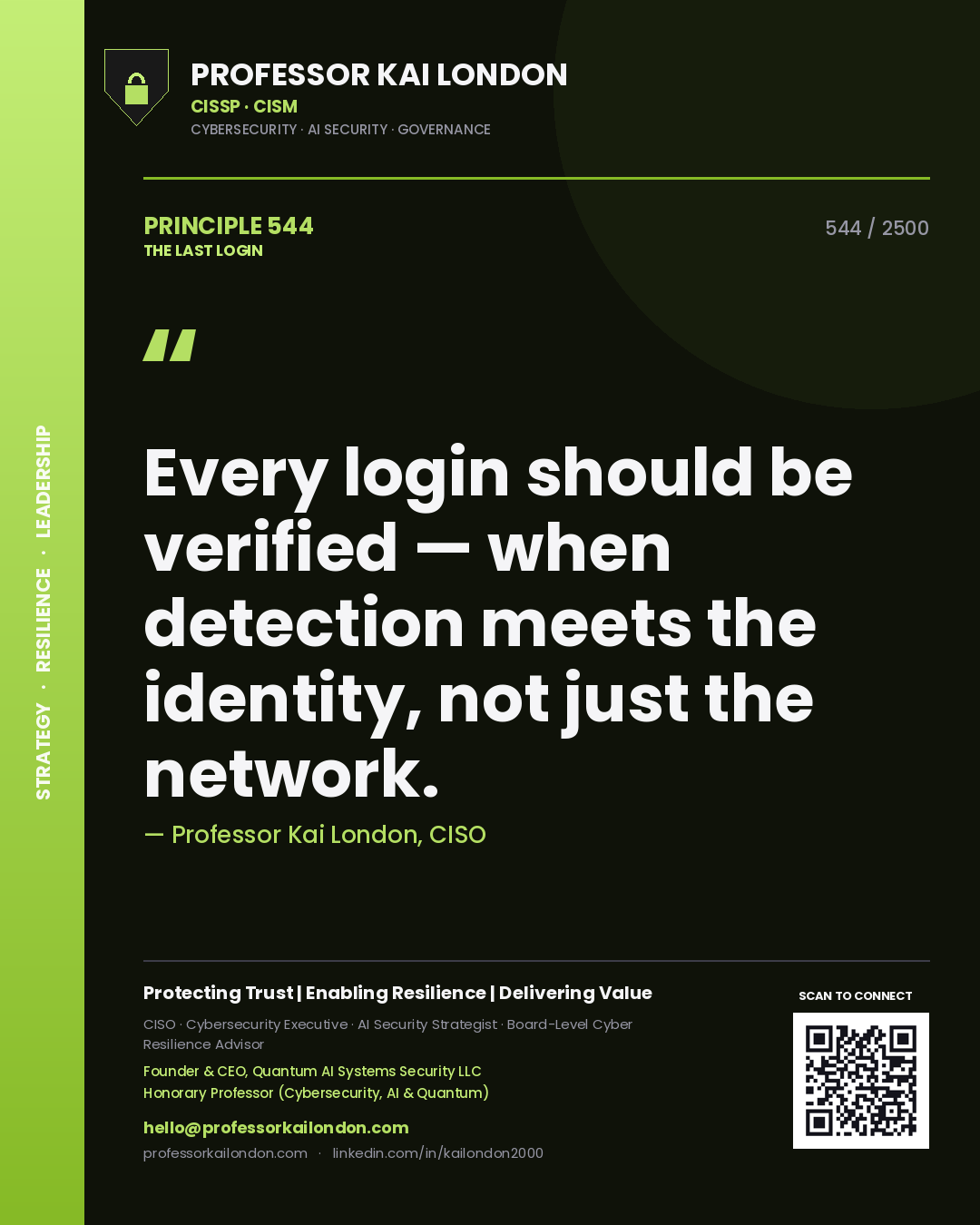
Professor Kai London principle 544: Every login should be verified — when detection meets the identity, not just the network.
Principle 544
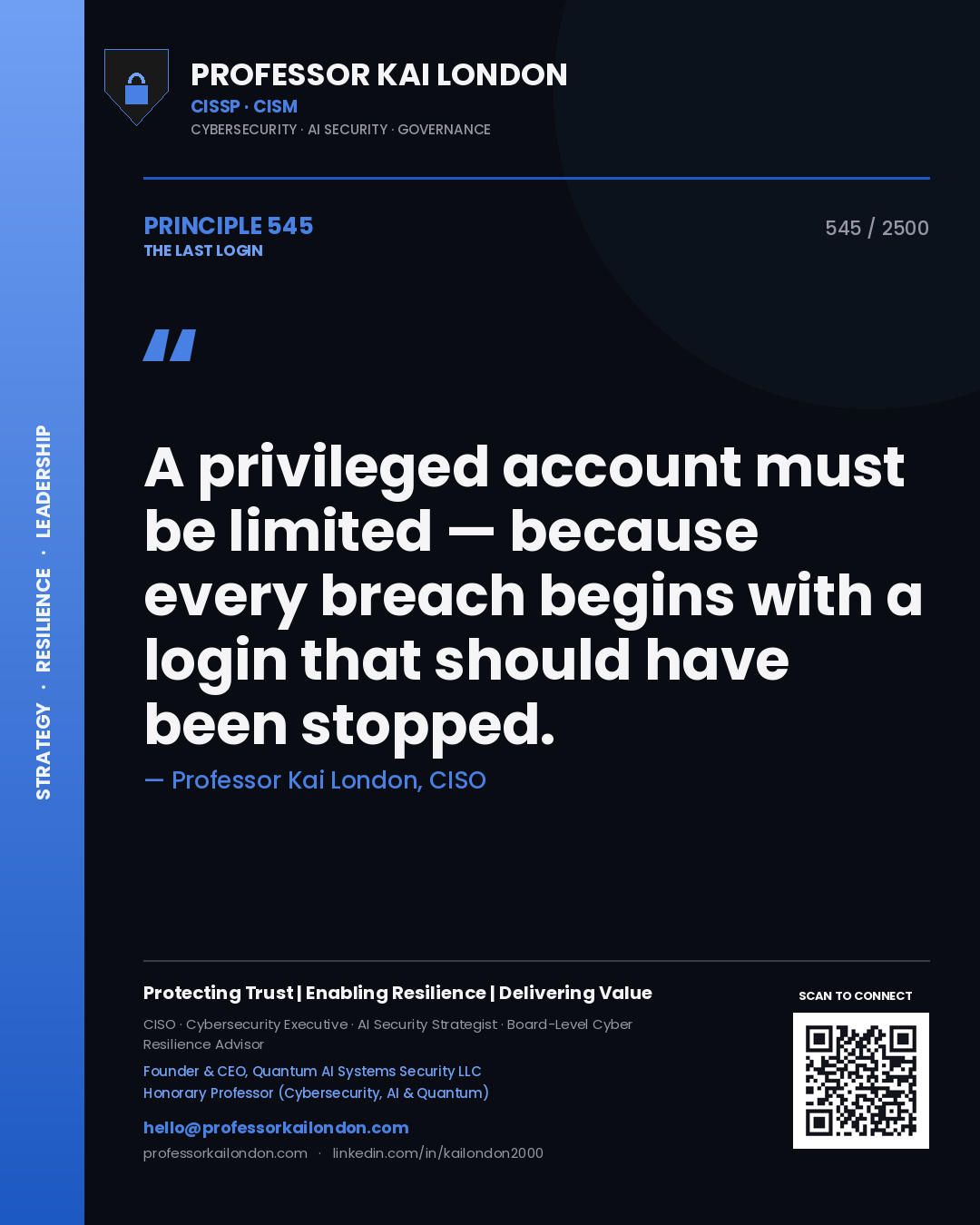
Professor Kai London principle 545: A privileged account must be limited — because every breach begins with a login that should have been stopped.
Principle 545
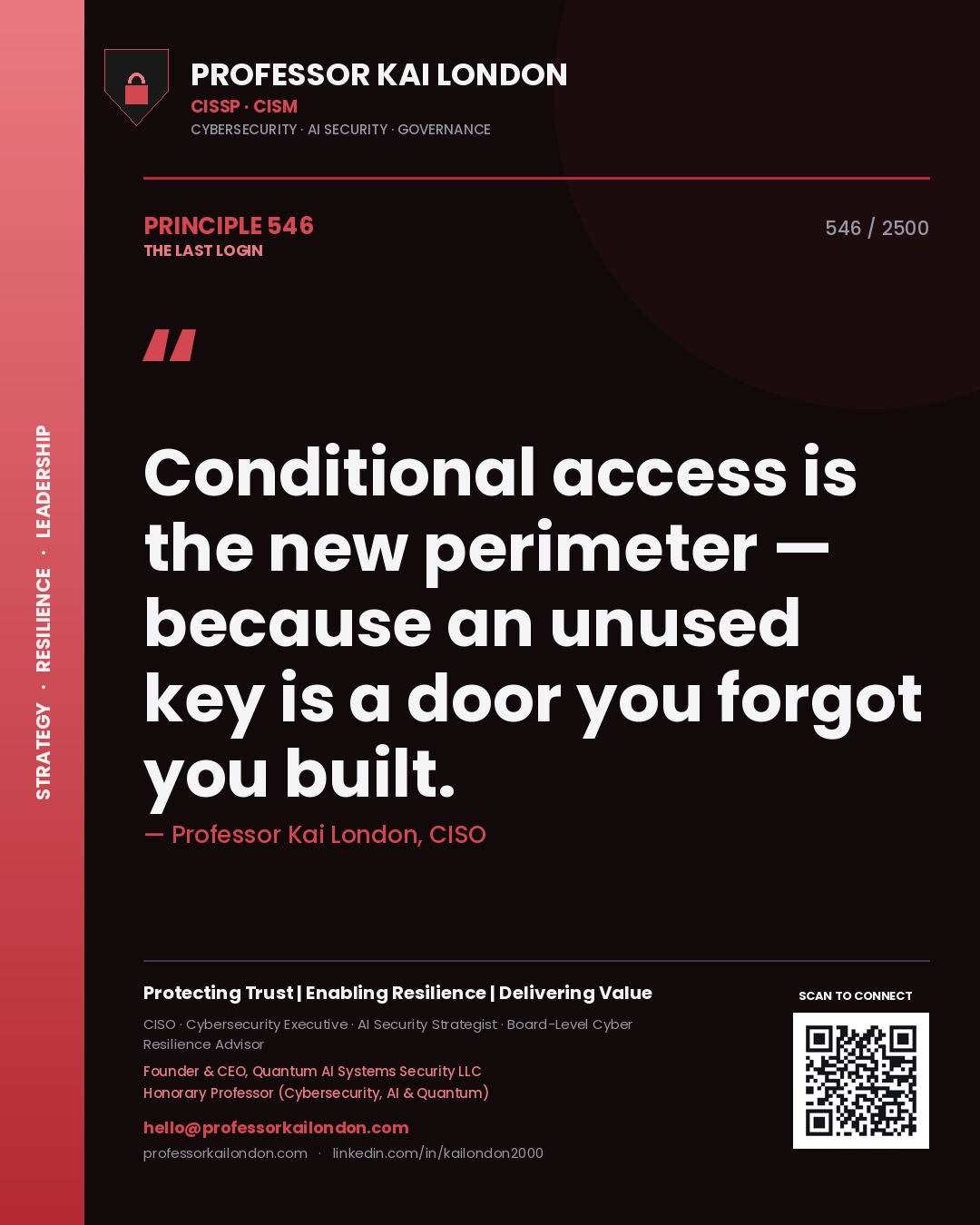
Professor Kai London principle 546: Conditional access is the new perimeter — because an unused key is a door you forgot you built.
Principle 546
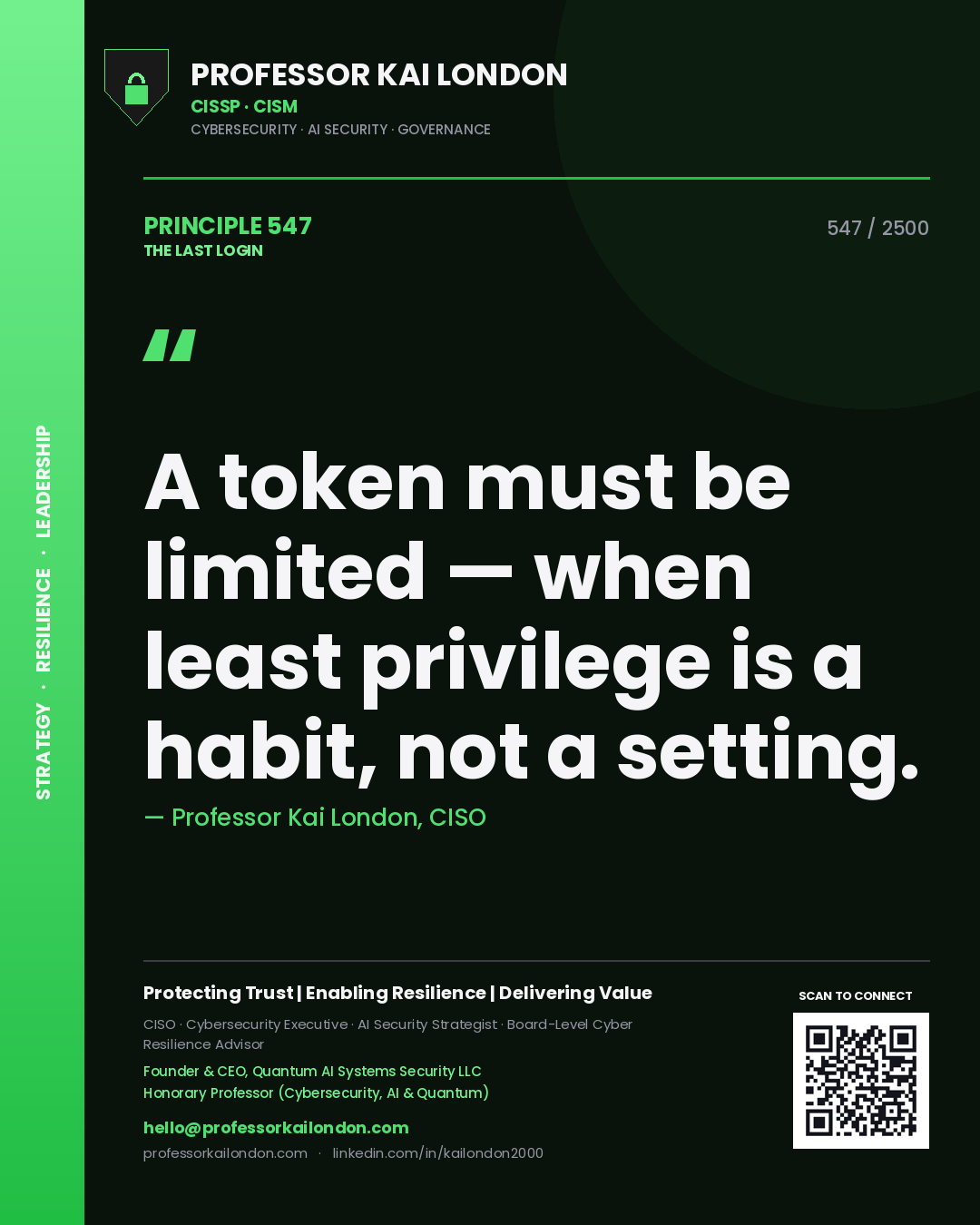
Professor Kai London principle 547: A token must be limited — when least privilege is a habit, not a setting.
Principle 547
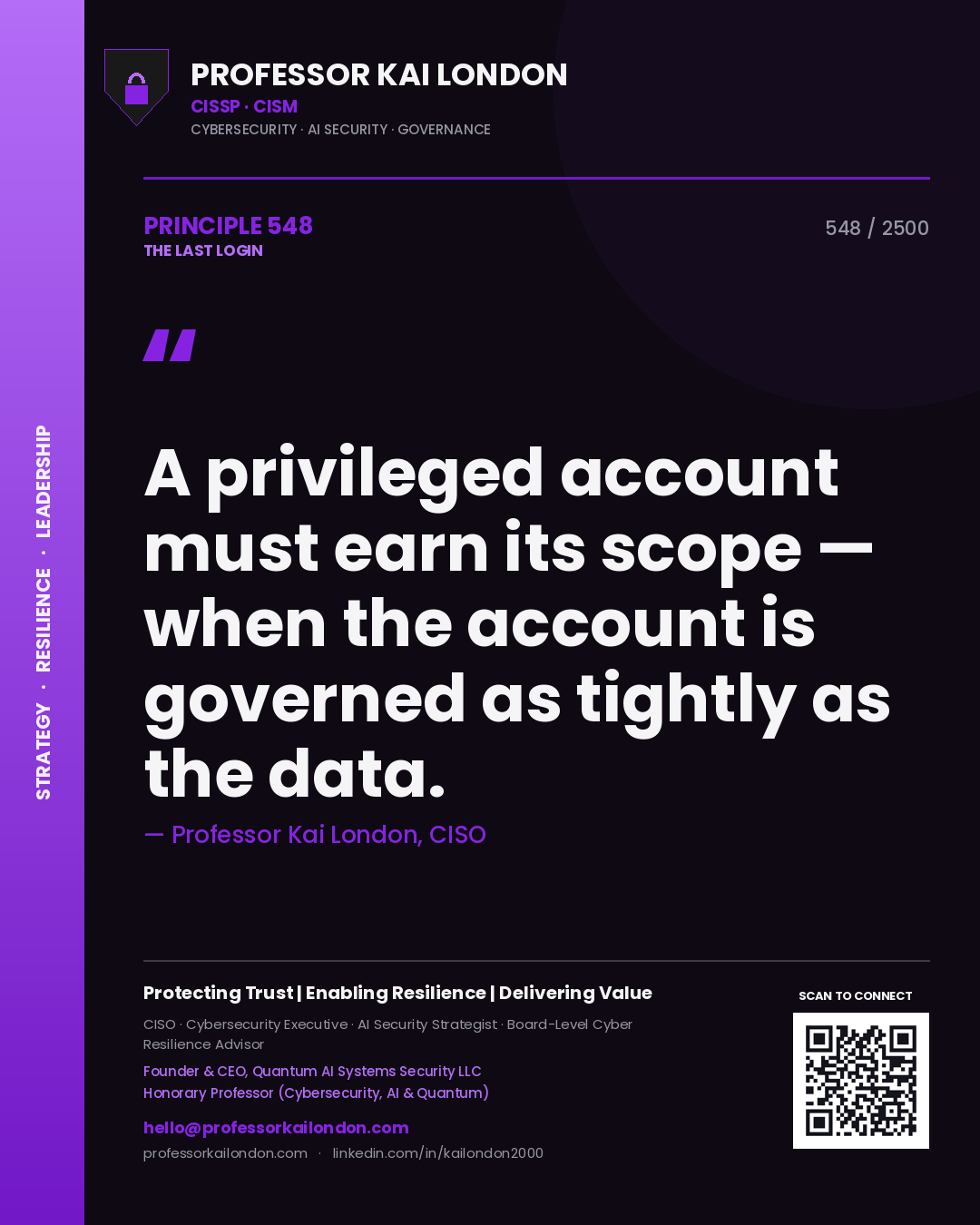
Professor Kai London principle 548: A privileged account must earn its scope — when the account is governed as tightly as the data.
Principle 548
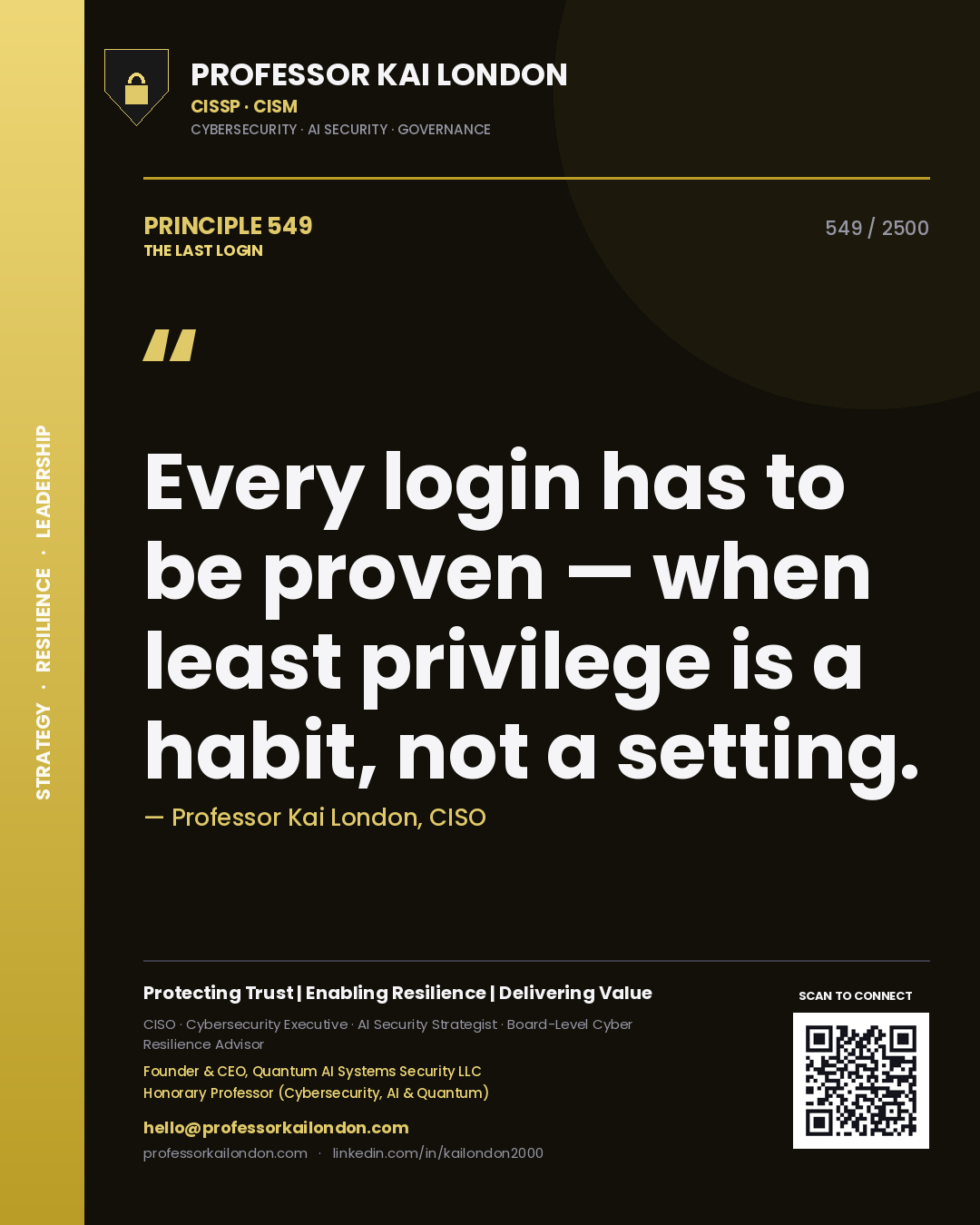
Professor Kai London principle 549: Every login has to be proven — when least privilege is a habit, not a setting.
Principle 549
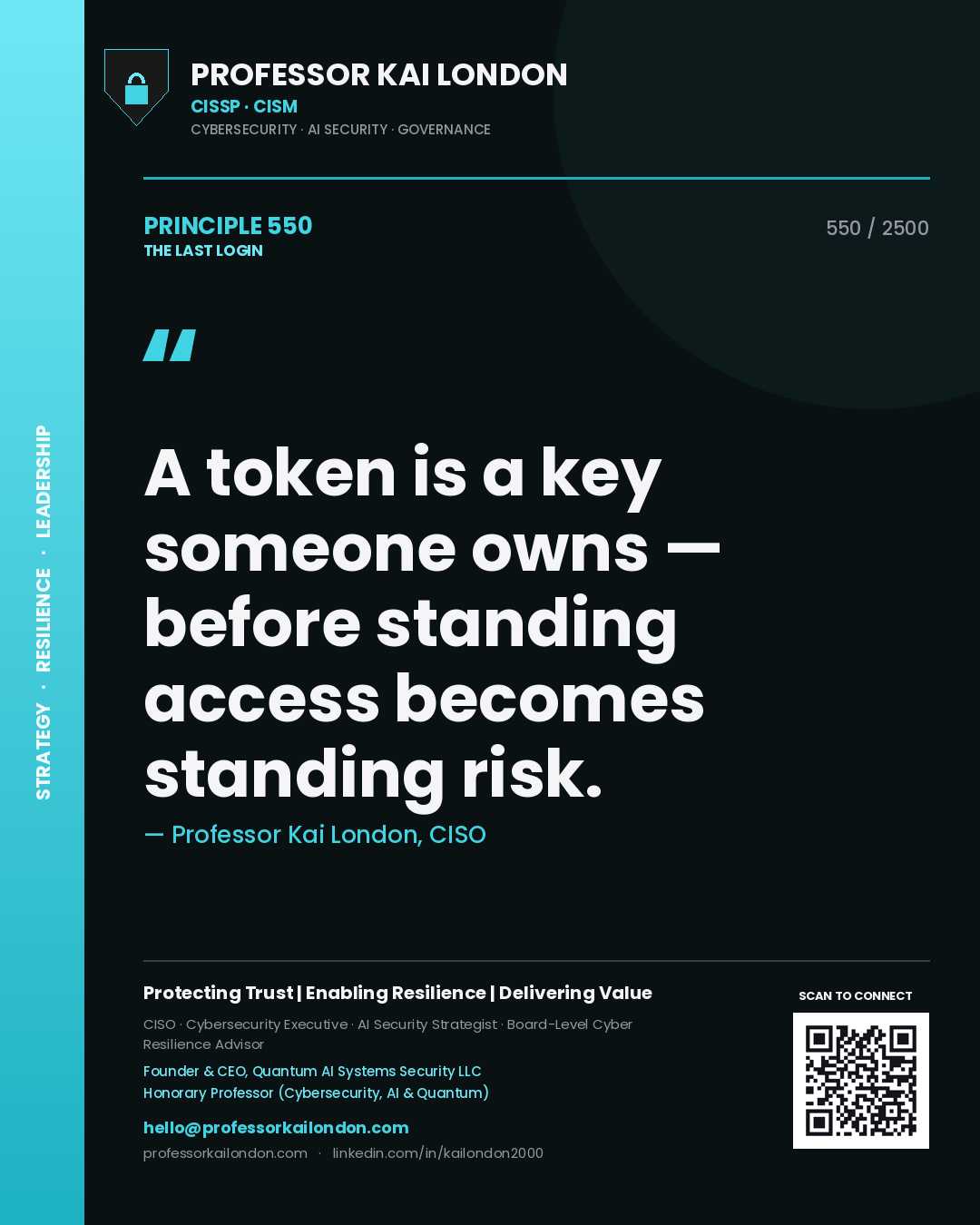
Professor Kai London principle 550: A token is a key someone owns — before standing access becomes standing risk.
Principle 550
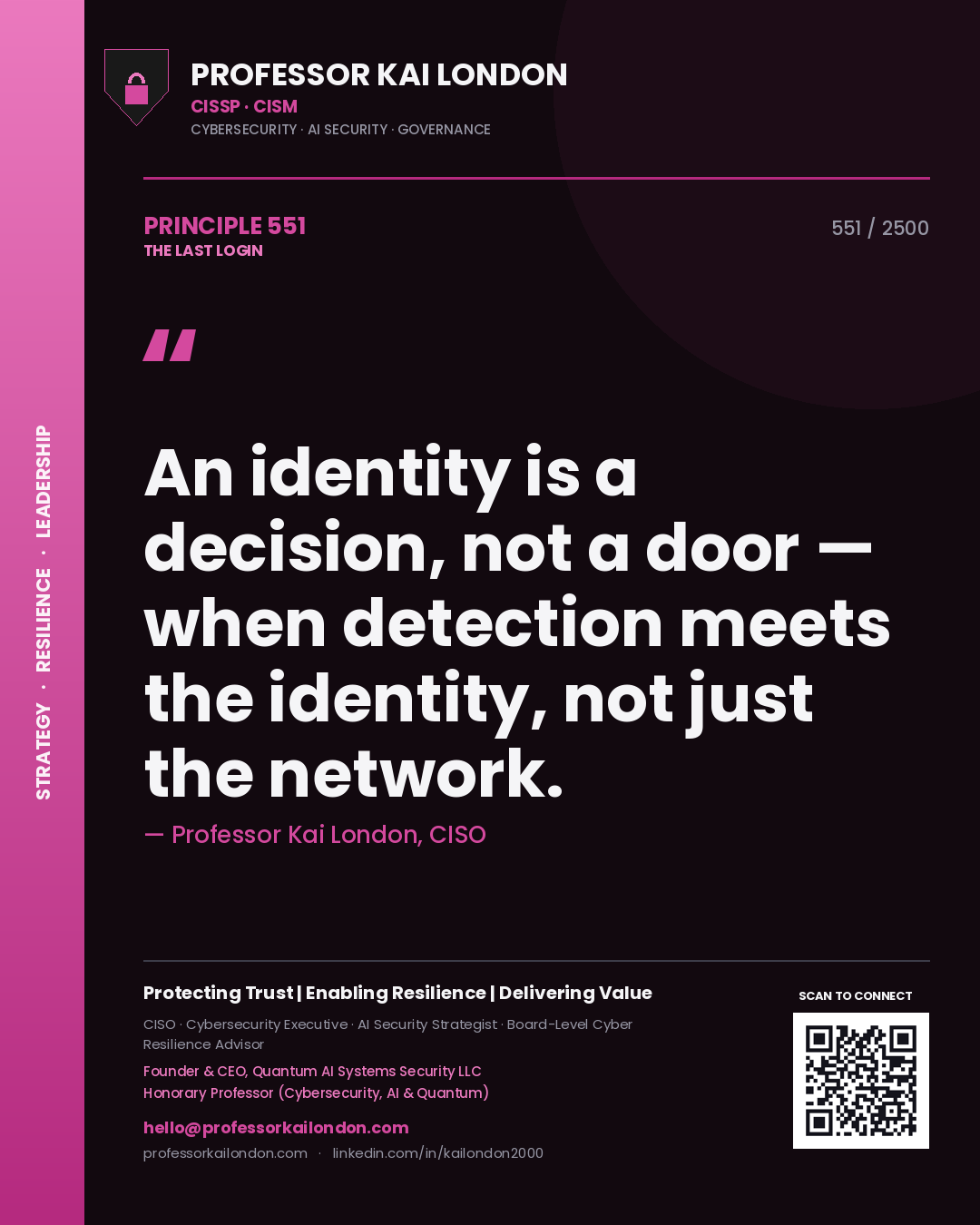
Professor Kai London principle 551: An identity is a decision, not a door — when detection meets the identity, not just the network.
Principle 551
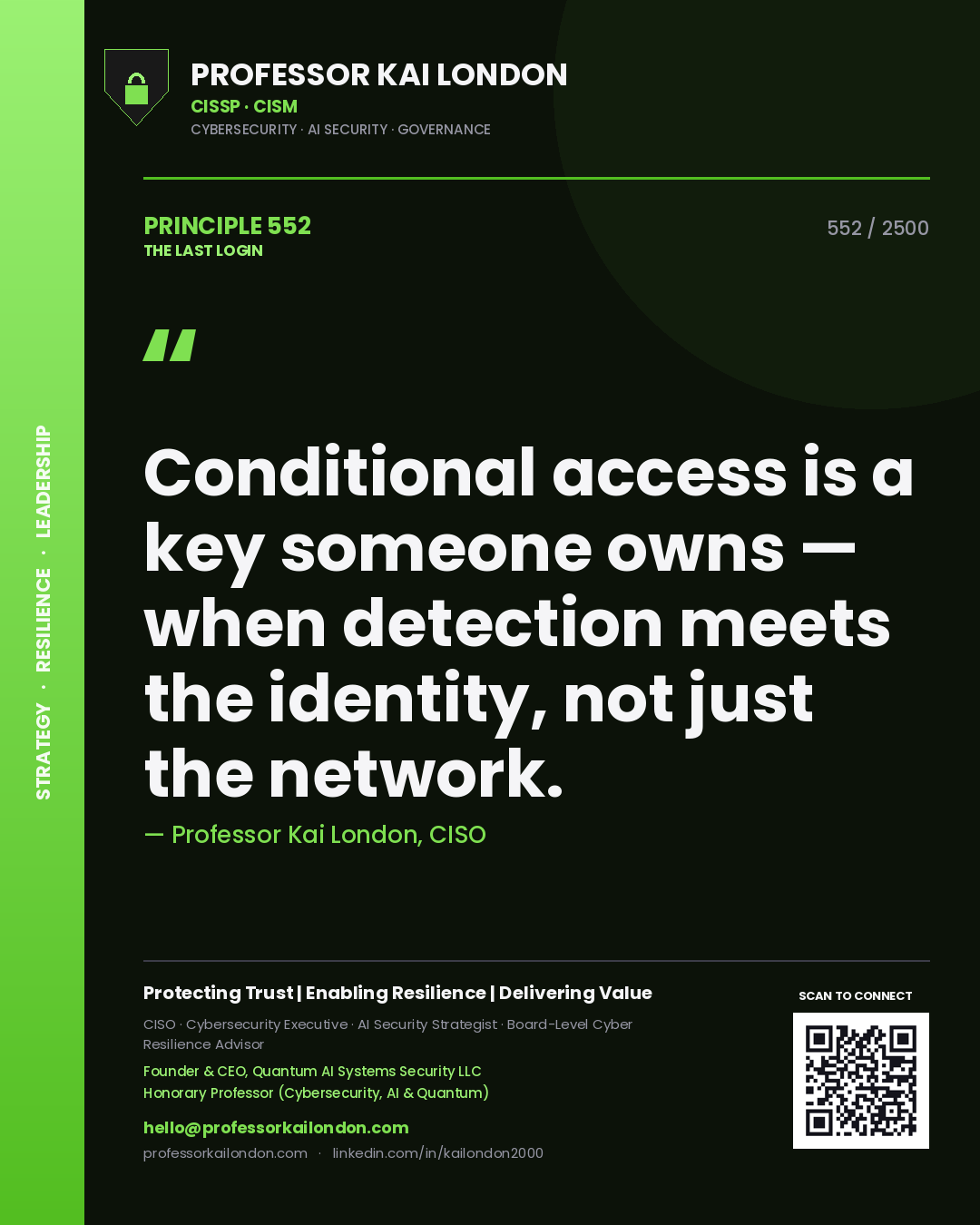
Professor Kai London principle 552: Conditional access is a key someone owns — when detection meets the identity, not just the network.
Principle 552
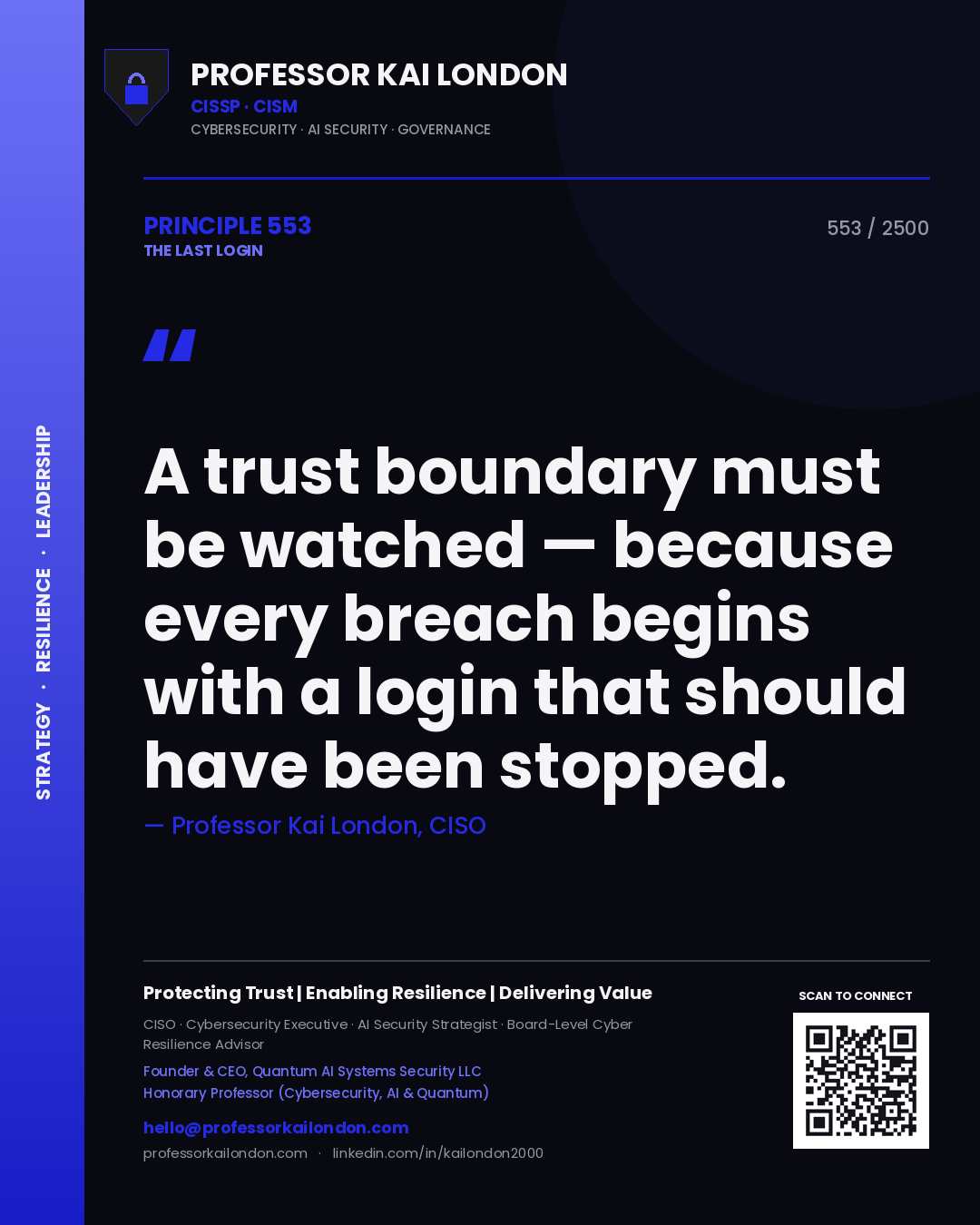
Professor Kai London principle 553: A trust boundary must be watched — because every breach begins with a login that should have been stopped.
Principle 553
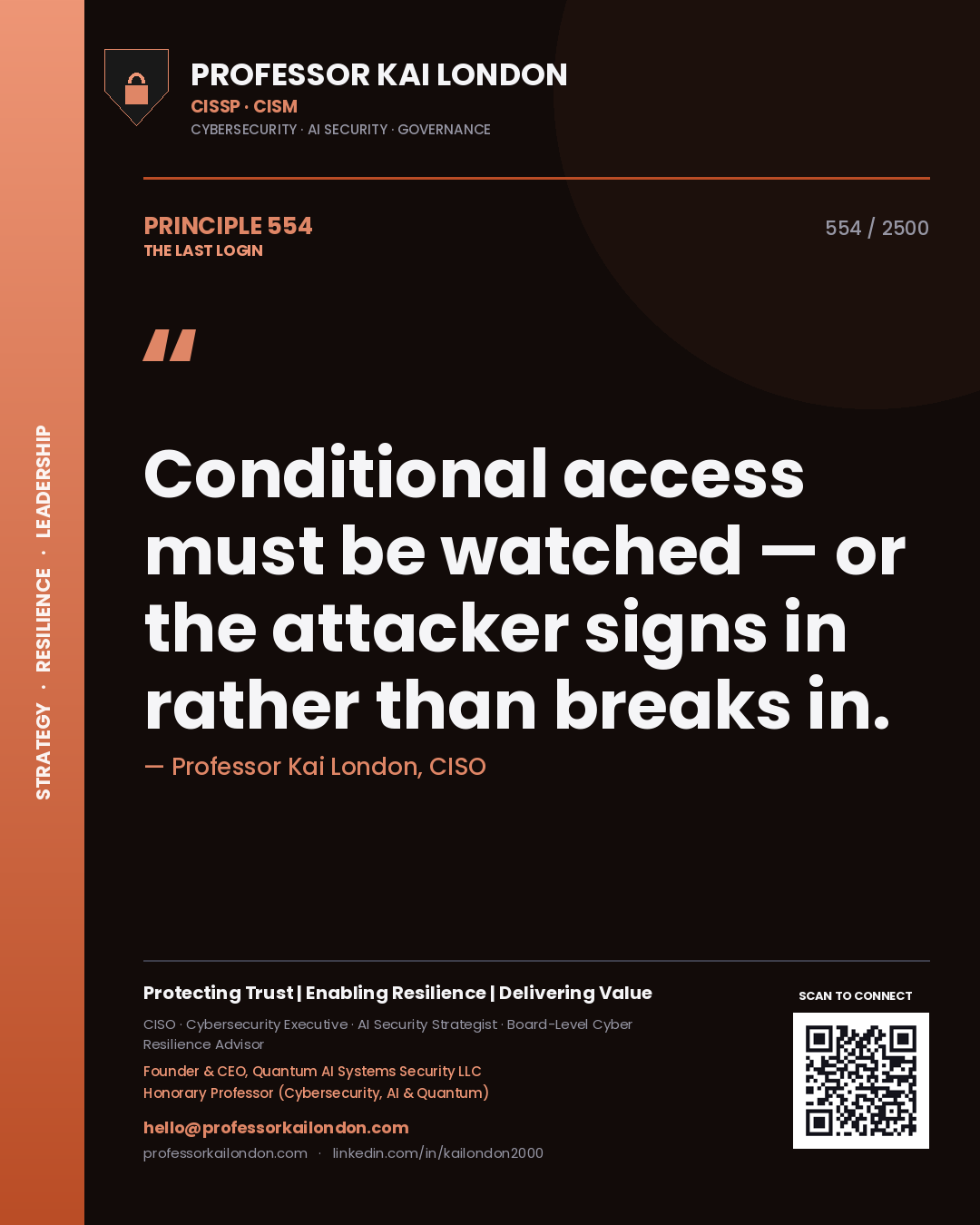
Professor Kai London principle 554: Conditional access must be watched — or the attacker signs in rather than breaks in.
Principle 554
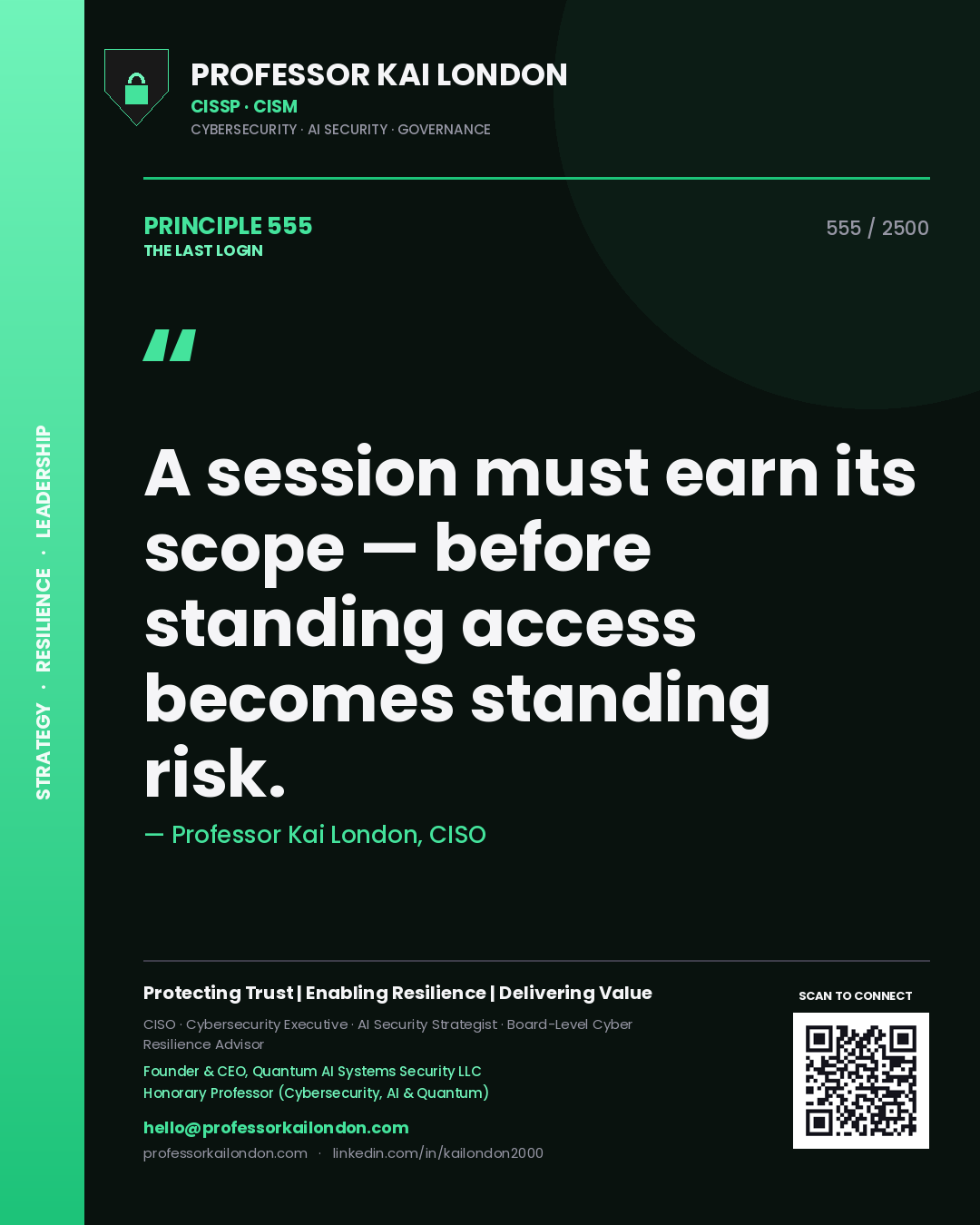
Professor Kai London principle 555: A session must earn its scope — before standing access becomes standing risk.
Principle 555
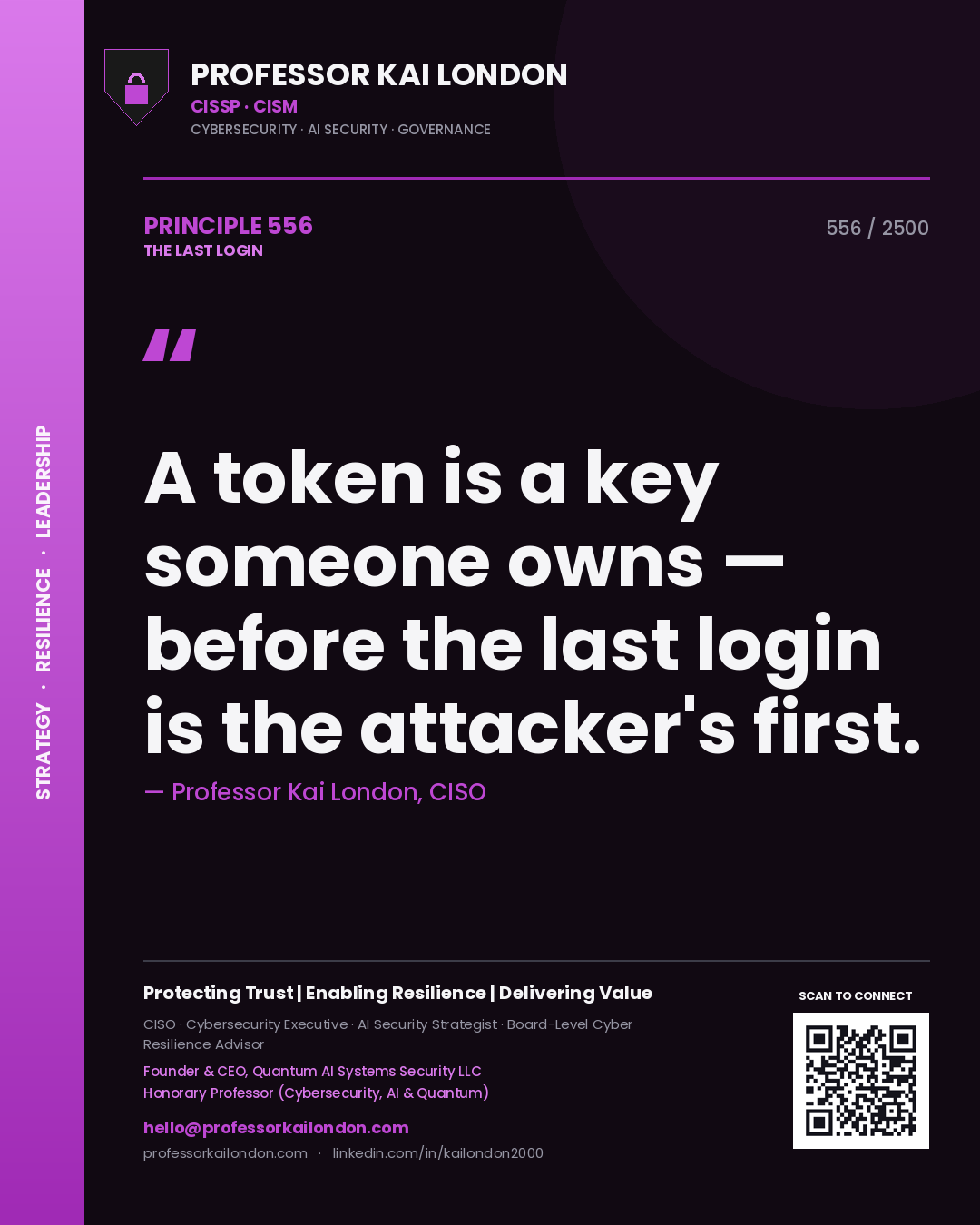
Professor Kai London principle 556: A token is a key someone owns — before the last login is the attacker's first.
Principle 556
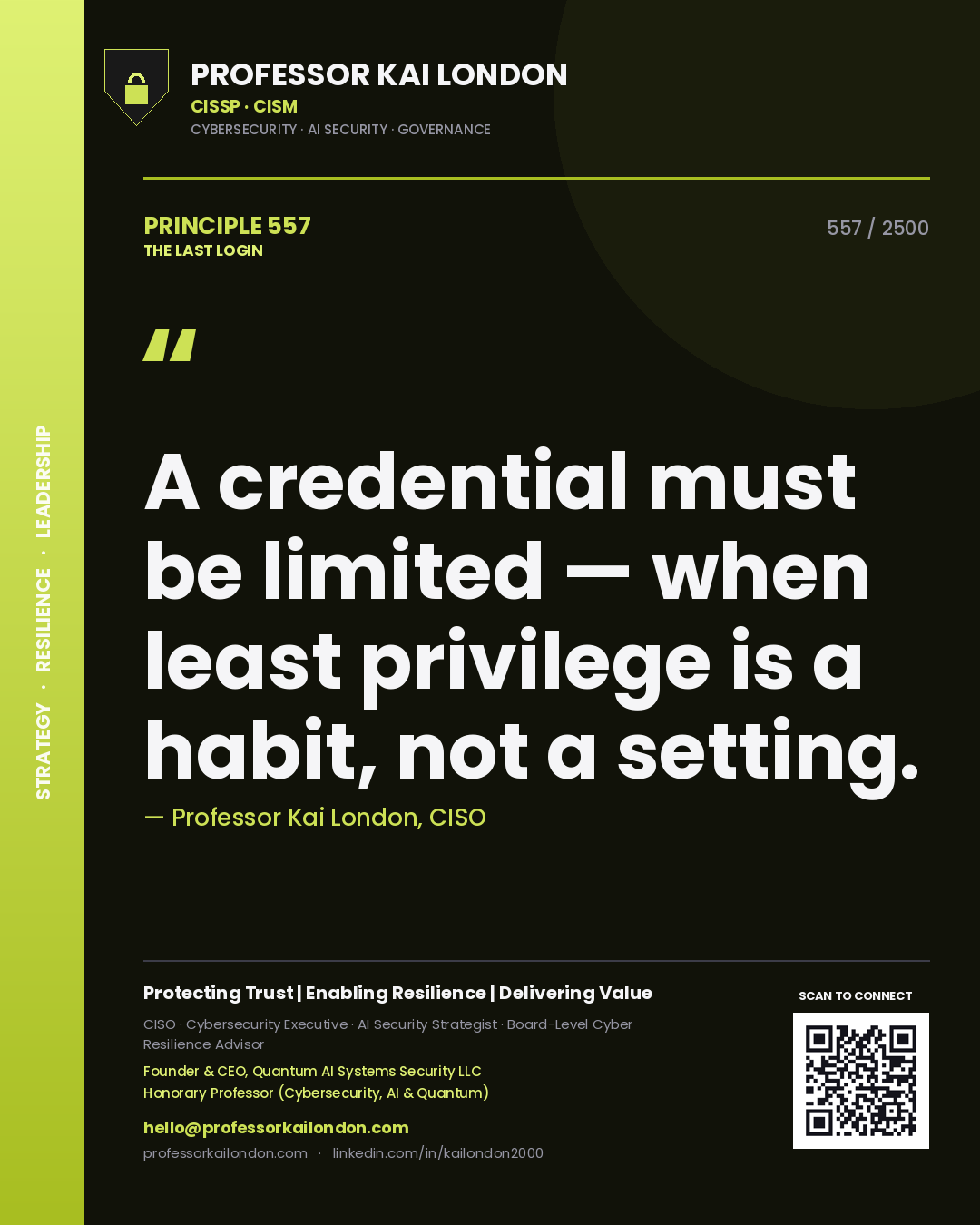
Professor Kai London principle 557: A credential must be limited — when least privilege is a habit, not a setting.
Principle 557
Professor Kai London principle 558: A trust boundary has to be proven — or the attacker signs in rather than breaks in.
Principle 558
Professor Kai London principle 559: An authentication event is the new perimeter — the moment trust is assumed instead of checked.
Principle 559
Professor Kai London principle 560: Conditional access must be watched.
Principle 560
Professor Kai London principle 561: A session is a key someone owns — the moment trust is assumed instead of checked.
Principle 561
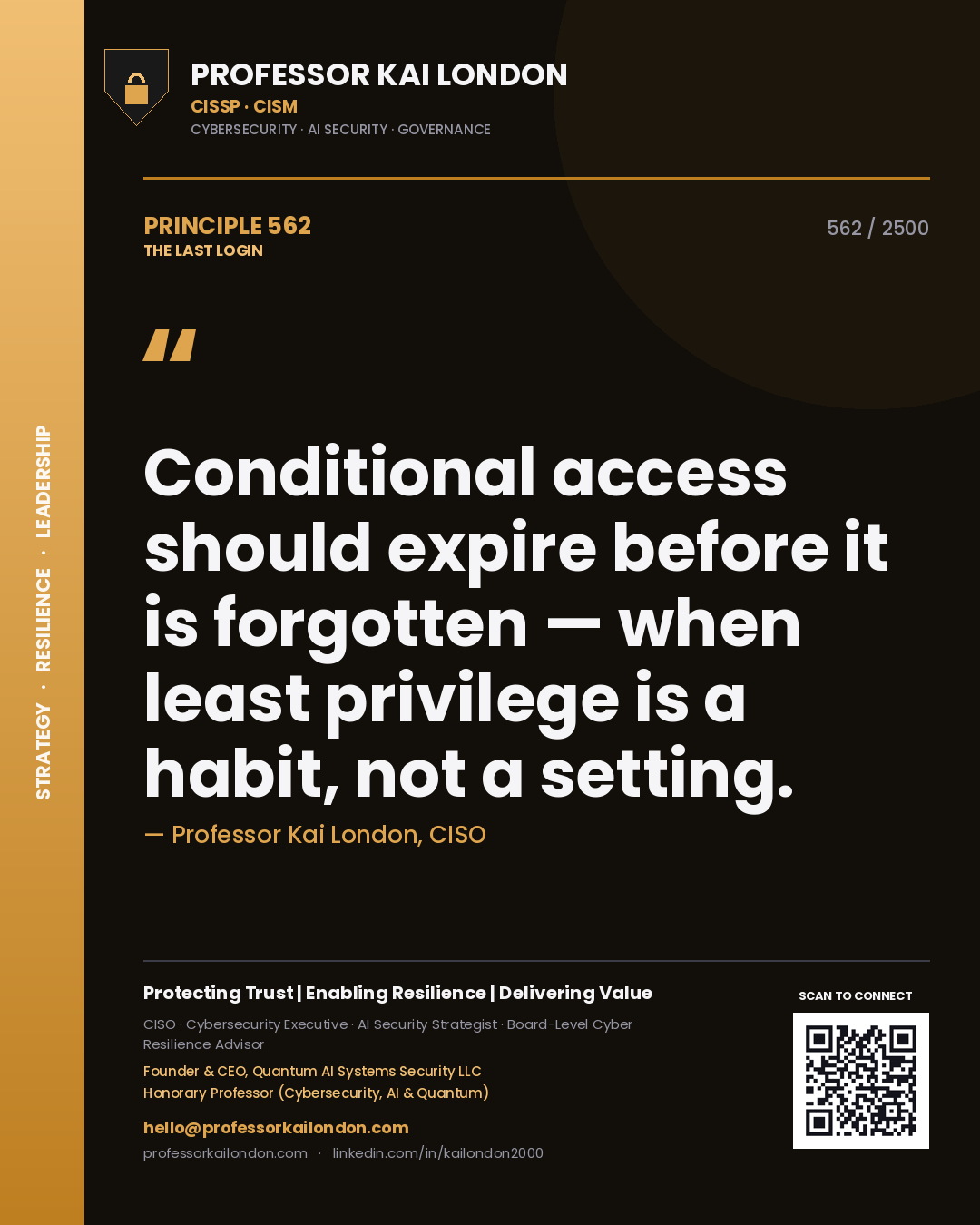
Professor Kai London principle 562: Conditional access should expire before it is forgotten — when least privilege is a habit, not a setting.
Principle 562
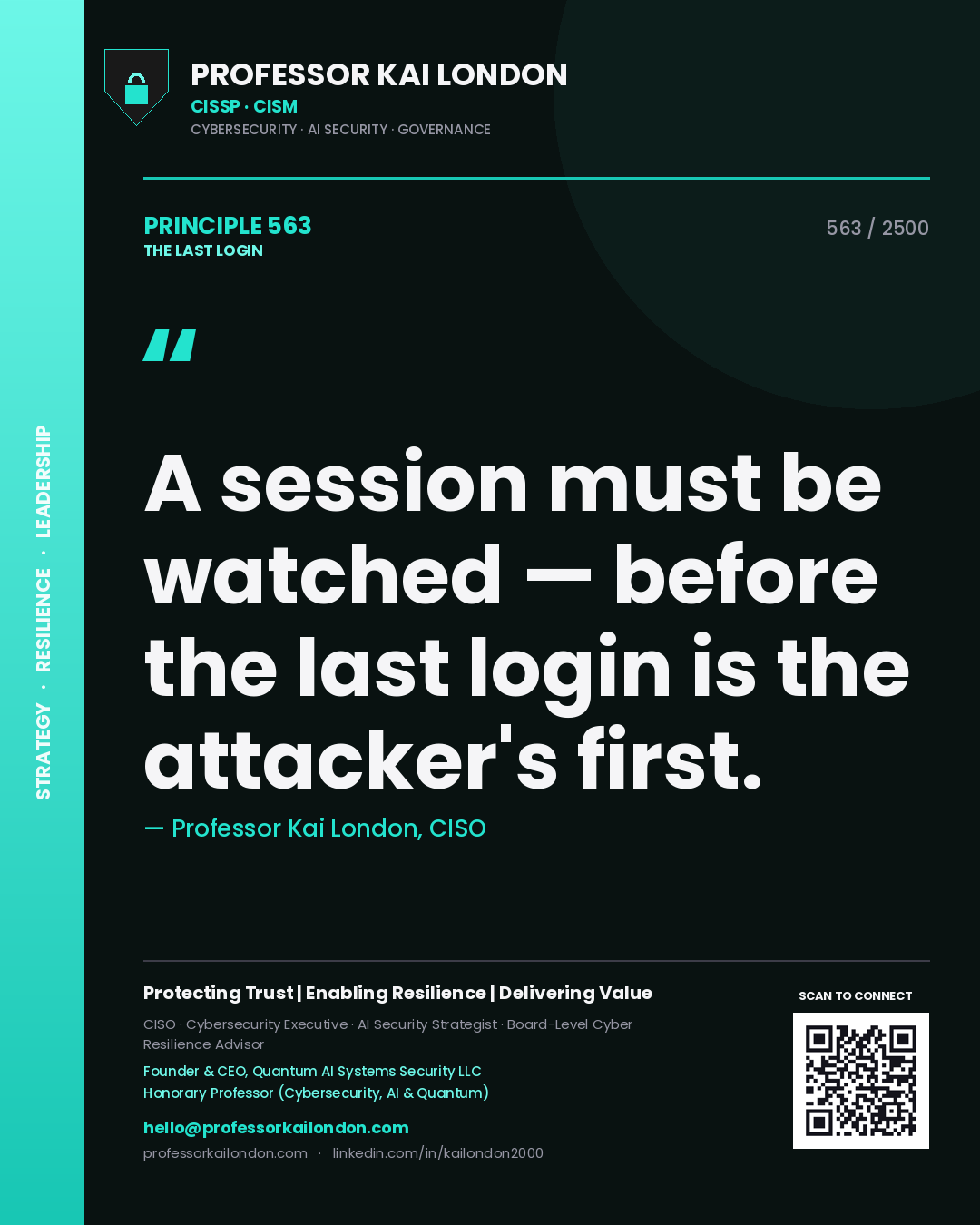
Professor Kai London principle 563: A session must be watched — before the last login is the attacker's first.
Principle 563
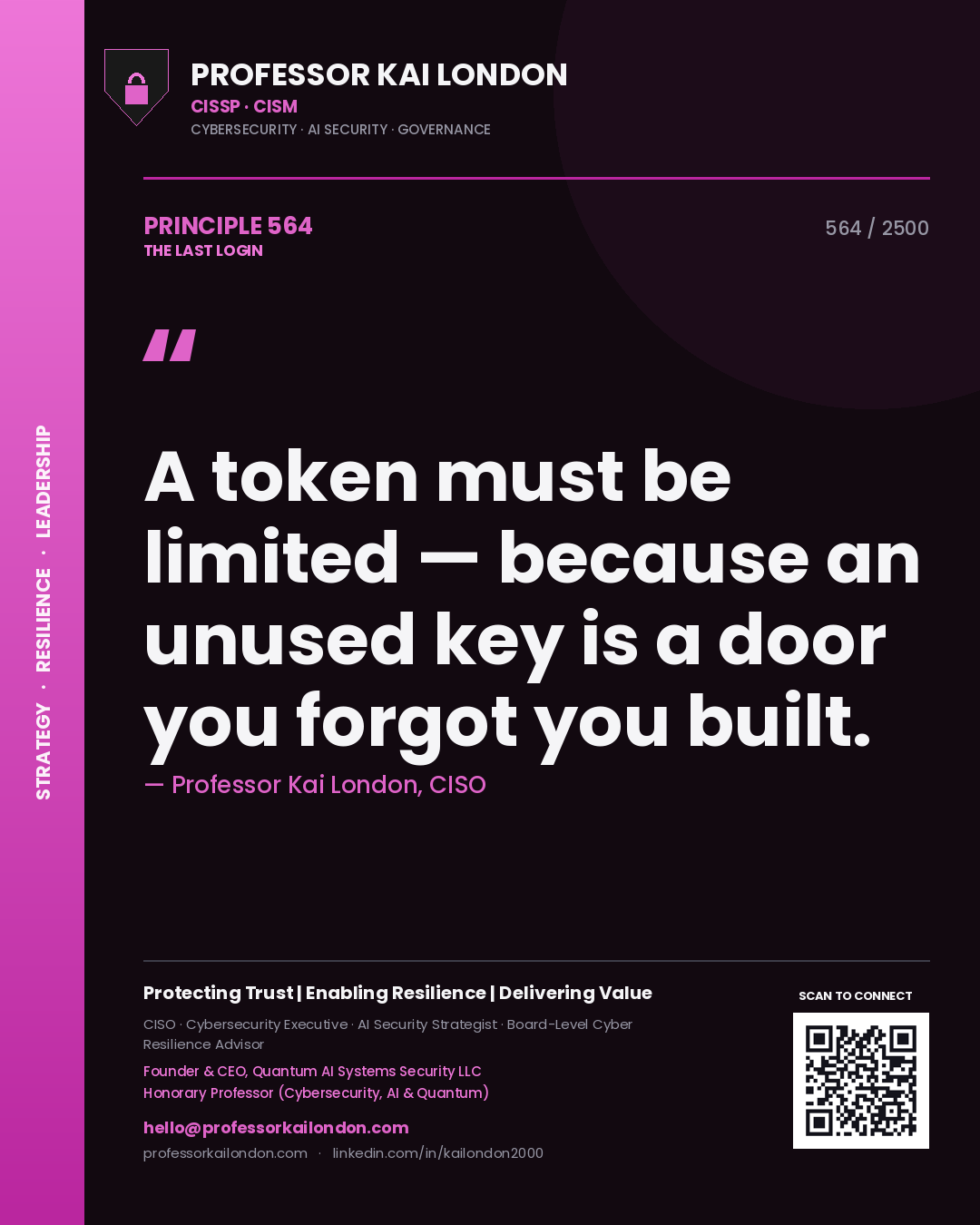
Professor Kai London principle 564: A token must be limited — because an unused key is a door you forgot you built.
Principle 564
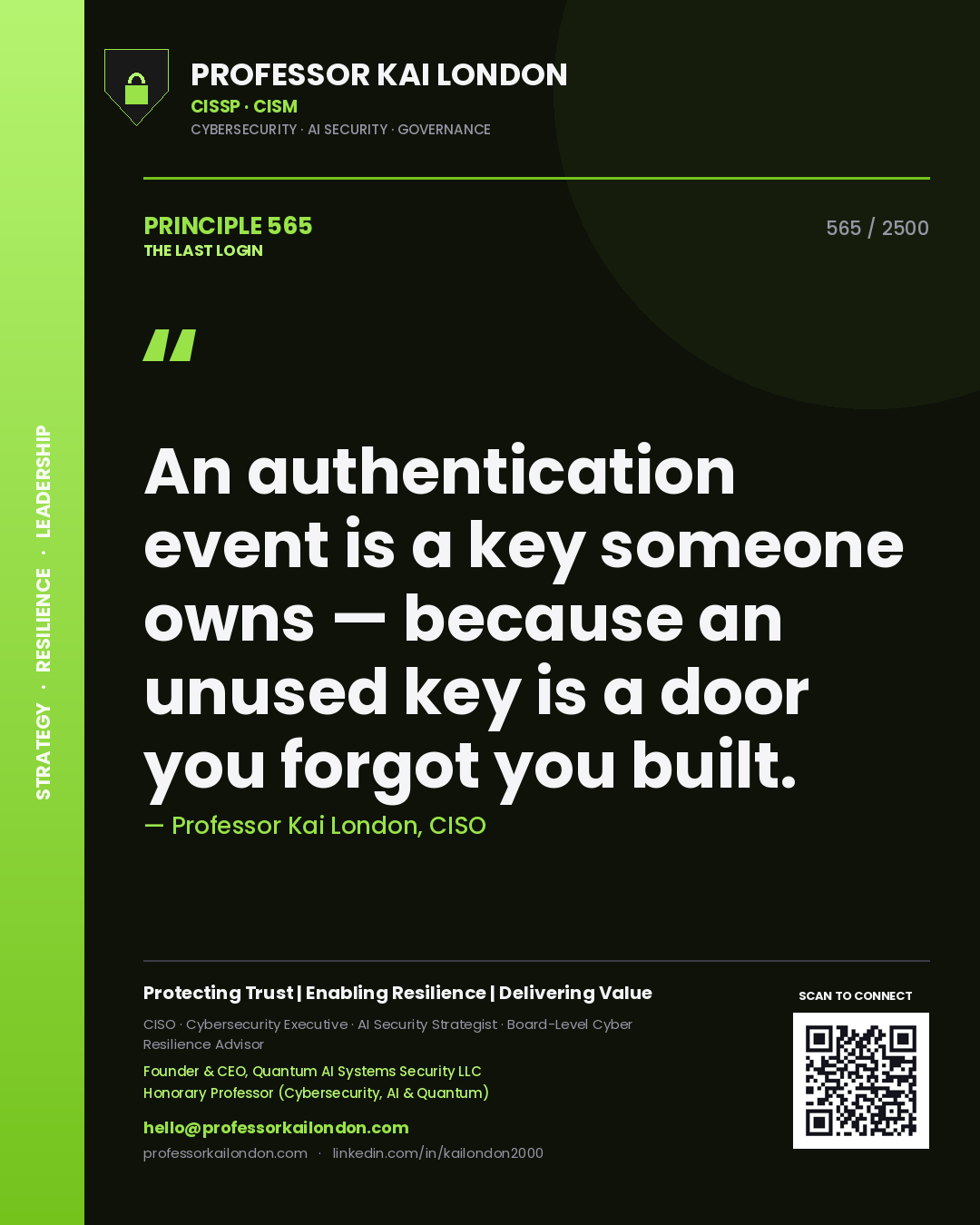
Professor Kai London principle 565: An authentication event is a key someone owns — because an unused key is a door you forgot you built.
Principle 565
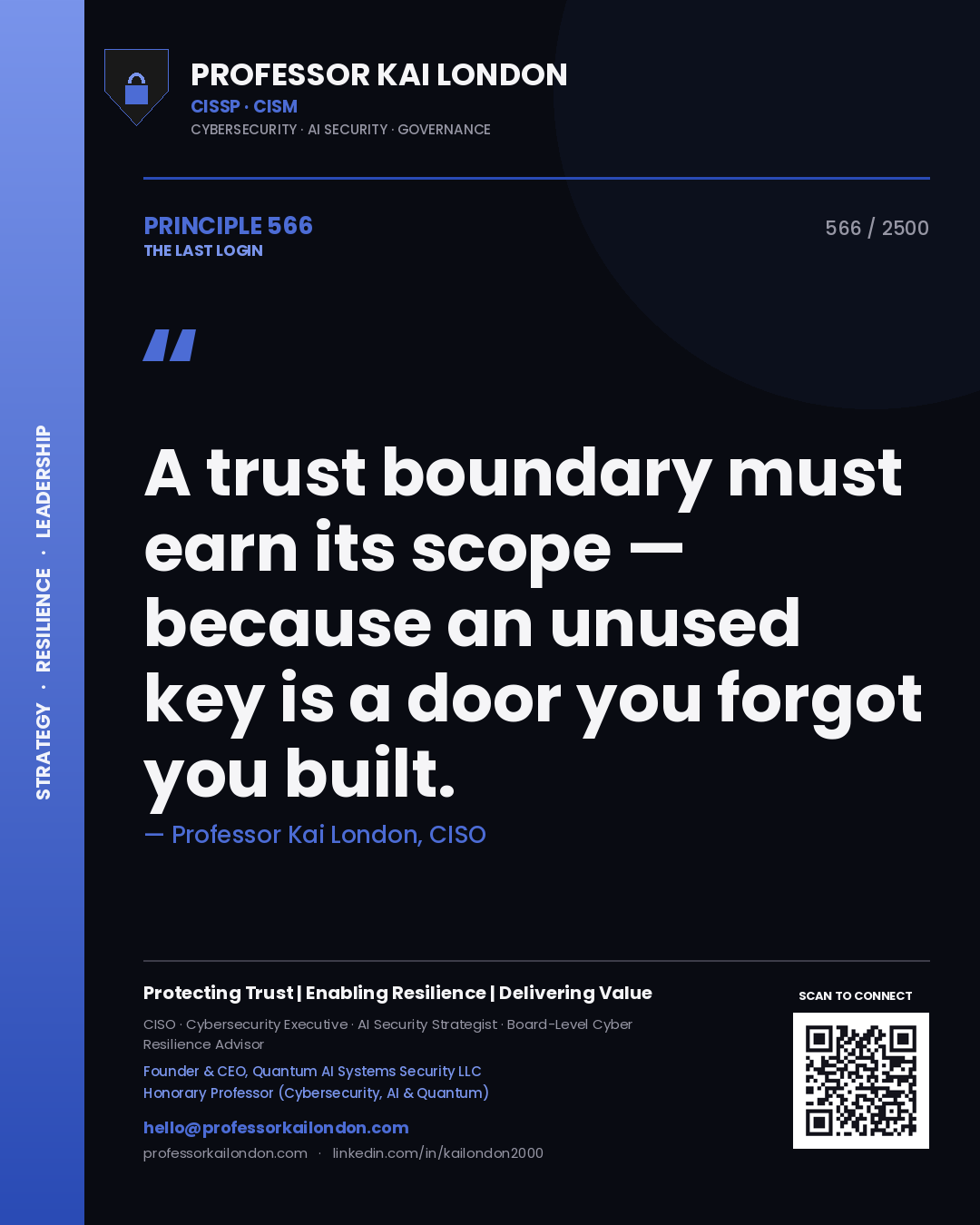
Professor Kai London principle 566: A trust boundary must earn its scope — because an unused key is a door you forgot you built.
Principle 566
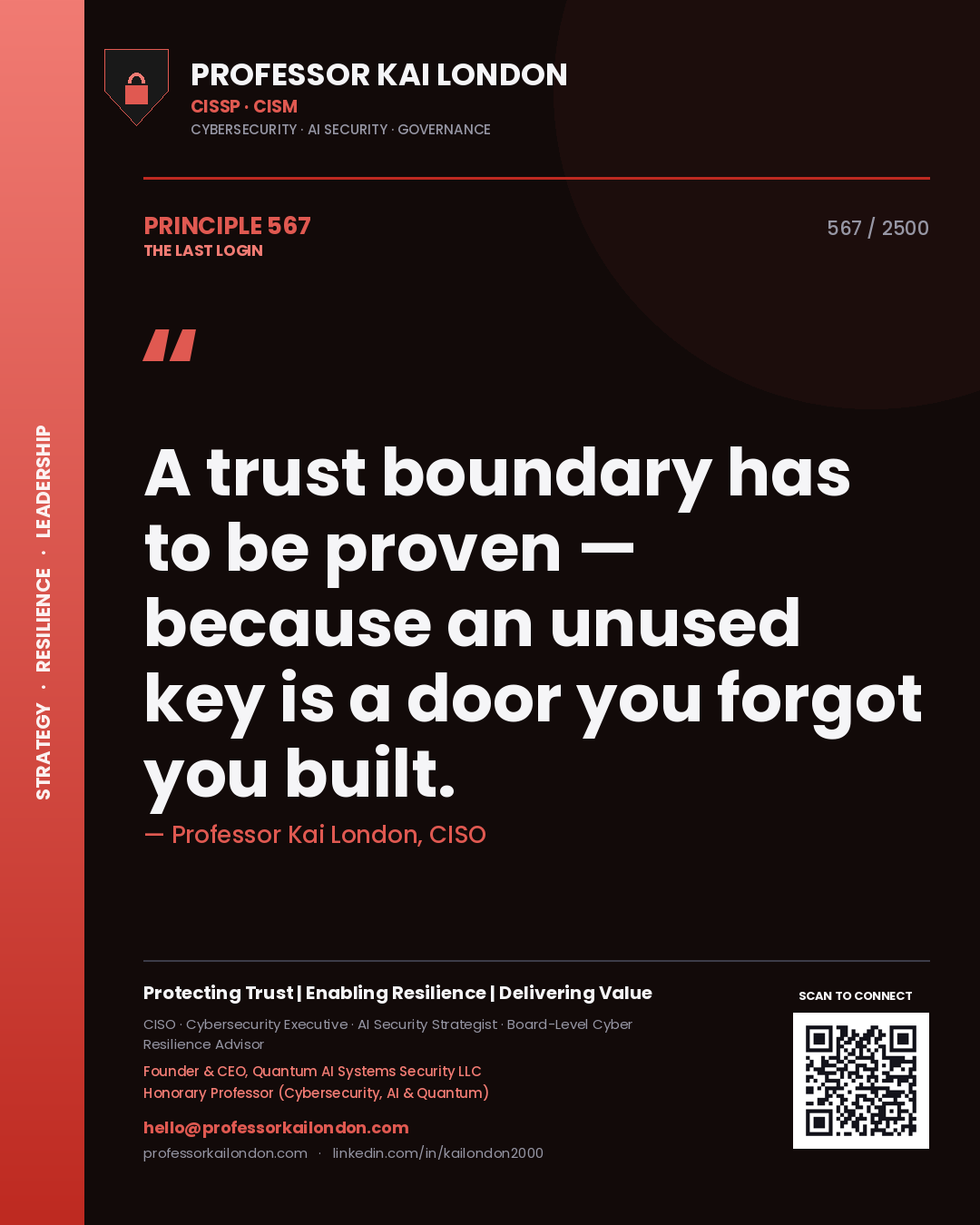
Professor Kai London principle 567: A trust boundary has to be proven — because an unused key is a door you forgot you built.
Principle 567
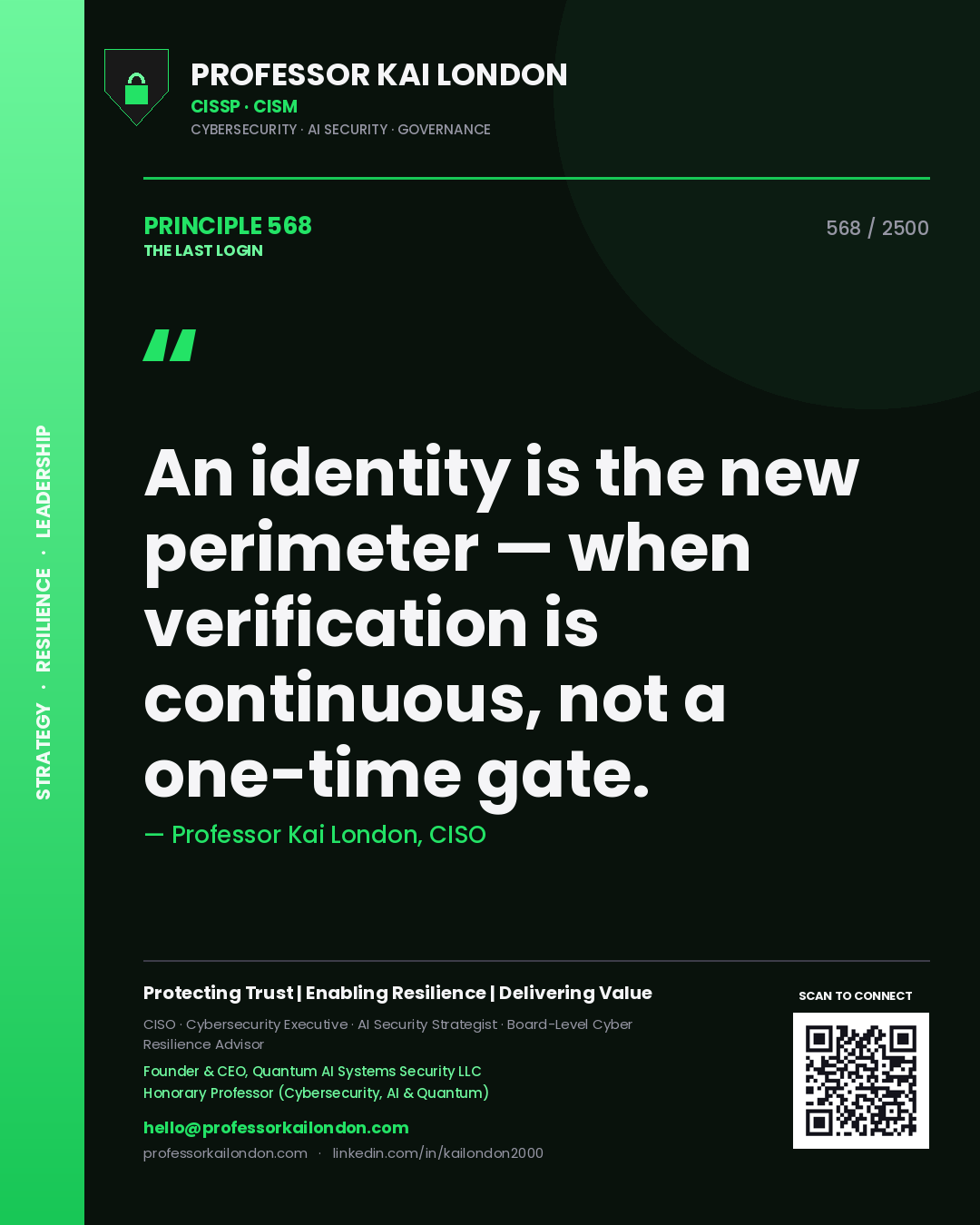
Professor Kai London principle 568: An identity is the new perimeter — when verification is continuous, not a one-time gate.
Principle 568
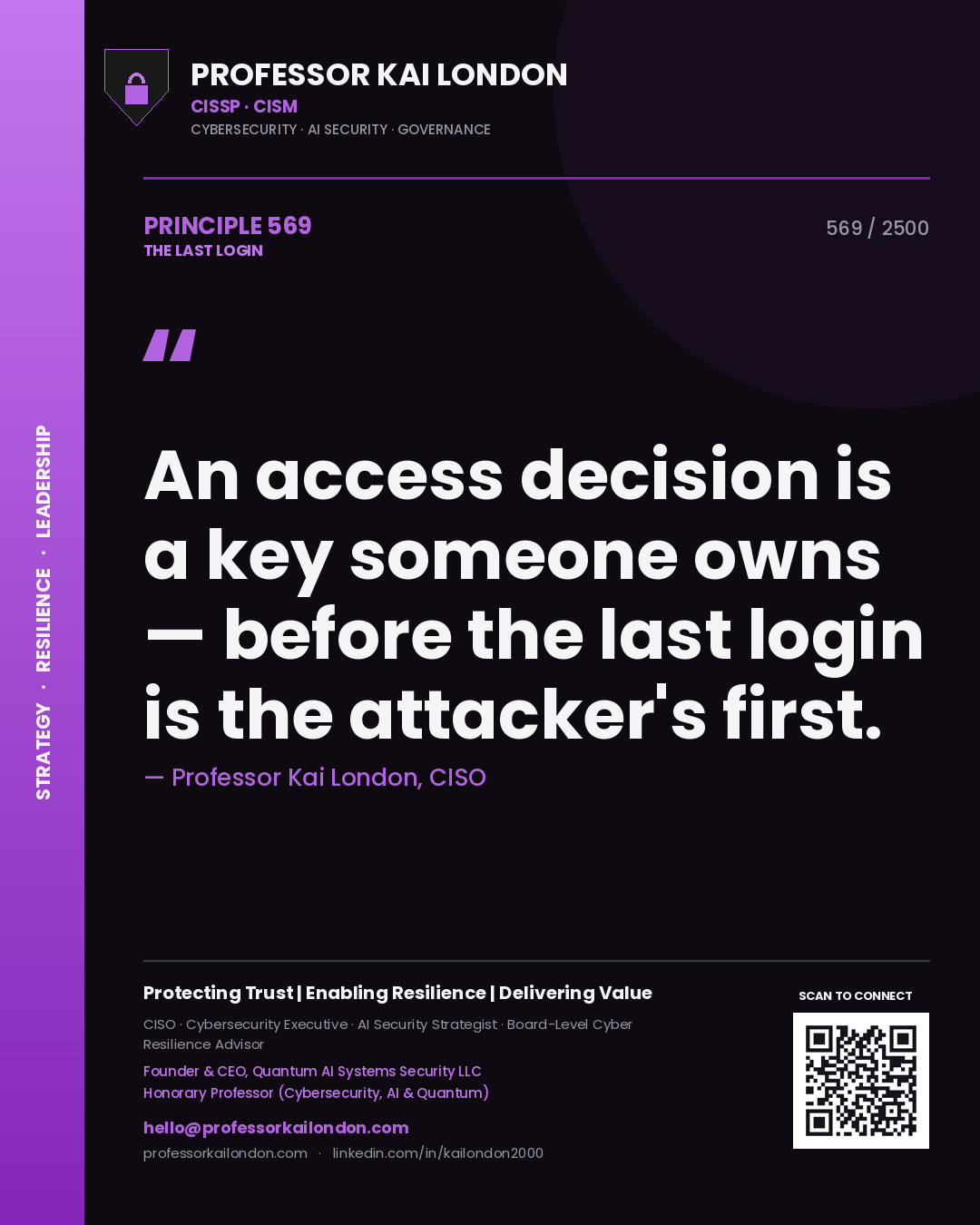
Professor Kai London principle 569: An access decision is a key someone owns — before the last login is the attacker's first.
Principle 569
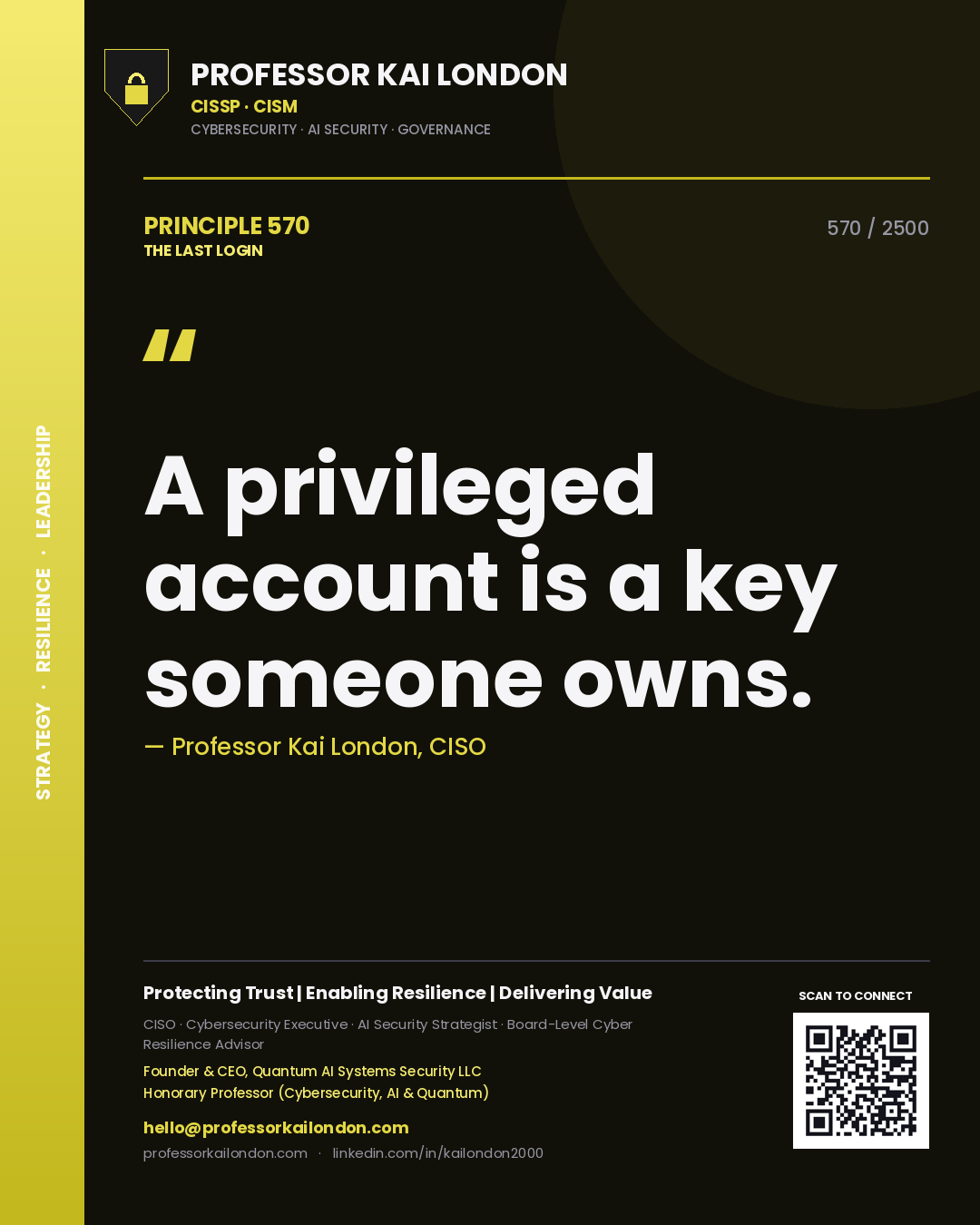
Professor Kai London principle 570: A privileged account is a key someone owns.
Principle 570
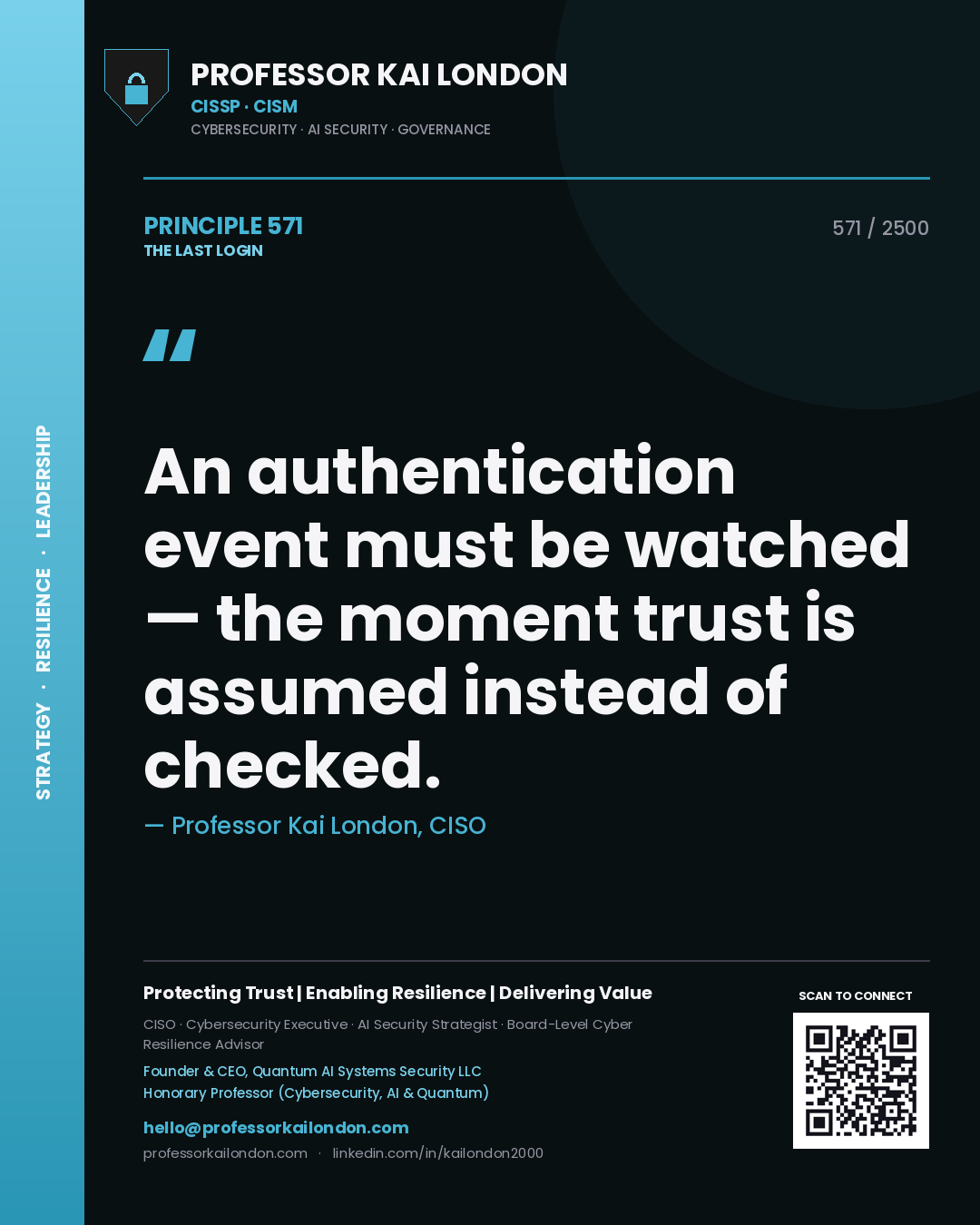
Professor Kai London principle 571: An authentication event must be watched — the moment trust is assumed instead of checked.
Principle 571
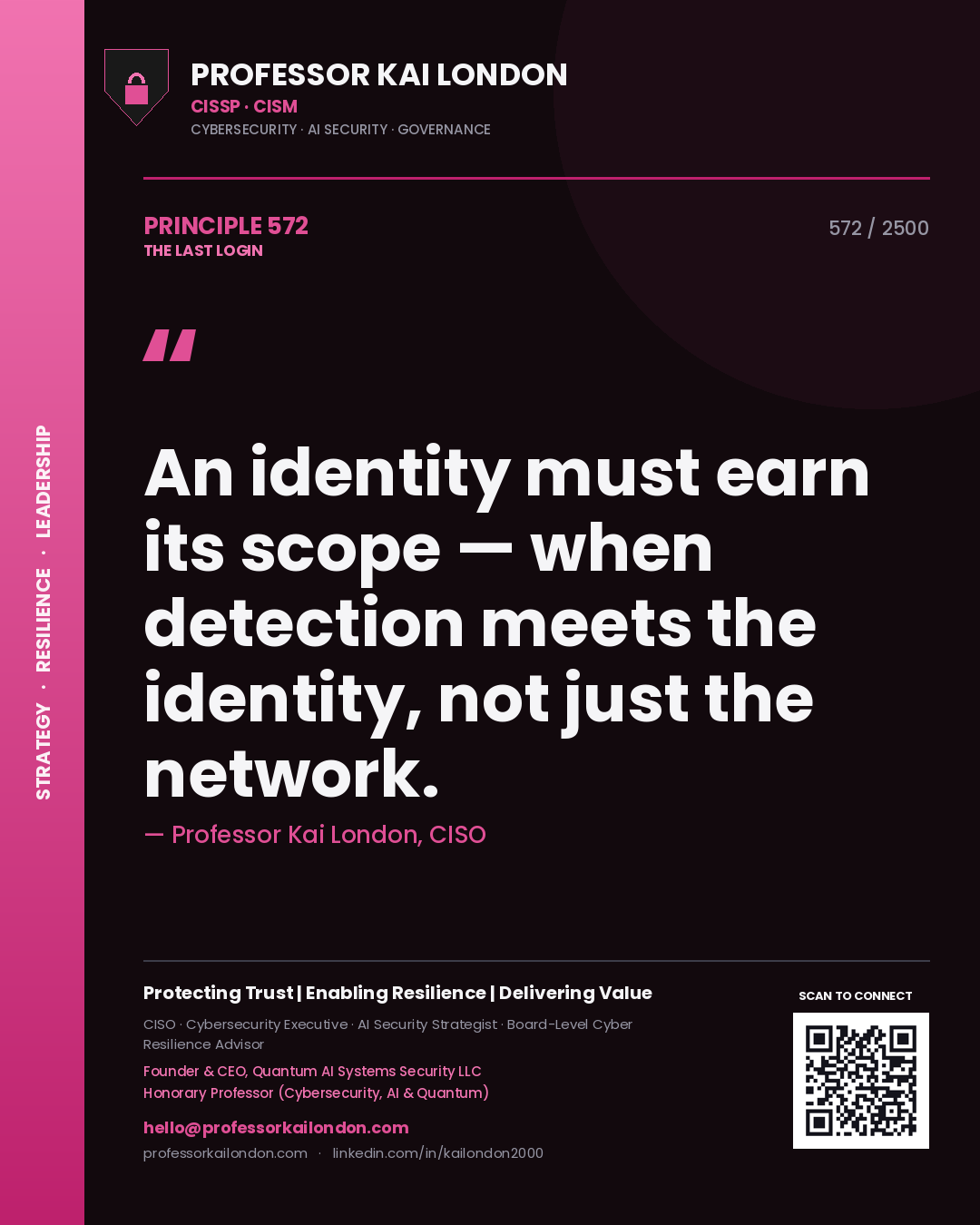
Professor Kai London principle 572: An identity must earn its scope — when detection meets the identity, not just the network.
Principle 572
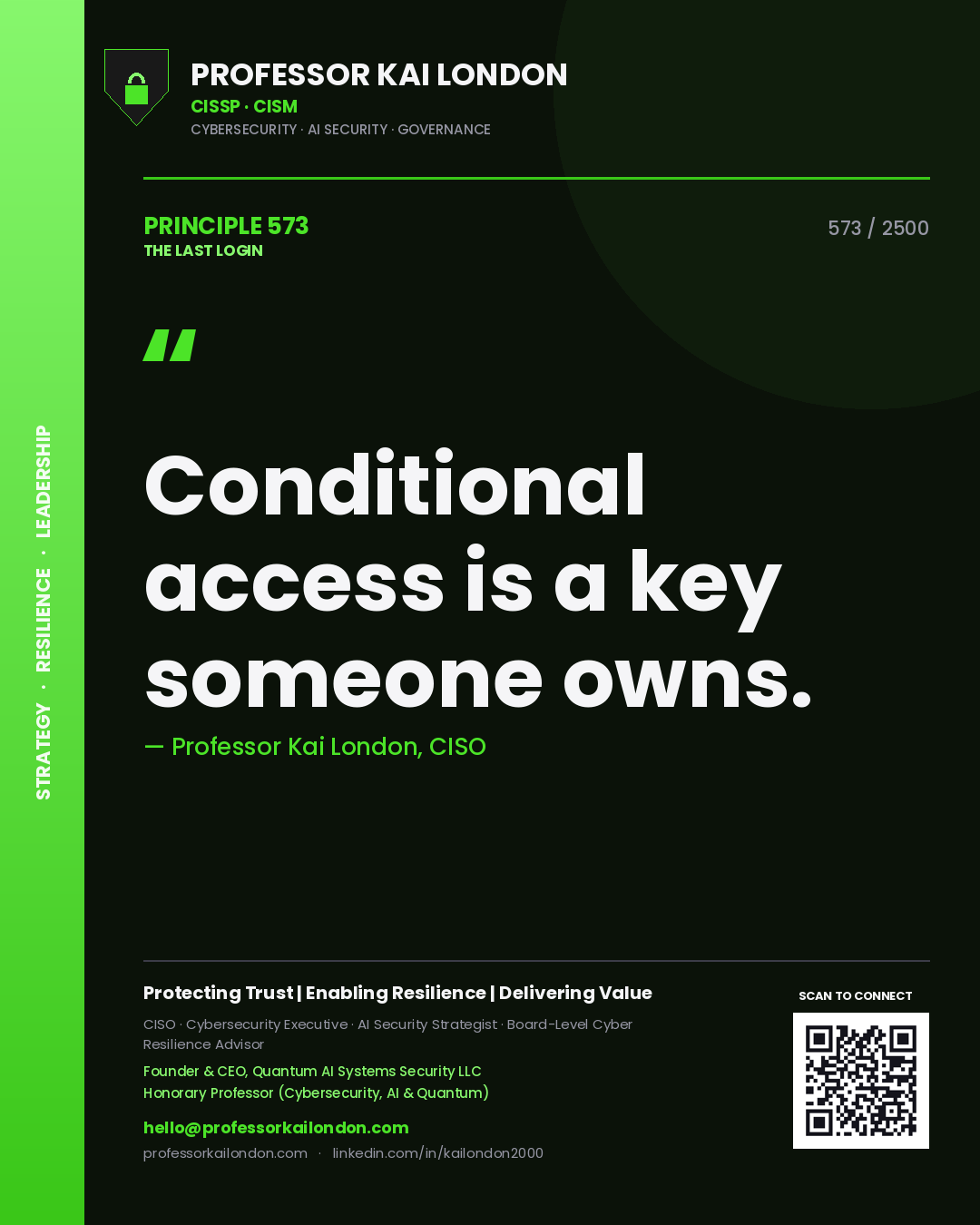
Professor Kai London principle 573: Conditional access is a key someone owns.
Principle 573
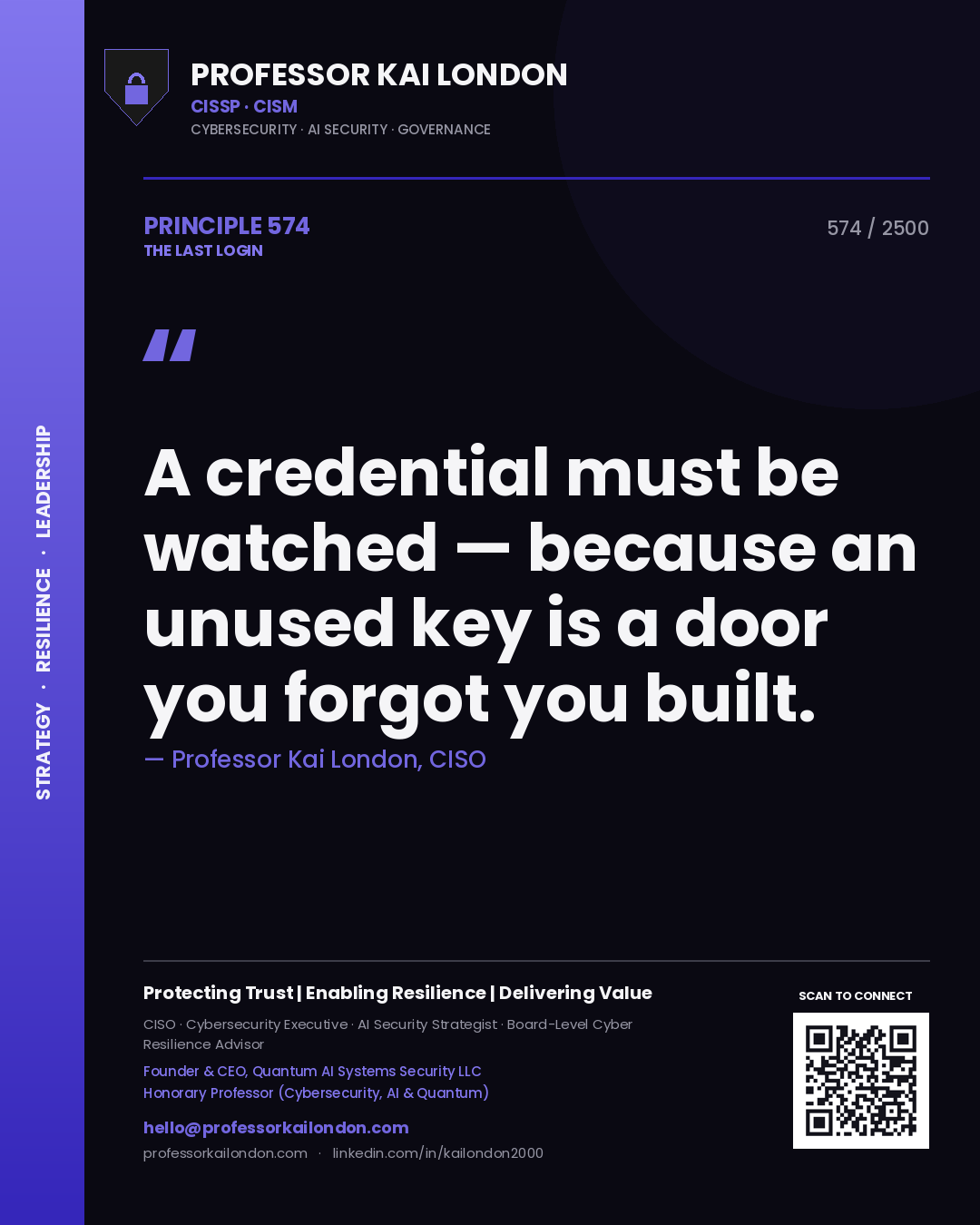
Professor Kai London principle 574: A credential must be watched — because an unused key is a door you forgot you built.
Principle 574
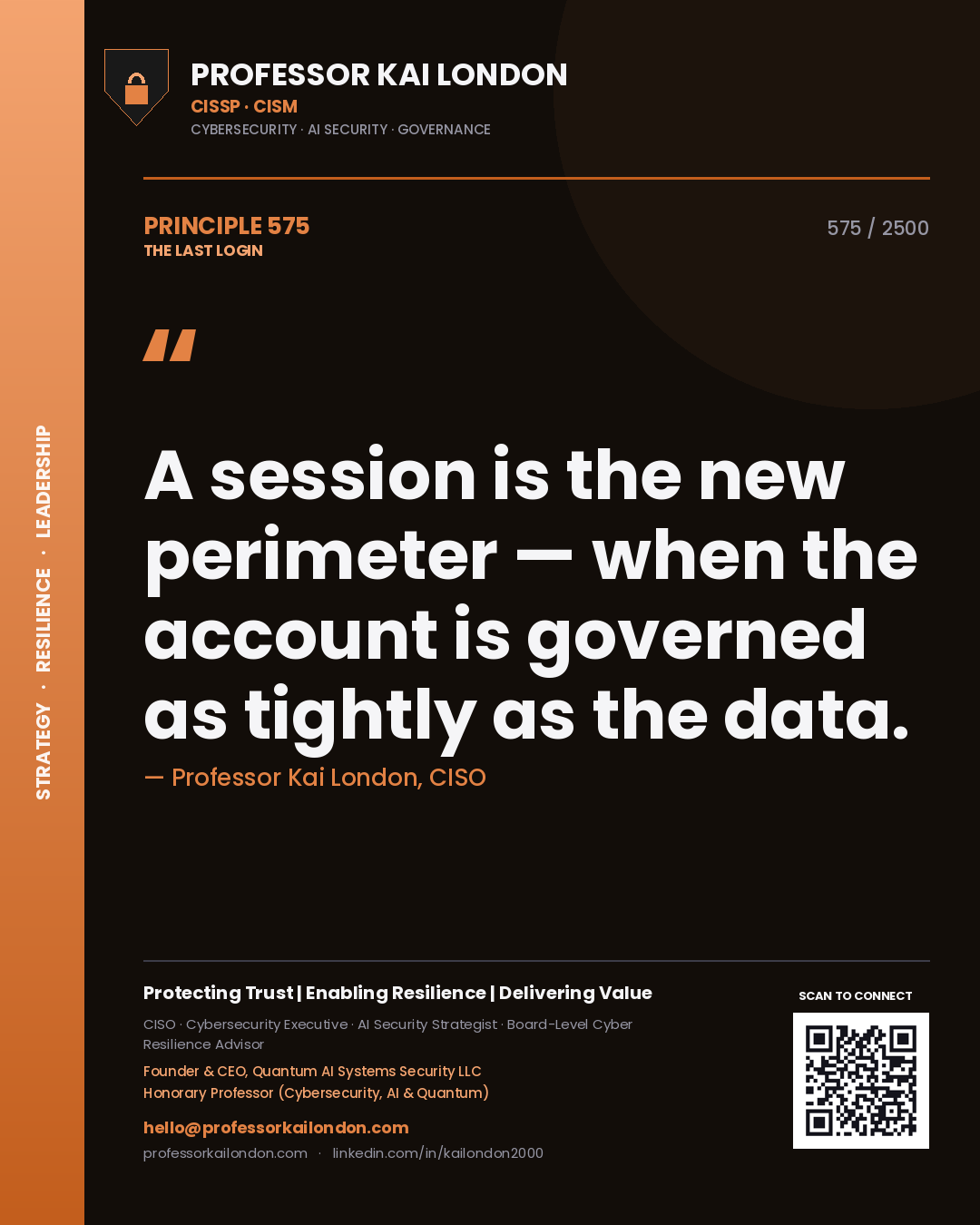
Professor Kai London principle 575: A session is the new perimeter — when the account is governed as tightly as the data.
Principle 575
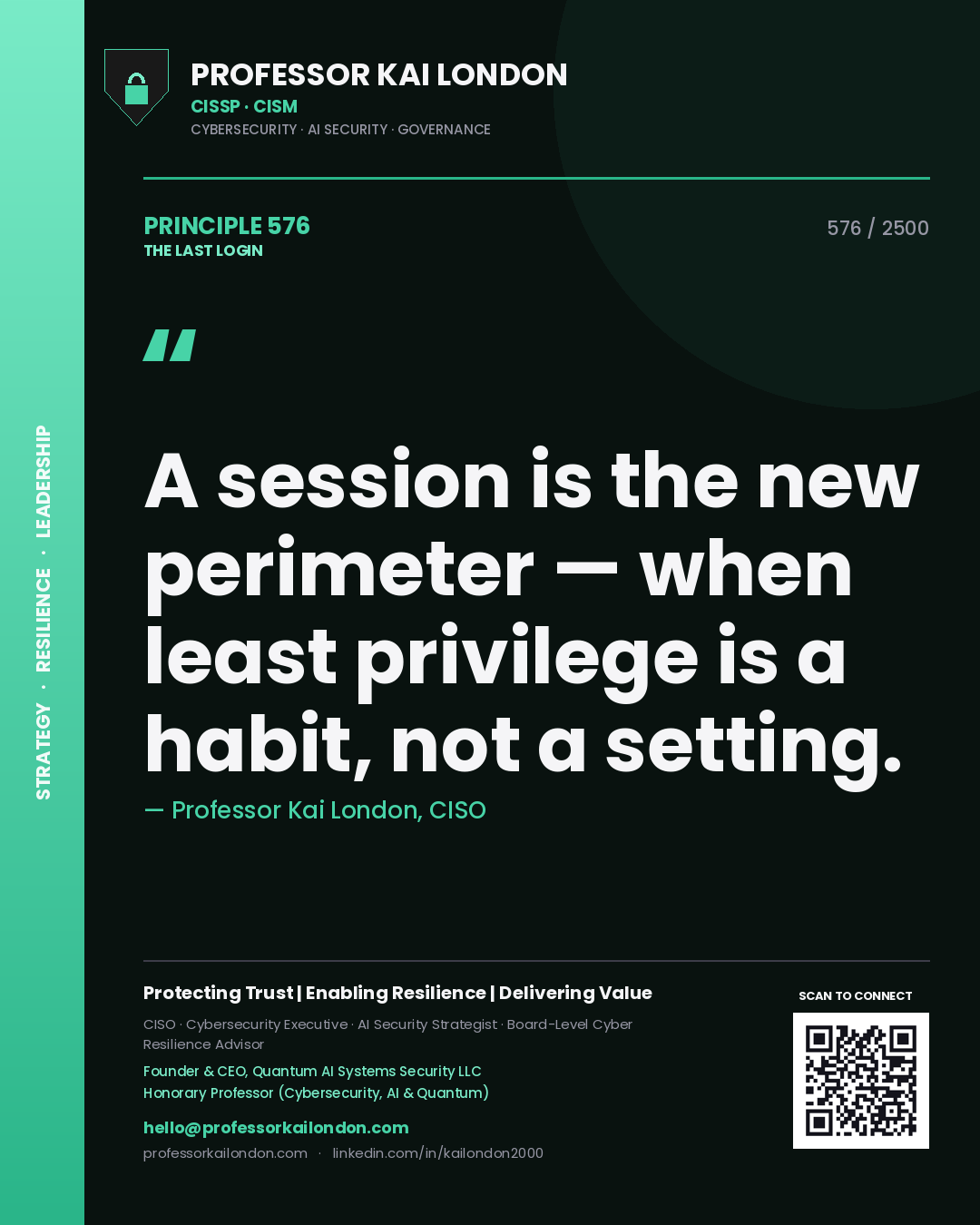
Professor Kai London principle 576: A session is the new perimeter — when least privilege is a habit, not a setting.
Principle 576
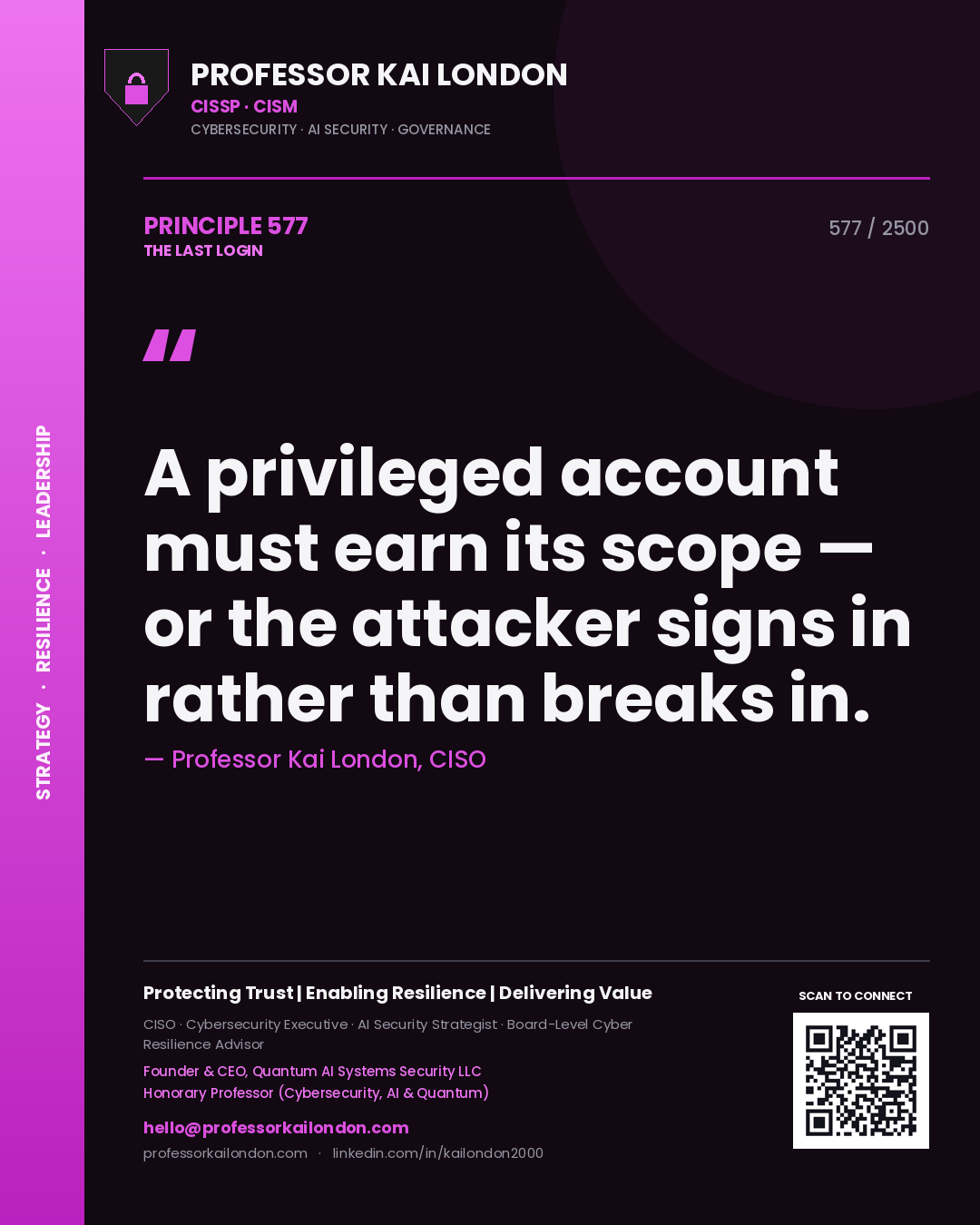
Professor Kai London principle 577: A privileged account must earn its scope — or the attacker signs in rather than breaks in.
Principle 577
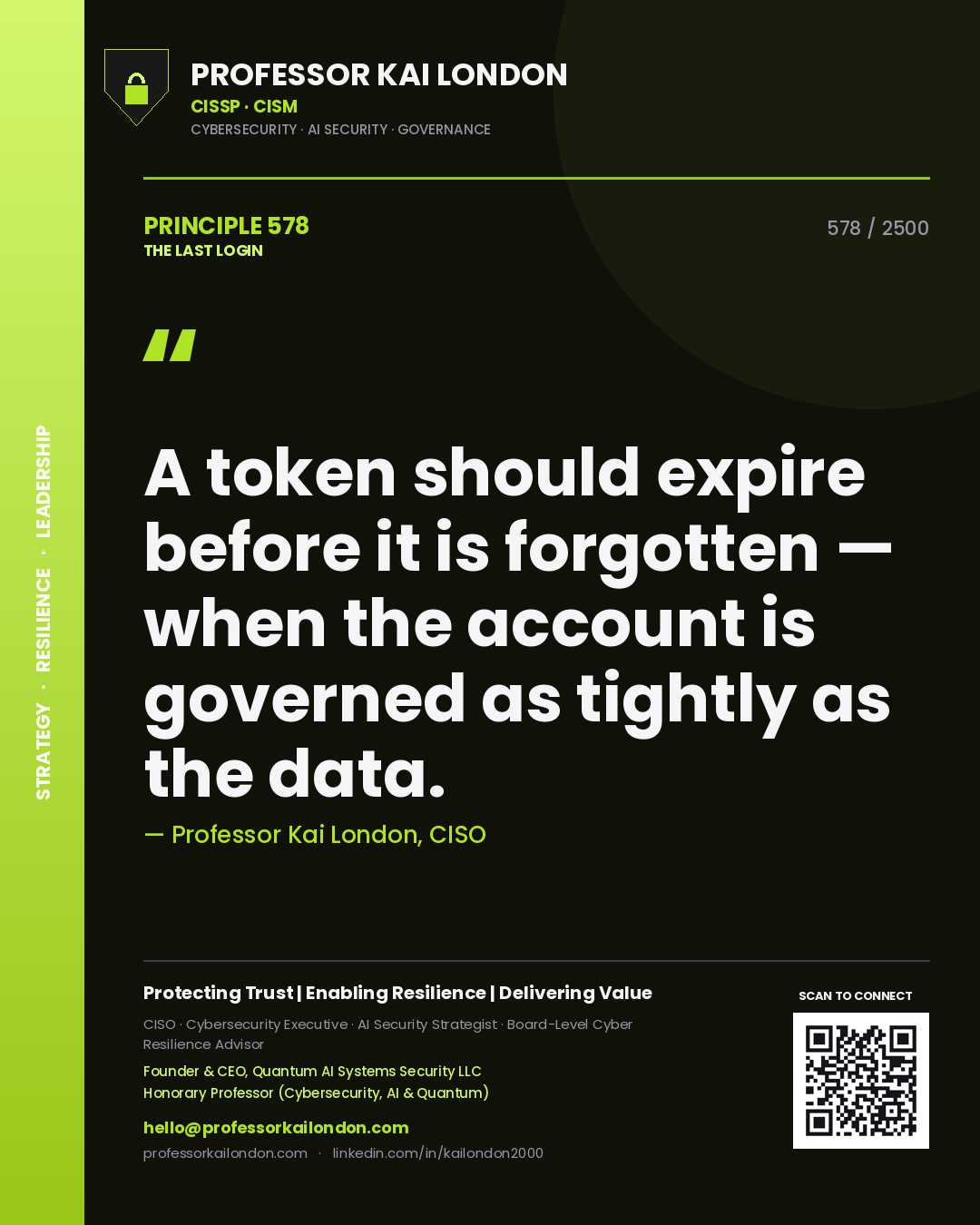
Professor Kai London principle 578: A token should expire before it is forgotten — when the account is governed as tightly as the data.
Principle 578
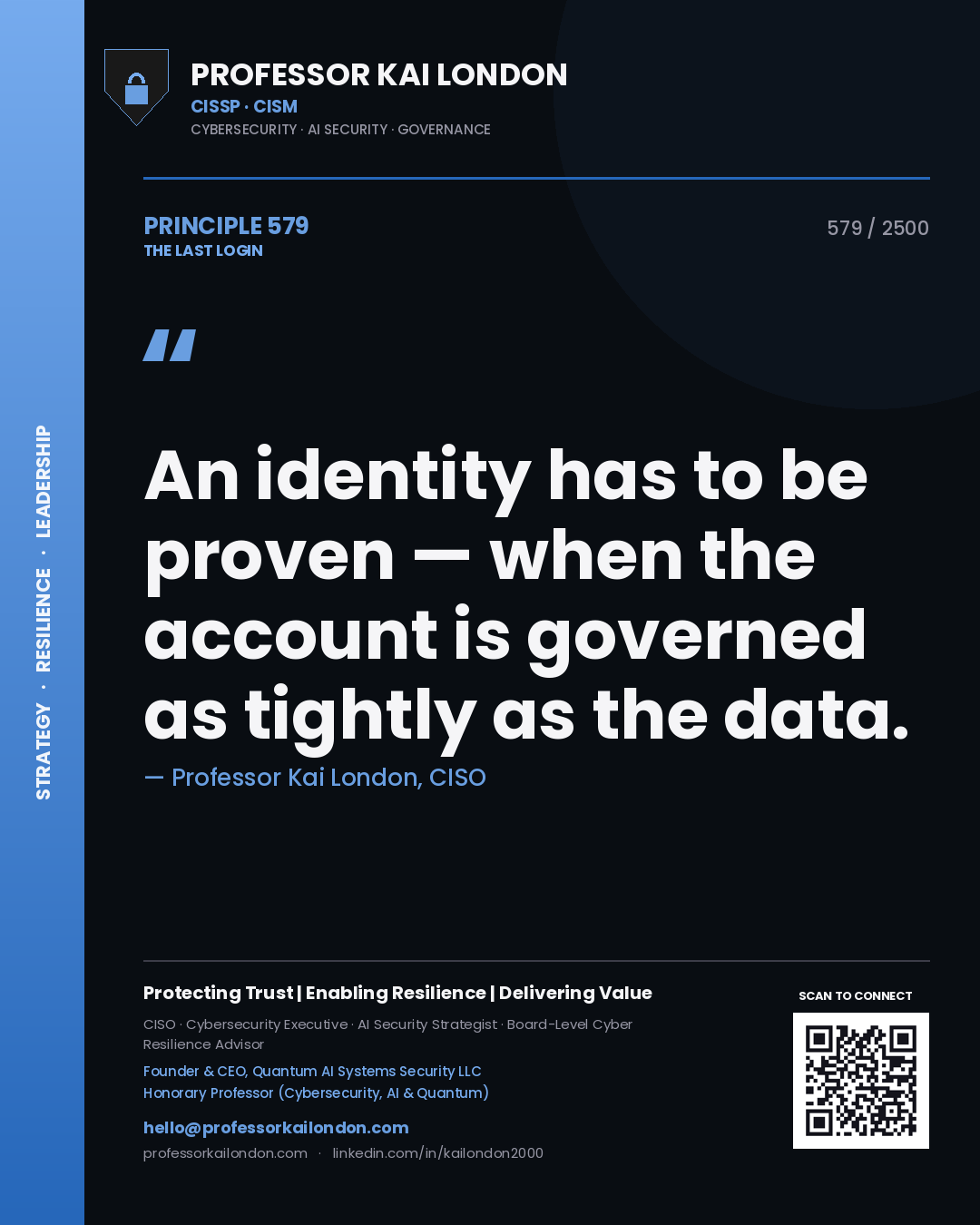
Professor Kai London principle 579: An identity has to be proven — when the account is governed as tightly as the data.
Principle 579
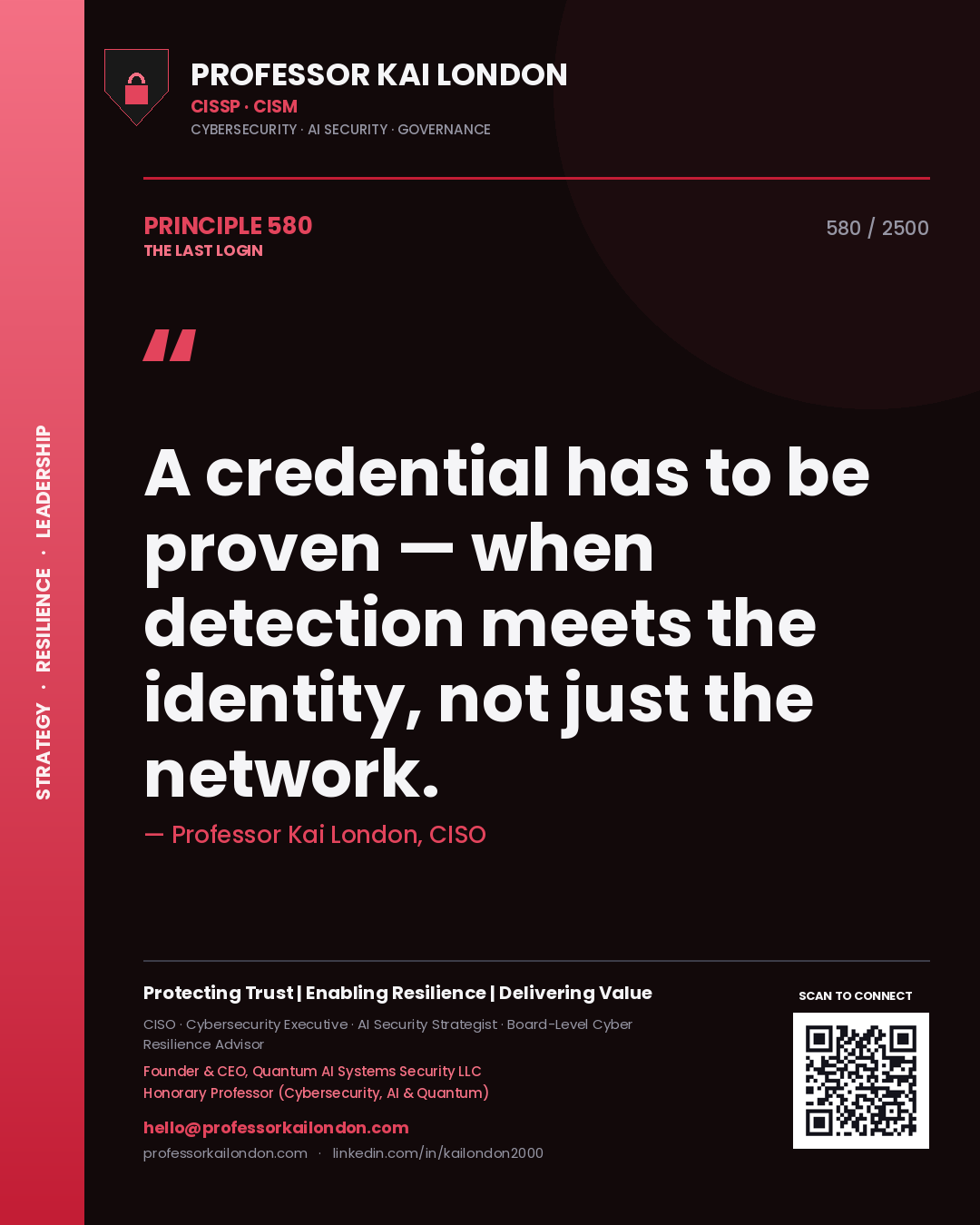
Professor Kai London principle 580: A credential has to be proven — when detection meets the identity, not just the network.
Principle 580
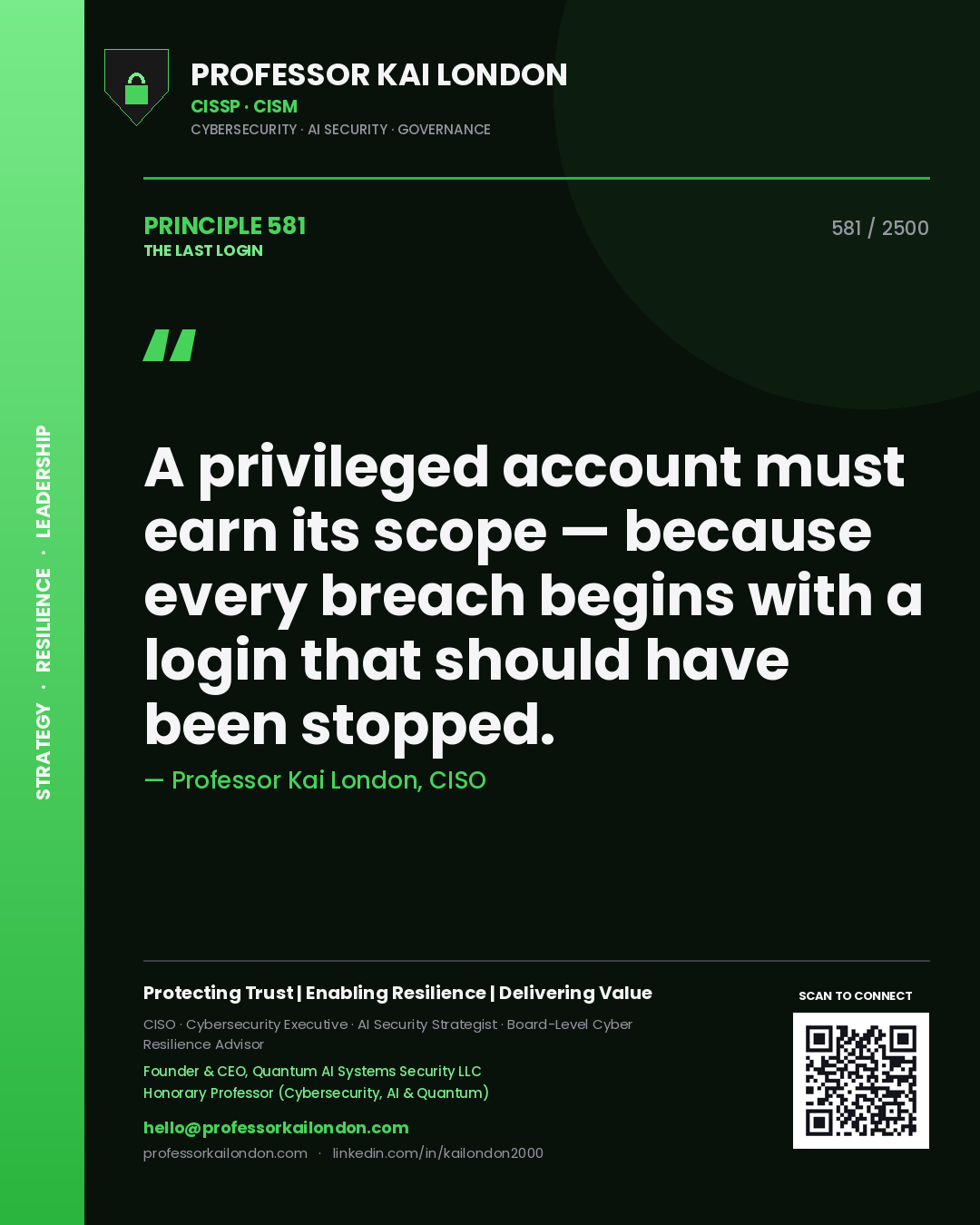
Professor Kai London principle 581: A privileged account must earn its scope — because every breach begins with a login that should have been stopped.
Principle 581
Professor Kai London principle 582: An access decision is the new perimeter — when least privilege is a habit, not a setting.
Principle 582
Professor Kai London principle 583: A privileged account should expire before it is forgotten — before the last login is the attacker's first.
Principle 583
Professor Kai London principle 584: A trust boundary should be verified — the moment trust is assumed instead of checked.
Principle 584
Professor Kai London principle 585: An authentication event is a key someone owns — because every breach begins with a login that should have been stopped.
Principle 585
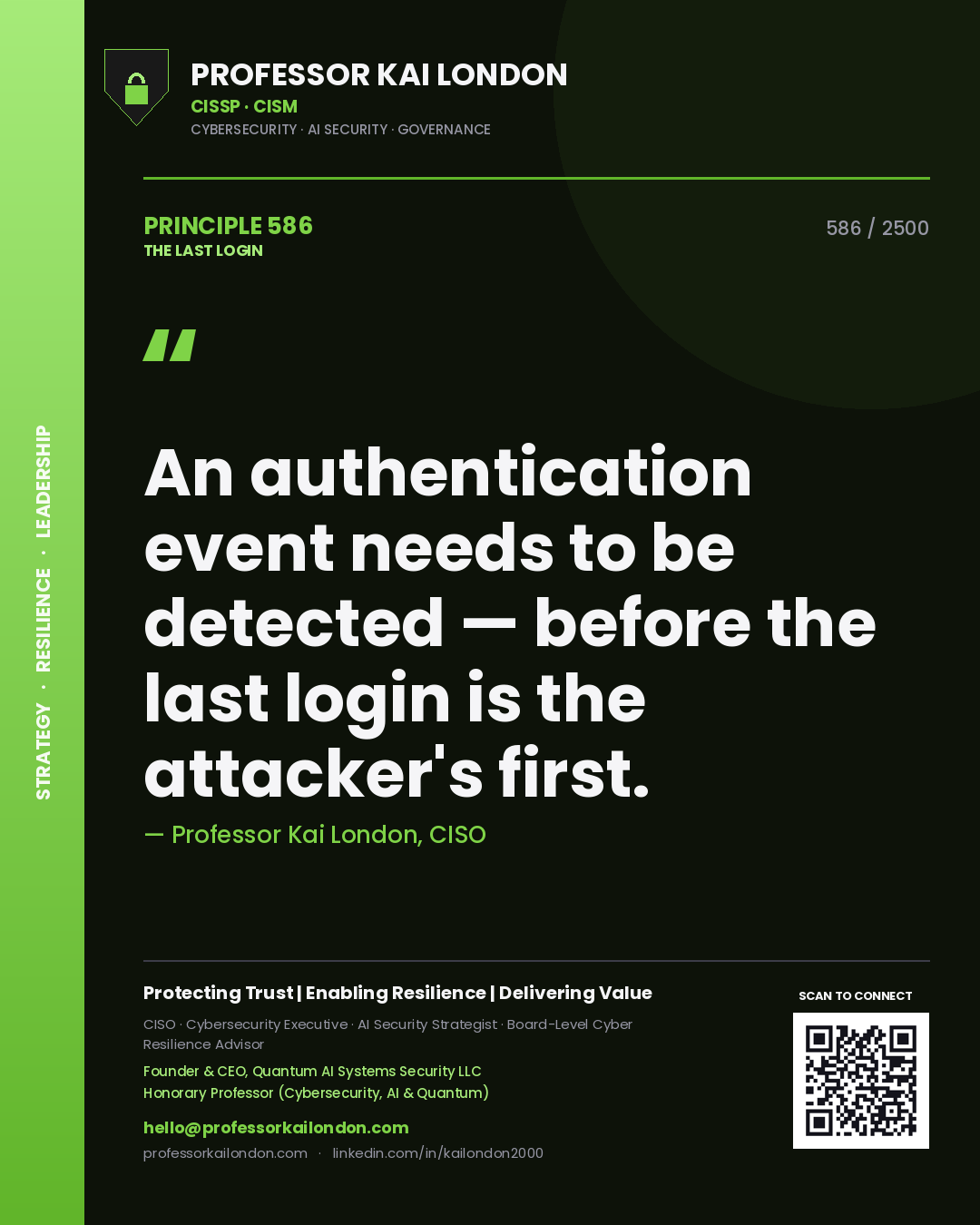
Professor Kai London principle 586: An authentication event needs to be detected — before the last login is the attacker's first.
Principle 586
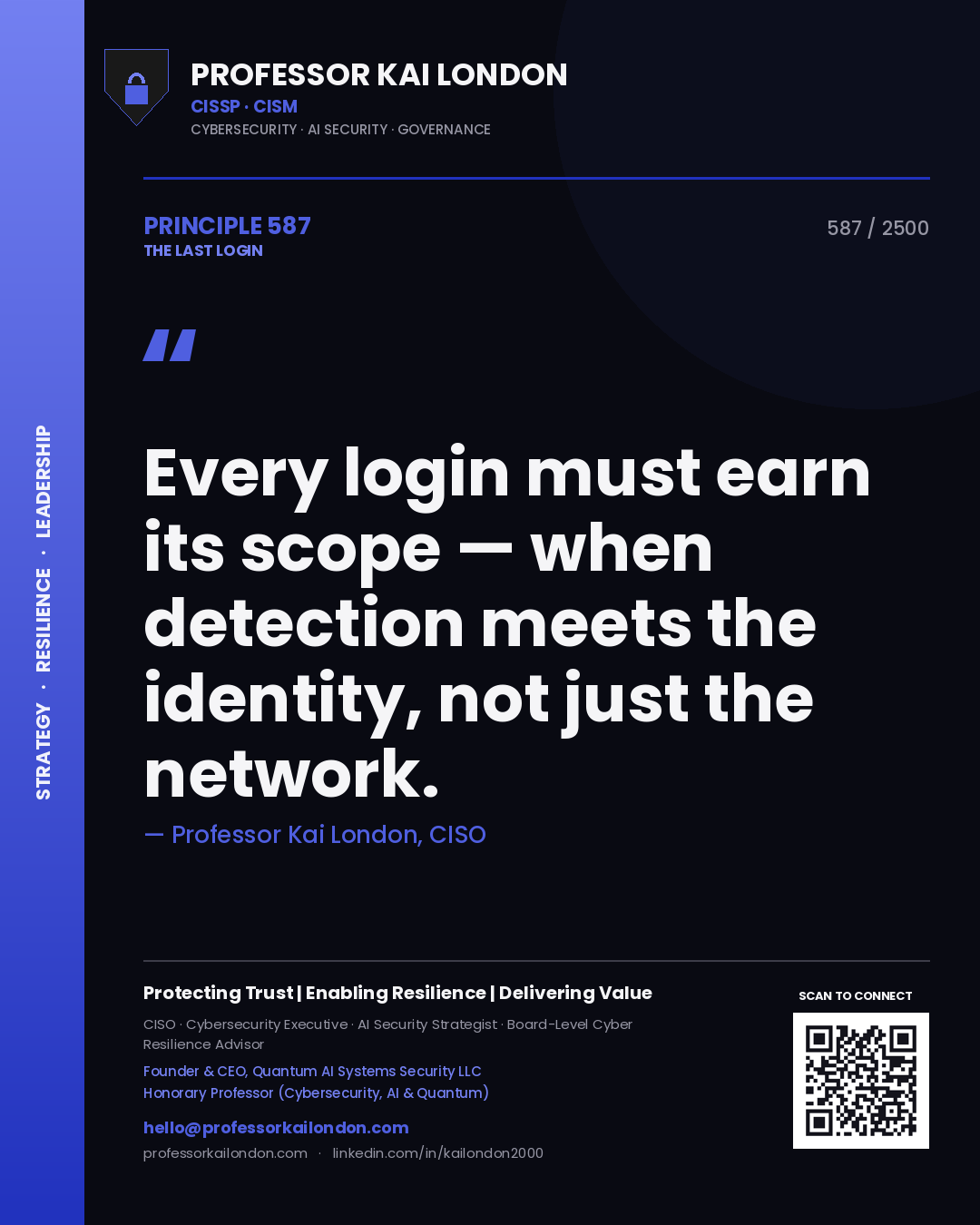
Professor Kai London principle 587: Every login must earn its scope — when detection meets the identity, not just the network.
Principle 587
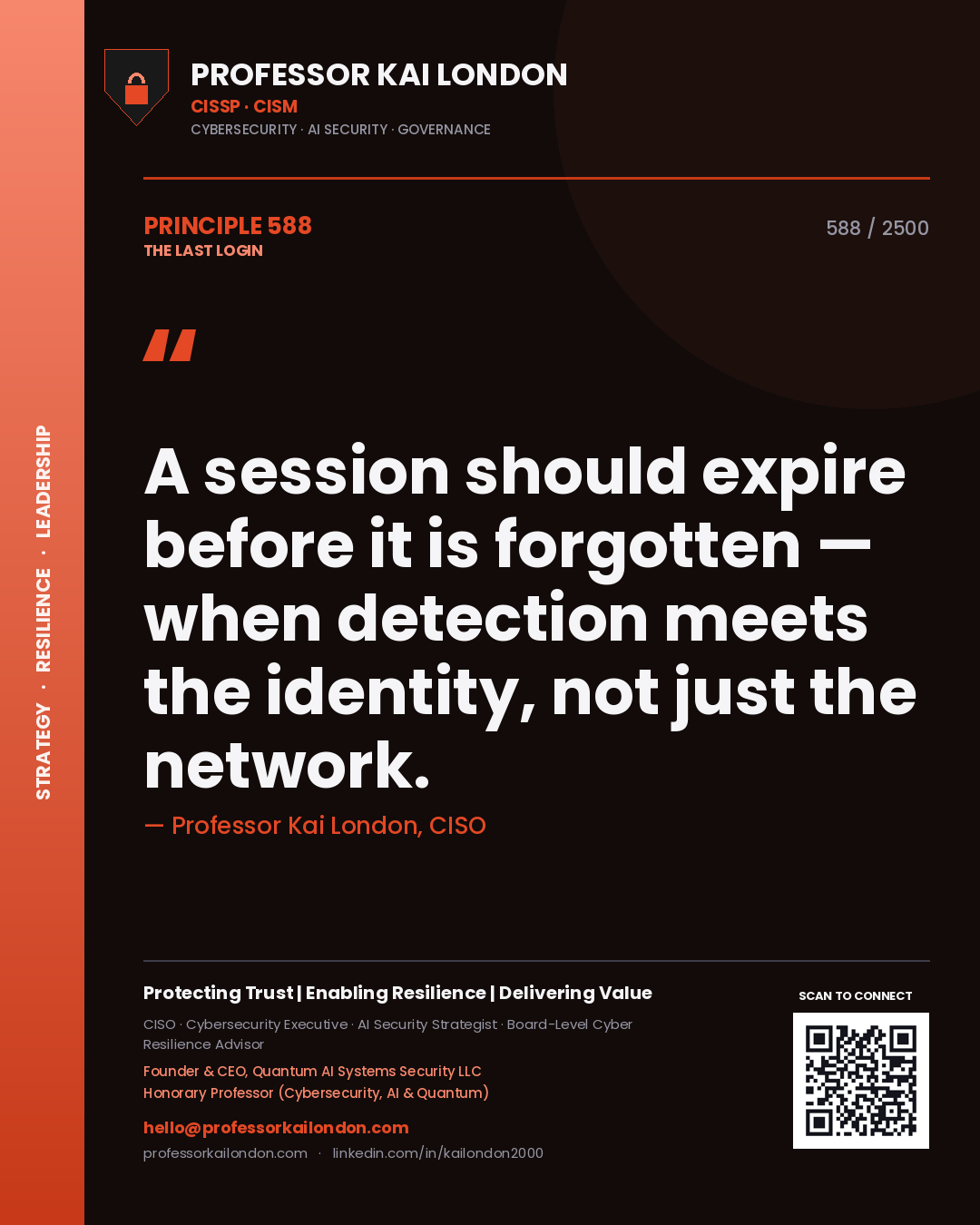
Professor Kai London principle 588: A session should expire before it is forgotten — when detection meets the identity, not just the network.
Principle 588
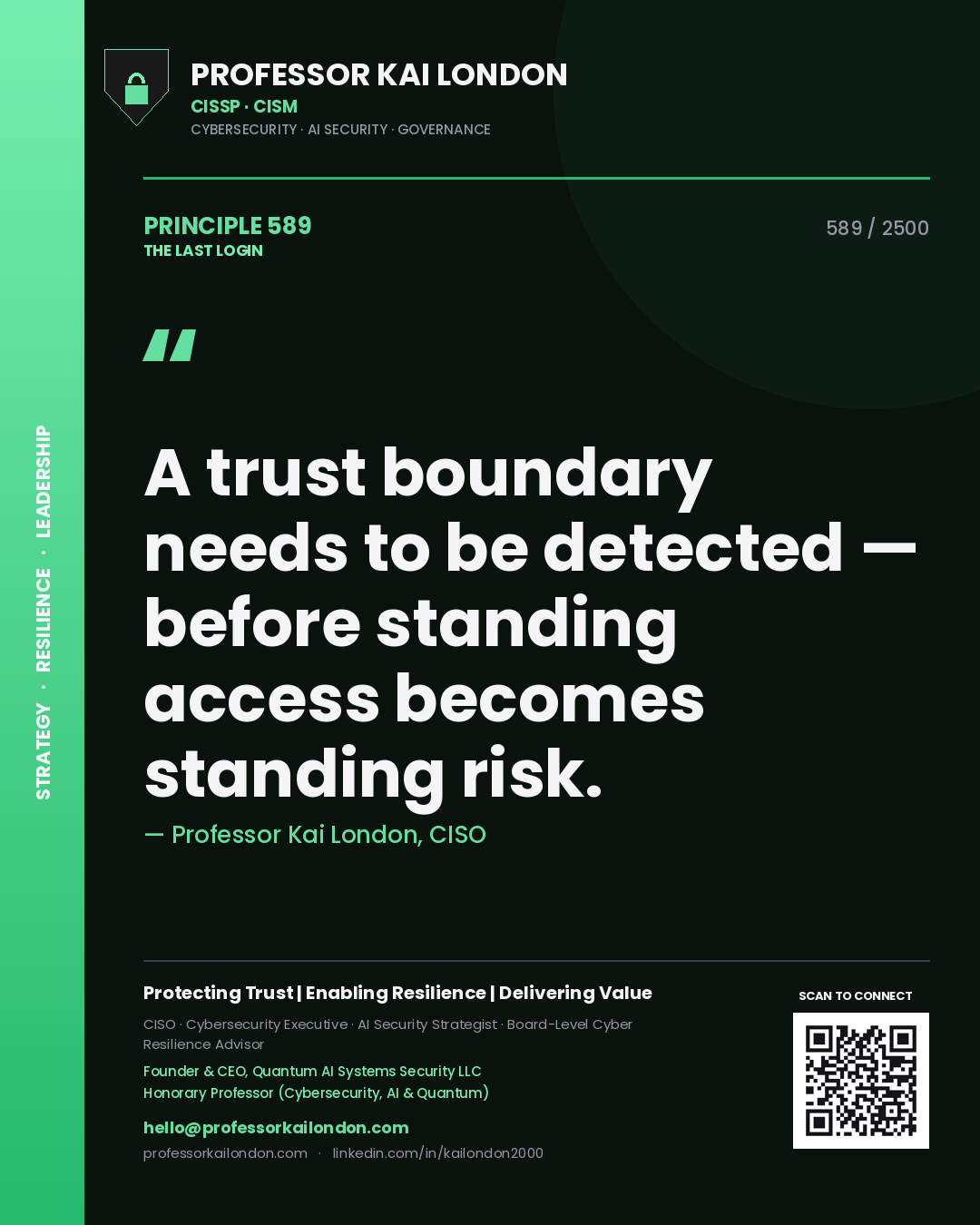
Professor Kai London principle 589: A trust boundary needs to be detected — before standing access becomes standing risk.
Principle 589
Professor Kai London principle 590: A token has to be proven — or the attacker signs in rather than breaks in.
Principle 590
Professor Kai London principle 591: A privileged account should be verified — because an unused key is a door you forgot you built.
Principle 591
Professor Kai London principle 592: A credential has to be proven — when the account is governed as tightly as the data.
Principle 592
Professor Kai London principle 593: A token is a key someone owns.
Principle 593
Professor Kai London principle 594: A credential is a decision, not a door — when least privilege is a habit, not a setting.
Principle 594
Professor Kai London principle 595: Conditional access should be verified — when the account is governed as tightly as the data.
Principle 595
Professor Kai London principle 596: A trust boundary should expire before it is forgotten — when least privilege is a habit, not a setting.
Principle 596
Professor Kai London principle 597: An authentication event is a key someone owns — when detection meets the identity, not just the network.
Principle 597
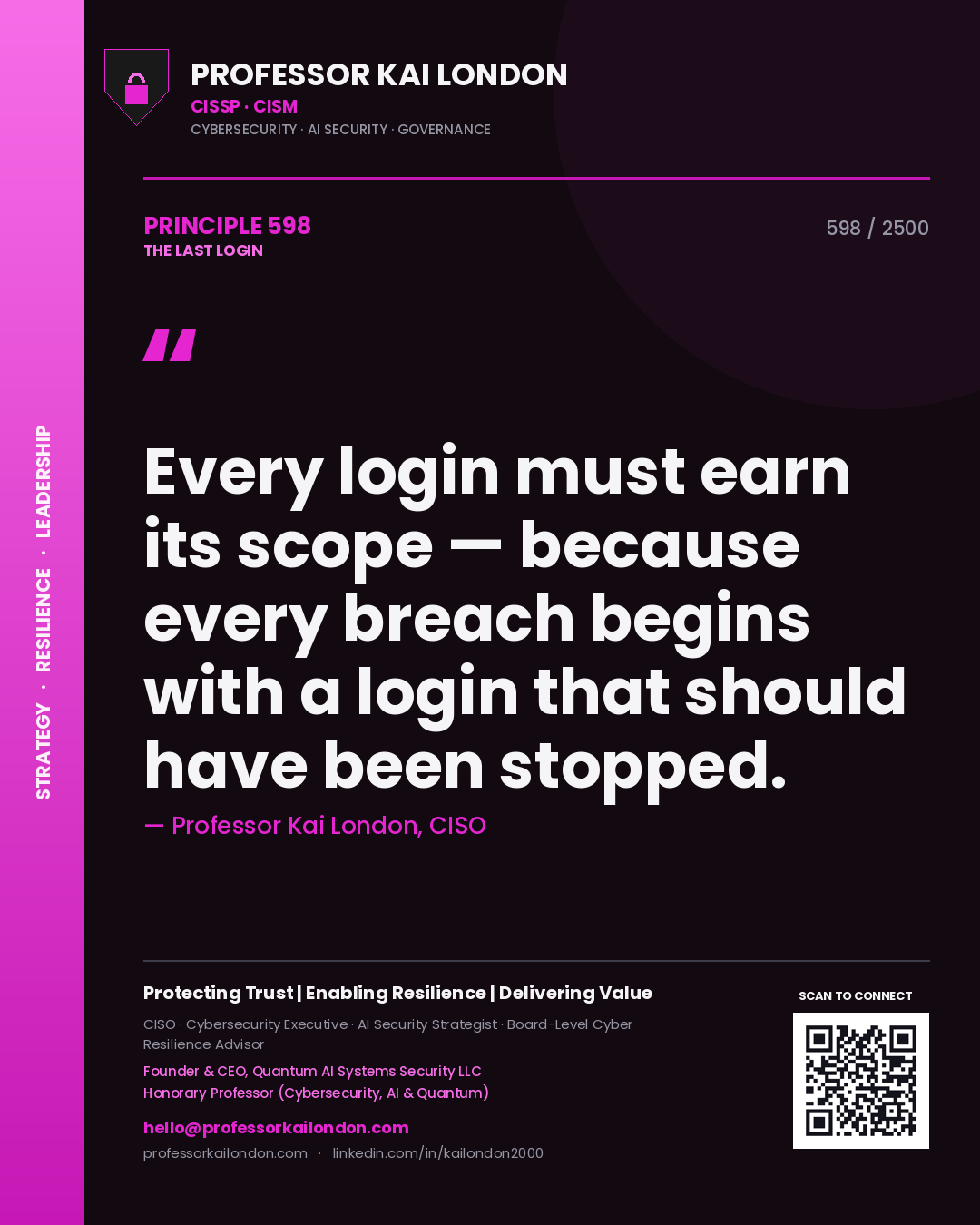
Professor Kai London principle 598: Every login must earn its scope — because every breach begins with a login that should have been stopped.
Principle 598
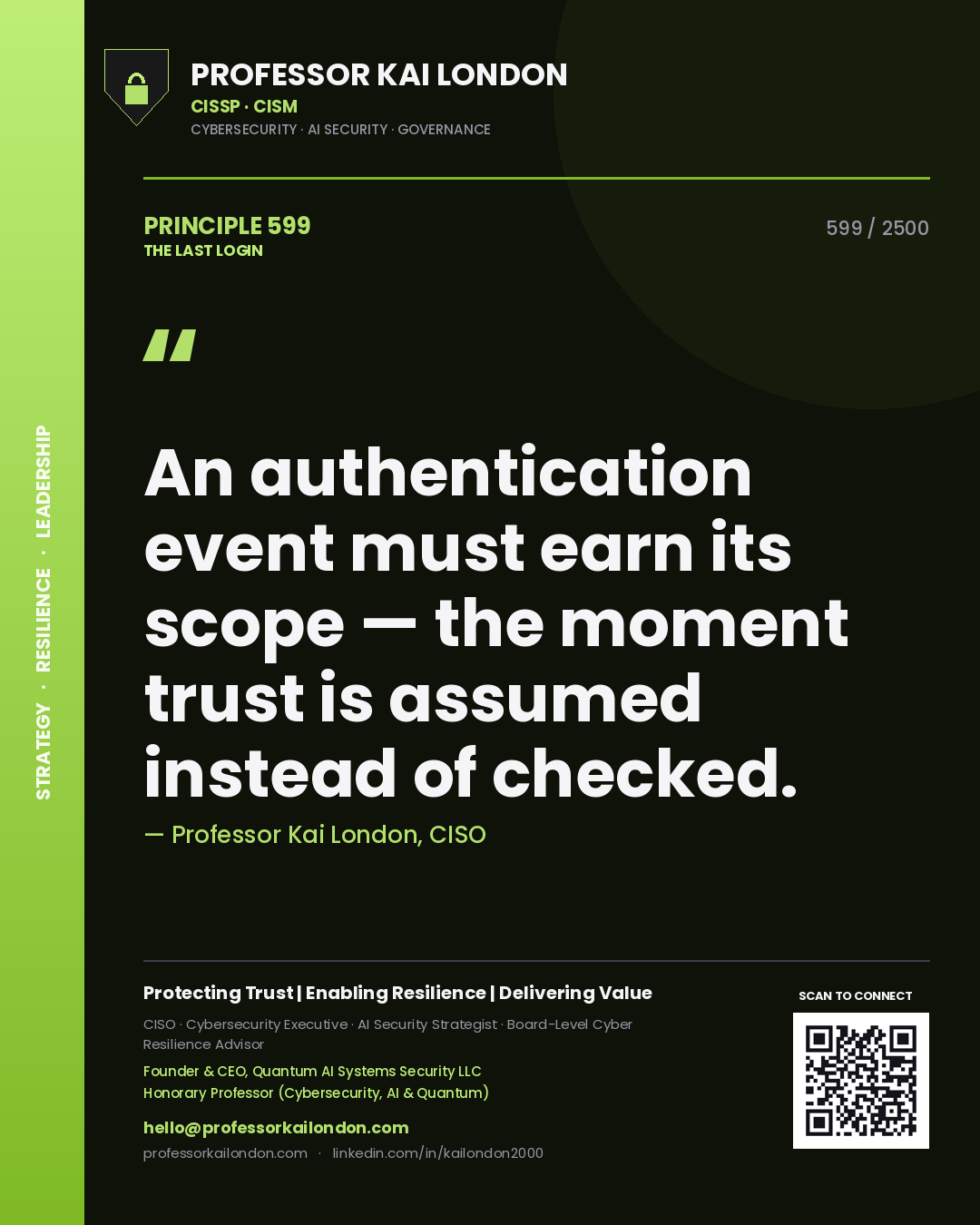
Professor Kai London principle 599: An authentication event must earn its scope — the moment trust is assumed instead of checked.
Principle 599
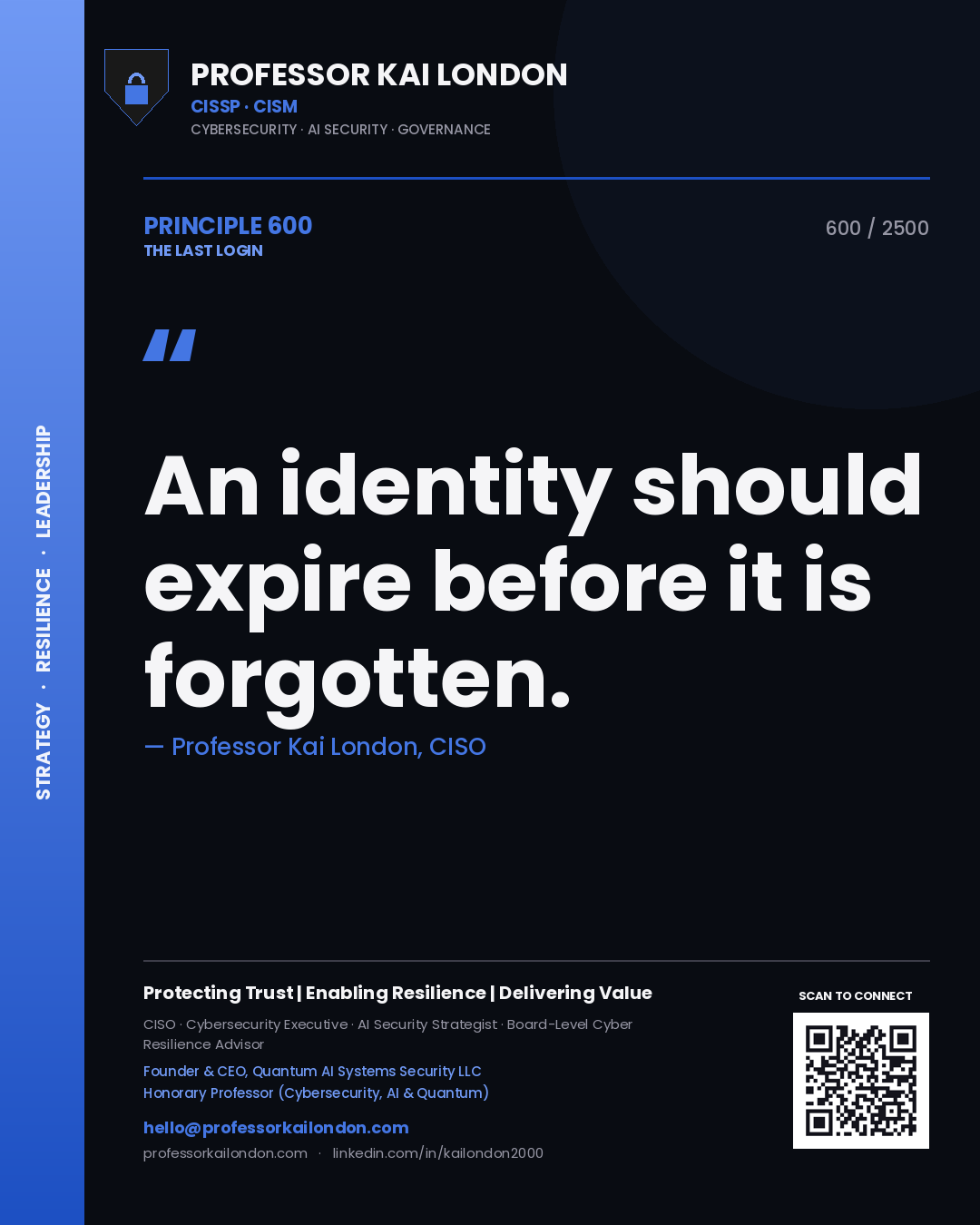
Professor Kai London principle 600: An identity should expire before it is forgotten.
Principle 600