The Day the Control Room Went Silent — Gallery (Page 18 of 100)
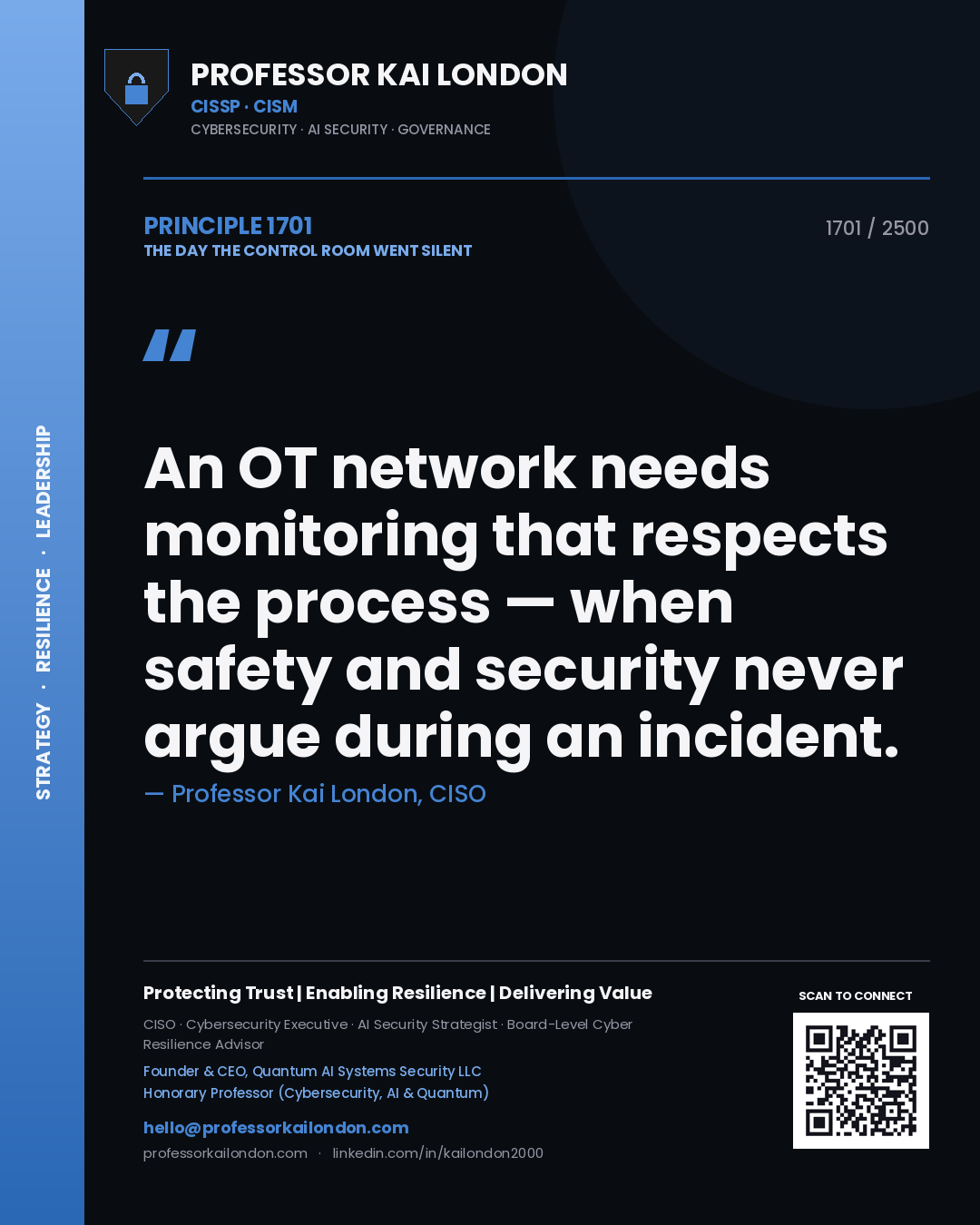
Professor Kai London principle 1701: An OT network needs monitoring that respects the process — when safety and security never argue during an incident.
Principle 1701
Professor Kai London principle 1702: A firmware update needs visibility before it needs control — the moment IT logic meets OT consequence.
Principle 1702
Professor Kai London principle 1703: A control room must fail to a safe state — when the control room stays loud enough to be heard.
Principle 1703
Professor Kai London principle 1704: An industrial process must see it, trust it, hand it back, and prove it — before a convenient bridge becomes the attack path.
Principle 1704
Professor Kai London principle 1705: A firmware update needs monitoring that respects the process — because a keystroke here moves the physical world.
Principle 1705
Professor Kai London principle 1706: A safety instrumented system needs visibility before it needs control — when safety and security never argue during an incident.
Principle 1706
Professor Kai London principle 1707: A safety system cannot be trusted just because it is old — because critical infrastructure resilience is a public duty.
Principle 1707
Professor Kai London principle 1708: A vendor VPN must see it, trust it, hand it back, and prove it — because critical infrastructure resilience is a public duty.
Principle 1708
Professor Kai London principle 1709: A remote engineering laptop must know its safe state before an attacker teaches it — because a keystroke here moves the physical world.
Principle 1709
Professor Kai London principle 1710: A jump host cannot be patched on a memo's schedule.
Principle 1710
Professor Kai London principle 1711: A critical process needs monitoring that respects the process — when the plant keeps running because trust was engineered.
Principle 1711
Professor Kai London principle 1712: A remote engineering laptop can turn a digital compromise into a physical consequence — when you see it, trust it, hand it back, and prove it.
Principle 1712
Professor Kai London principle 1713: A firmware update needs monitoring that respects the process — when the control room stays loud enough to be heard.
Principle 1713
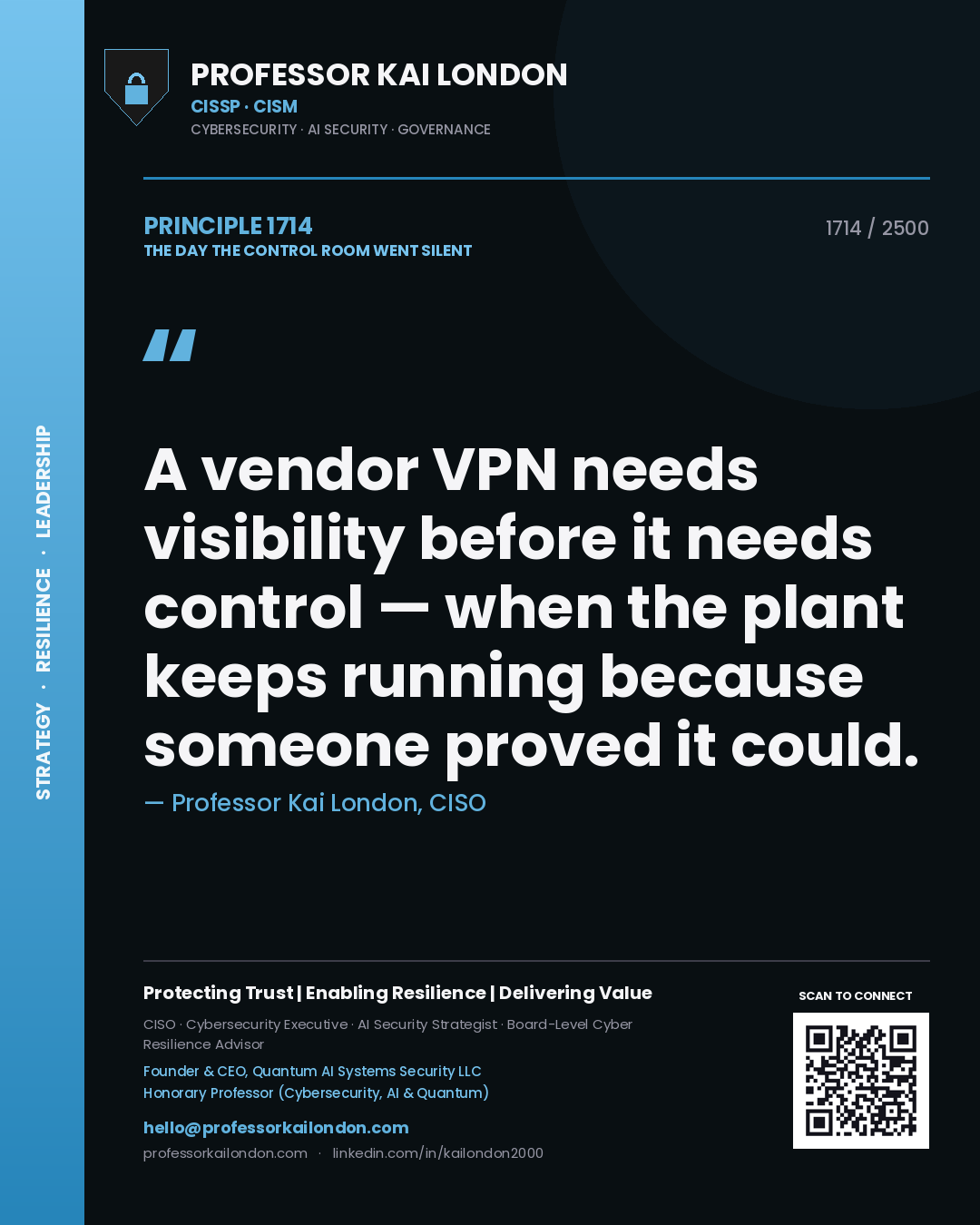
Professor Kai London principle 1714: A vendor VPN needs visibility before it needs control — when the plant keeps running because someone proved it could.
Principle 1714
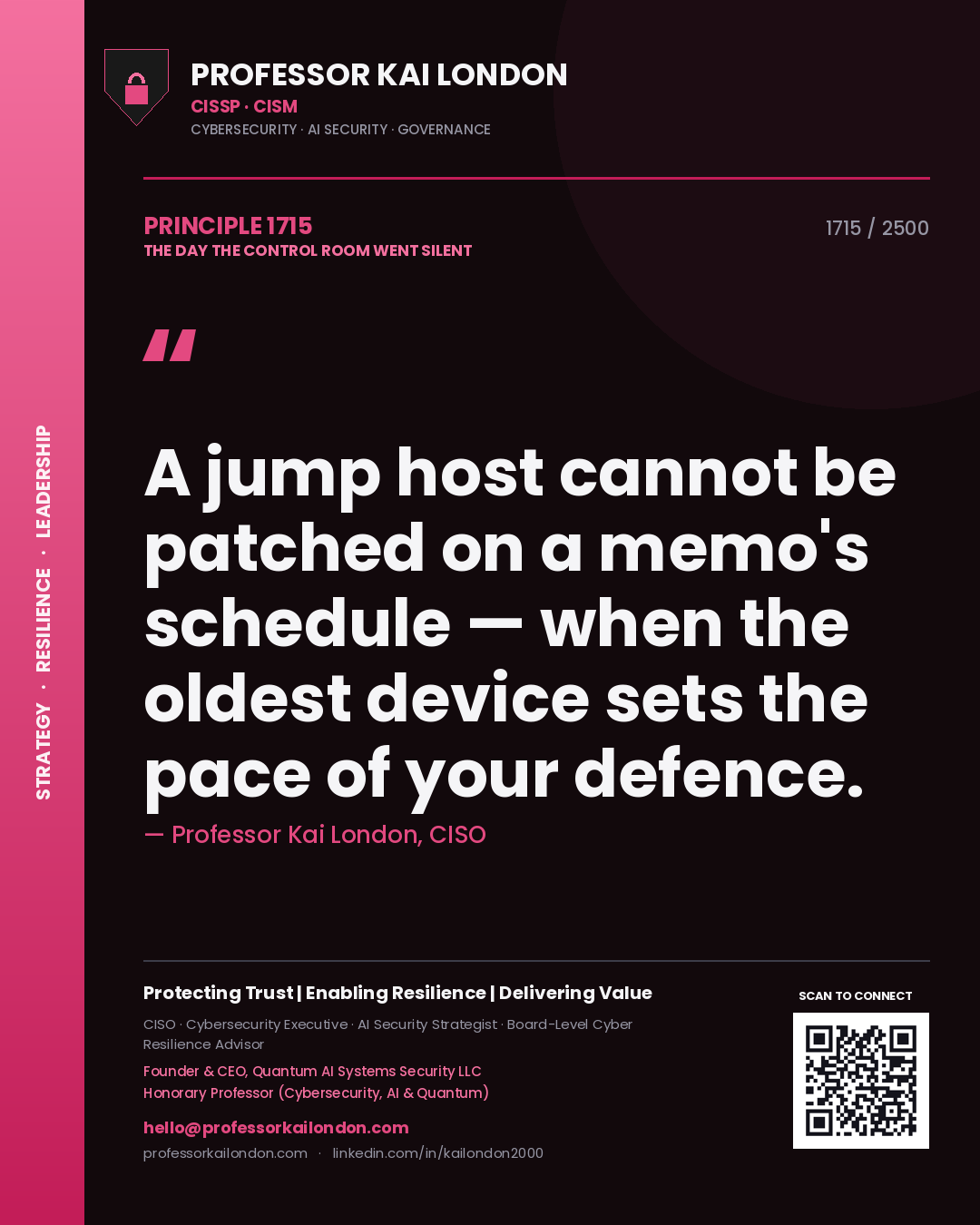
Professor Kai London principle 1715: A jump host cannot be patched on a memo's schedule — when the oldest device sets the pace of your defence.
Principle 1715
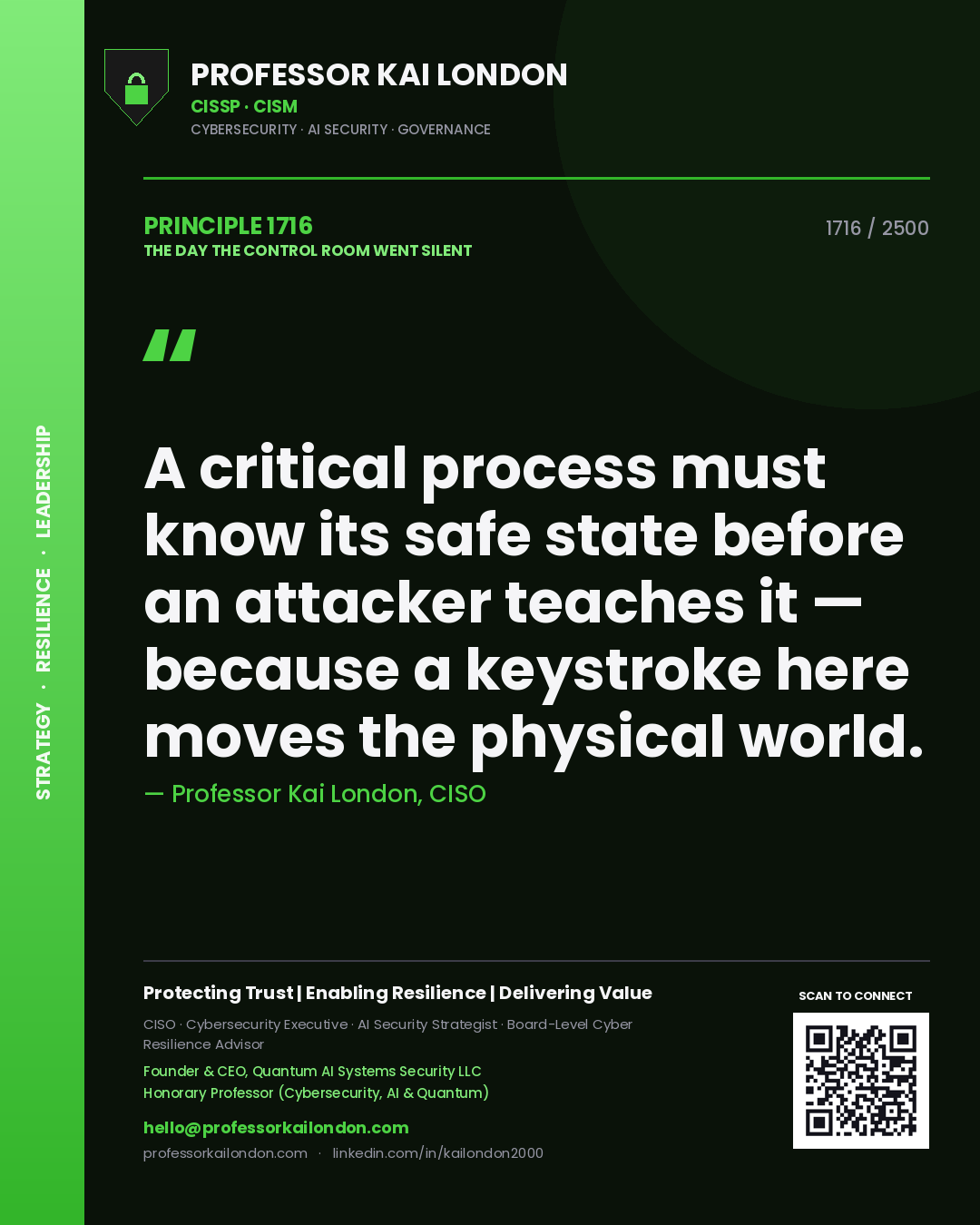
Professor Kai London principle 1716: A critical process must know its safe state before an attacker teaches it — because a keystroke here moves the physical world.
Principle 1716
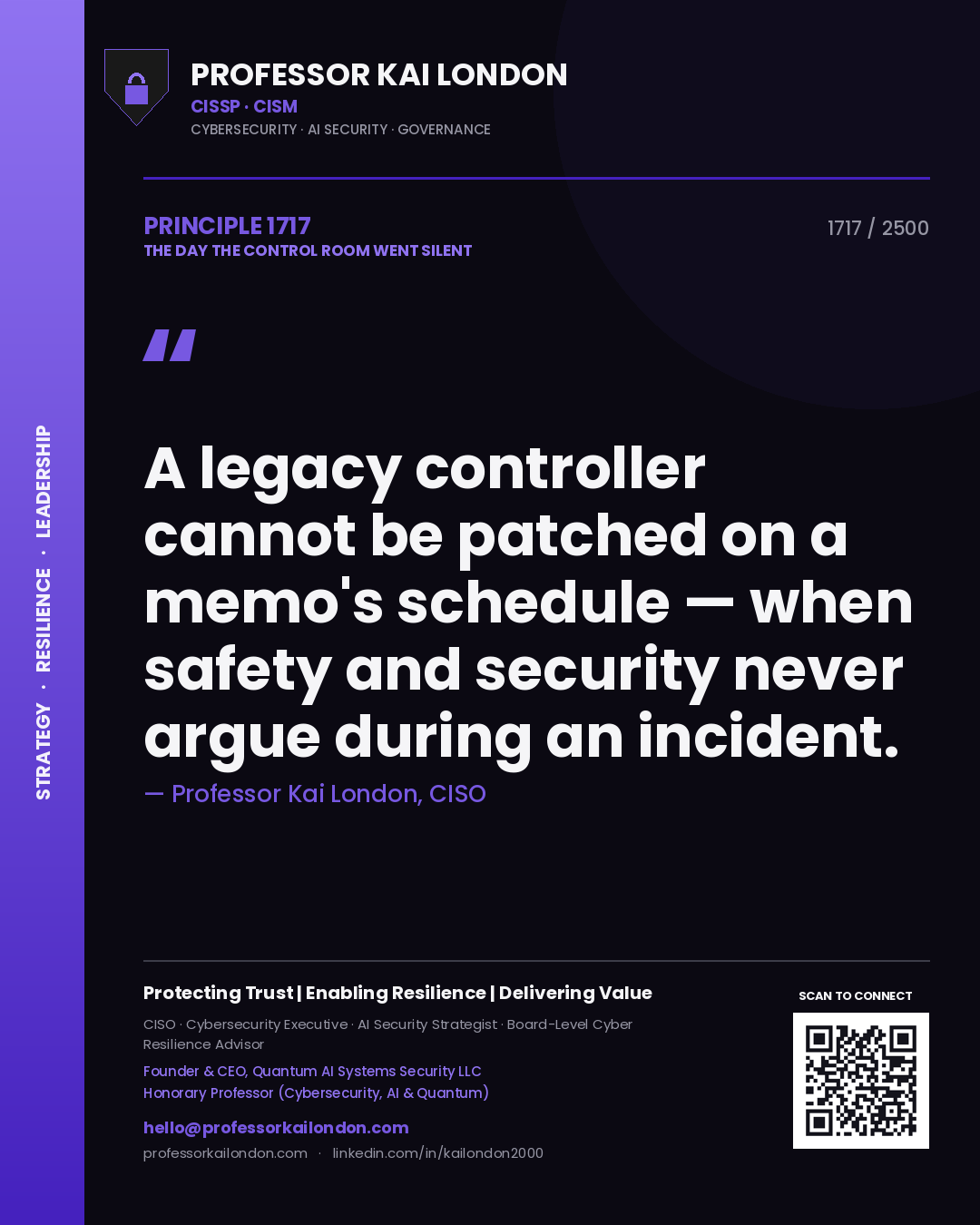
Professor Kai London principle 1717: A legacy controller cannot be patched on a memo's schedule — when safety and security never argue during an incident.
Principle 1717
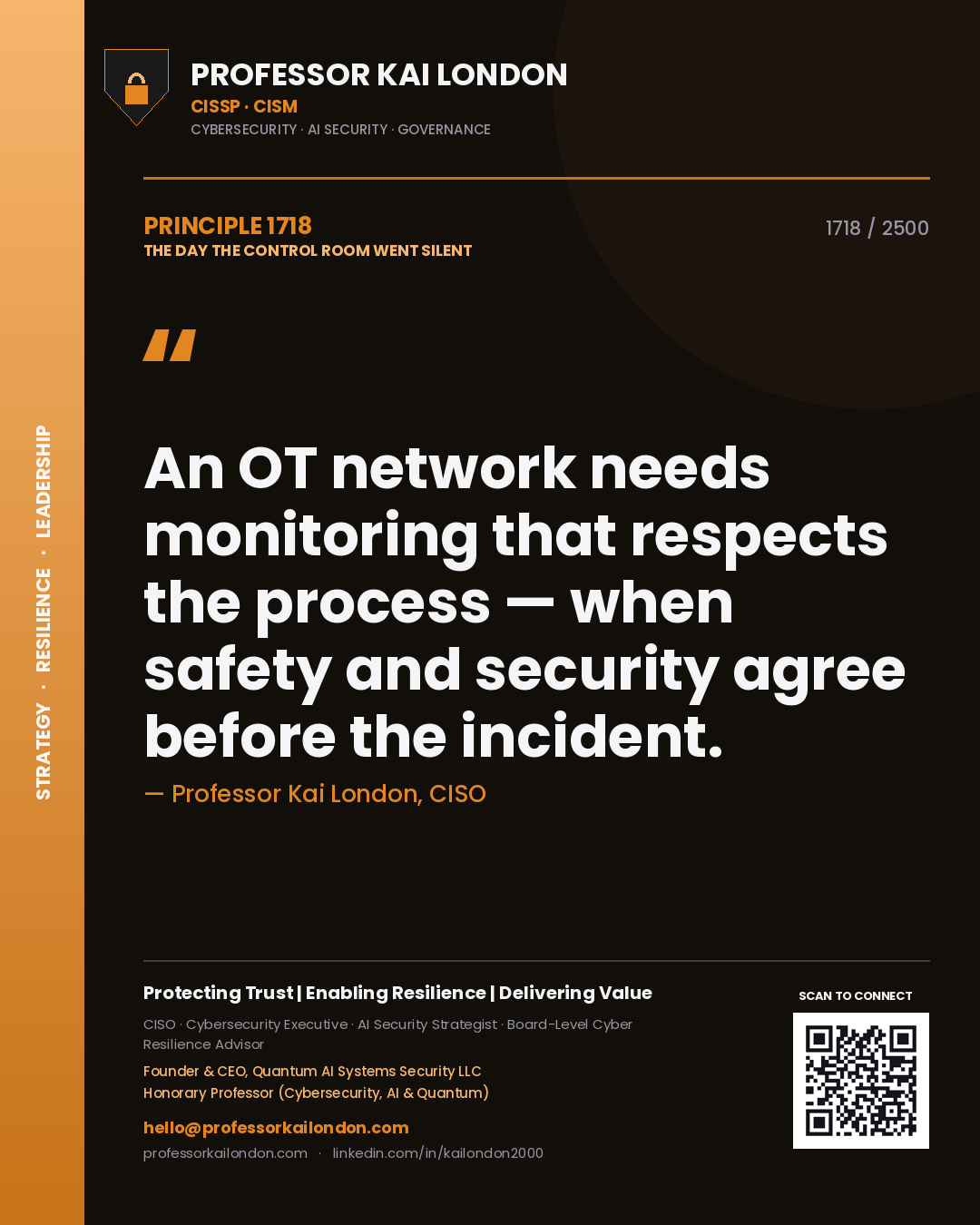
Professor Kai London principle 1718: An OT network needs monitoring that respects the process — when safety and security agree before the incident.
Principle 1718
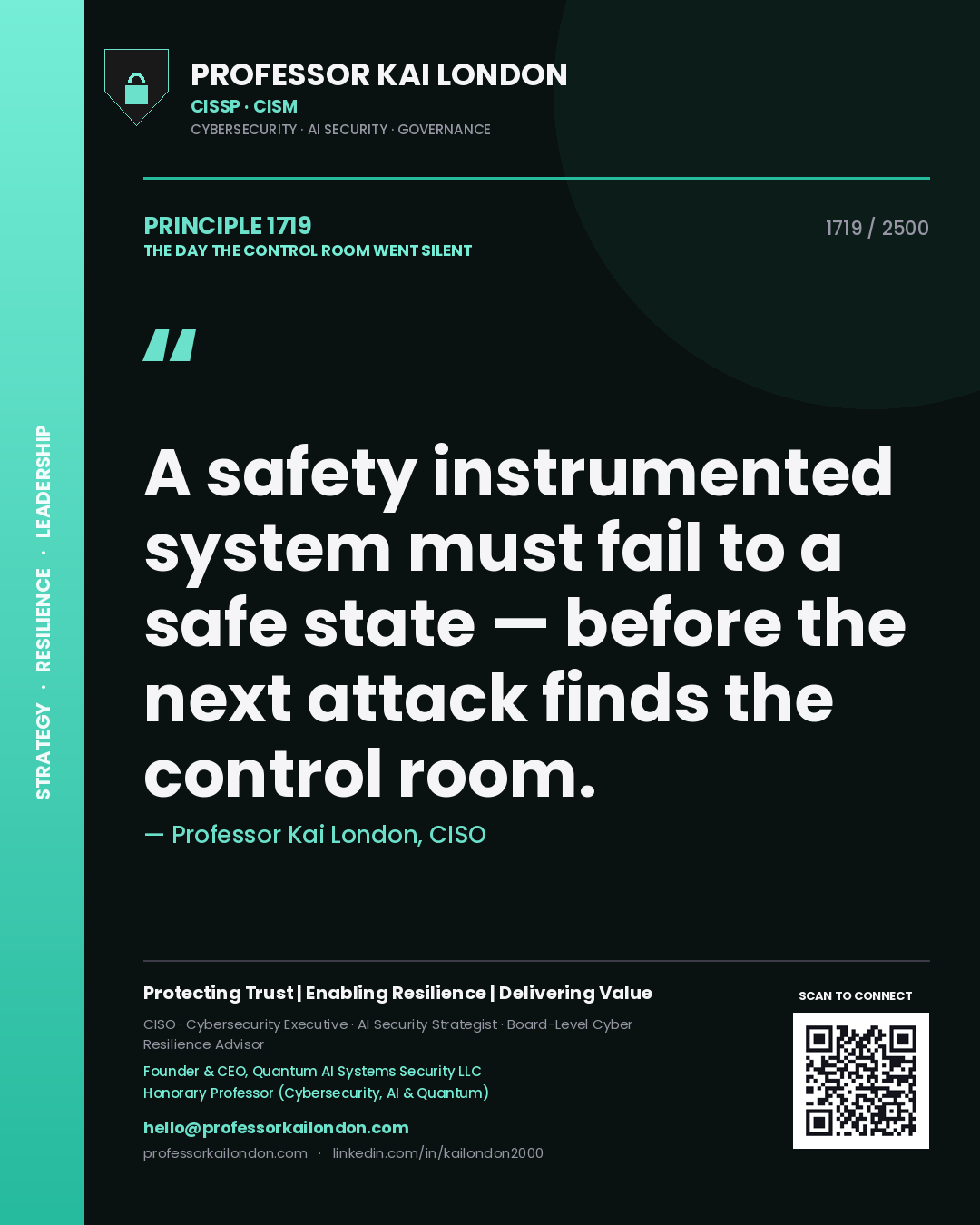
Professor Kai London principle 1719: A safety instrumented system must fail to a safe state — before the next attack finds the control room.
Principle 1719
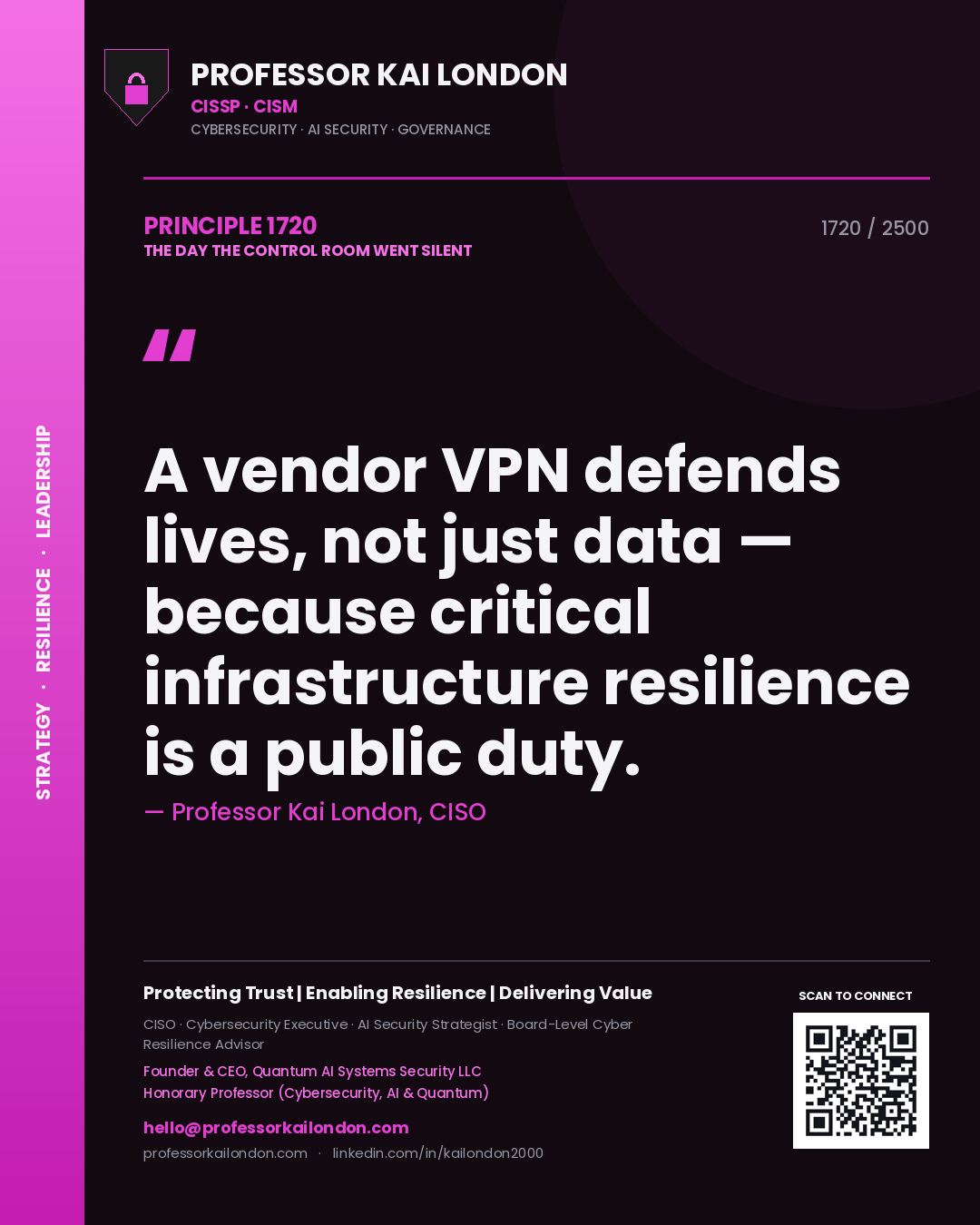
Professor Kai London principle 1720: A vendor VPN defends lives, not just data — because critical infrastructure resilience is a public duty.
Principle 1720
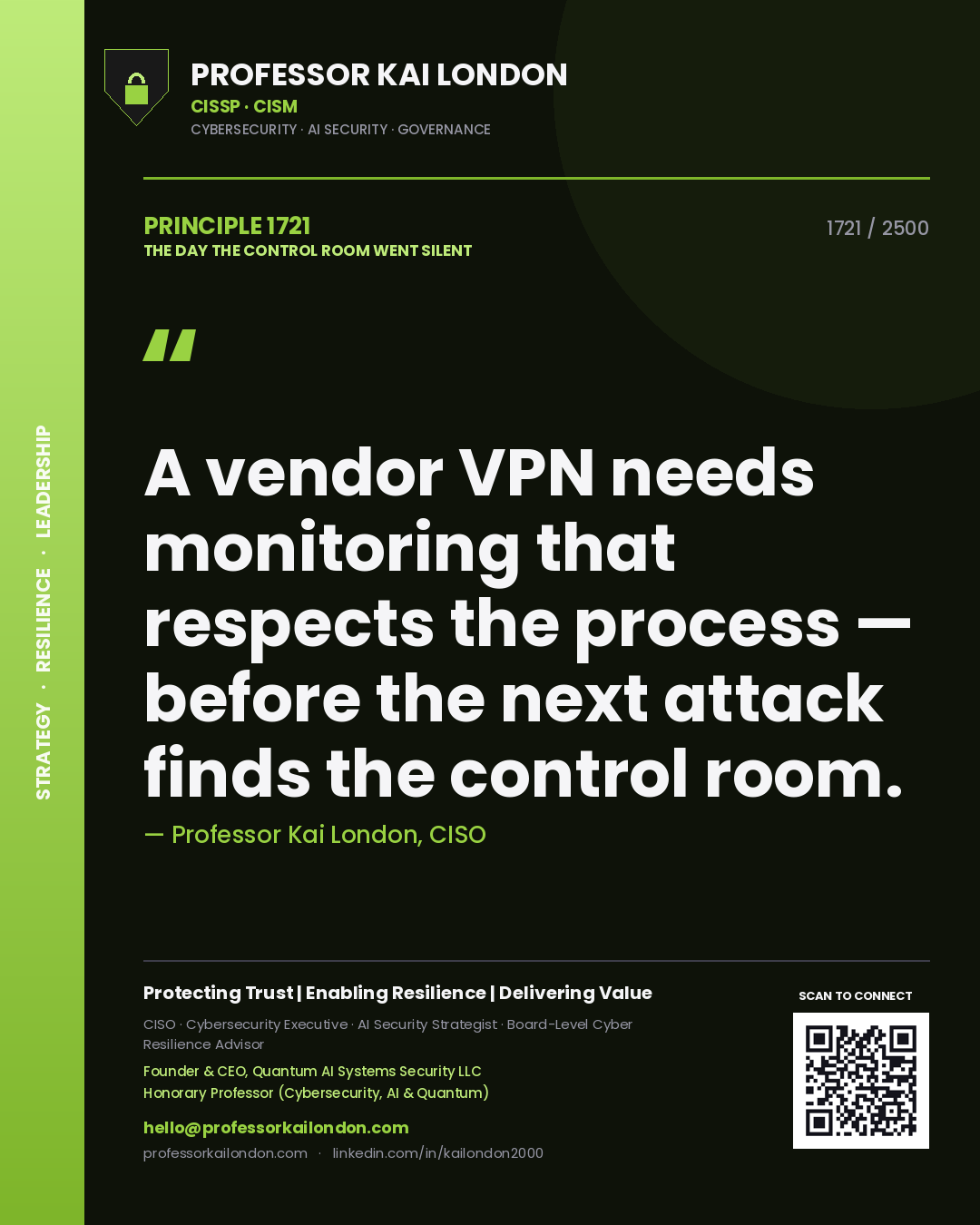
Professor Kai London principle 1721: A vendor VPN needs monitoring that respects the process — before the next attack finds the control room.
Principle 1721
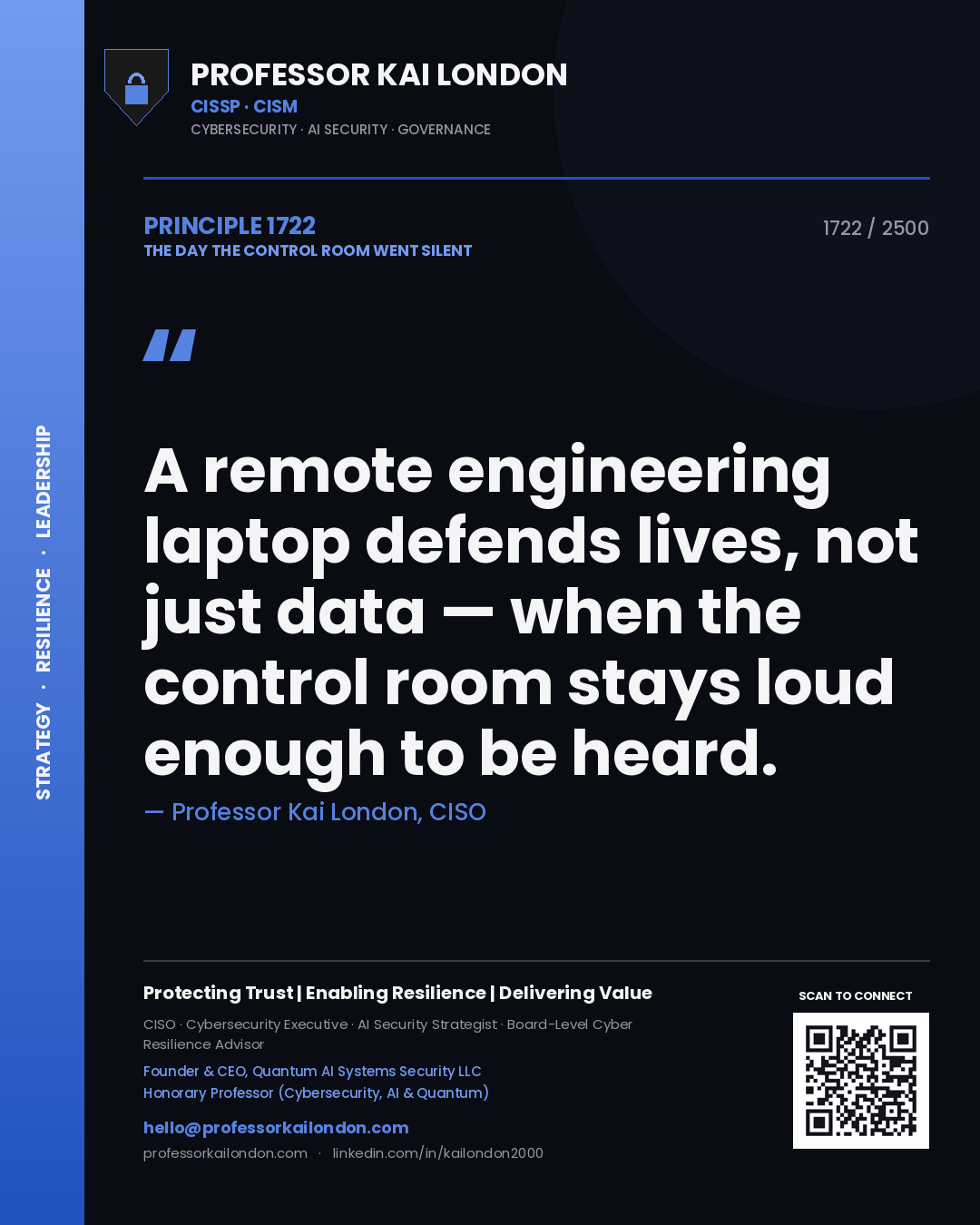
Professor Kai London principle 1722: A remote engineering laptop defends lives, not just data — when the control room stays loud enough to be heard.
Principle 1722
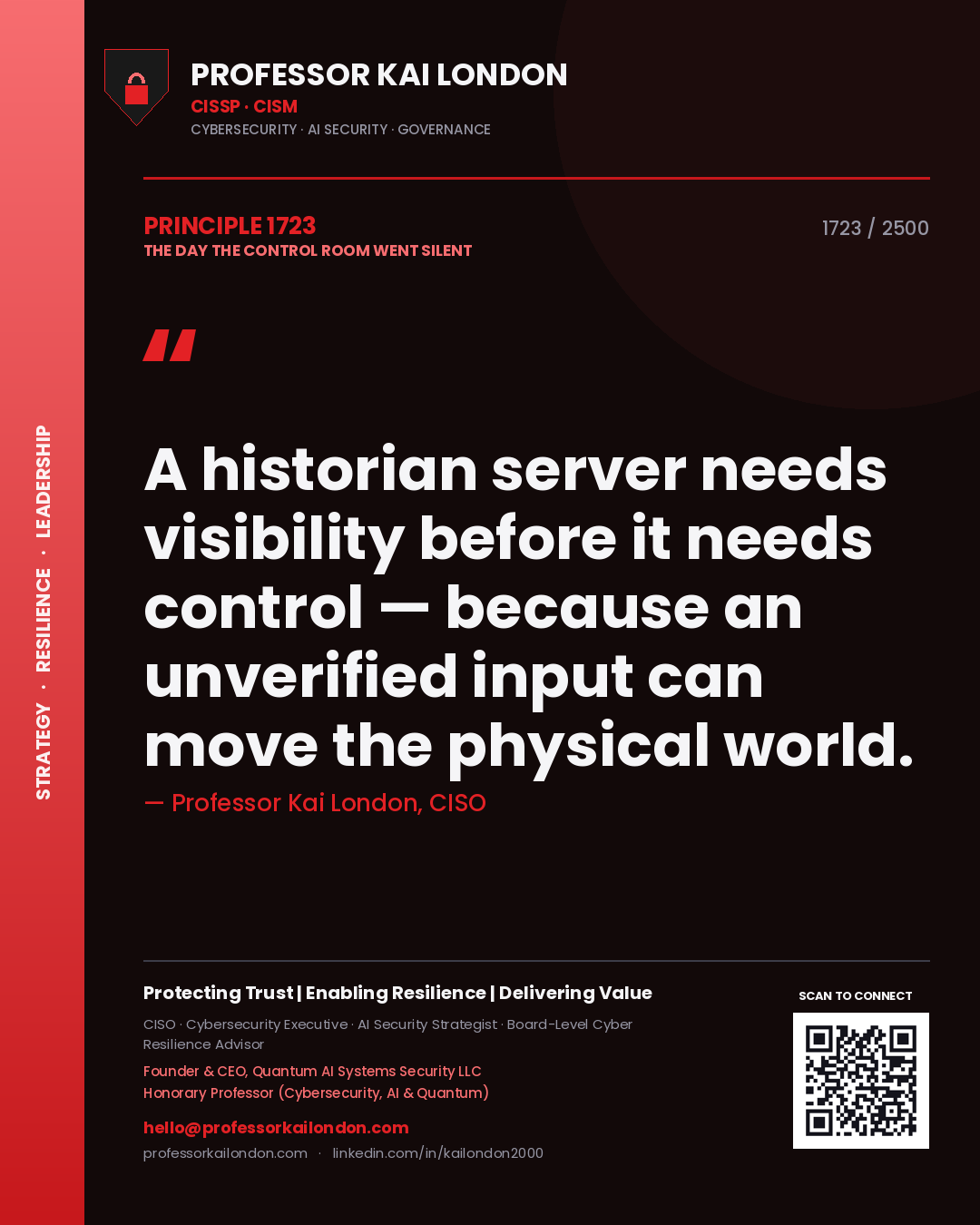
Professor Kai London principle 1723: A historian server needs visibility before it needs control — because an unverified input can move the physical world.
Principle 1723
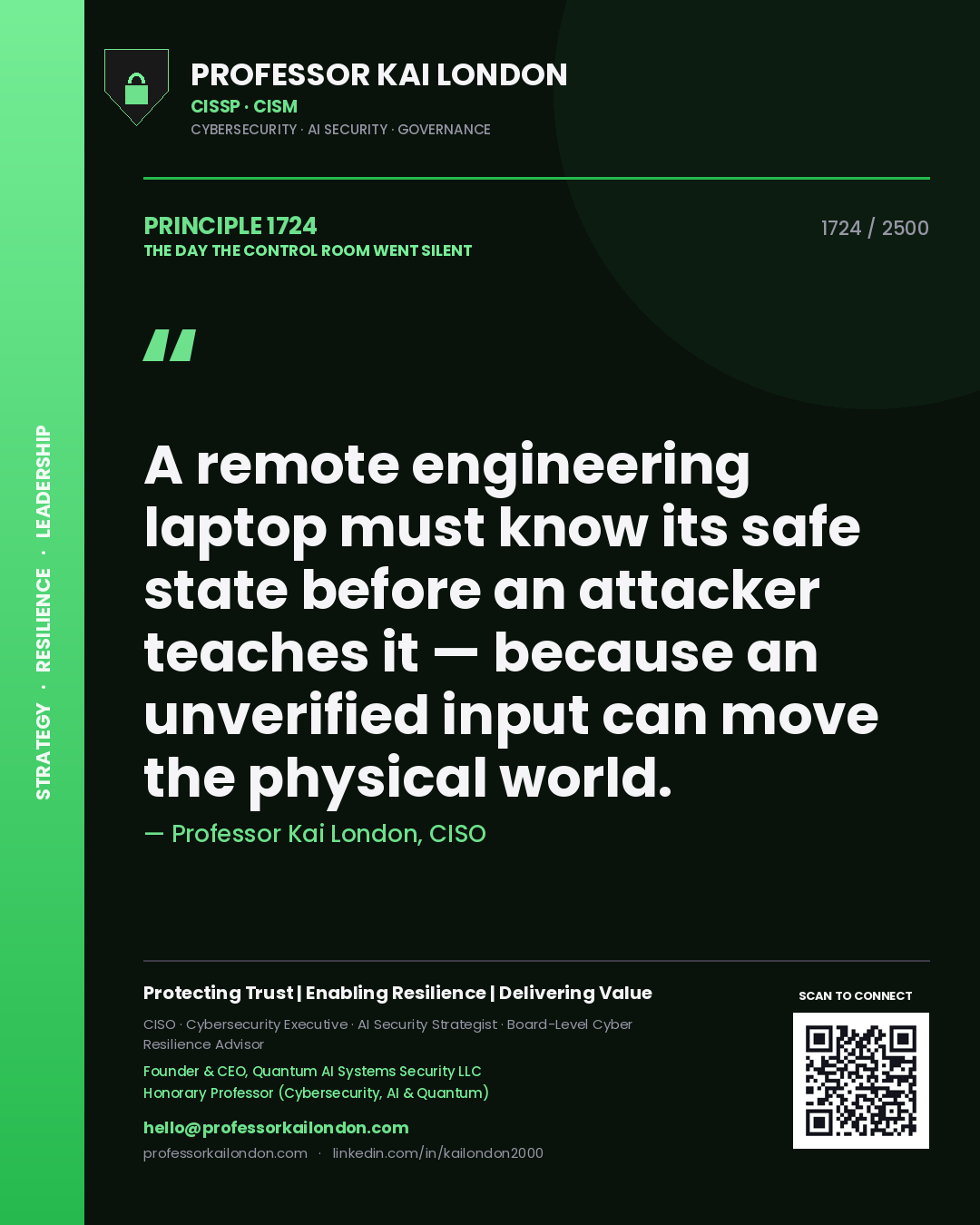
Professor Kai London principle 1724: A remote engineering laptop must know its safe state before an attacker teaches it — because an unverified input can move the physical world.
Principle 1724
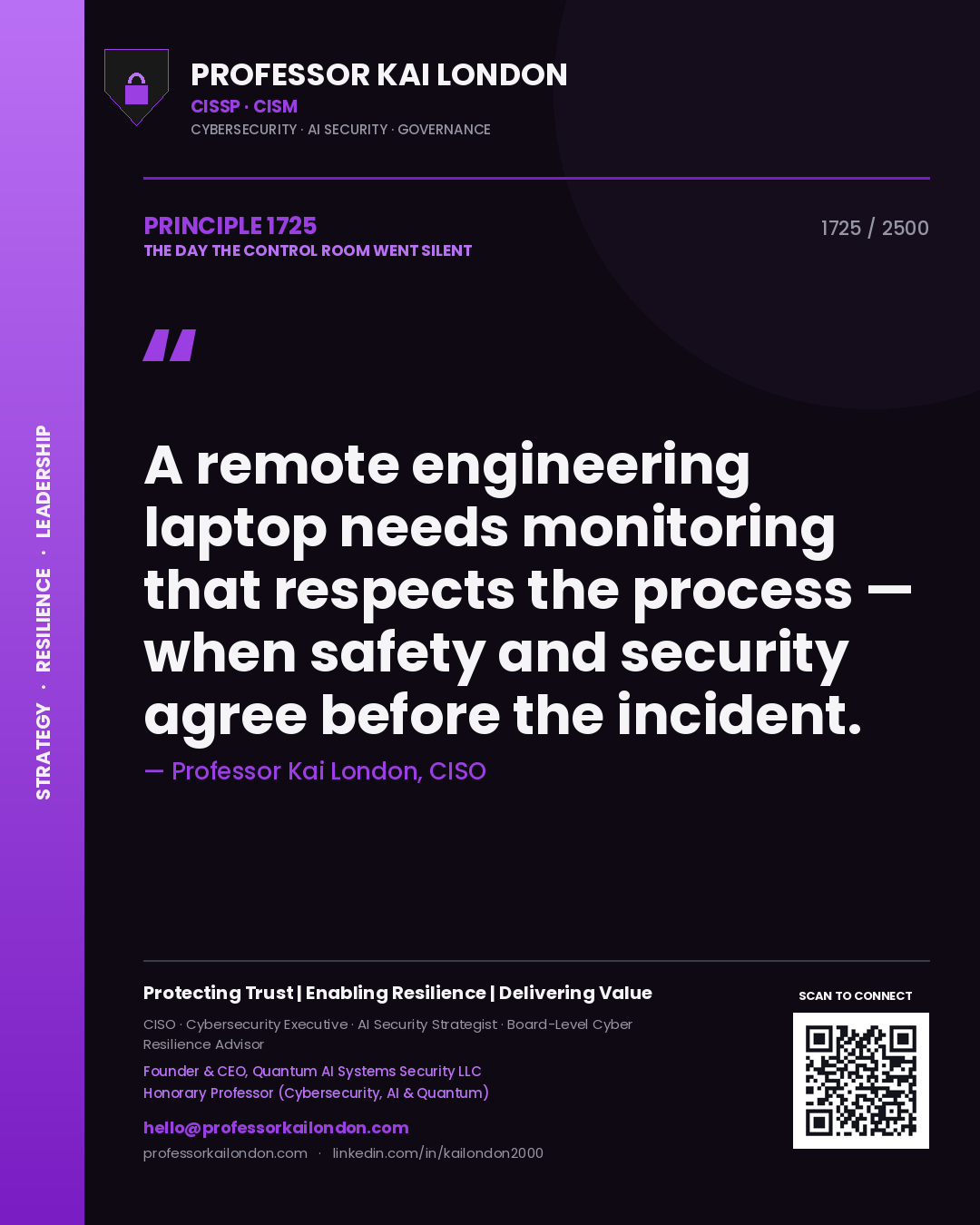
Professor Kai London principle 1725: A remote engineering laptop needs monitoring that respects the process — when safety and security agree before the incident.
Principle 1725
Professor Kai London principle 1726: A vendor VPN governs consequence, not just configuration — because an unverified input can move the physical world.
Principle 1726
Professor Kai London principle 1727: A safety system must fail to a safe state — when safety and security agree before the incident.
Principle 1727
Professor Kai London principle 1728: A control room needs monitoring that respects the process — when safety and security never argue during an incident.
Principle 1728
Professor Kai London principle 1729: An unverified digital input cannot be patched on a memo's schedule — because a keystroke here moves the physical world.
Principle 1729
Professor Kai London principle 1730: A jump host needs visibility before it needs control — the moment IT logic meets OT consequence.
Principle 1730
Professor Kai London principle 1731: A PLC governs consequence, not just configuration — when the control room stays loud enough to be heard.
Principle 1731
Professor Kai London principle 1732: A SCADA system must know its safe state before an attacker teaches it — before a convenient bridge becomes the attack path.
Principle 1732
Professor Kai London principle 1733: An OT network bridges IT risk into physical consequence — when you see it, trust it, hand it back, and prove it.
Principle 1733
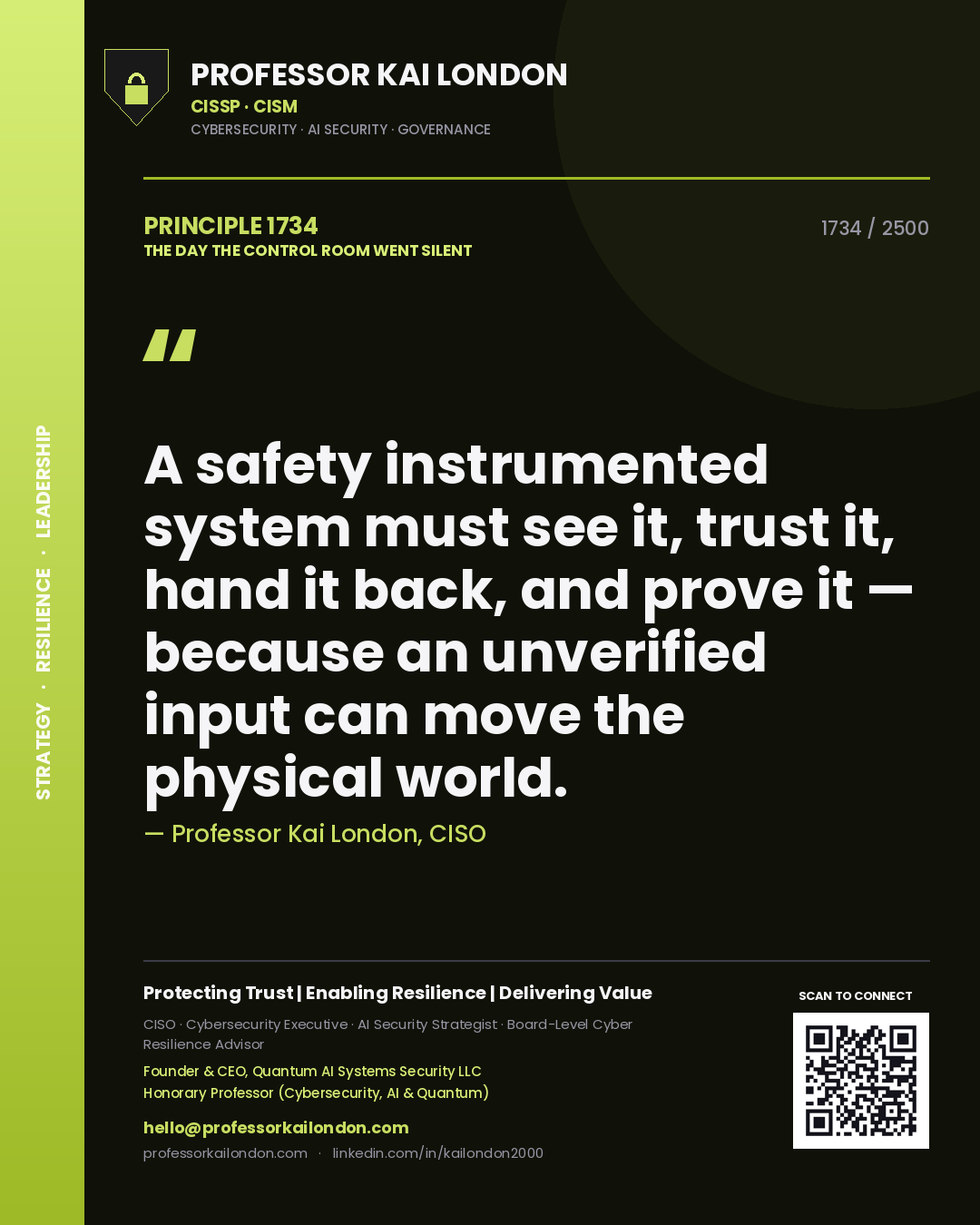
Professor Kai London principle 1734: A safety instrumented system must see it, trust it, hand it back, and prove it — because an unverified input can move the physical world.
Principle 1734
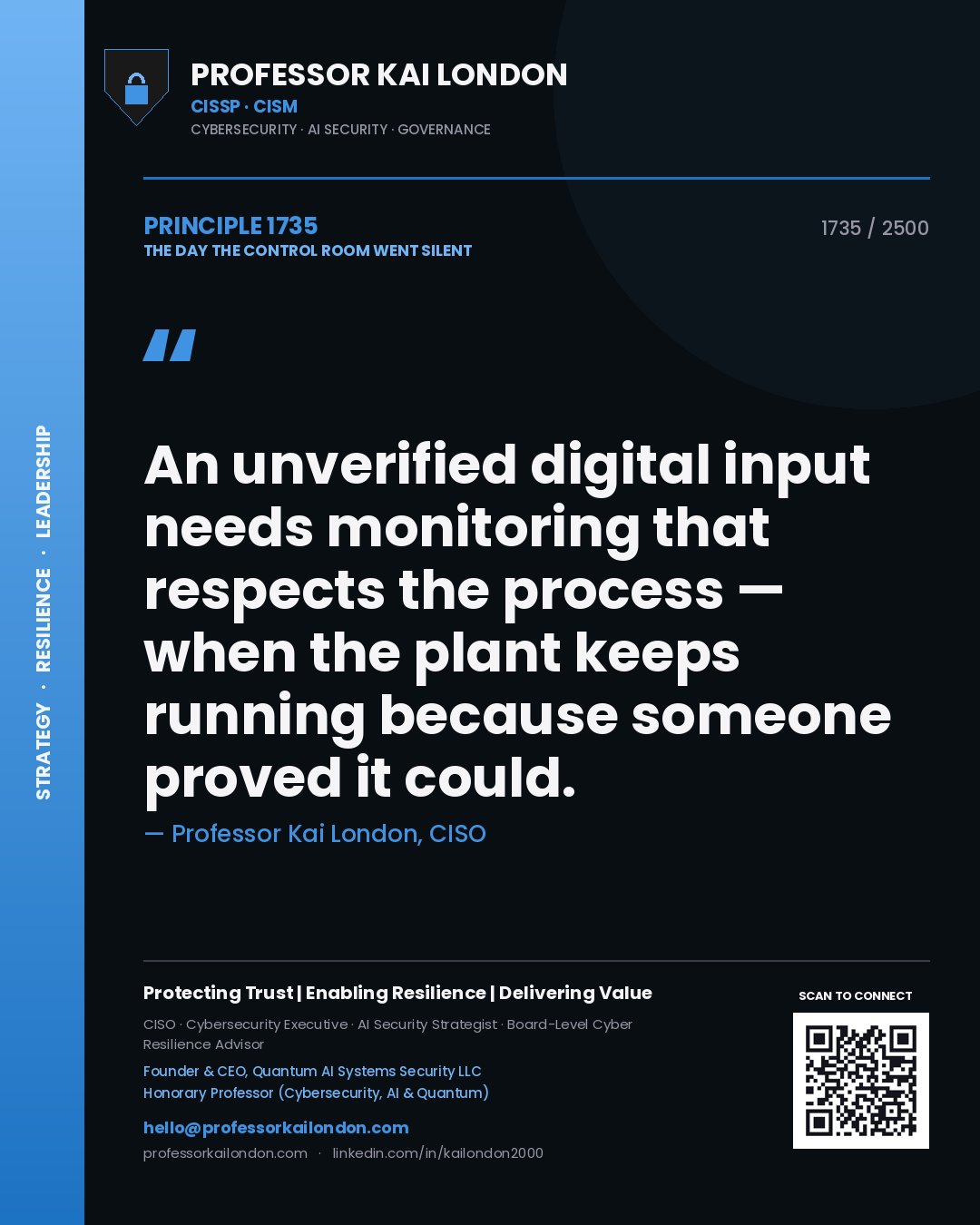
Professor Kai London principle 1735: An unverified digital input needs monitoring that respects the process — when the plant keeps running because someone proved it could.
Principle 1735
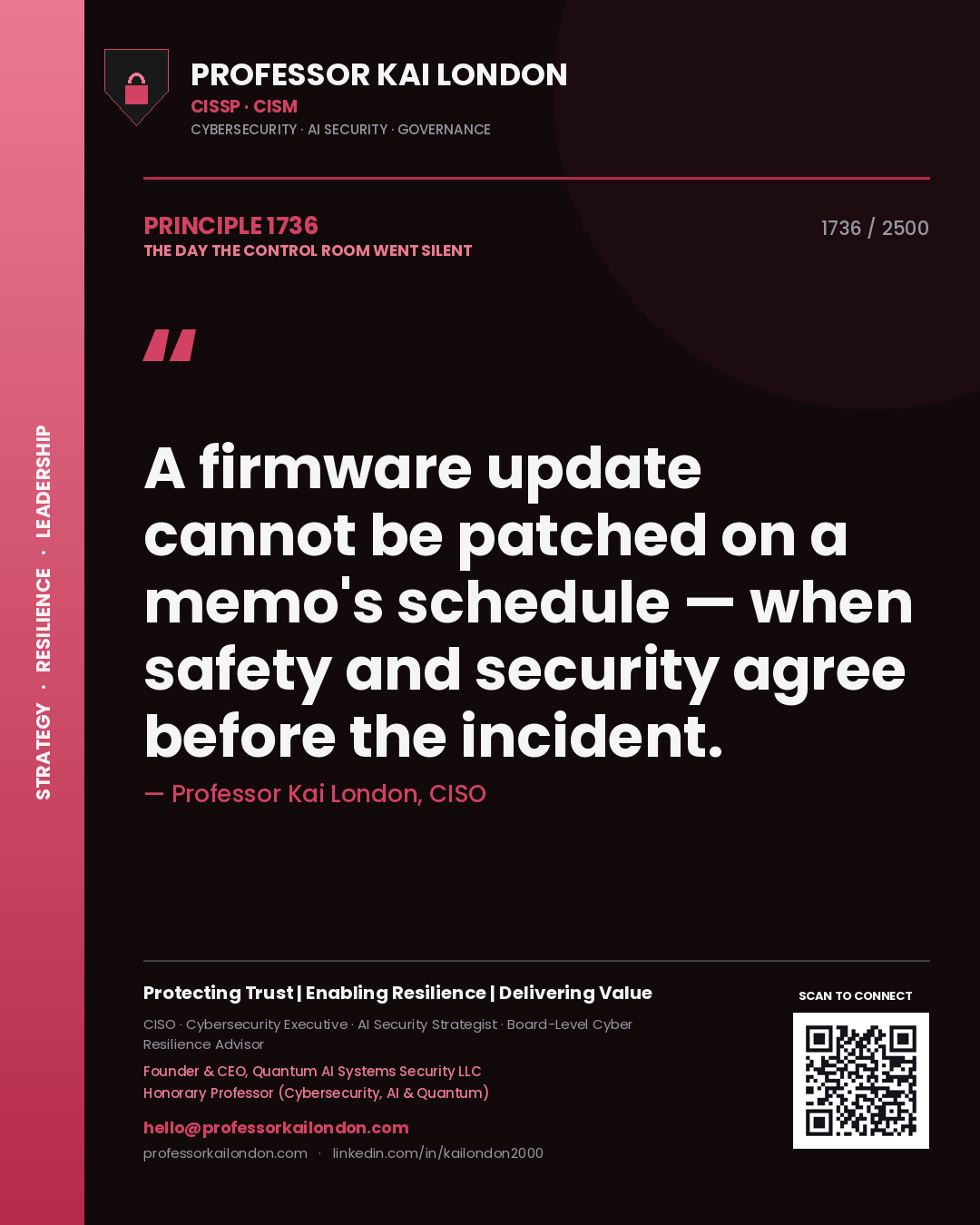
Professor Kai London principle 1736: A firmware update cannot be patched on a memo's schedule — when safety and security agree before the incident.
Principle 1736
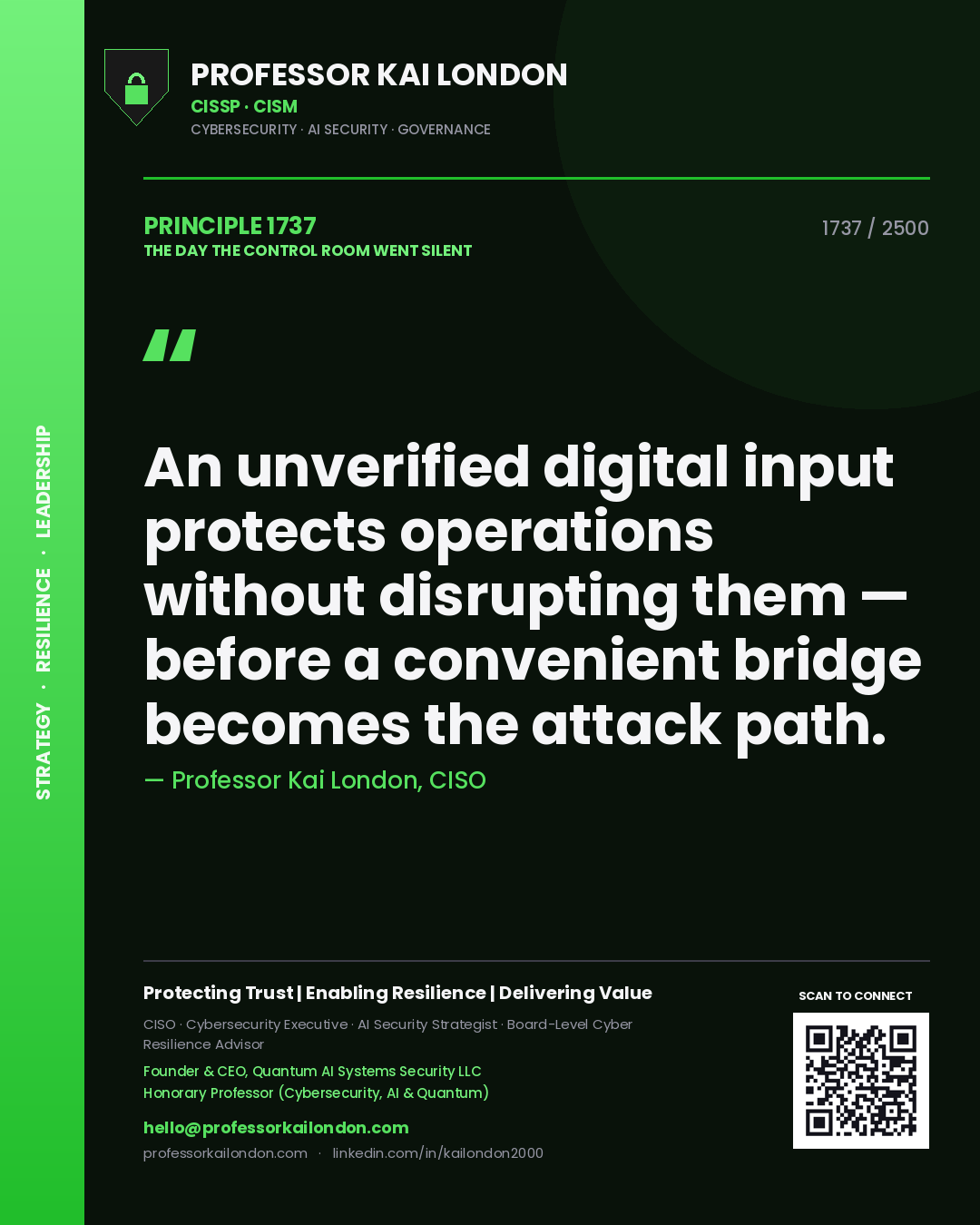
Professor Kai London principle 1737: An unverified digital input protects operations without disrupting them — before a convenient bridge becomes the attack path.
Principle 1737
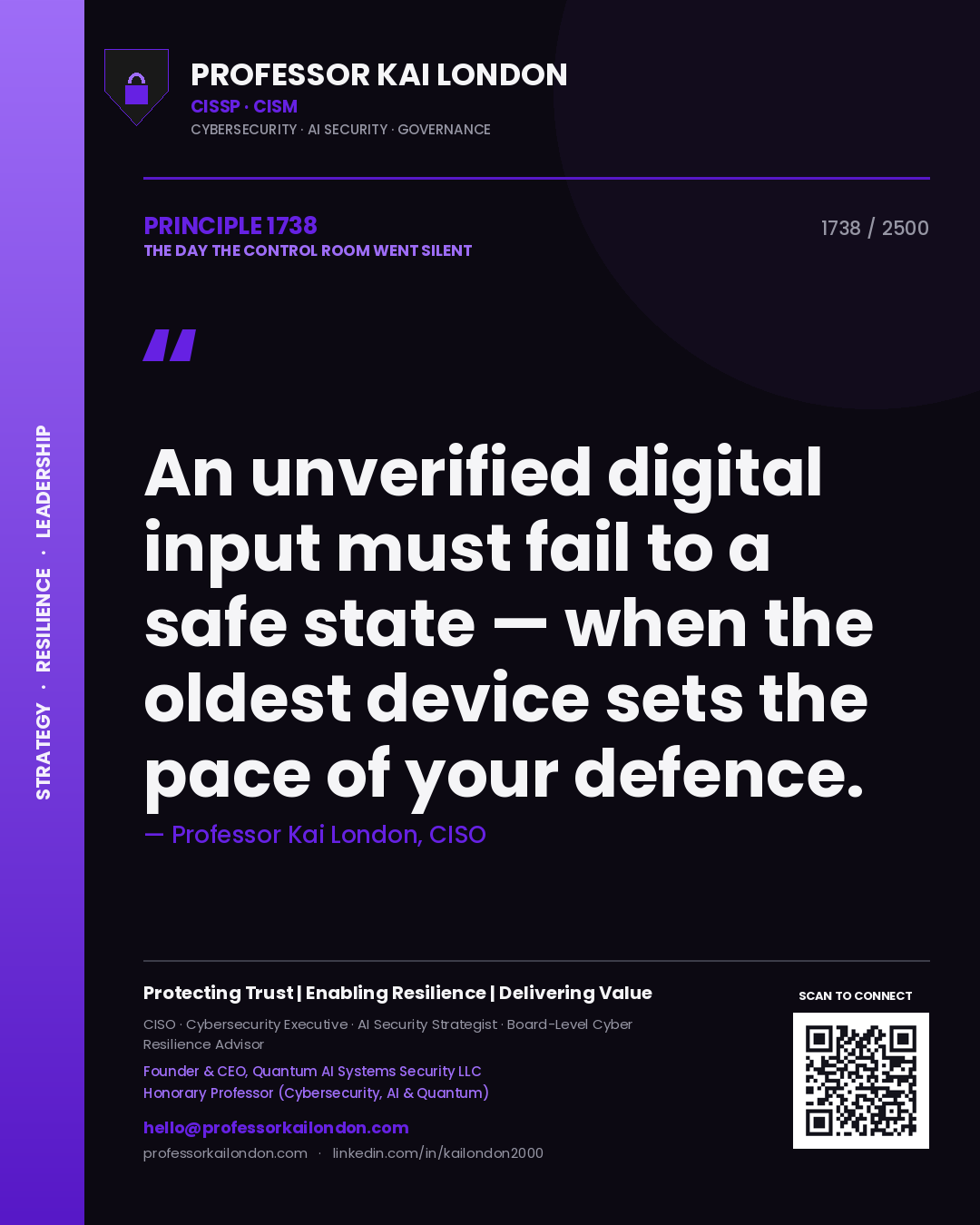
Professor Kai London principle 1738: An unverified digital input must fail to a safe state — when the oldest device sets the pace of your defence.
Principle 1738
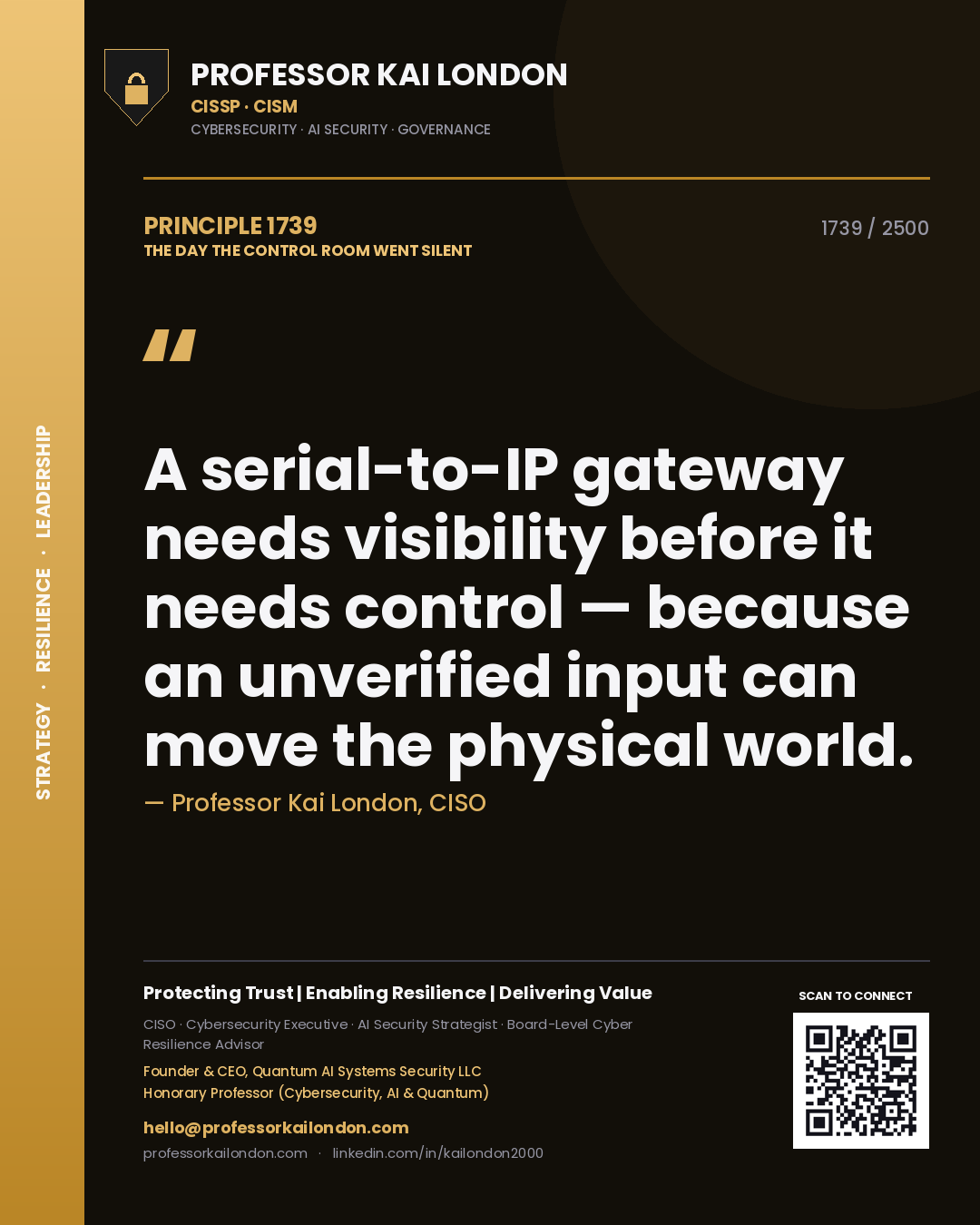
Professor Kai London principle 1739: A serial-to-IP gateway needs visibility before it needs control — because an unverified input can move the physical world.
Principle 1739
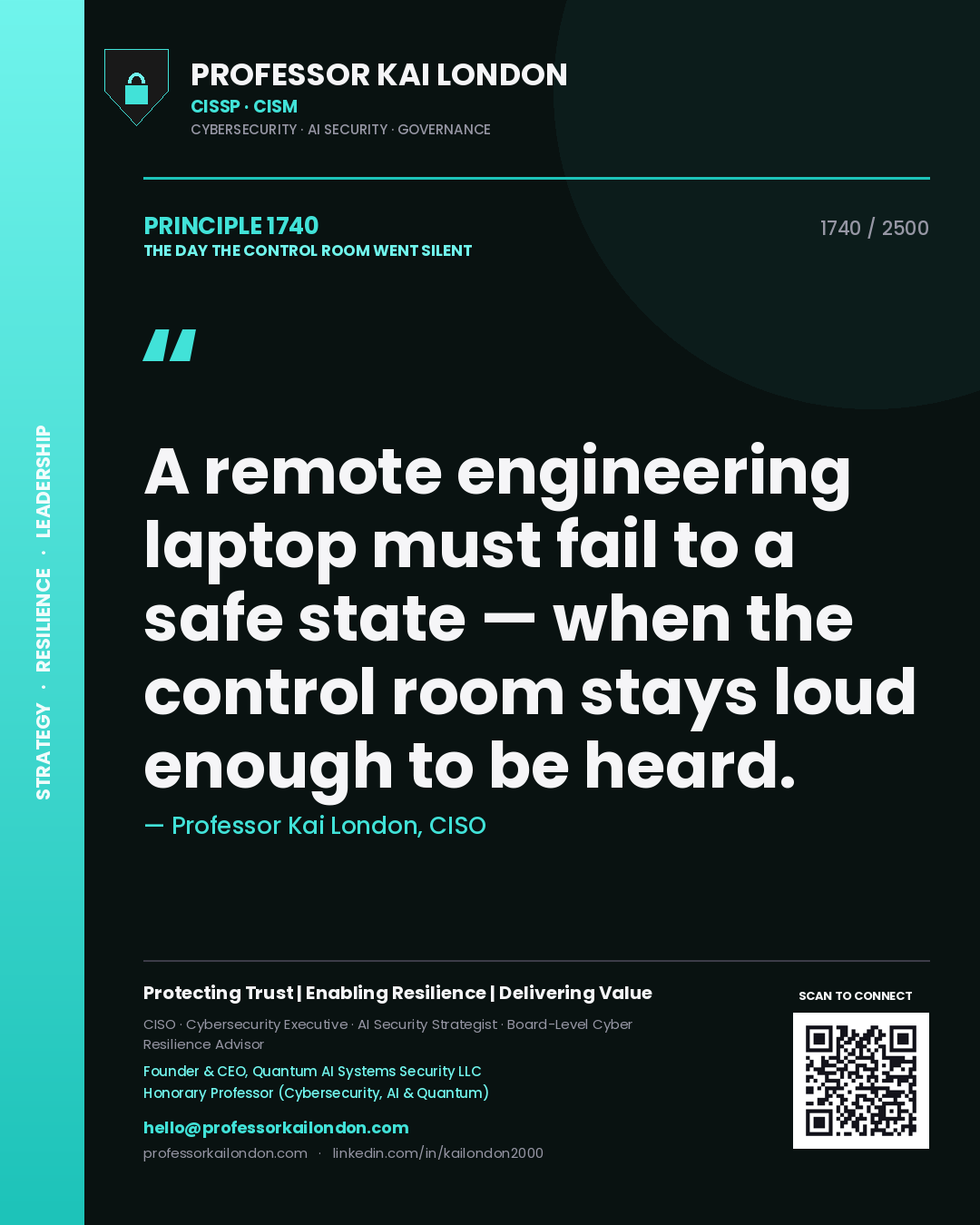
Professor Kai London principle 1740: A remote engineering laptop must fail to a safe state — when the control room stays loud enough to be heard.
Principle 1740
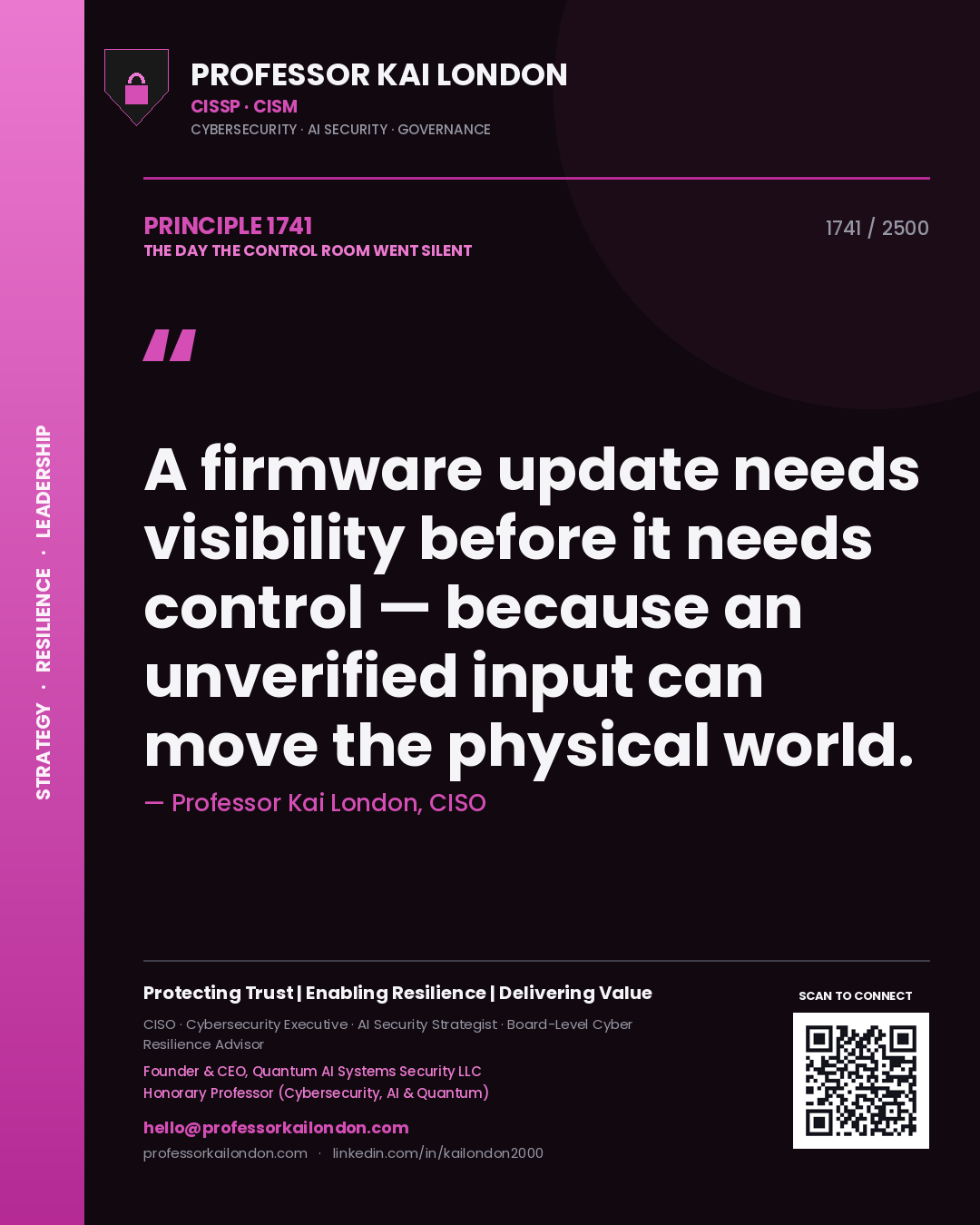
Professor Kai London principle 1741: A firmware update needs visibility before it needs control — because an unverified input can move the physical world.
Principle 1741
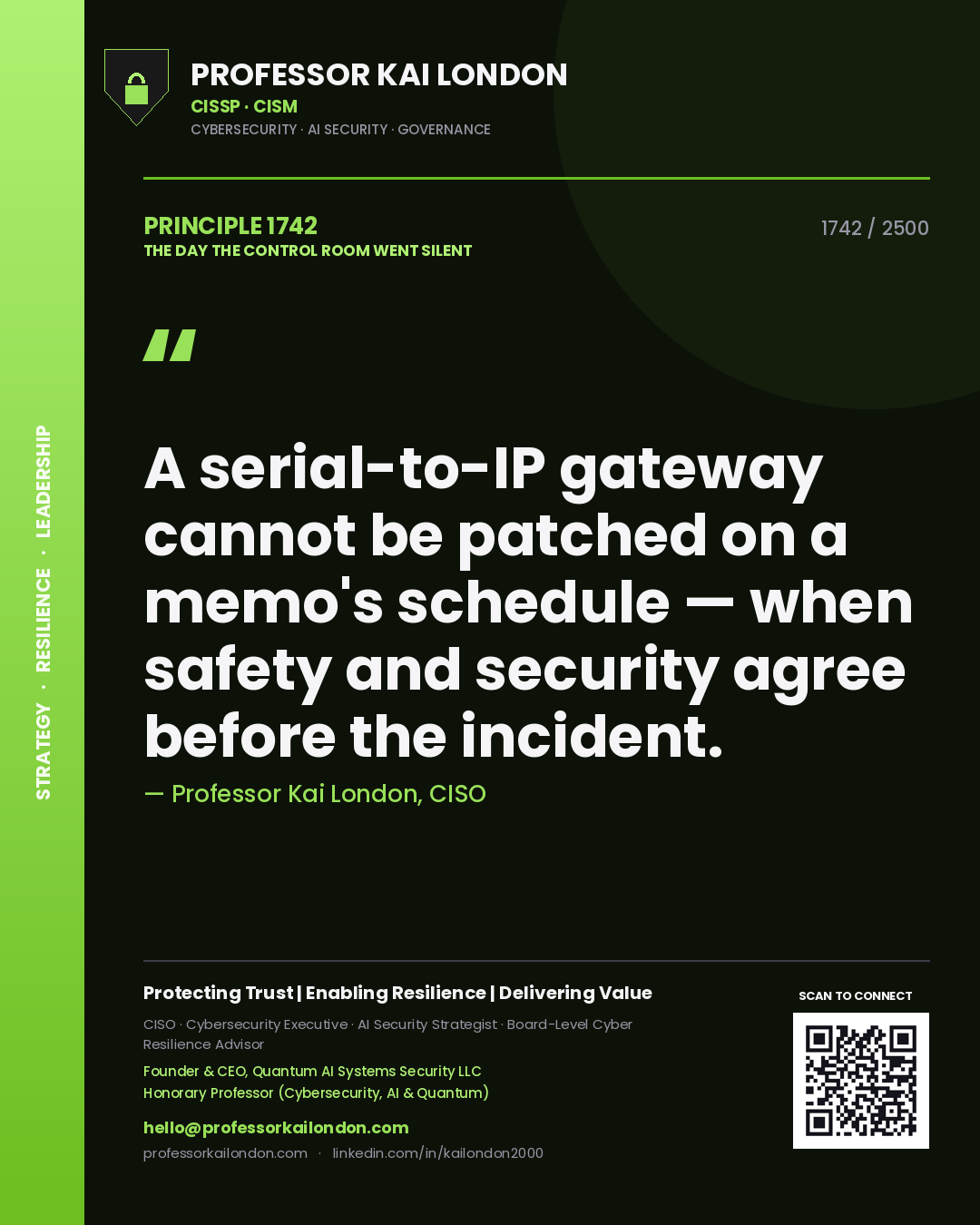
Professor Kai London principle 1742: A serial-to-IP gateway cannot be patched on a memo's schedule — when safety and security agree before the incident.
Principle 1742
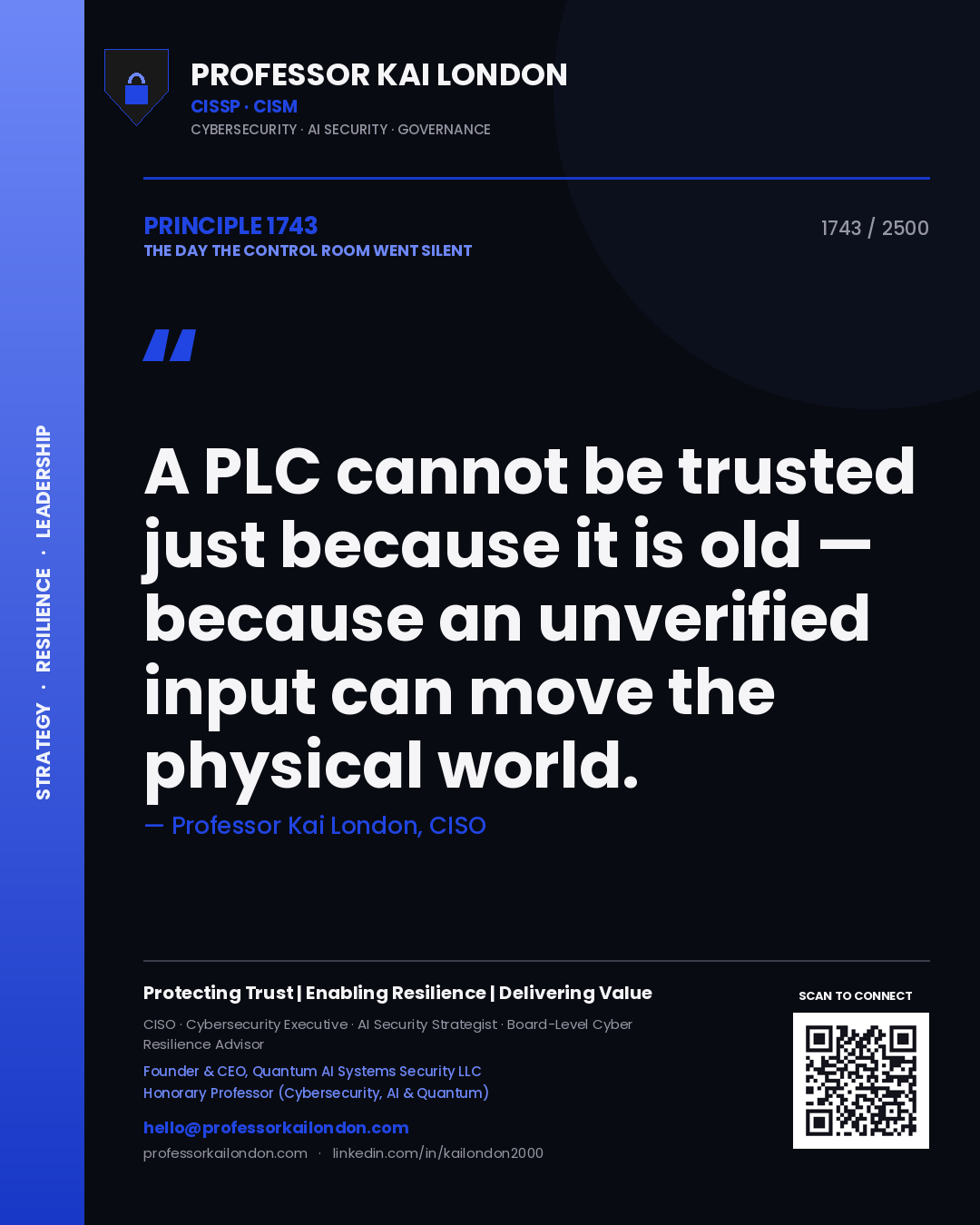
Professor Kai London principle 1743: A PLC cannot be trusted just because it is old — because an unverified input can move the physical world.
Principle 1743
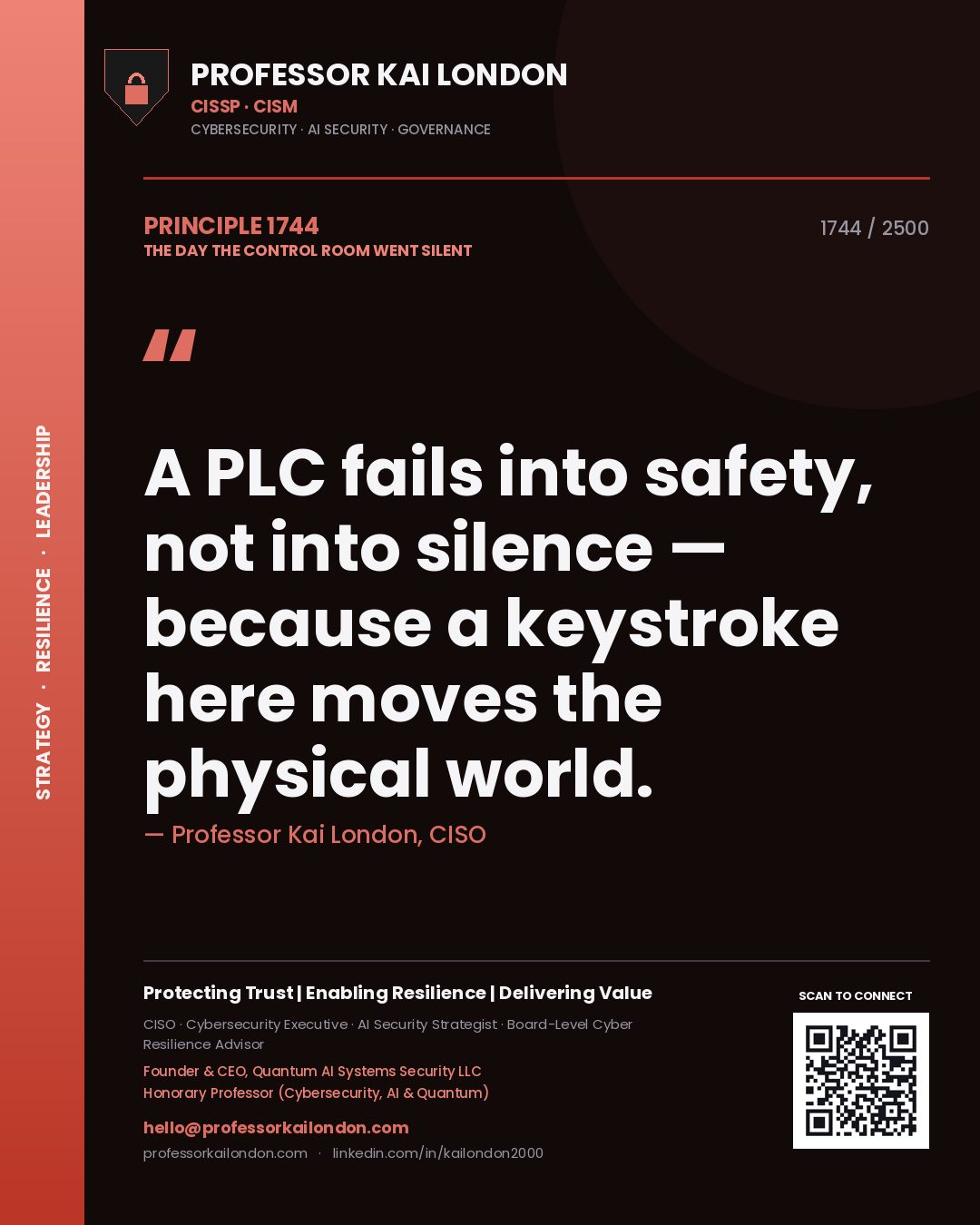
Professor Kai London principle 1744: A PLC fails into safety, not into silence — because a keystroke here moves the physical world.
Principle 1744
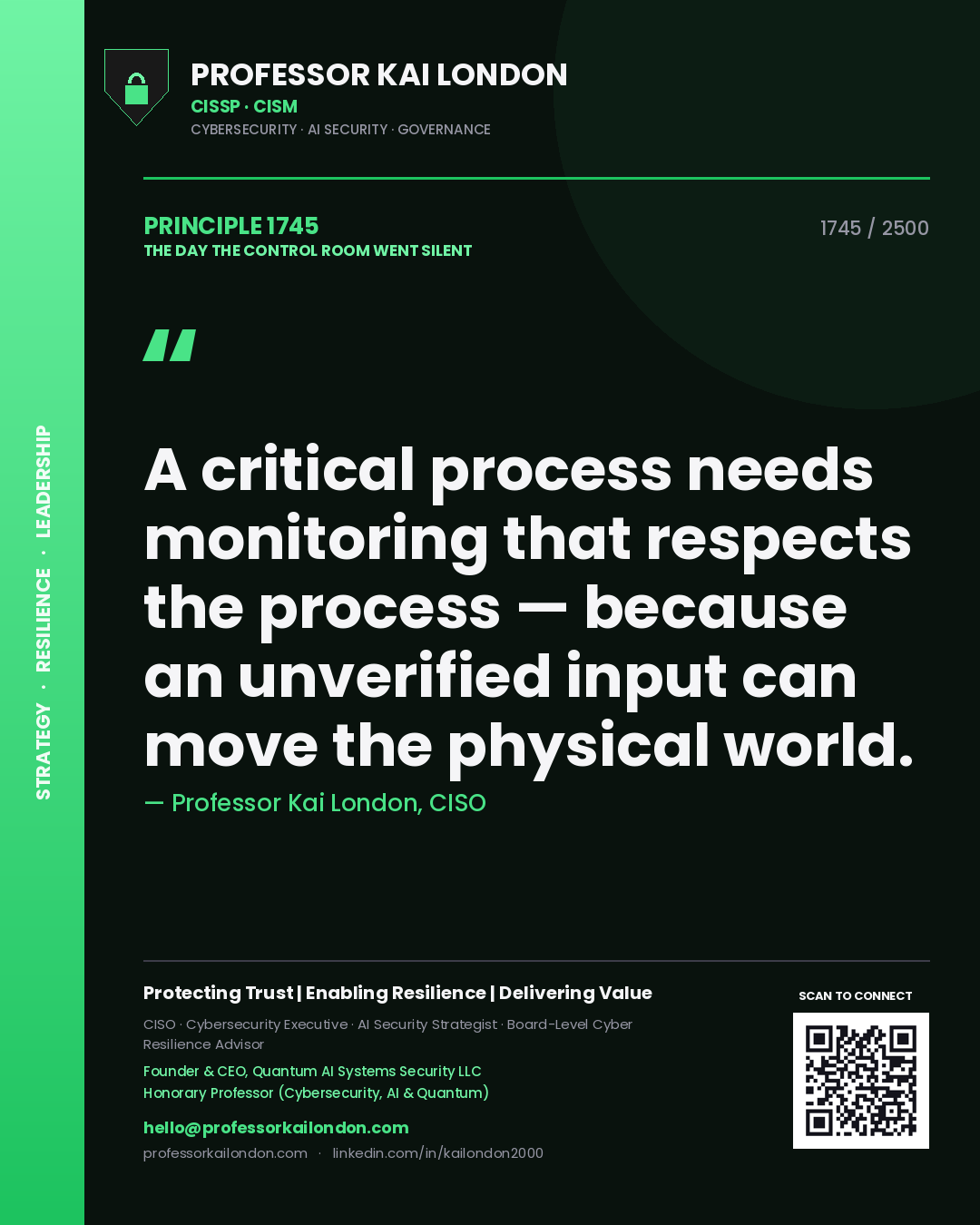
Professor Kai London principle 1745: A critical process needs monitoring that respects the process — because an unverified input can move the physical world.
Principle 1745
Professor Kai London principle 1746: A jump host defends lives, not just data — before a convenient bridge becomes the attack path.
Principle 1746
Professor Kai London principle 1747: A safety system bridges IT risk into physical consequence — when the control room stays loud enough to be heard.
Principle 1747
Professor Kai London principle 1748: A legacy controller needs monitoring that respects the process — when safety and security agree before the incident.
Principle 1748
Professor Kai London principle 1749: A jump host must know its safe state before an attacker teaches it.
Principle 1749
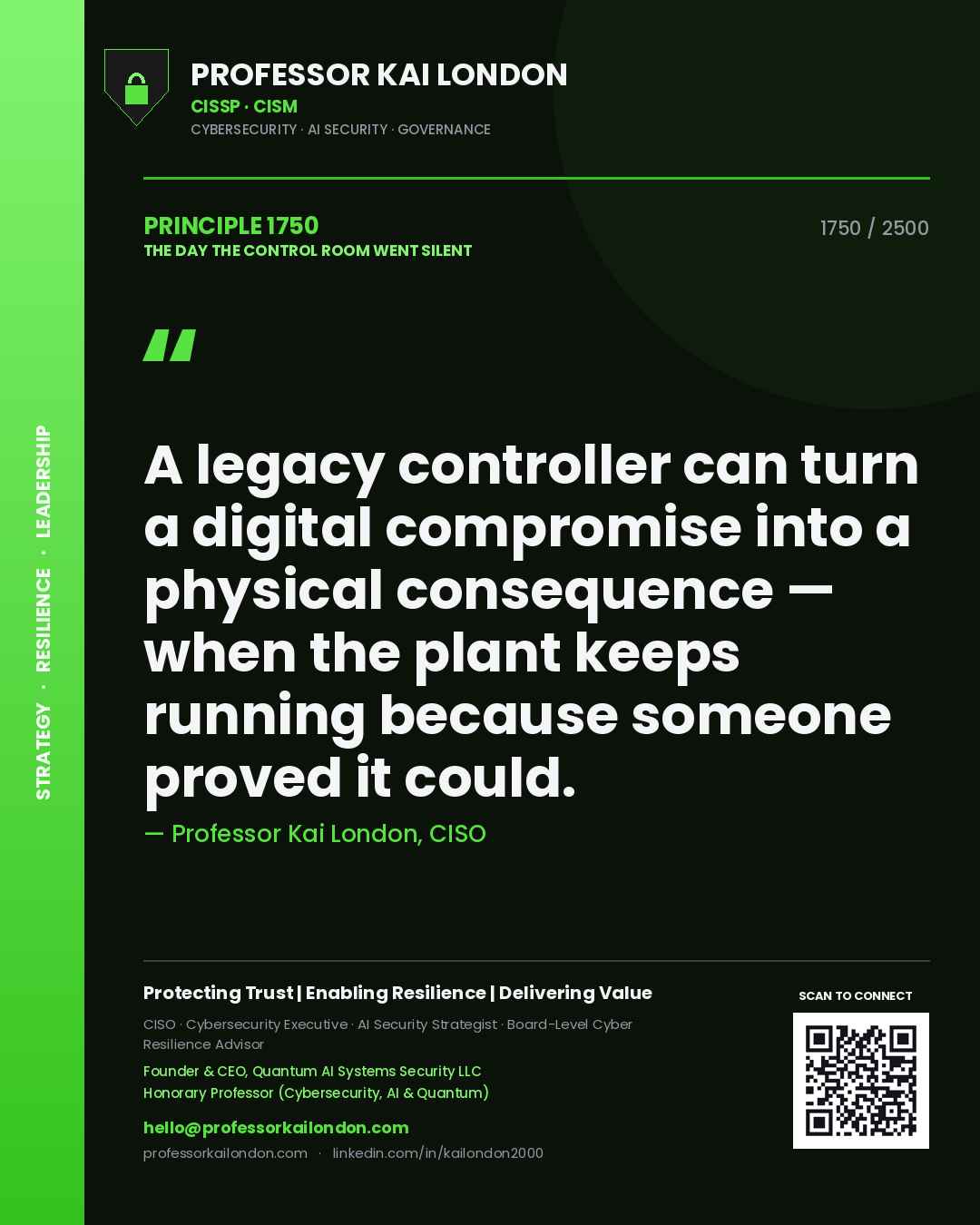
Professor Kai London principle 1750: A legacy controller can turn a digital compromise into a physical consequence — when the plant keeps running because someone proved it could.
Principle 1750
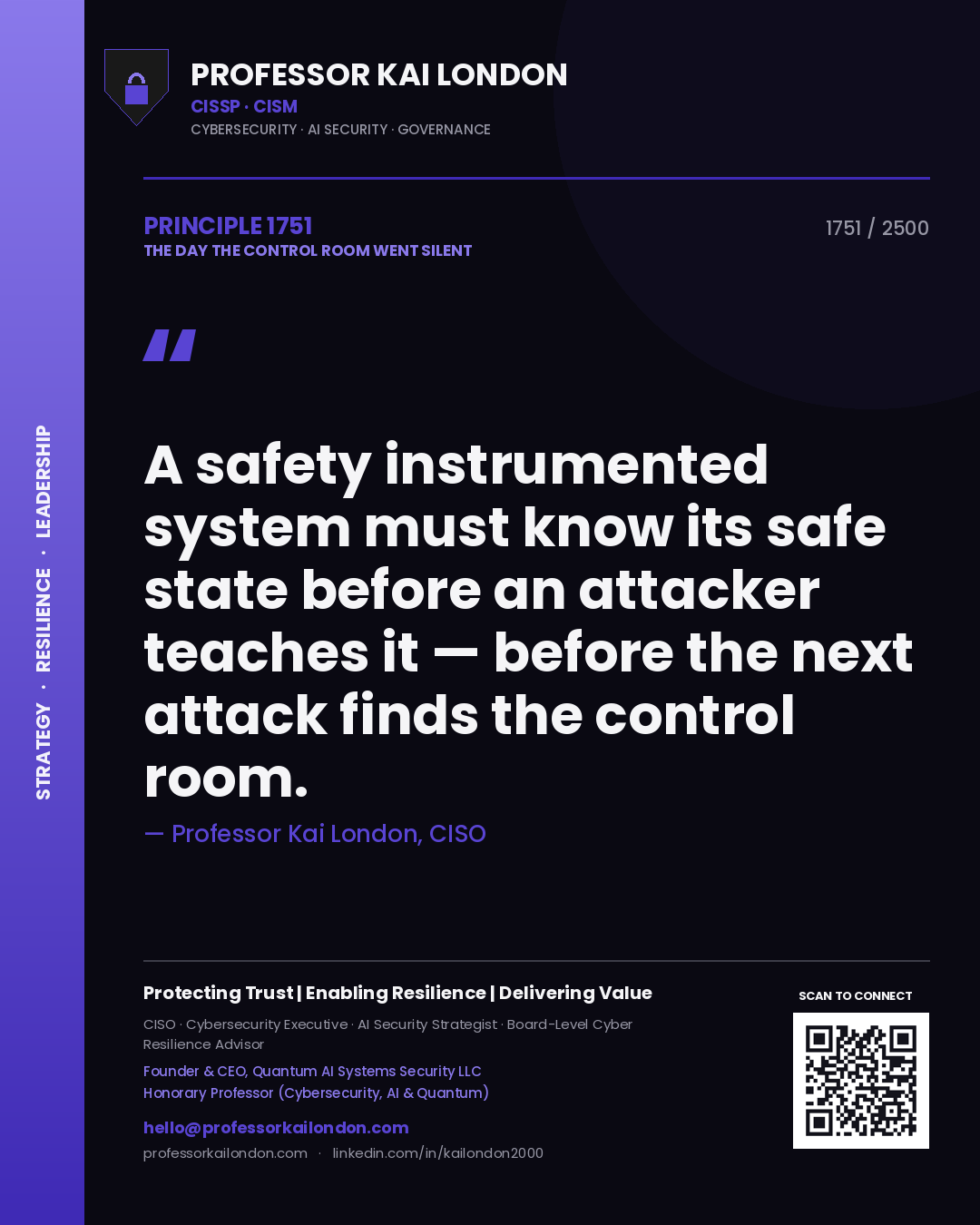
Professor Kai London principle 1751: A safety instrumented system must know its safe state before an attacker teaches it — before the next attack finds the control room.
Principle 1751
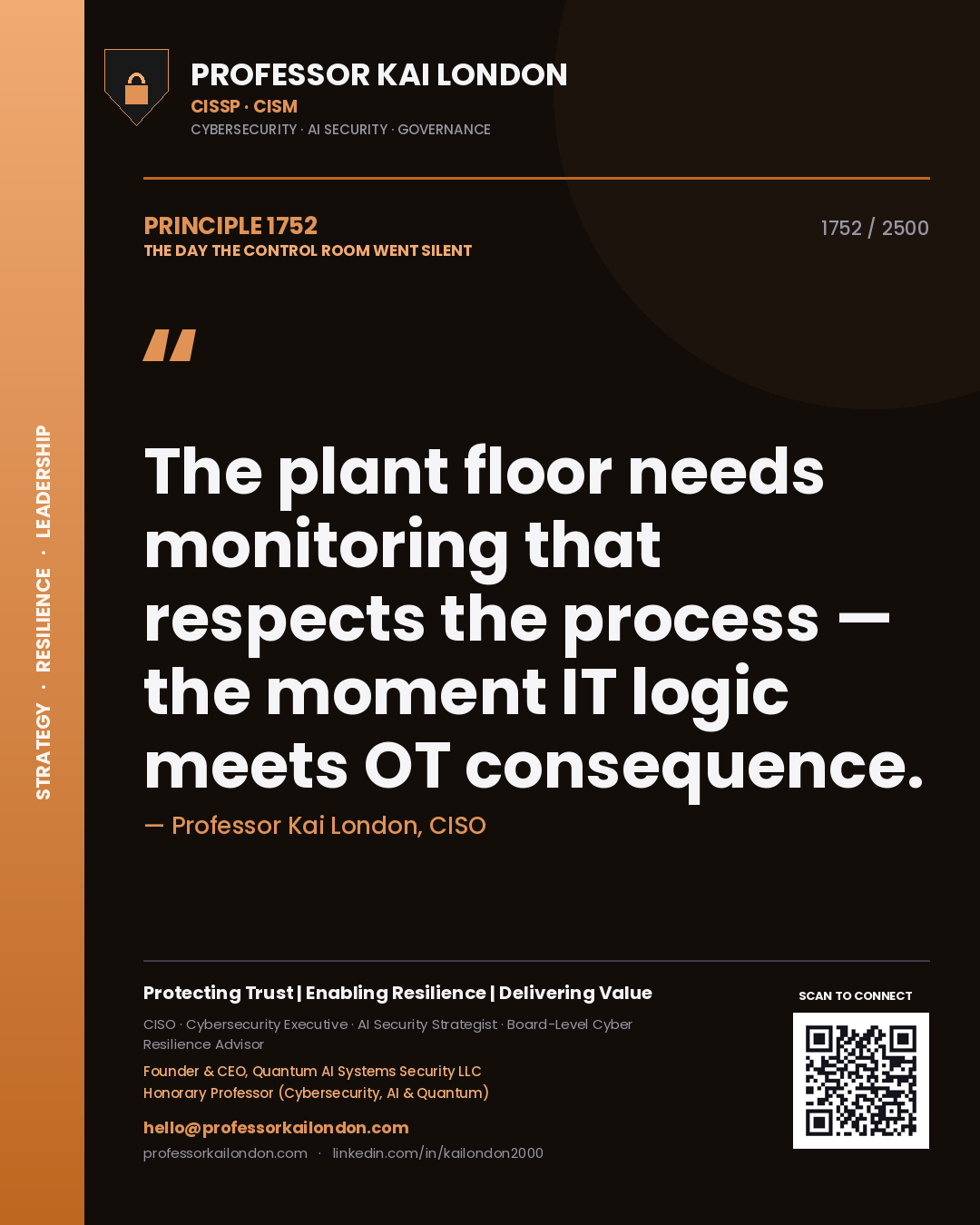
Professor Kai London principle 1752: The plant floor needs monitoring that respects the process — the moment IT logic meets OT consequence.
Principle 1752
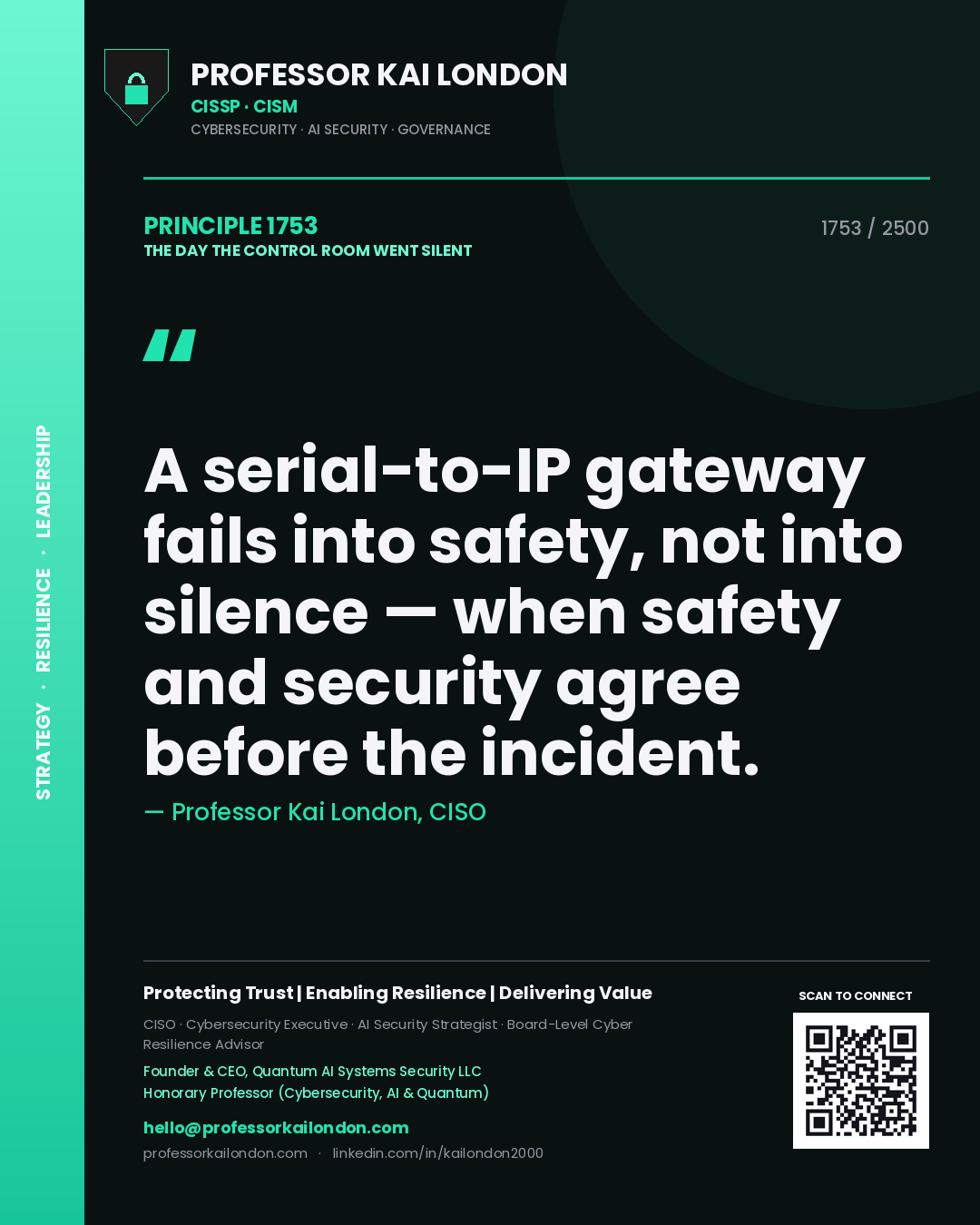
Professor Kai London principle 1753: A serial-to-IP gateway fails into safety, not into silence — when safety and security agree before the incident.
Principle 1753
Professor Kai London principle 1754: A control room protects operations without disrupting them — when the plant keeps running because someone proved it could.
Principle 1754
Professor Kai London principle 1755: The plant floor must fail to a safe state — when safety and security agree before the incident.
Principle 1755
Professor Kai London principle 1756: A control room cannot be trusted just because it is old.
Principle 1756
Professor Kai London principle 1757: A legacy controller governs consequence, not just configuration — before a convenient bridge becomes the attack path.
Principle 1757
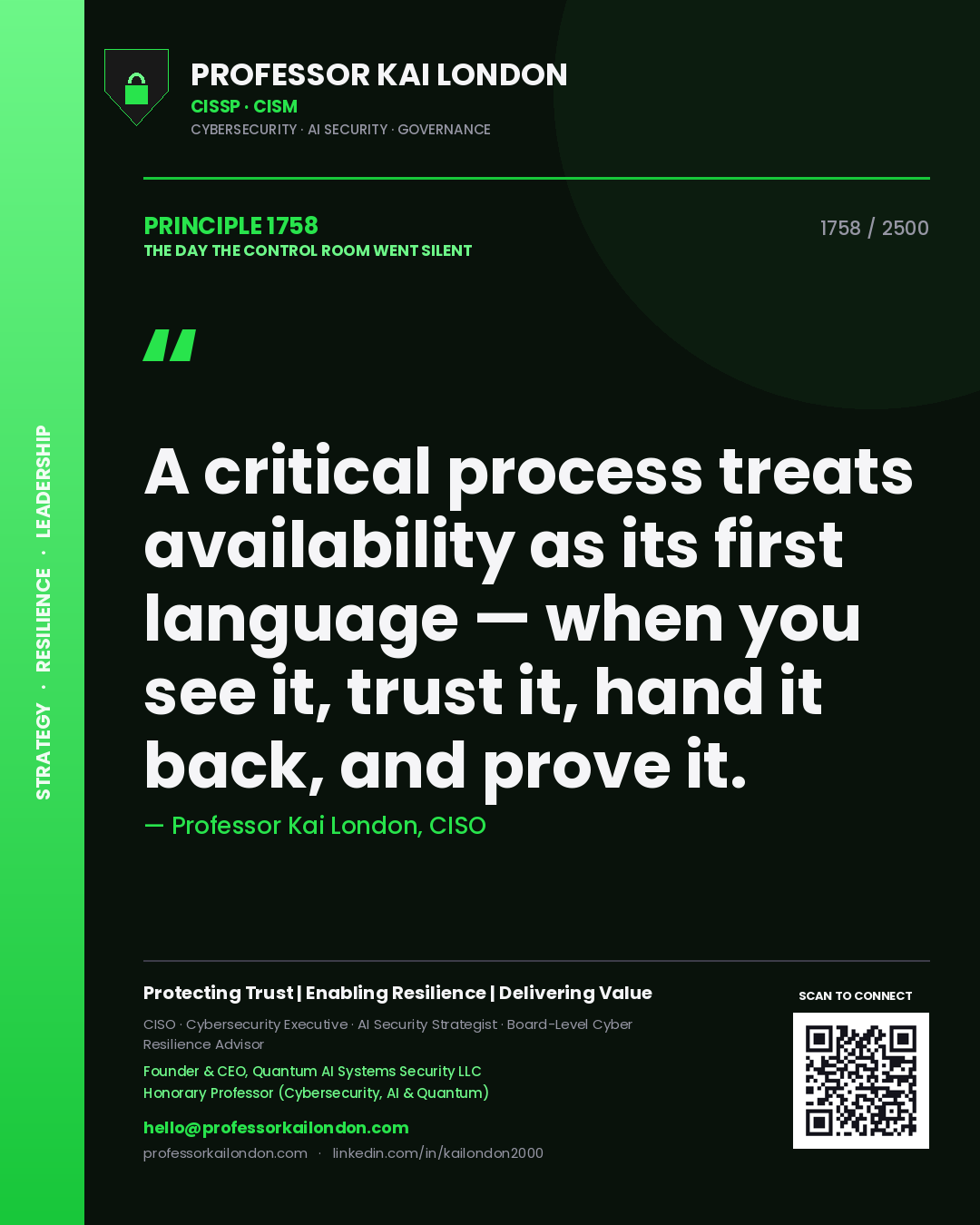
Professor Kai London principle 1758: A critical process treats availability as its first language — when you see it, trust it, hand it back, and prove it.
Principle 1758
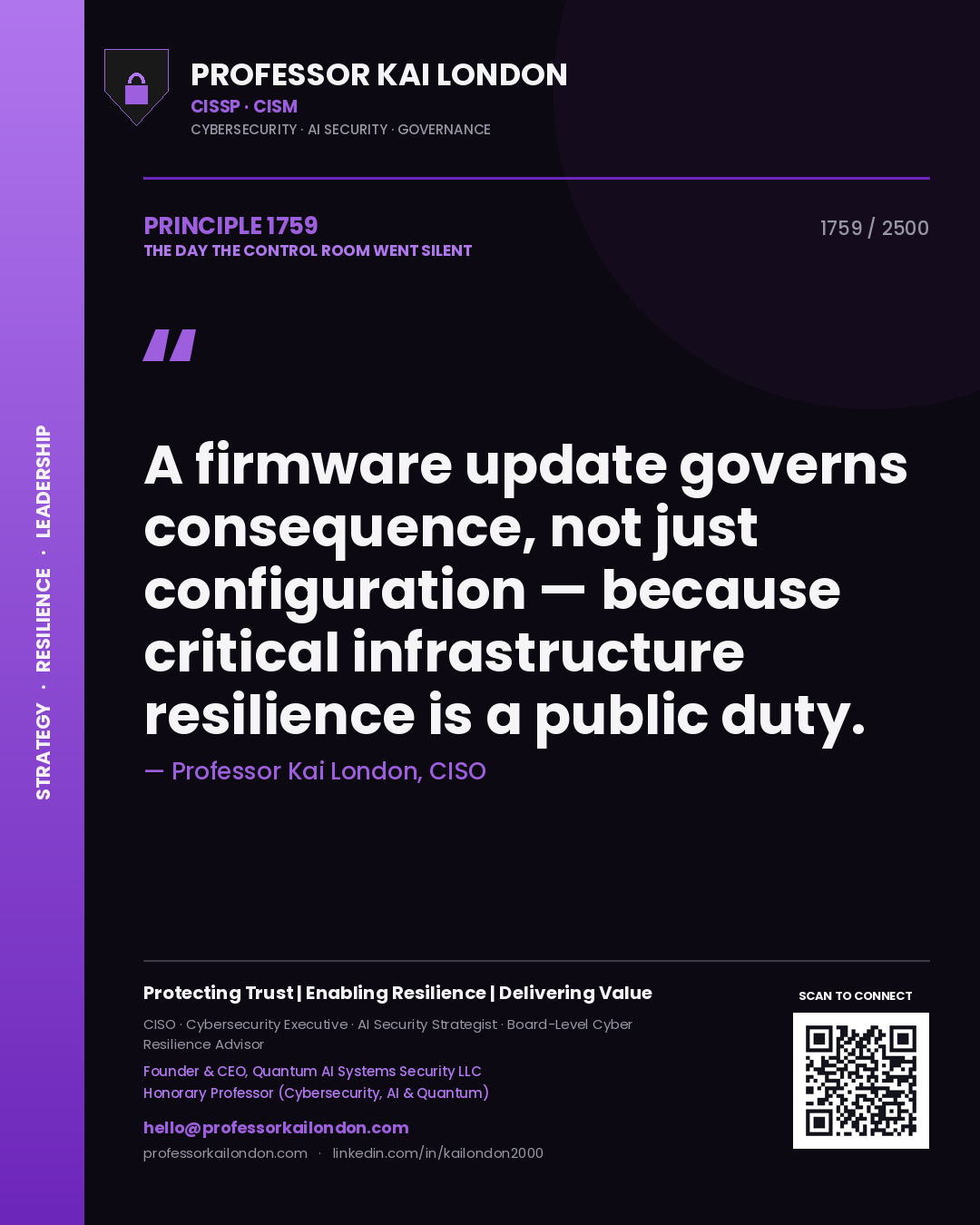
Professor Kai London principle 1759: A firmware update governs consequence, not just configuration — because critical infrastructure resilience is a public duty.
Principle 1759
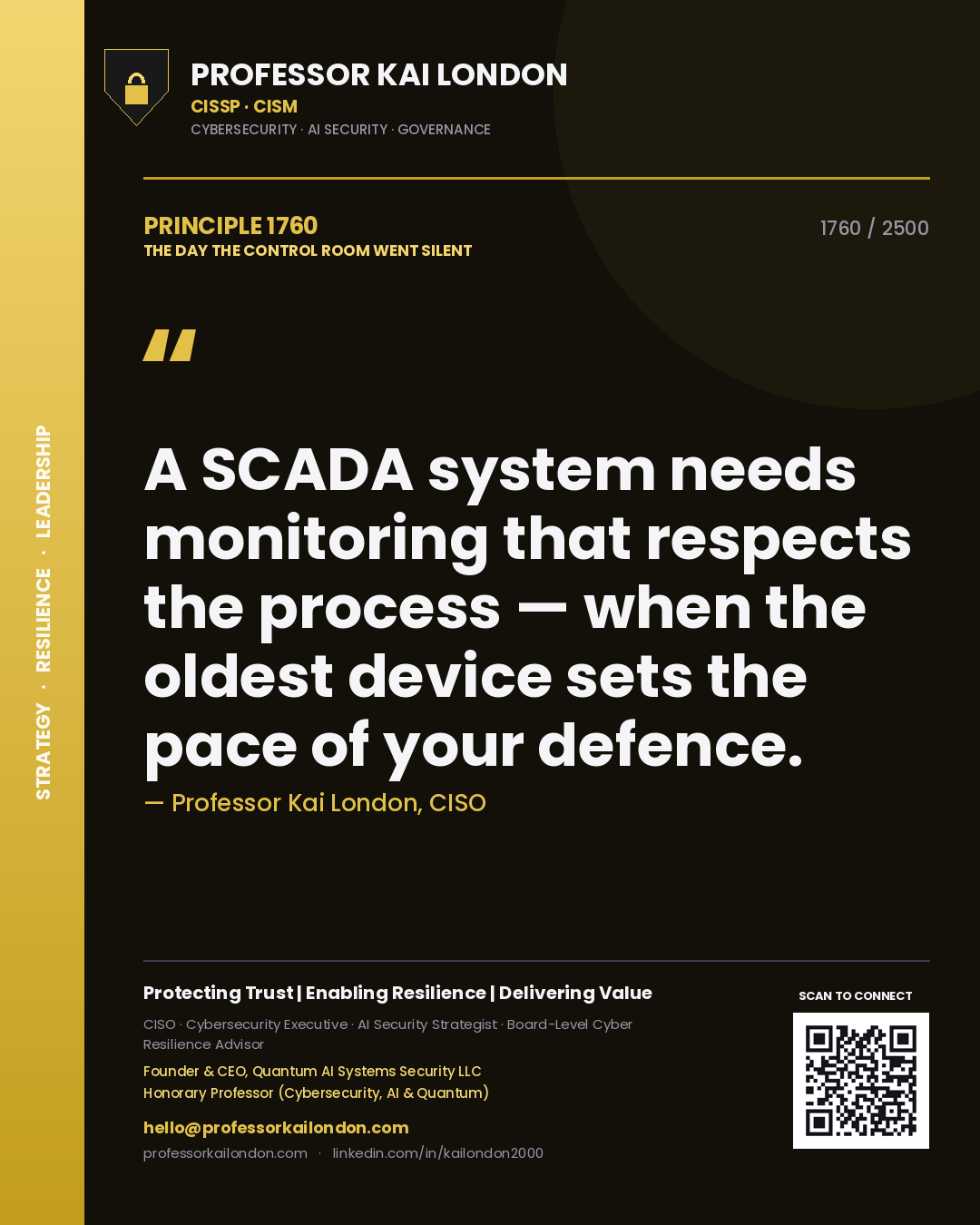
Professor Kai London principle 1760: A SCADA system needs monitoring that respects the process — when the oldest device sets the pace of your defence.
Principle 1760
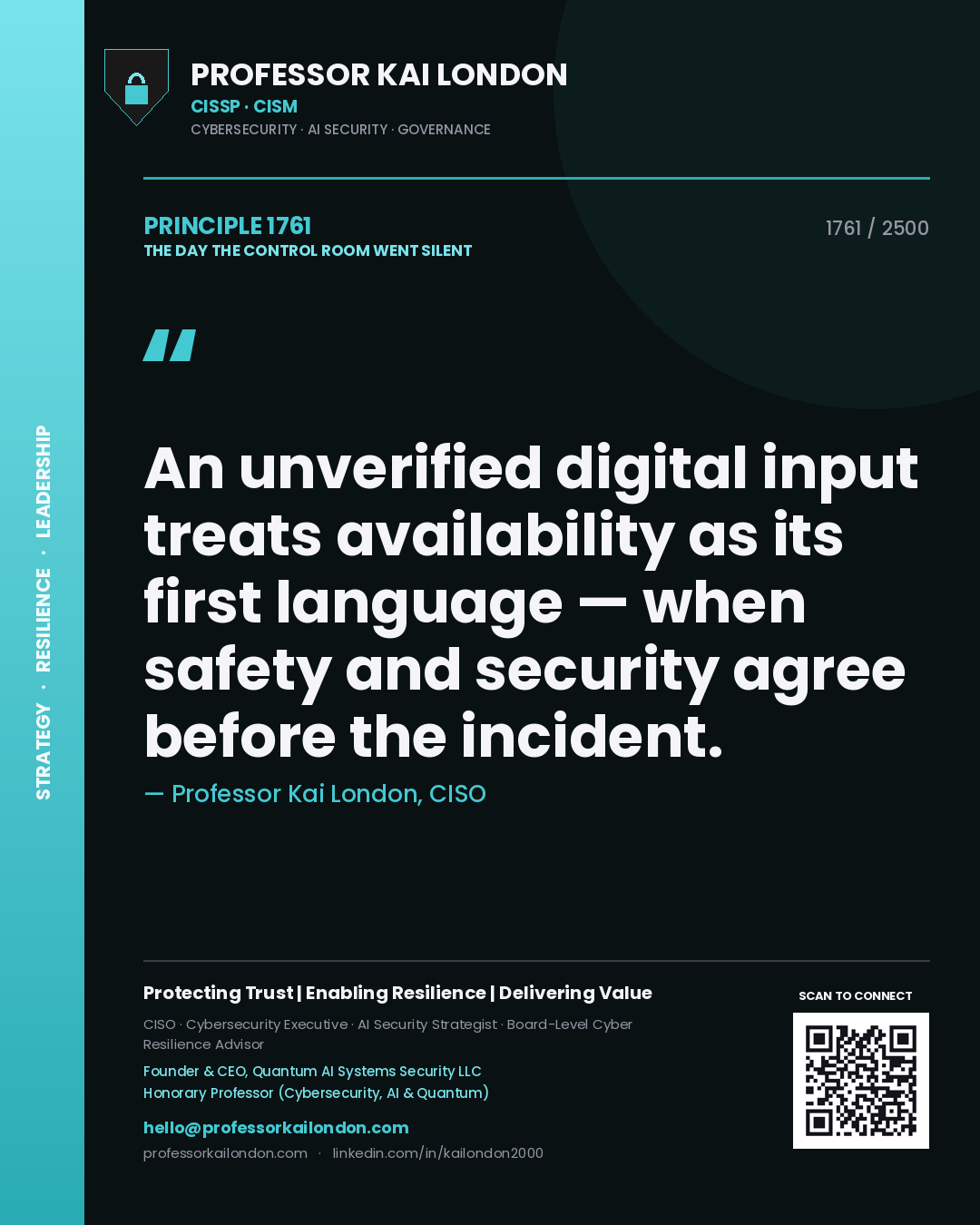
Professor Kai London principle 1761: An unverified digital input treats availability as its first language — when safety and security agree before the incident.
Principle 1761
Professor Kai London principle 1762: A jump host can turn a digital compromise into a physical consequence — because a keystroke here moves the physical world.
Principle 1762
Professor Kai London principle 1763: A critical process bridges IT risk into physical consequence — before the next attack finds the control room.
Principle 1763
Professor Kai London principle 1764: A jump host cannot be patched on a memo's schedule — because an unverified input can move the physical world.
Principle 1764
Professor Kai London principle 1765: A historian server needs visibility before it needs control — before the next attack finds the control room.
Principle 1765
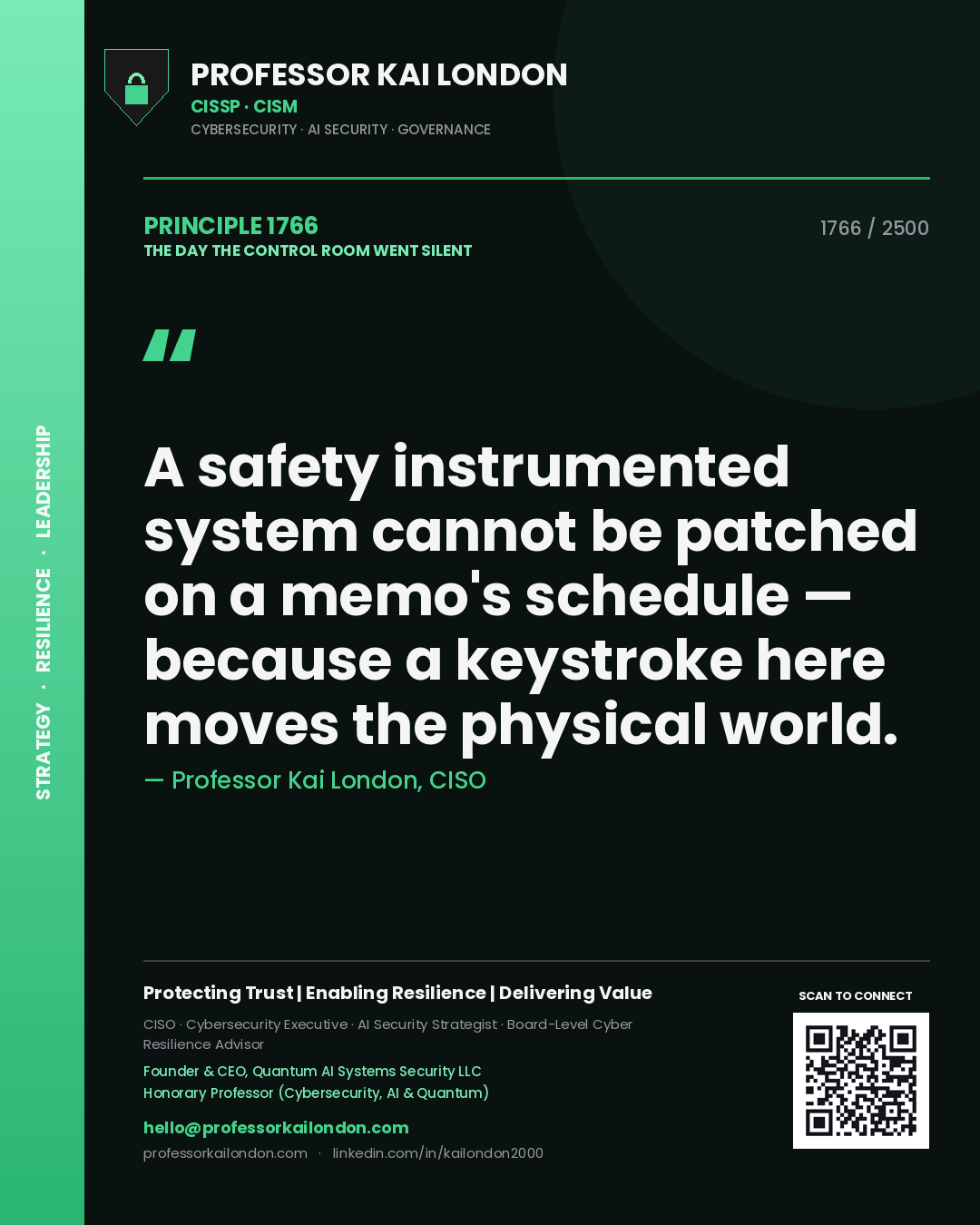
Professor Kai London principle 1766: A safety instrumented system cannot be patched on a memo's schedule — because a keystroke here moves the physical world.
Principle 1766
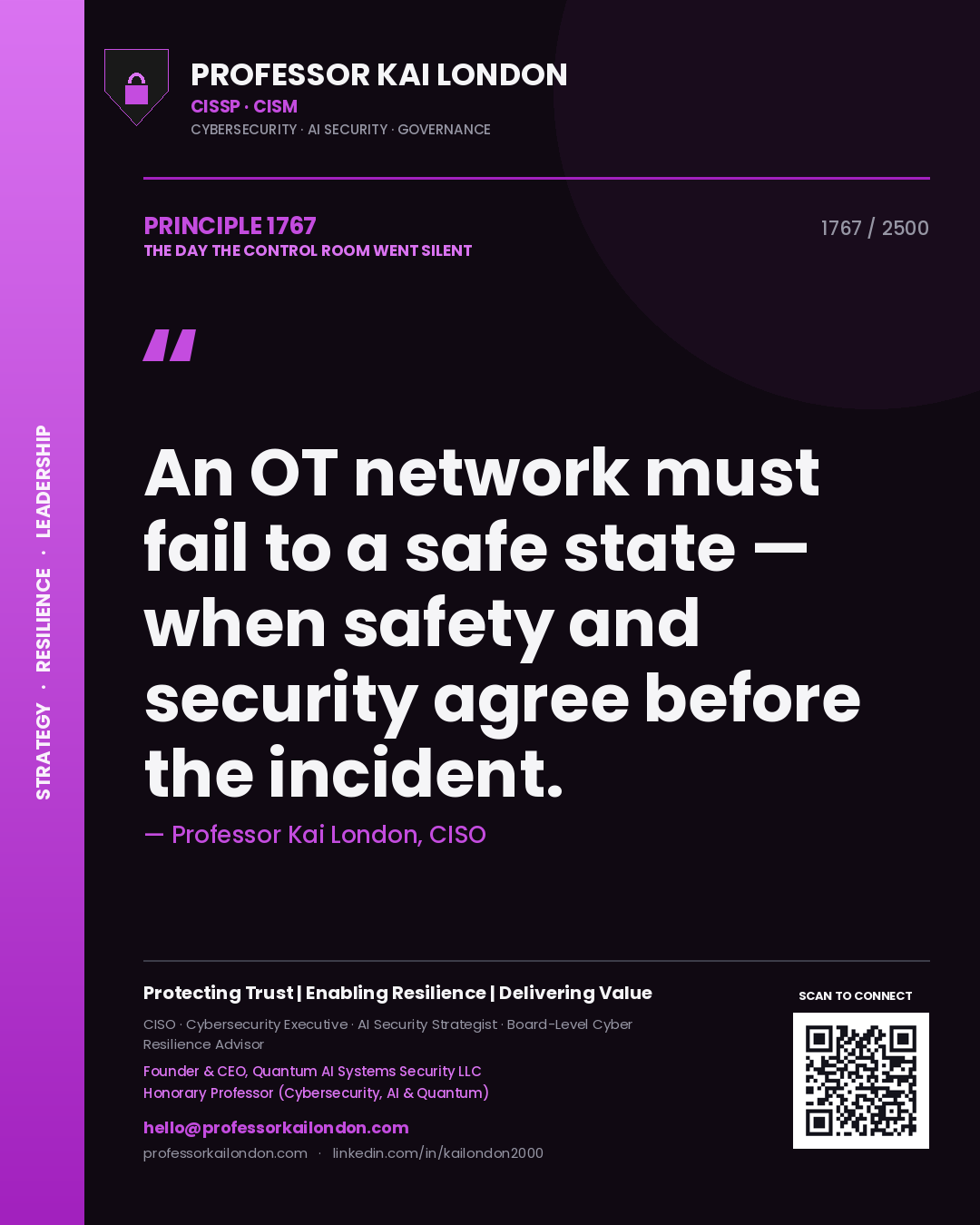
Professor Kai London principle 1767: An OT network must fail to a safe state — when safety and security agree before the incident.
Principle 1767
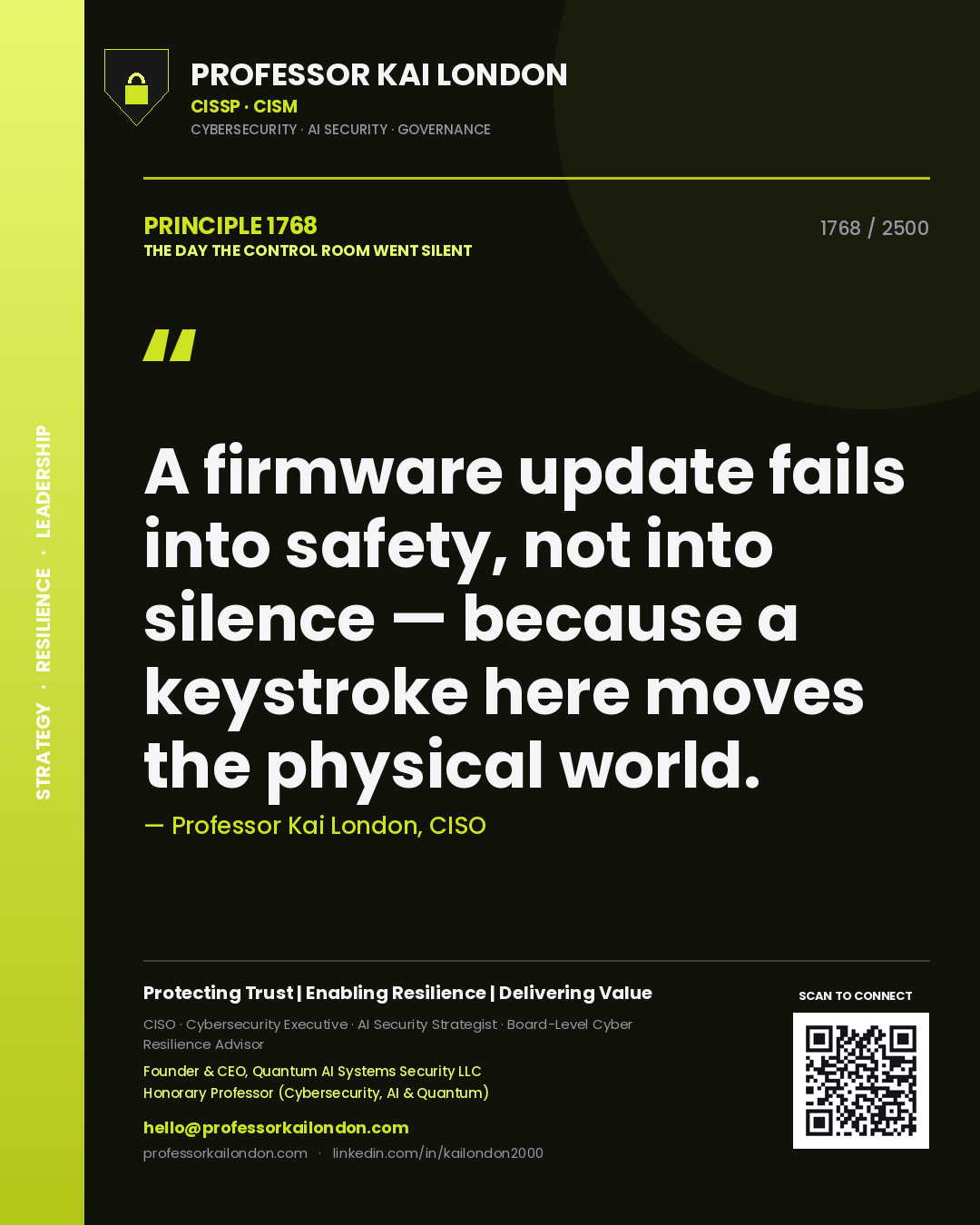
Professor Kai London principle 1768: A firmware update fails into safety, not into silence — because a keystroke here moves the physical world.
Principle 1768
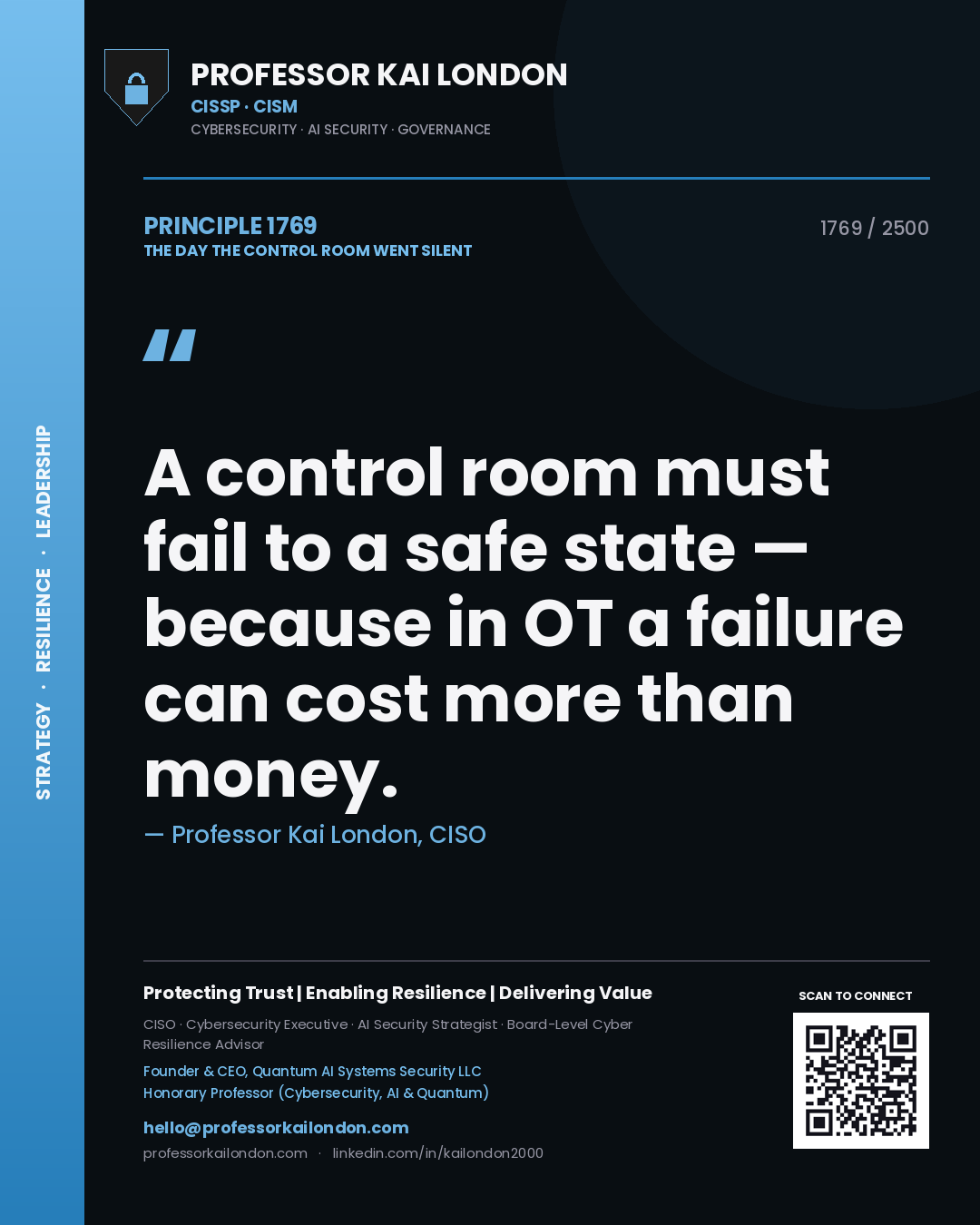
Professor Kai London principle 1769: A control room must fail to a safe state — because in OT a failure can cost more than money.
Principle 1769
Professor Kai London principle 1770: A vendor VPN fails into safety, not into silence — because a keystroke here moves the physical world.
Principle 1770
Professor Kai London principle 1771: A remote engineering laptop governs consequence, not just configuration — when the plant keeps running because someone proved it could.
Principle 1771
Professor Kai London principle 1772: A critical process must see it, trust it, hand it back, and prove it — when safety and security agree before the incident.
Principle 1772
Professor Kai London principle 1773: A control room needs monitoring that respects the process — because in OT a failure can cost more than money.
Principle 1773
Professor Kai London principle 1774: An industrial process needs monitoring that respects the process — before the next attack finds the control room.
Principle 1774
Professor Kai London principle 1775: A remote engineering laptop must know its safe state before an attacker teaches it — because critical infrastructure resilience is a public duty.
Principle 1775
Professor Kai London principle 1776: A remote engineering laptop bridges IT risk into physical consequence — the moment IT logic meets OT consequence.
Principle 1776
Professor Kai London principle 1777: A remote engineering laptop governs consequence, not just configuration — when the oldest device sets the pace of your defence.
Principle 1777
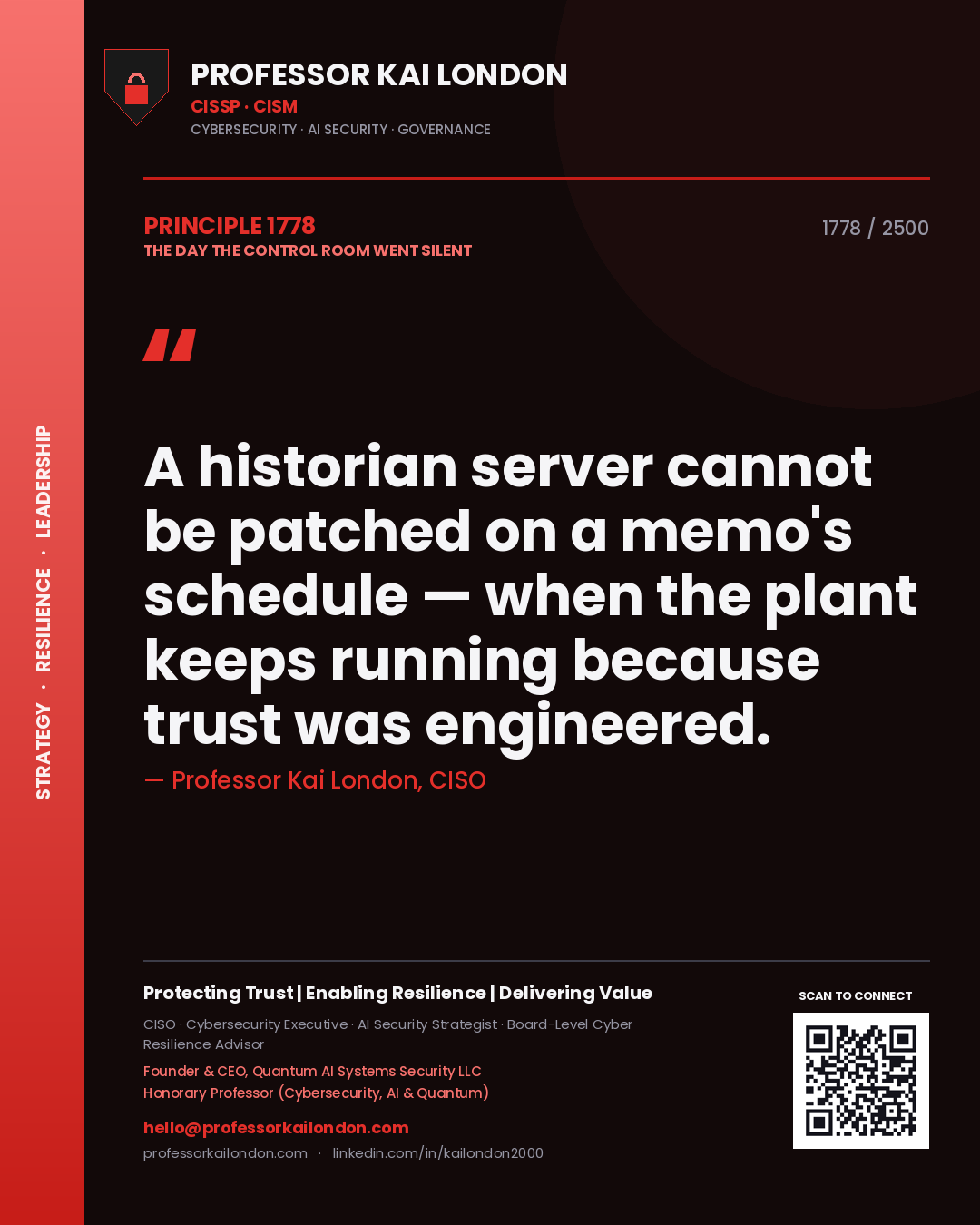
Professor Kai London principle 1778: A historian server cannot be patched on a memo's schedule — when the plant keeps running because trust was engineered.
Principle 1778
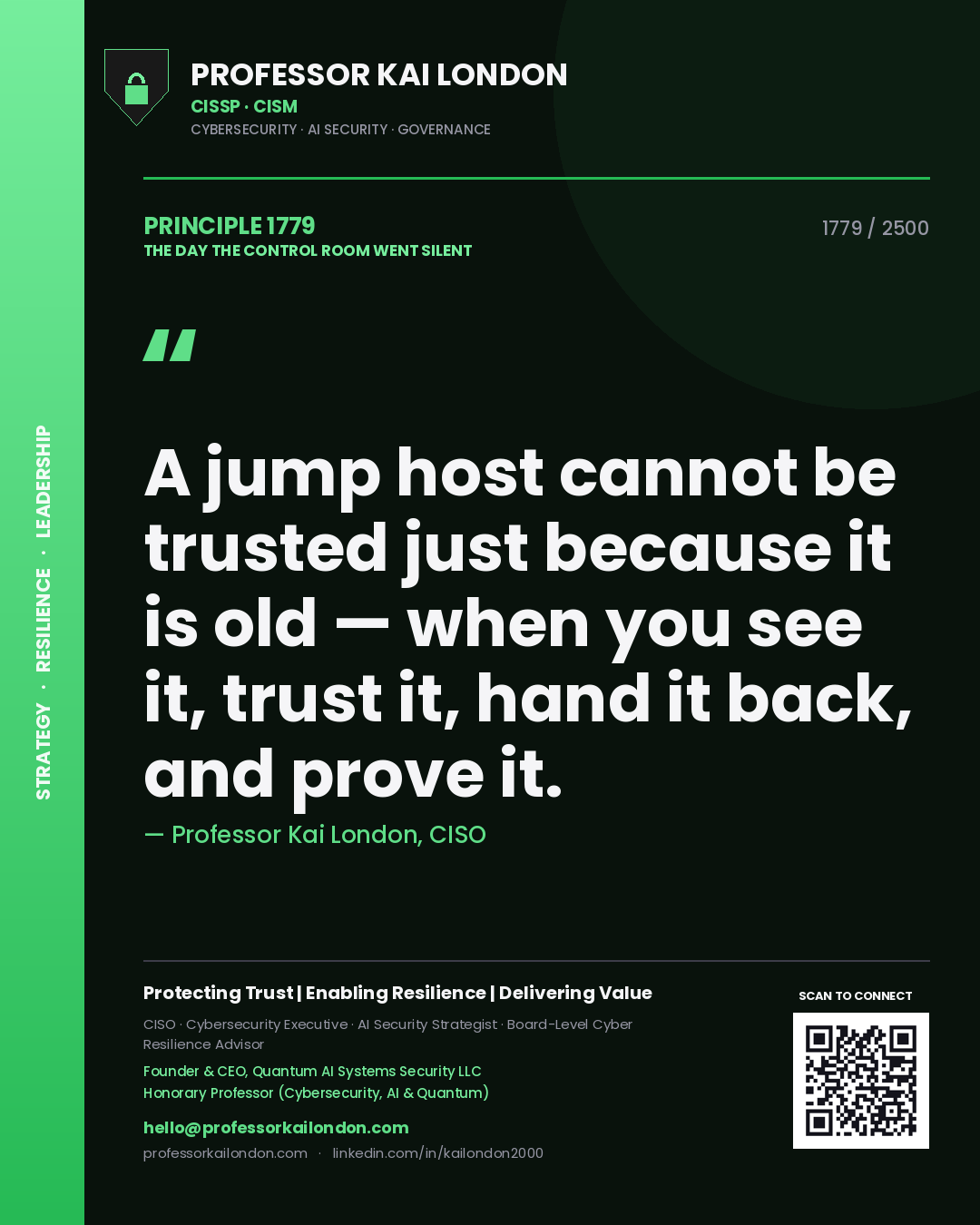
Professor Kai London principle 1779: A jump host cannot be trusted just because it is old — when you see it, trust it, hand it back, and prove it.
Principle 1779
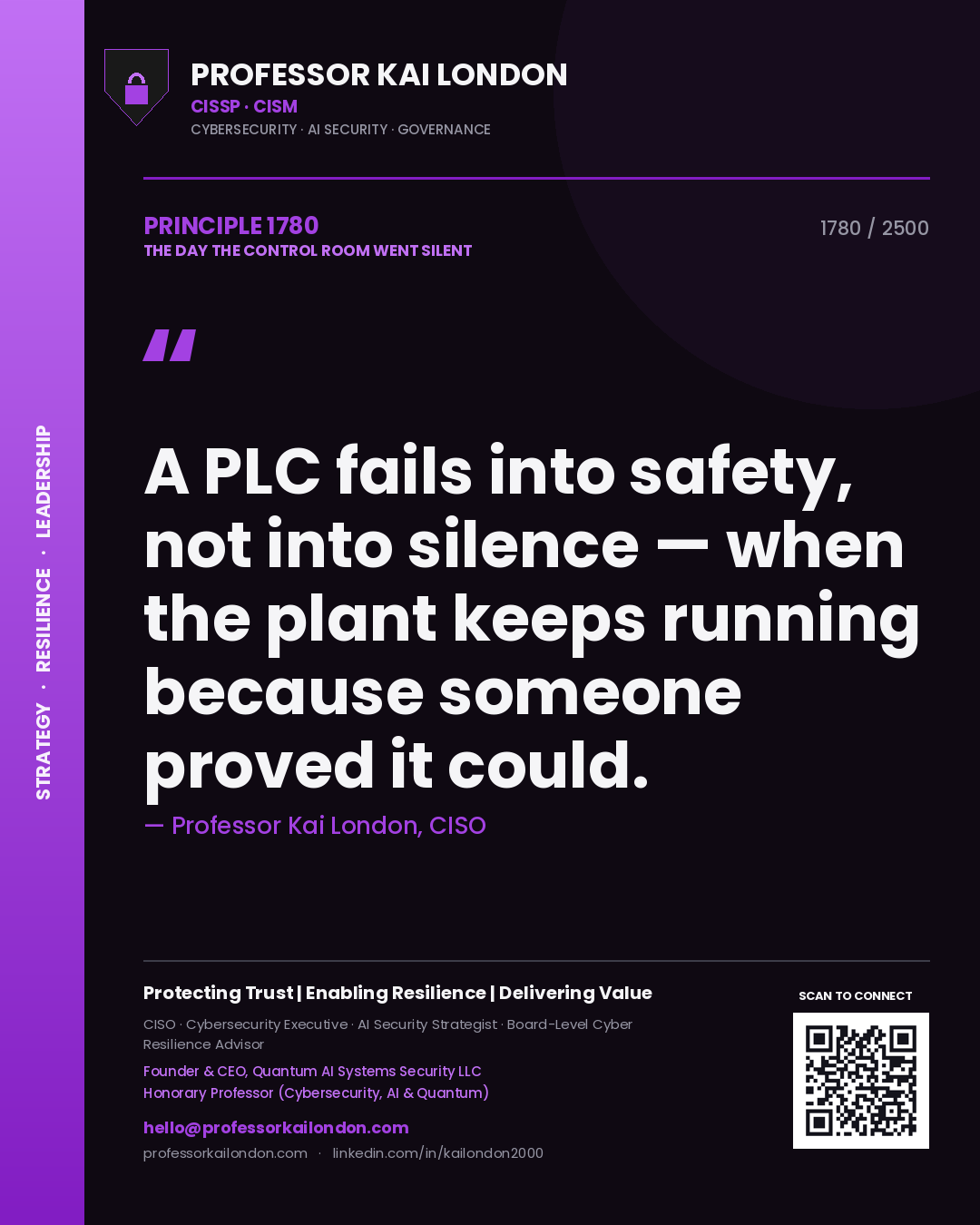
Professor Kai London principle 1780: A PLC fails into safety, not into silence — when the plant keeps running because someone proved it could.
Principle 1780
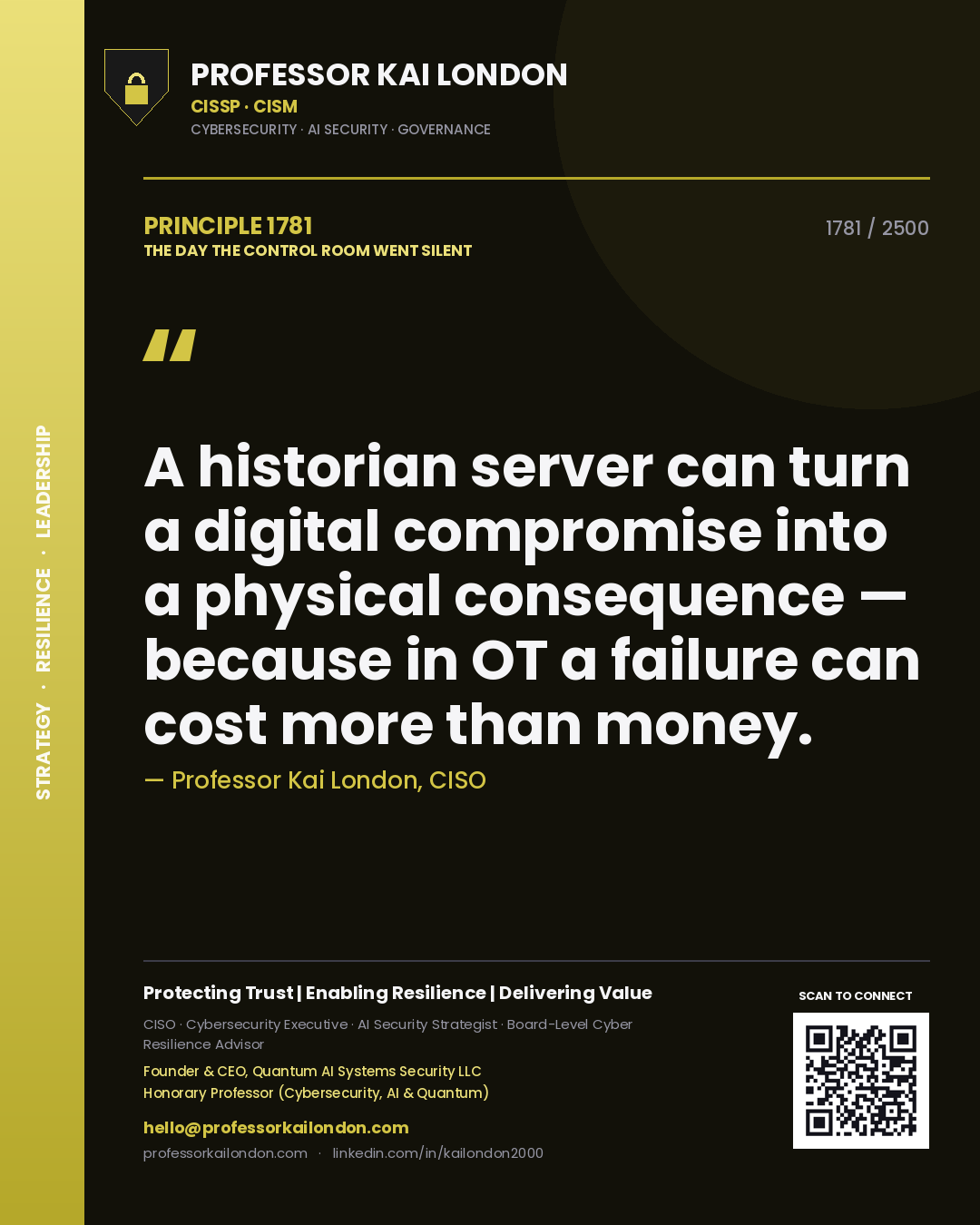
Professor Kai London principle 1781: A historian server can turn a digital compromise into a physical consequence — because in OT a failure can cost more than money.
Principle 1781
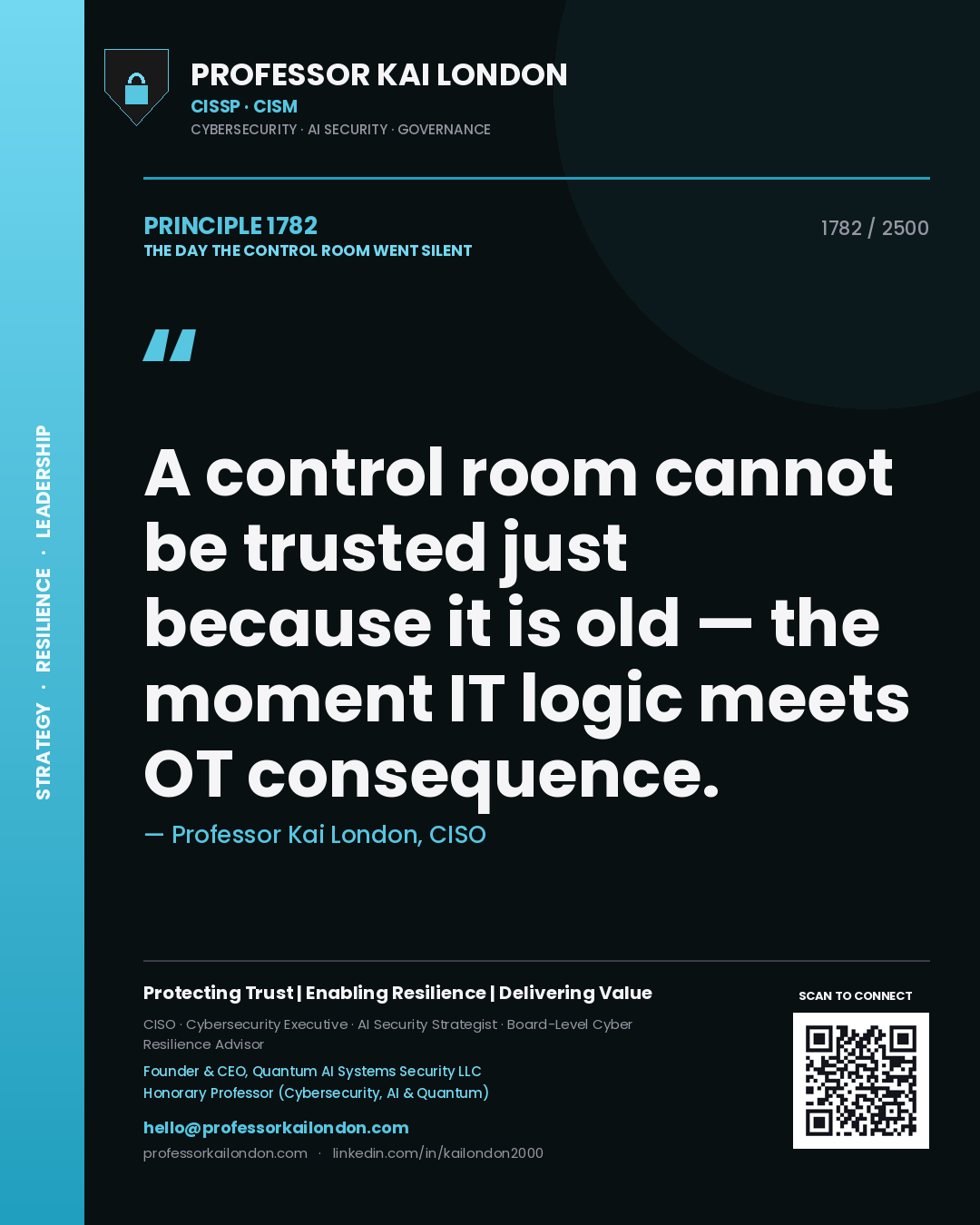
Professor Kai London principle 1782: A control room cannot be trusted just because it is old — the moment IT logic meets OT consequence.
Principle 1782
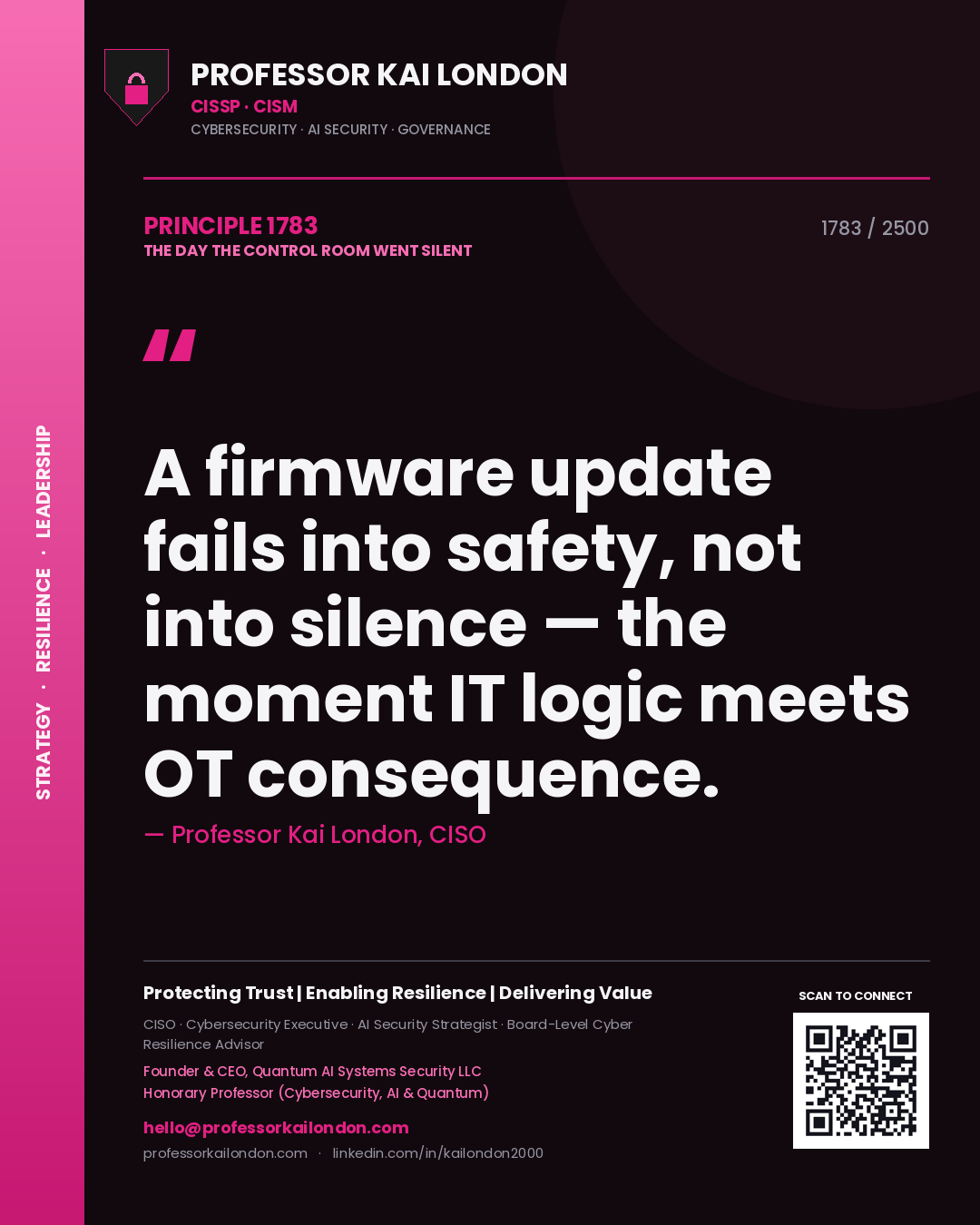
Professor Kai London principle 1783: A firmware update fails into safety, not into silence — the moment IT logic meets OT consequence.
Principle 1783
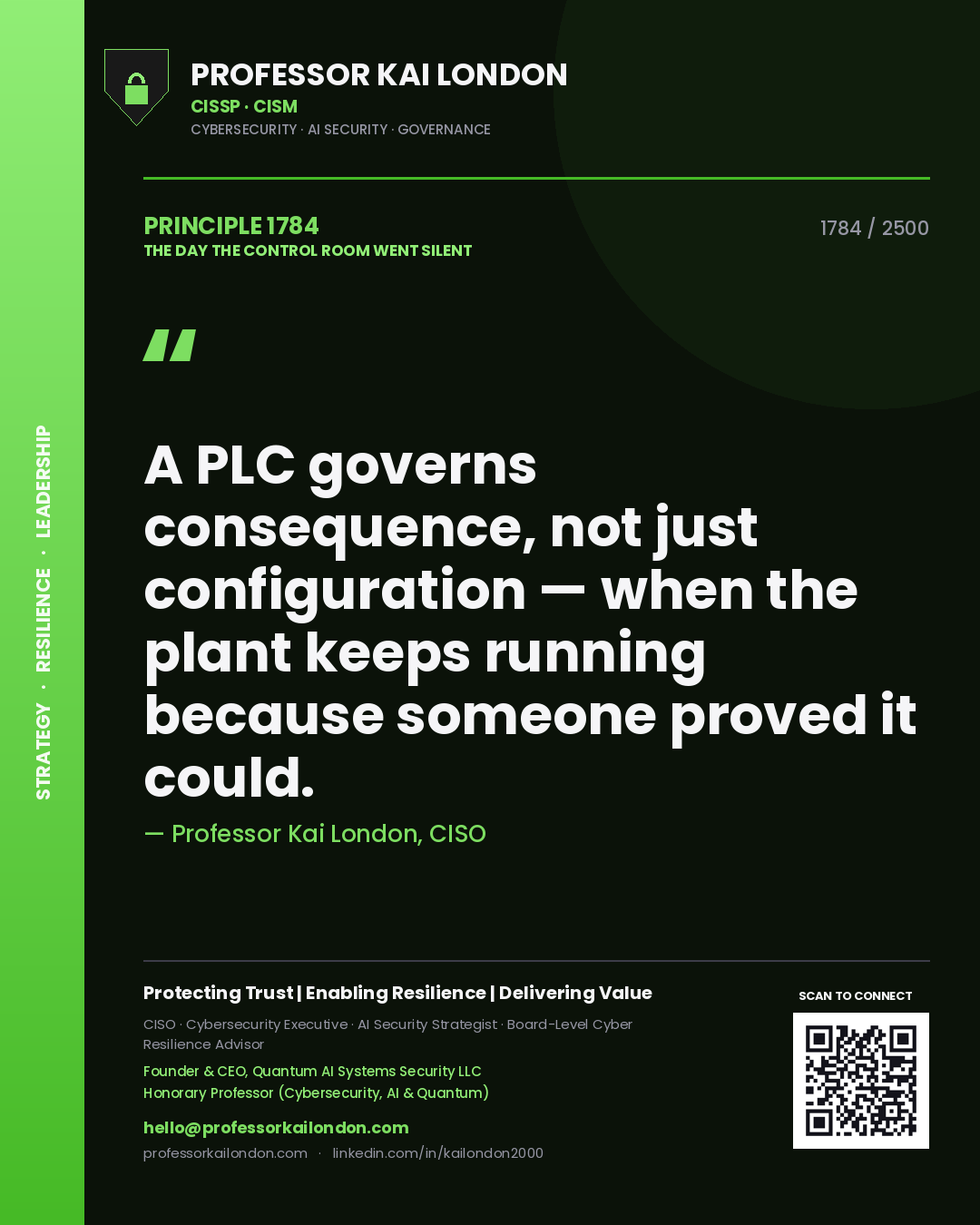
Professor Kai London principle 1784: A PLC governs consequence, not just configuration — when the plant keeps running because someone proved it could.
Principle 1784
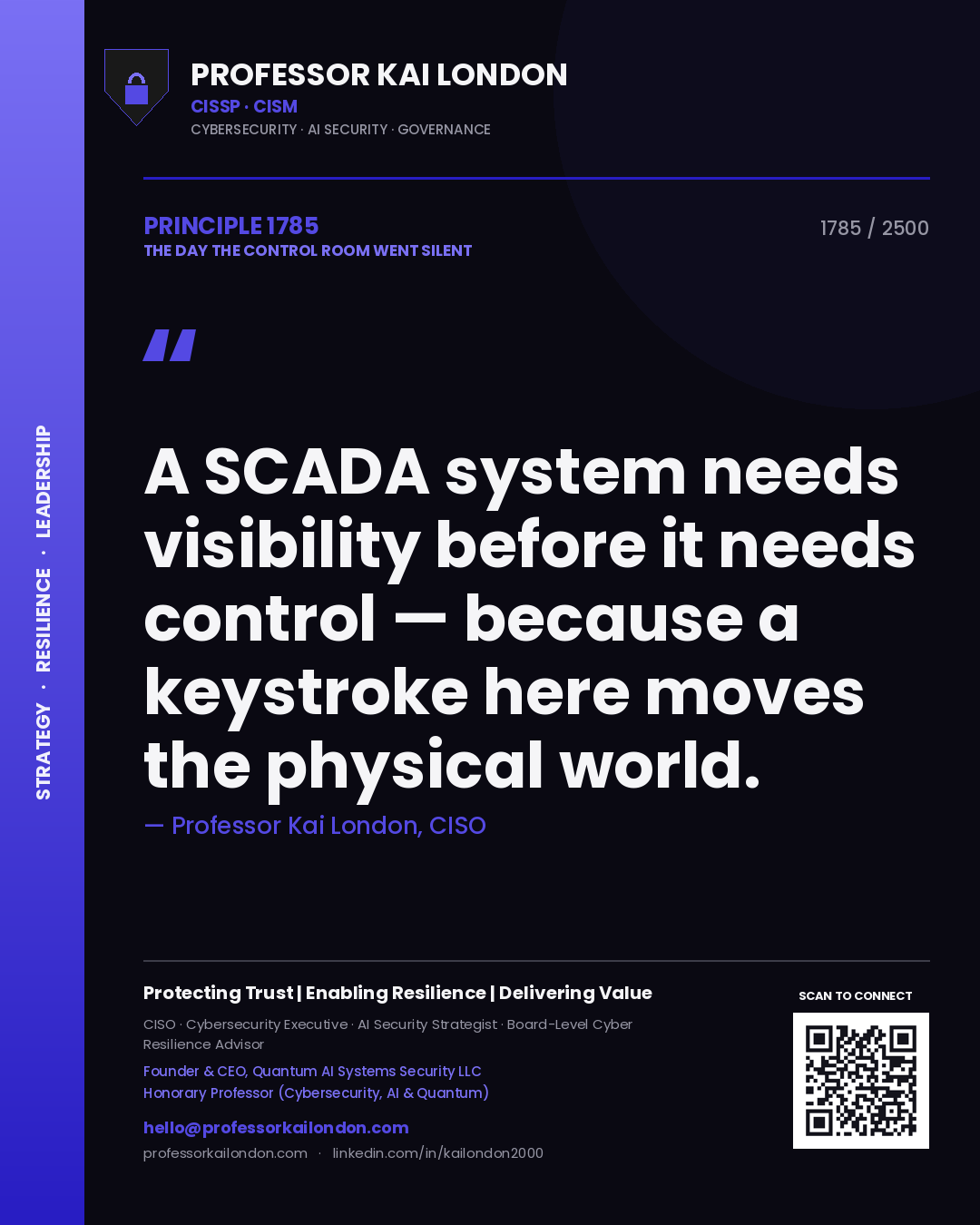
Professor Kai London principle 1785: A SCADA system needs visibility before it needs control — because a keystroke here moves the physical world.
Principle 1785
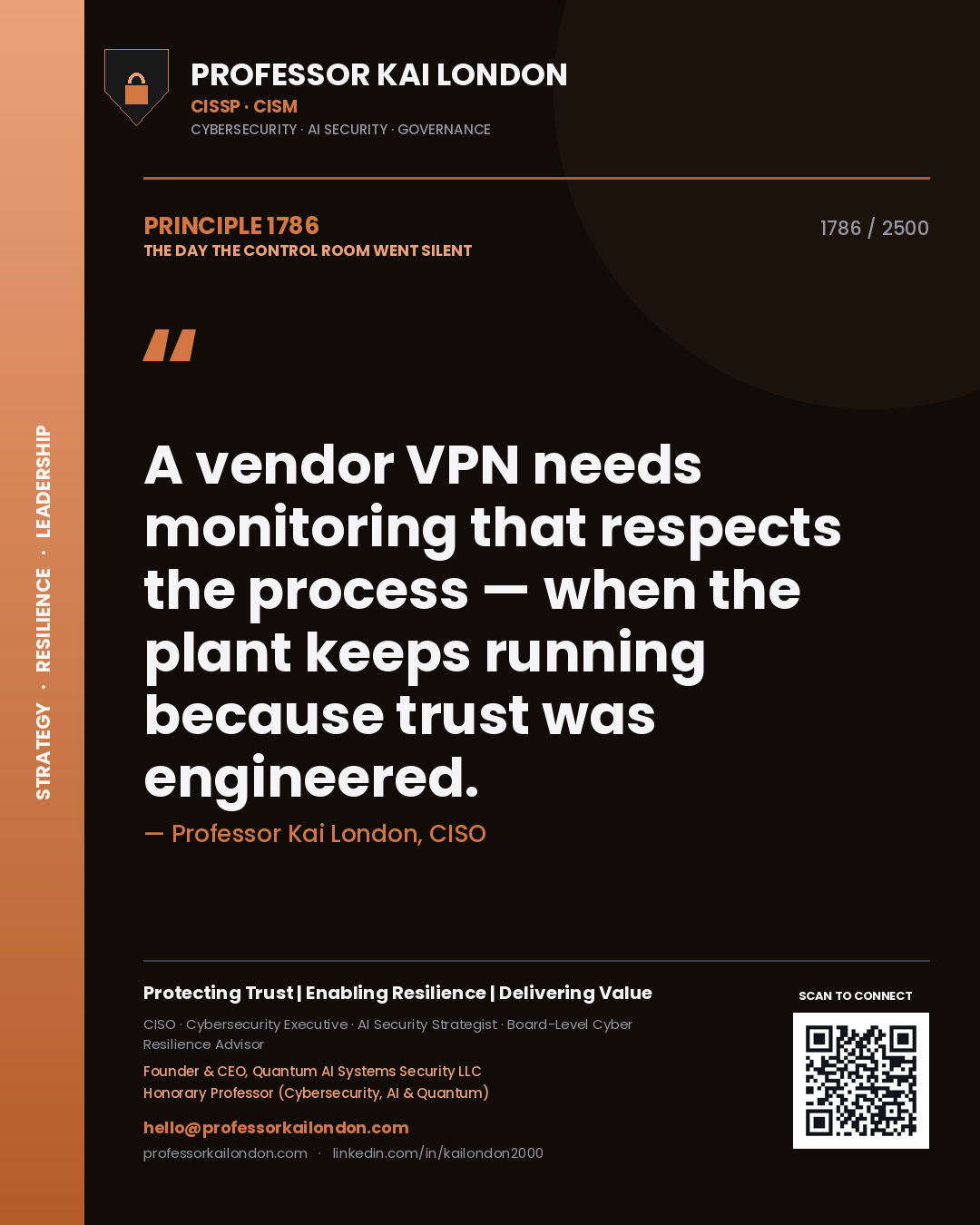
Professor Kai London principle 1786: A vendor VPN needs monitoring that respects the process — when the plant keeps running because trust was engineered.
Principle 1786
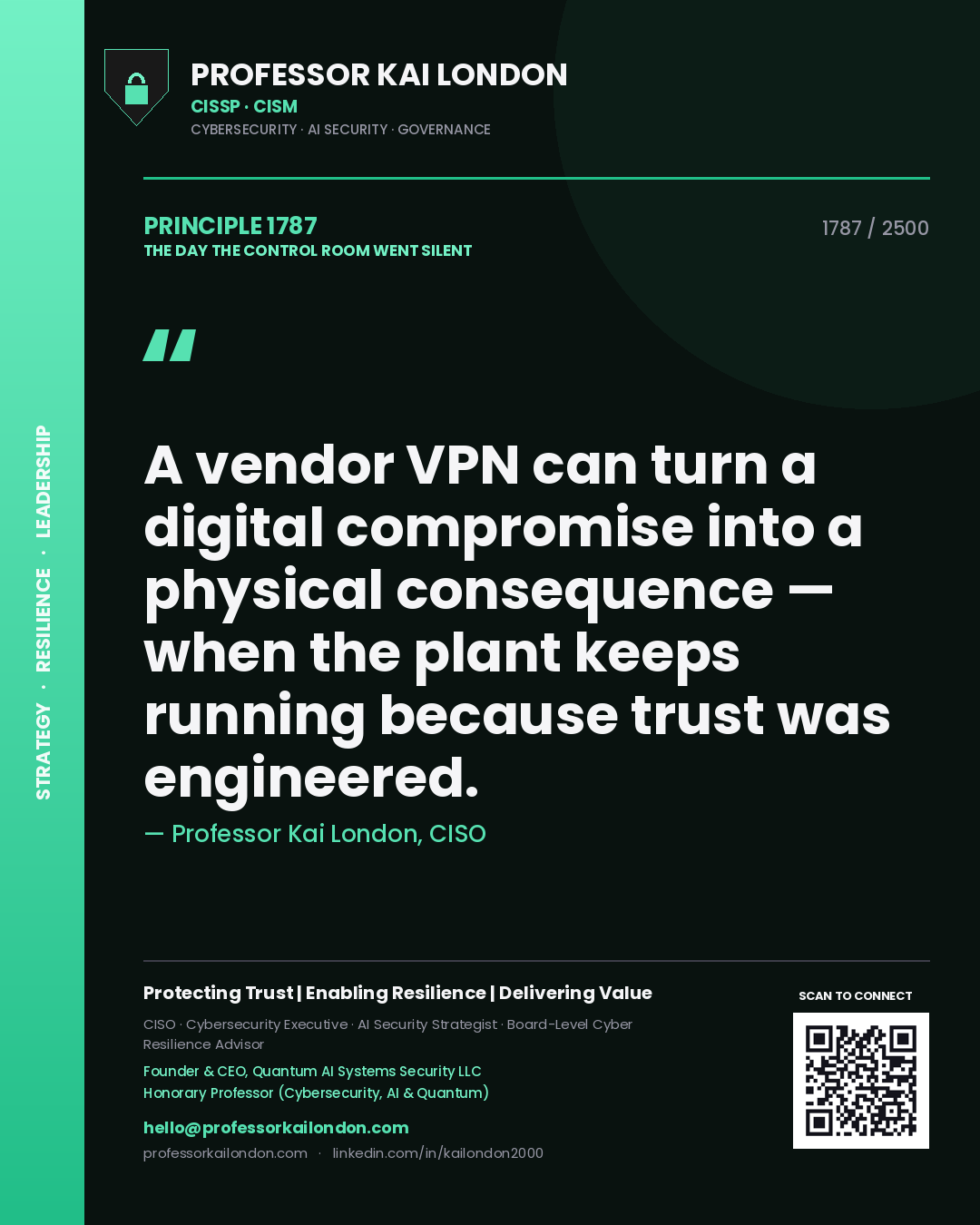
Professor Kai London principle 1787: A vendor VPN can turn a digital compromise into a physical consequence — when the plant keeps running because trust was engineered.
Principle 1787
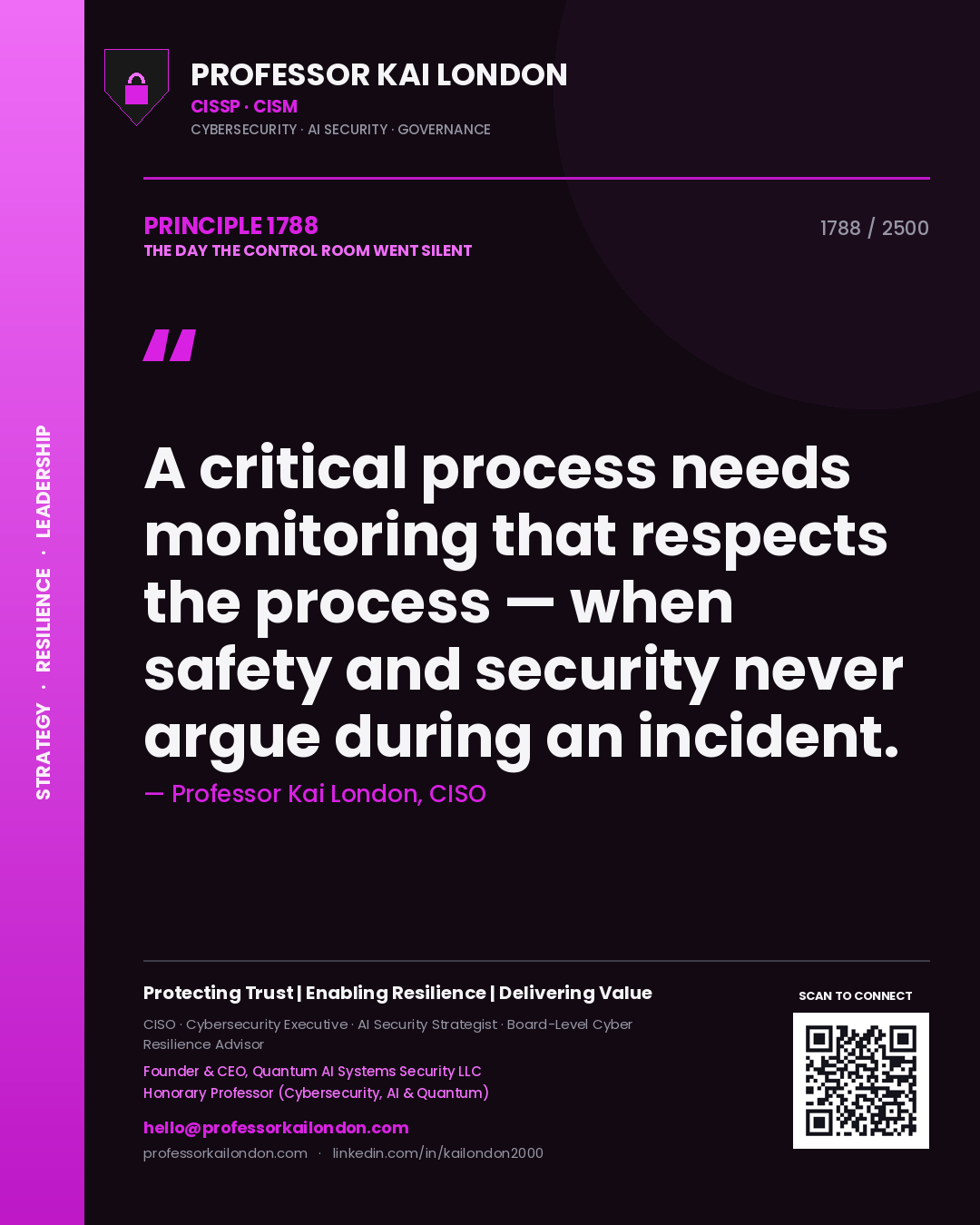
Professor Kai London principle 1788: A critical process needs monitoring that respects the process — when safety and security never argue during an incident.
Principle 1788
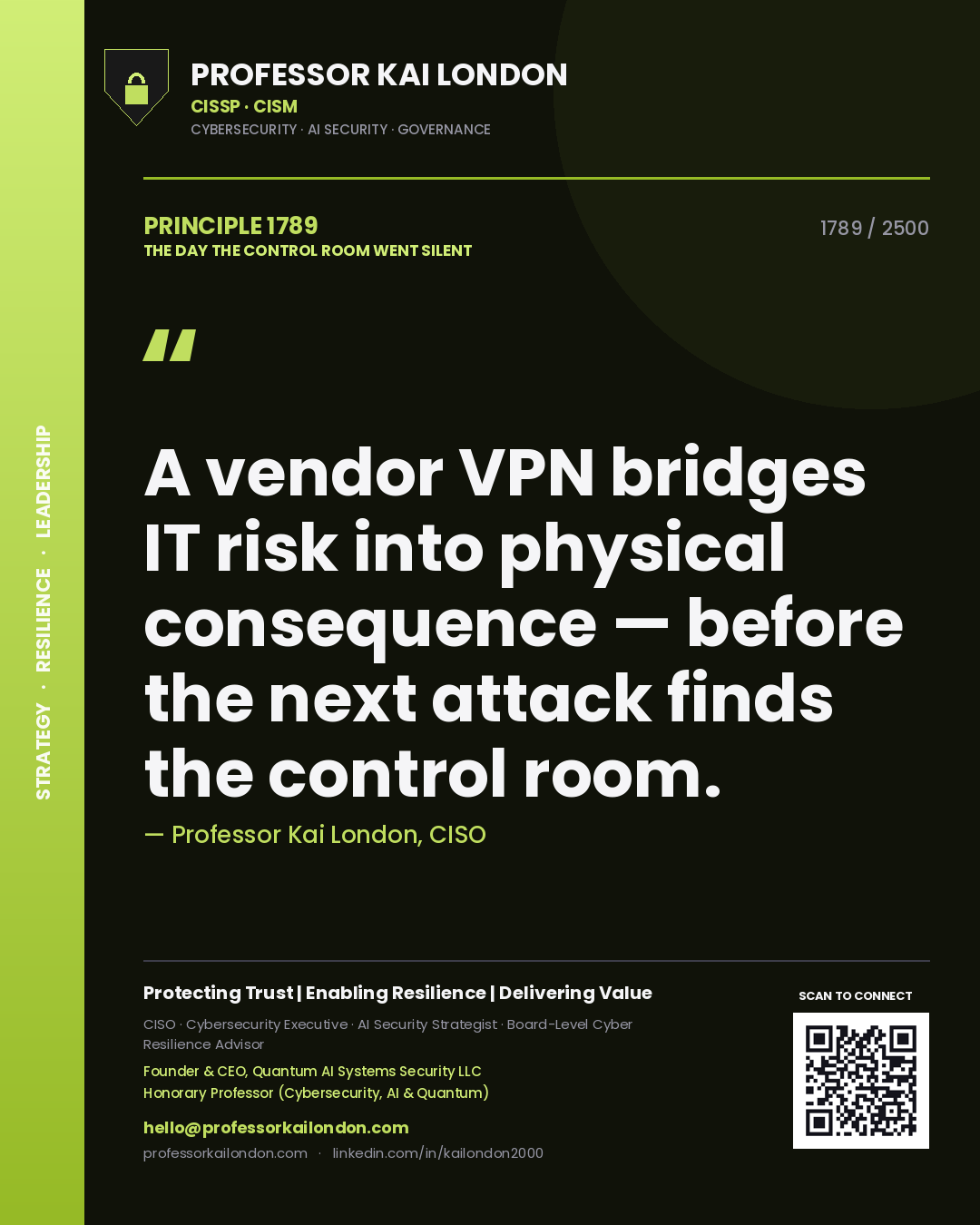
Professor Kai London principle 1789: A vendor VPN bridges IT risk into physical consequence — before the next attack finds the control room.
Principle 1789
Professor Kai London principle 1790: A safety instrumented system must fail to a safe state — when the oldest device sets the pace of your defence.
Principle 1790
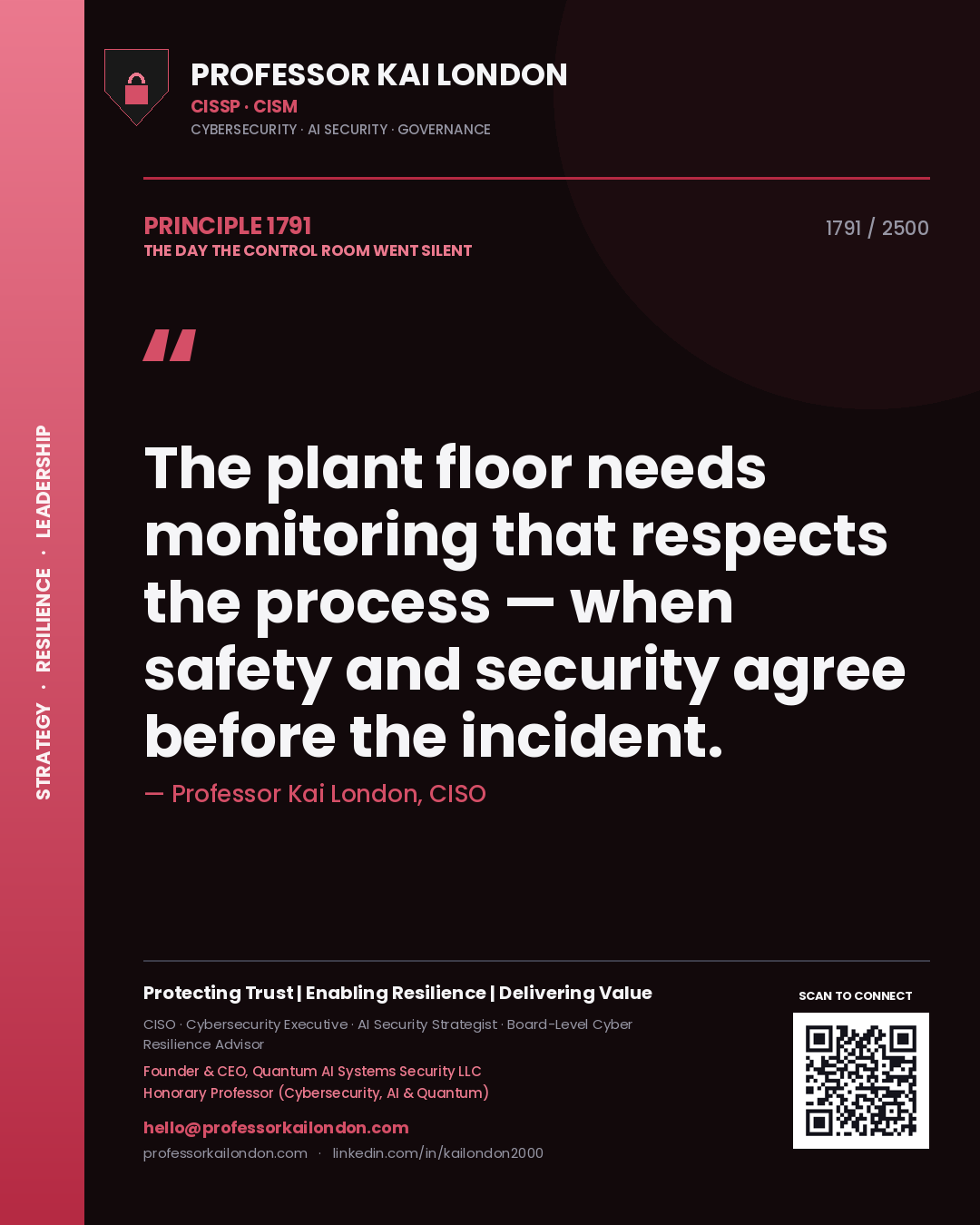
Professor Kai London principle 1791: The plant floor needs monitoring that respects the process — when safety and security agree before the incident.
Principle 1791
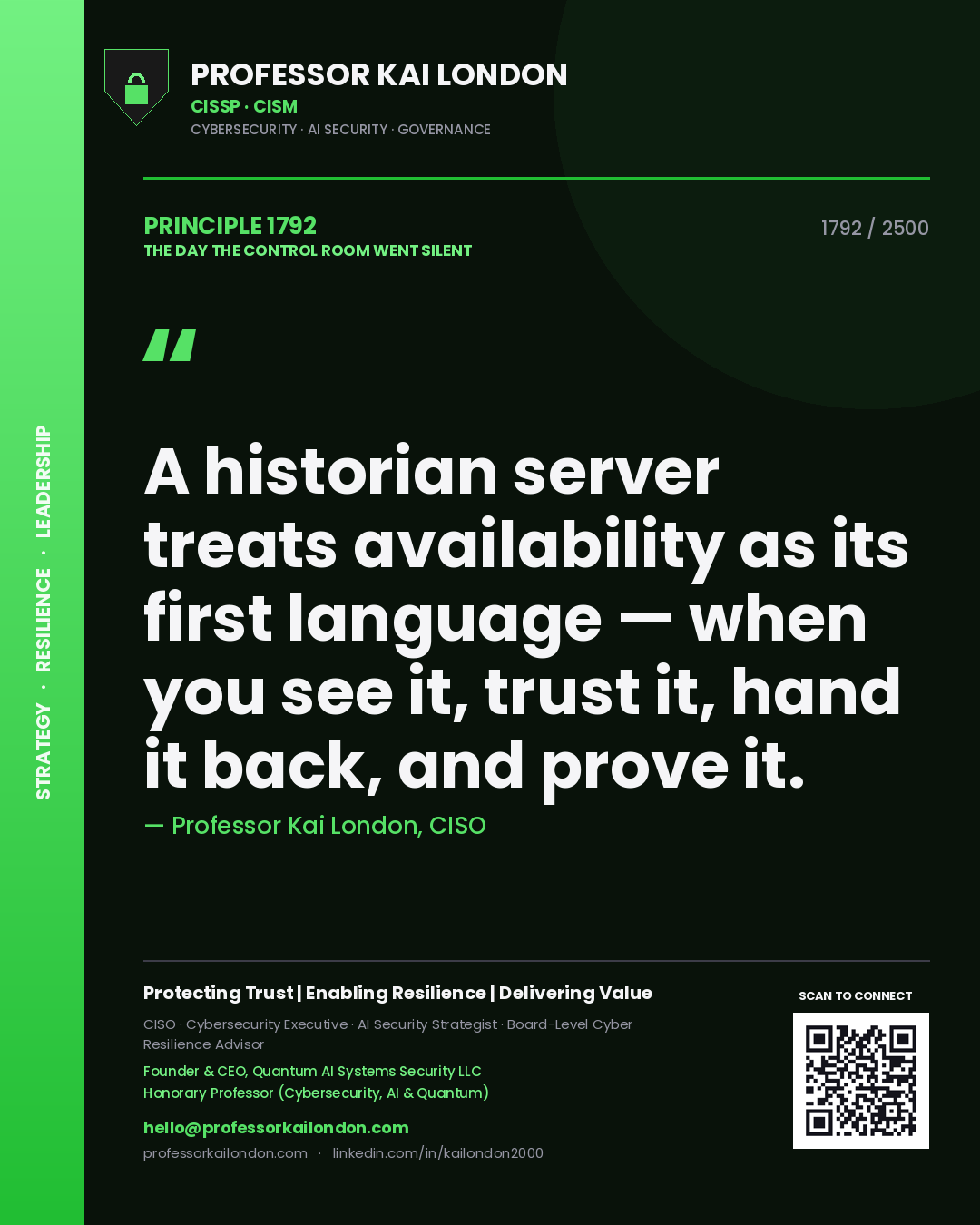
Professor Kai London principle 1792: A historian server treats availability as its first language — when you see it, trust it, hand it back, and prove it.
Principle 1792
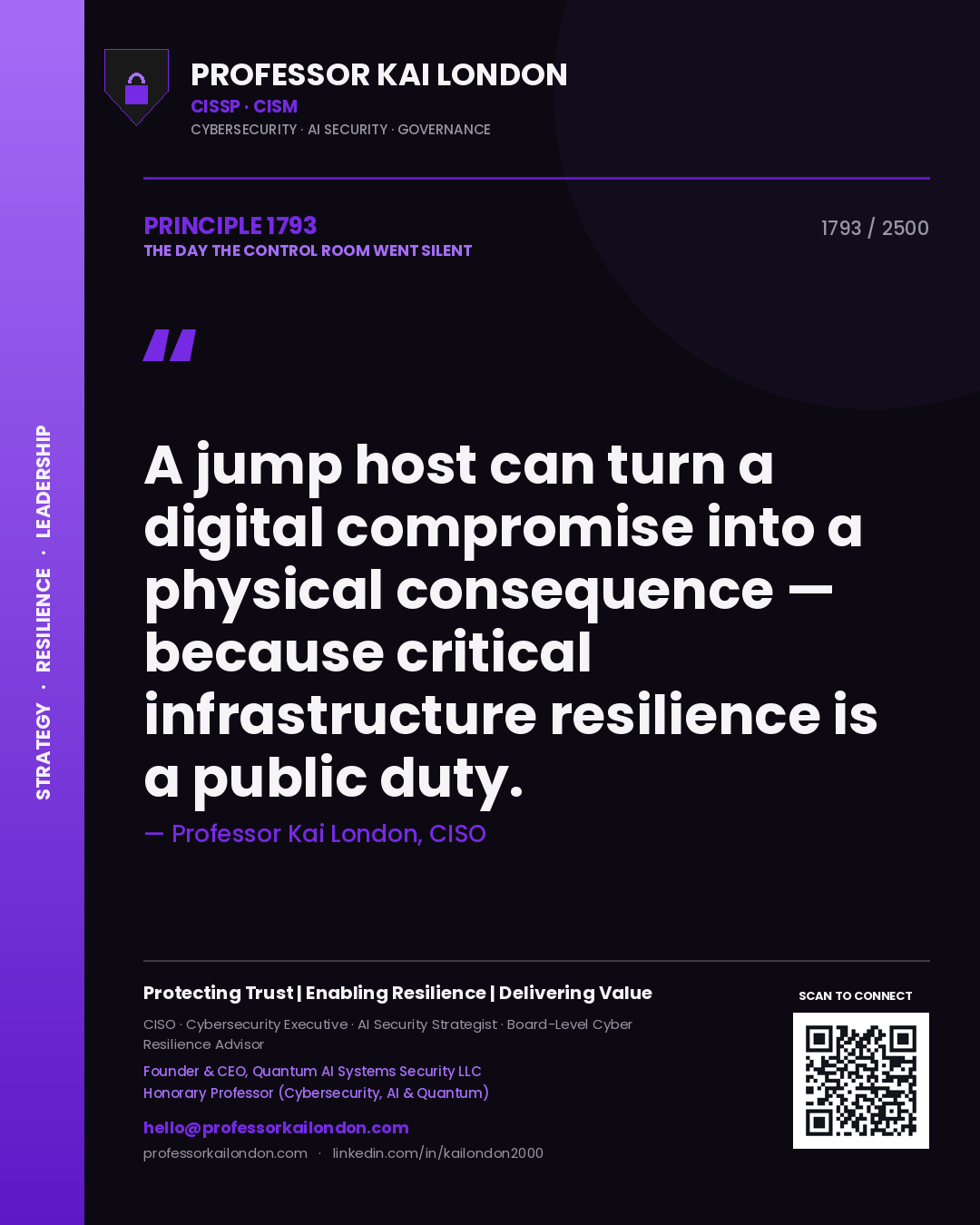
Professor Kai London principle 1793: A jump host can turn a digital compromise into a physical consequence — because critical infrastructure resilience is a public duty.
Principle 1793
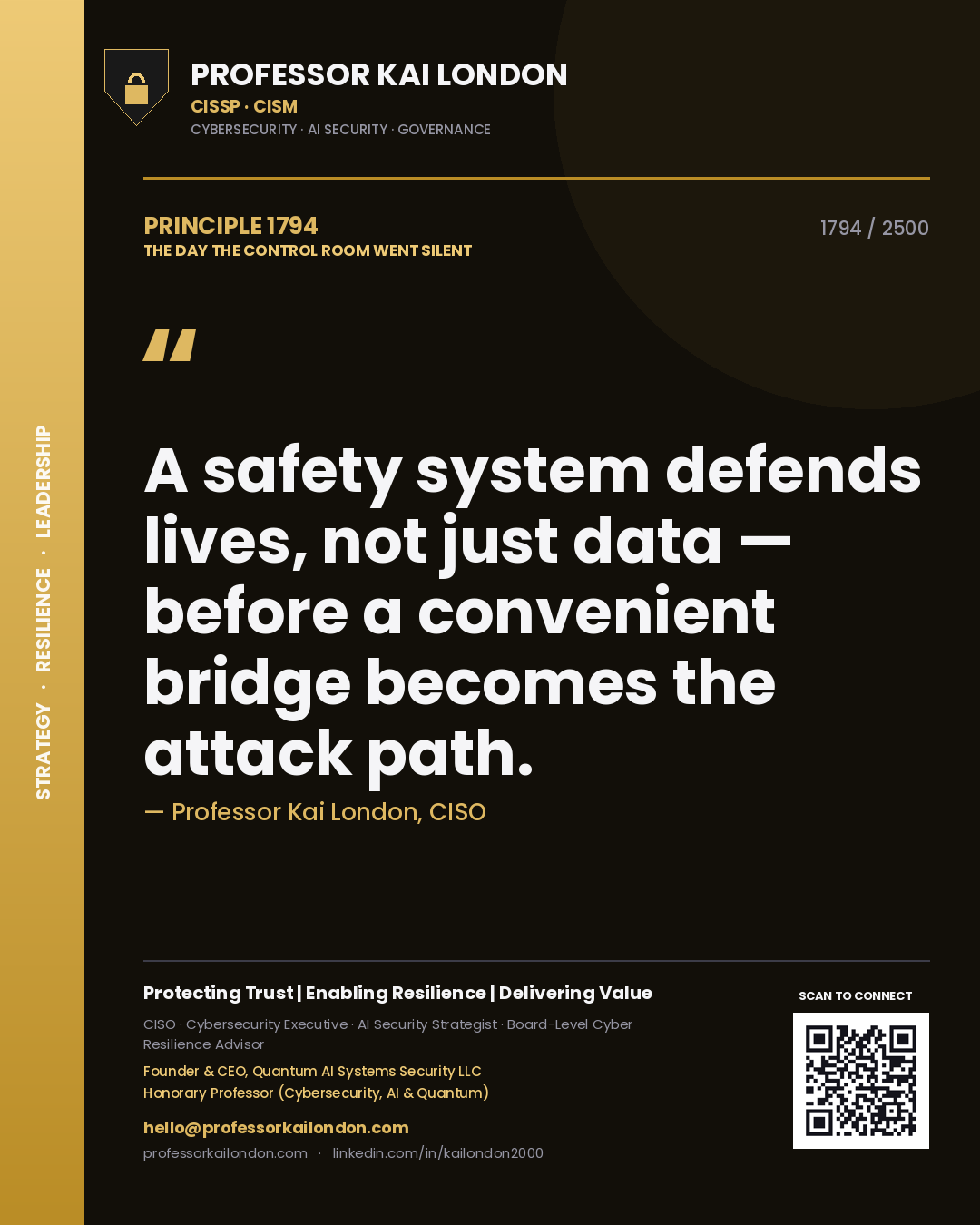
Professor Kai London principle 1794: A safety system defends lives, not just data — before a convenient bridge becomes the attack path.
Principle 1794
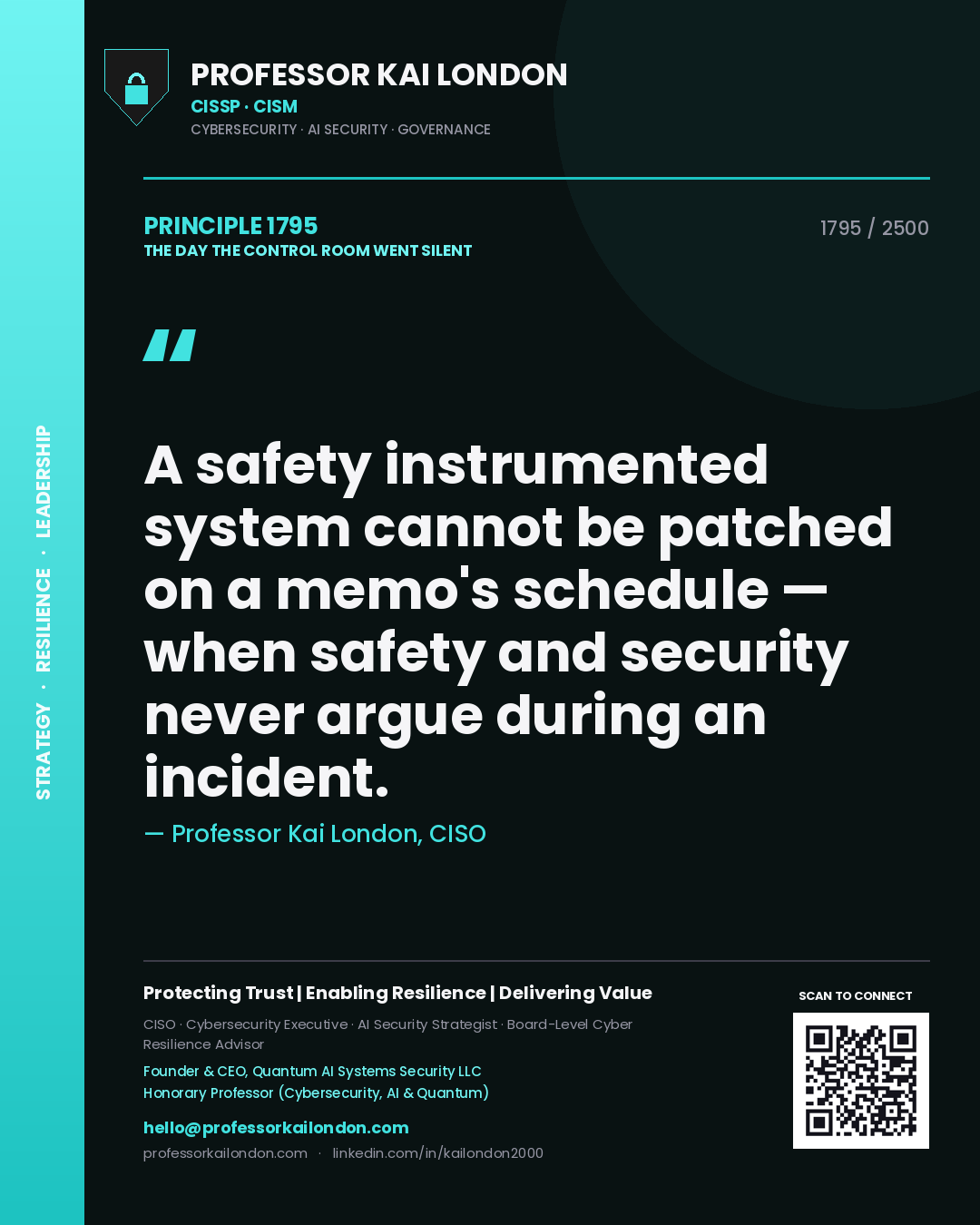
Professor Kai London principle 1795: A safety instrumented system cannot be patched on a memo's schedule — when safety and security never argue during an incident.
Principle 1795
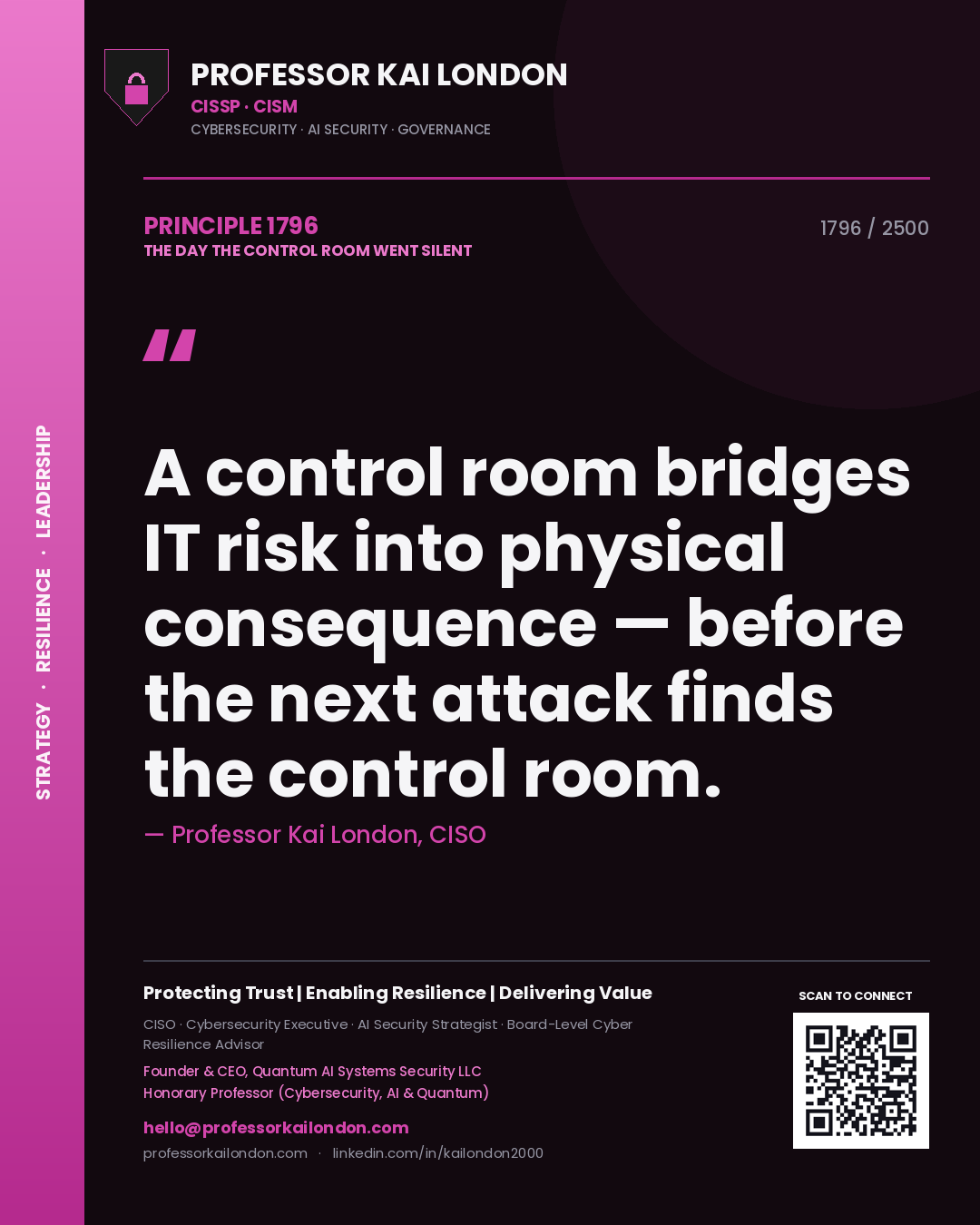
Professor Kai London principle 1796: A control room bridges IT risk into physical consequence — before the next attack finds the control room.
Principle 1796
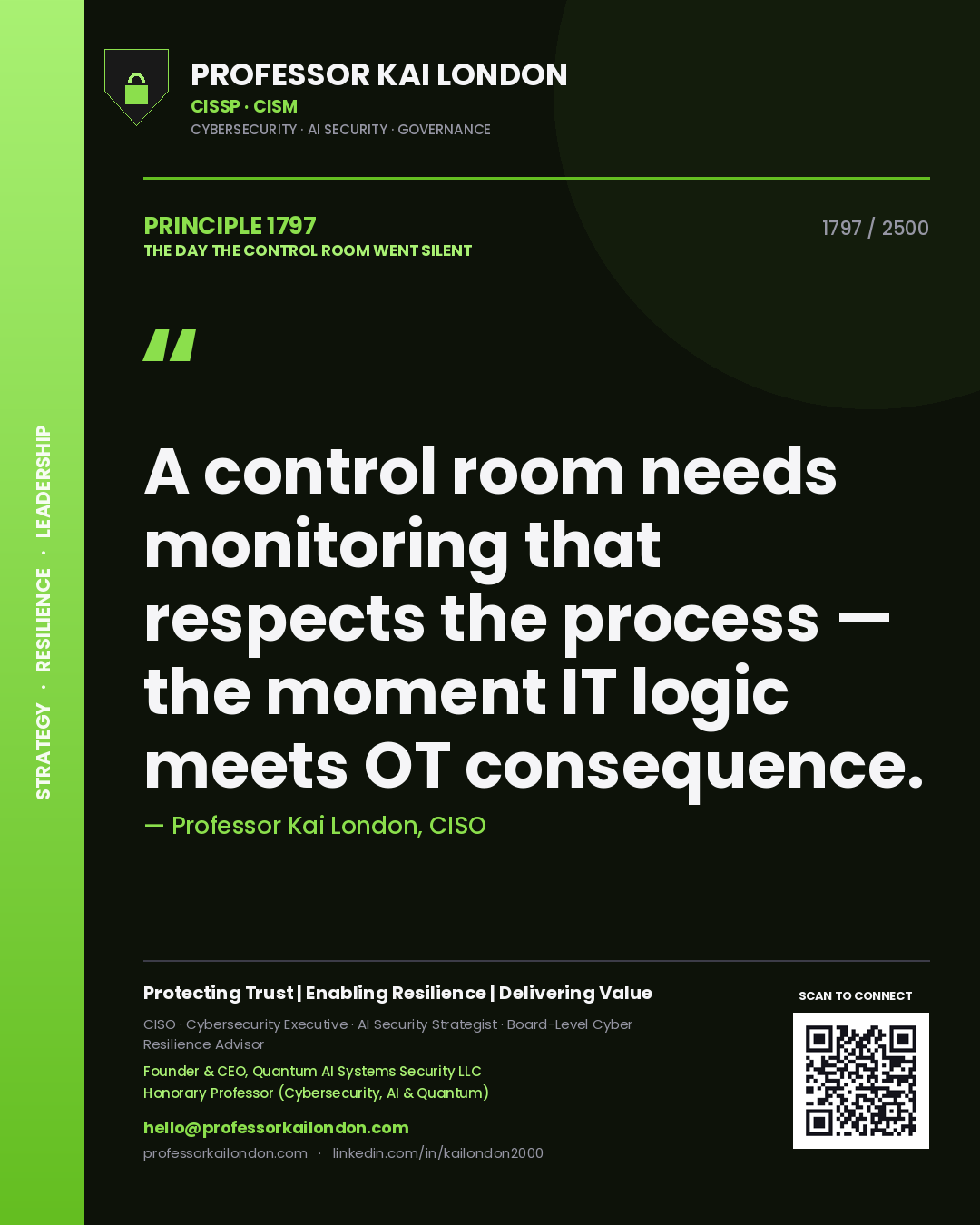
Professor Kai London principle 1797: A control room needs monitoring that respects the process — the moment IT logic meets OT consequence.
Principle 1797
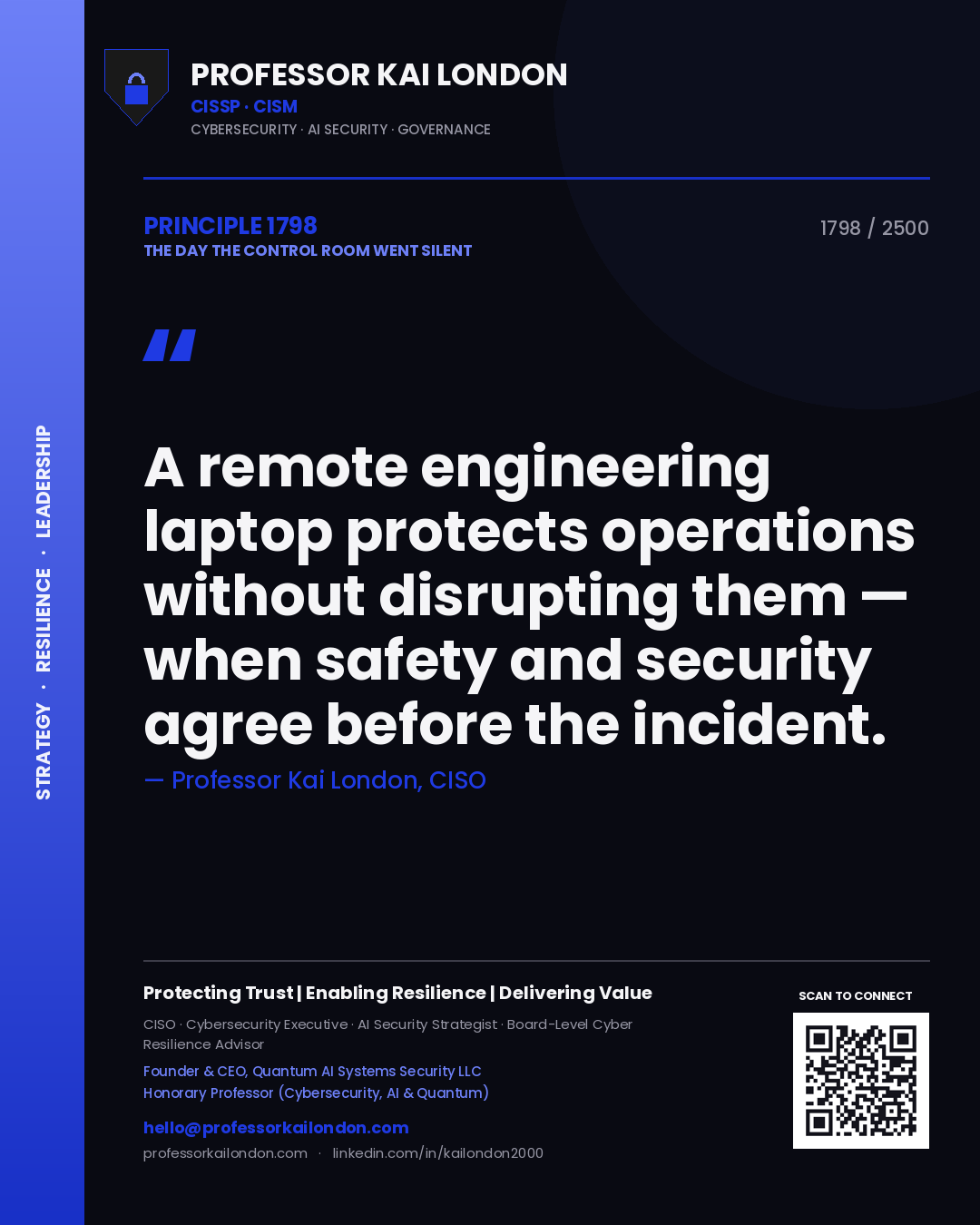
Professor Kai London principle 1798: A remote engineering laptop protects operations without disrupting them — when safety and security agree before the incident.
Principle 1798
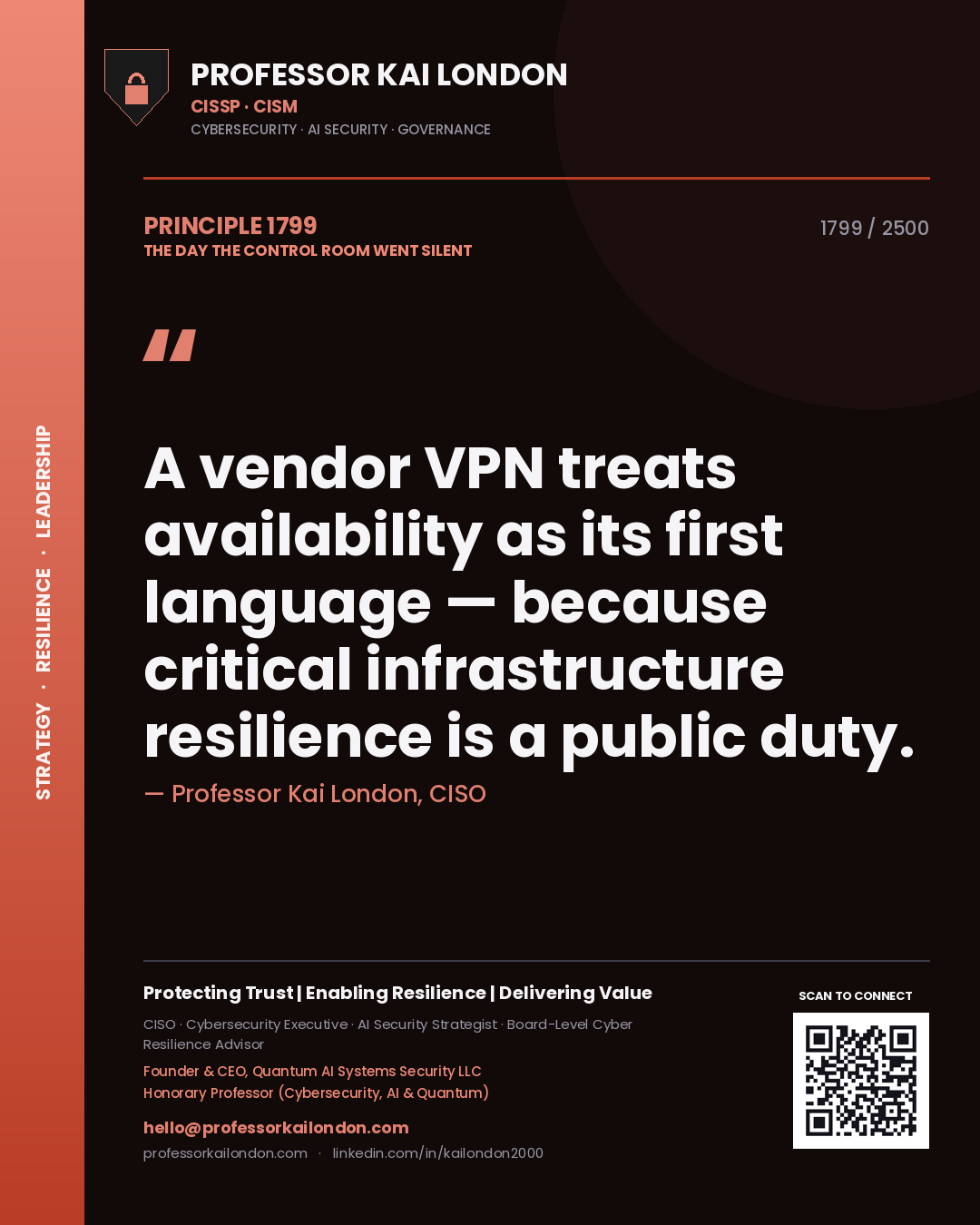
Professor Kai London principle 1799: A vendor VPN treats availability as its first language — because critical infrastructure resilience is a public duty.
Principle 1799
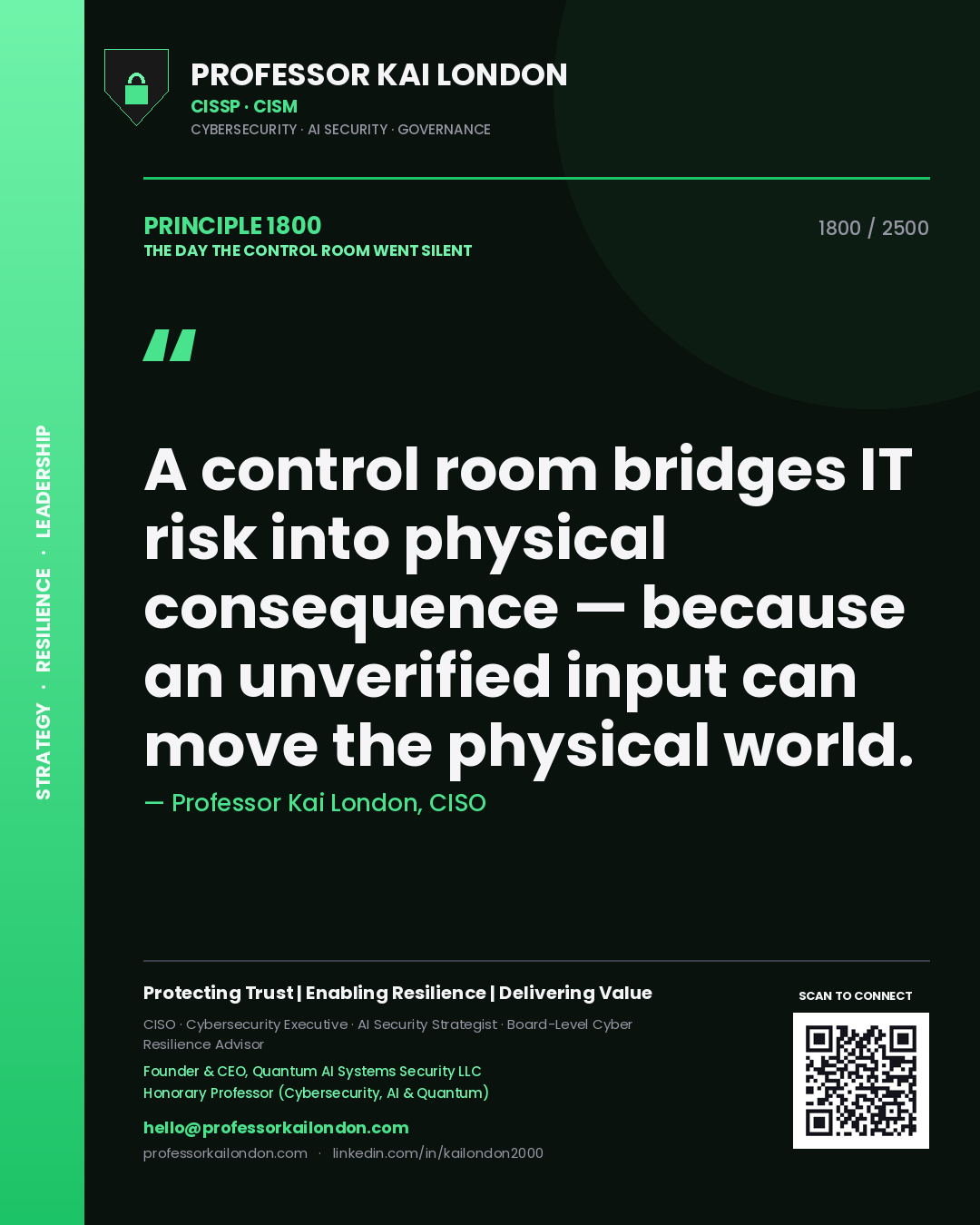
Professor Kai London principle 1800: A control room bridges IT risk into physical consequence — because an unverified input can move the physical world.
Principle 1800