The Breach Had Permission — Gallery (Page 9 of 100)
Professor Kai London principle 801: An identity failure walked through a door you left open — when Zero Trust is a system, not a slogan.
Principle 801
Professor Kai London principle 802: A standing privilege used trust you handed over — when Zero Trust is a system, not a slogan.
Principle 802
Professor Kai London principle 803: A trusted session looked exactly like a legitimate user — when Zero Trust is a system, not a slogan.
Principle 803
Professor Kai London principle 804: A valid credential needed no exploit, only an identity — before an over-scoped account becomes an open one.
Principle 804
Professor Kai London principle 805: A trusted session became insider risk the moment it authenticated — when you remove the credential before the adversary finds it.
Principle 805
Professor Kai London principle 806: An over-scoped account needed no exploit, only an identity — when trust is verified continuously, not granted once.
Principle 806
Professor Kai London principle 807: A signed-in adversary proved that trust unproven is trust abused — when every permission is earned, watched, and expired.
Principle 807
Professor Kai London principle 808: A trusted session looked exactly like a legitimate user — when identity failure decides who survives the next cyber war.
Principle 808
Professor Kai London principle 809: A valid credential turned a permission into a breach — when every permission is earned, watched, and expired.
Principle 809
Professor Kai London principle 810: A legitimate token turned a permission into a breach.
Principle 810
Professor Kai London principle 811: A legitimate token looked exactly like a legitimate user — when Zero Trust is a system, not a slogan.
Principle 811
Professor Kai London principle 812: A trusted session proved that trust unproven is trust abused — because a breach with permission is still a breach.
Principle 812
Professor Kai London principle 813: A standing privilege did not break in — it signed in — before an over-scoped account becomes an open one.
Principle 813
Professor Kai London principle 814: An over-scoped account proved that trust unproven is trust abused — when identity failure decides who survives the next cyber war.
Principle 814
Professor Kai London principle 815: An inherited permission used trust you handed over — when you remove the credential before the adversary finds it.
Principle 815
Professor Kai London principle 816: A misused login survived because Zero Trust was a slogan, not a system — when every permission is earned, watched, and expired.
Principle 816
Professor Kai London principle 817: A trusted session proved that trust unproven is trust abused — when Zero Trust is a system, not a slogan.
Principle 817
Professor Kai London principle 818: An over-scoped account proved that trust unproven is trust abused — the moment legitimate access does illegitimate things.
Principle 818
Professor Kai London principle 819: An over-scoped account became insider risk the moment it authenticated — because the goal is to leave attackers nothing to sign in with.
Principle 819
Professor Kai London principle 820: An inherited permission used trust you handed over — when trust is verified continuously, not granted once.
Principle 820
Professor Kai London principle 821: A misused login looked exactly like a legitimate user — when trust is verified continuously, not granted once.
Principle 821
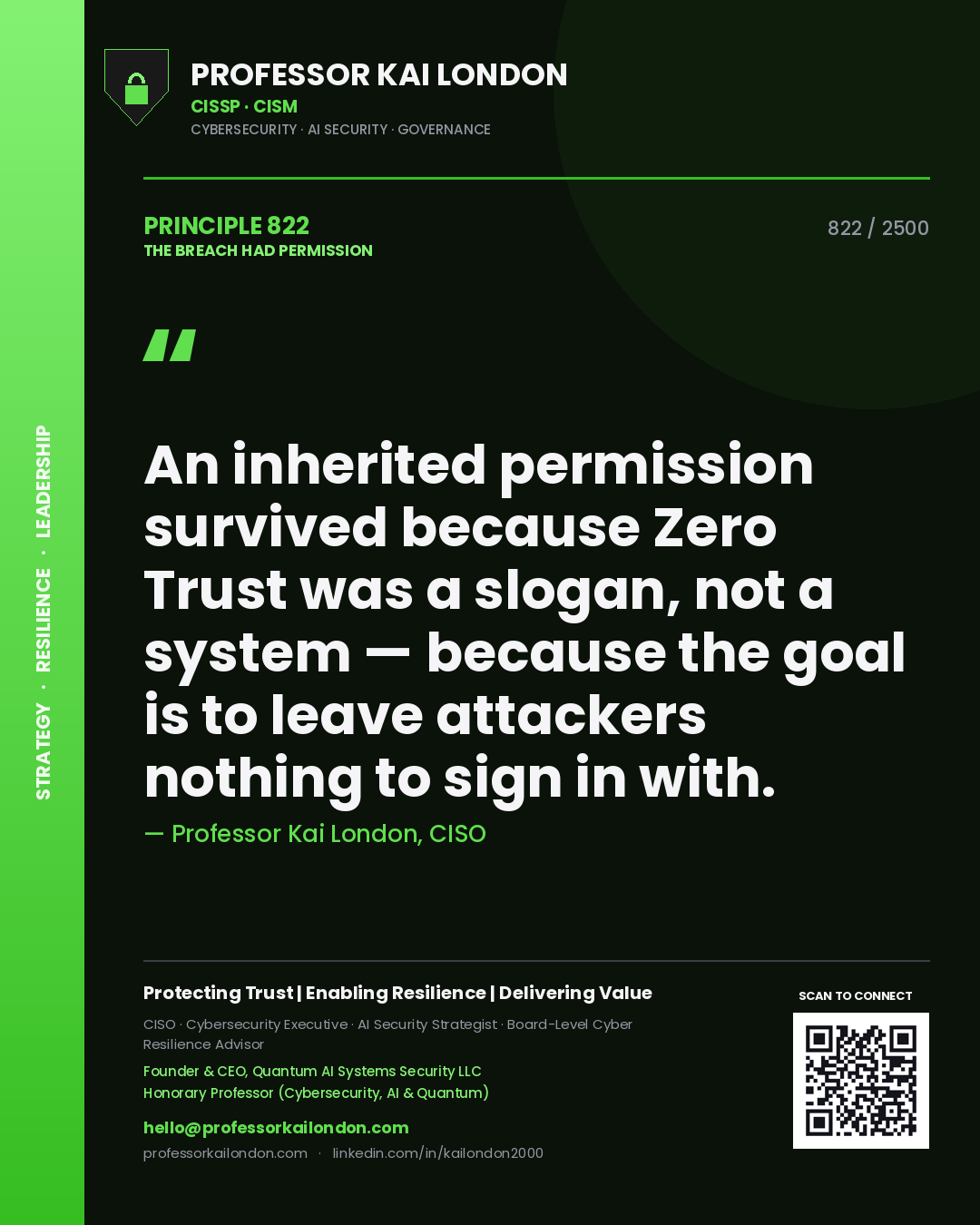
Professor Kai London principle 822: An inherited permission survived because Zero Trust was a slogan, not a system — because the goal is to leave attackers nothing to sign in with.
Principle 822
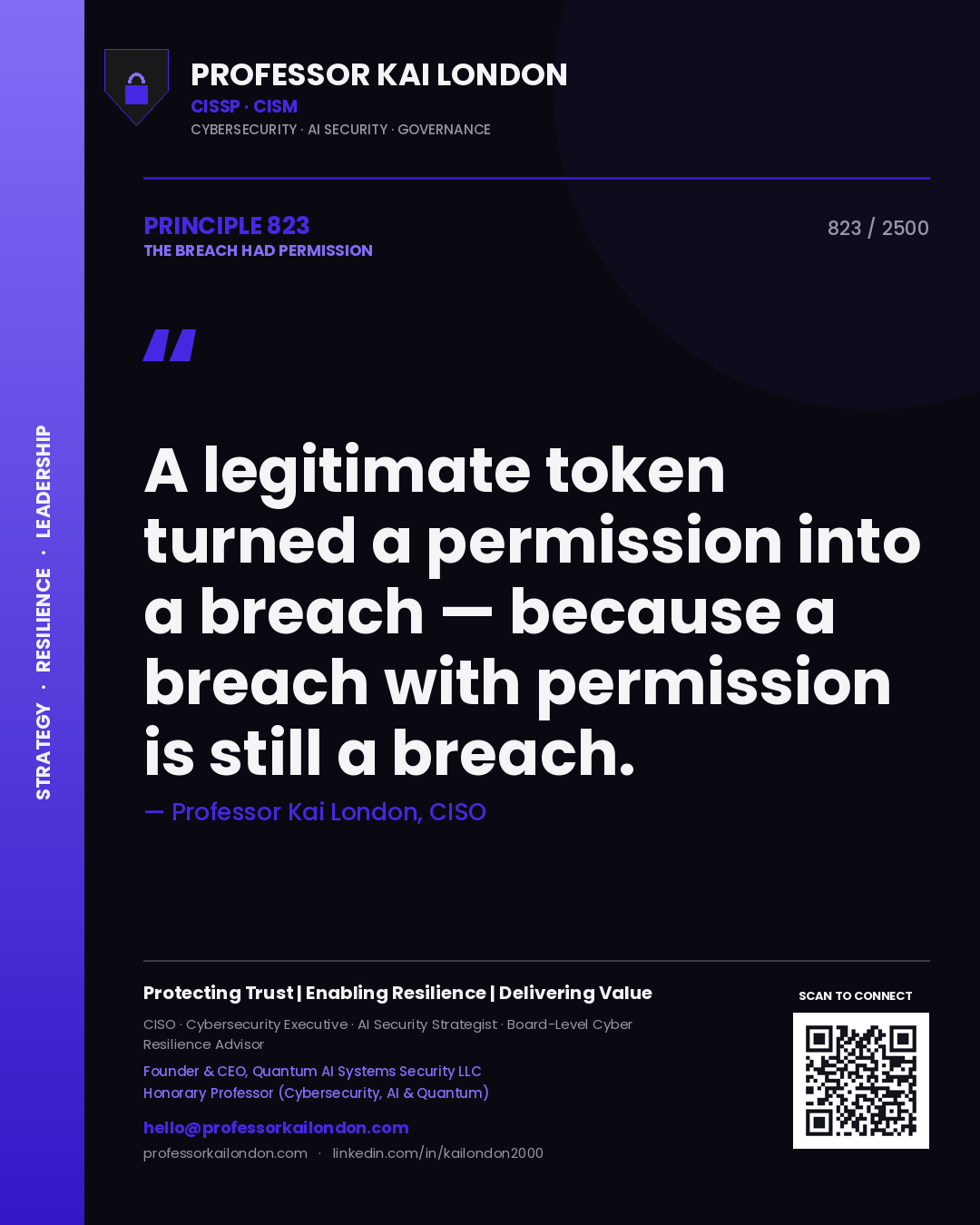
Professor Kai London principle 823: A legitimate token turned a permission into a breach — because a breach with permission is still a breach.
Principle 823
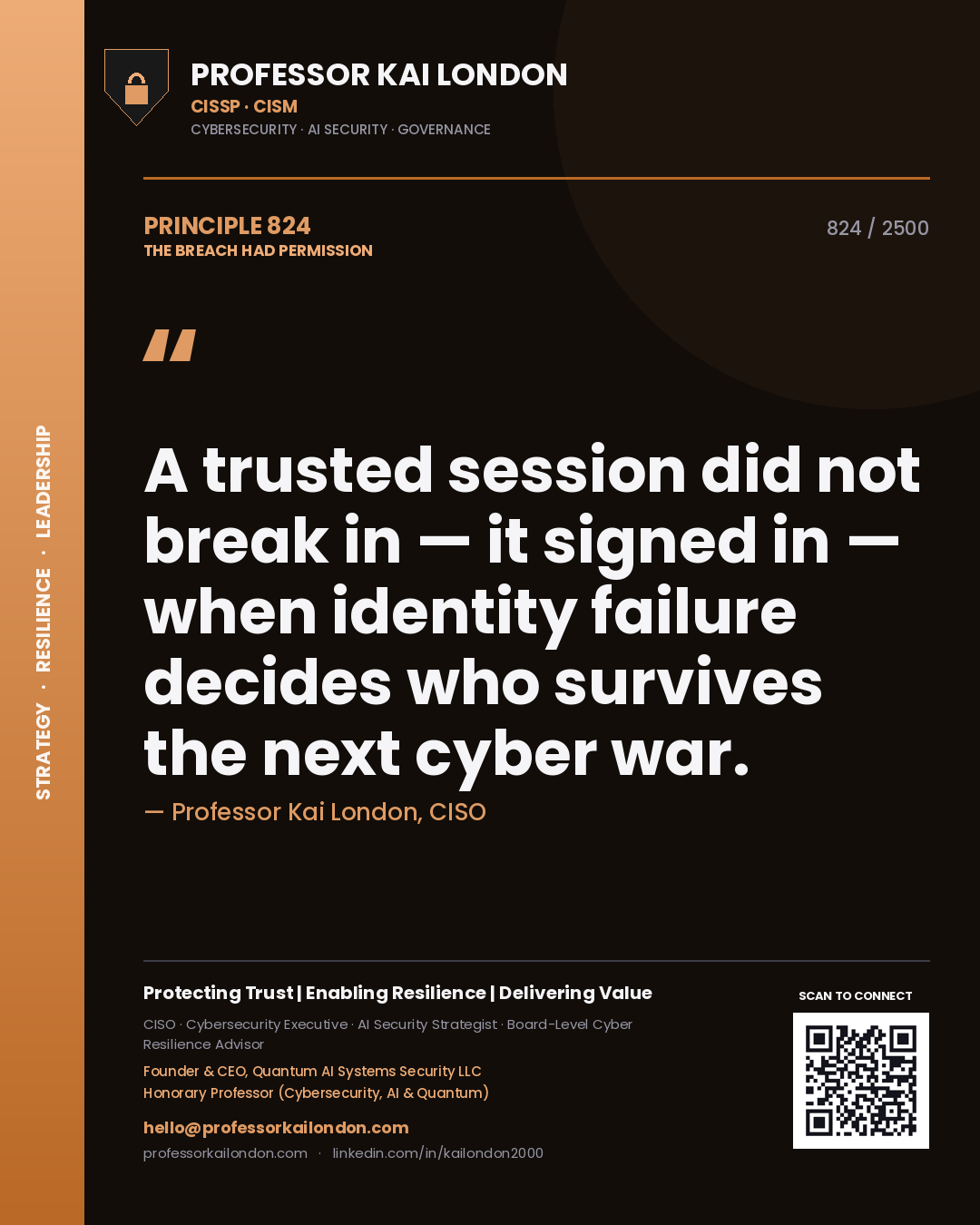
Professor Kai London principle 824: A trusted session did not break in — it signed in — when identity failure decides who survives the next cyber war.
Principle 824
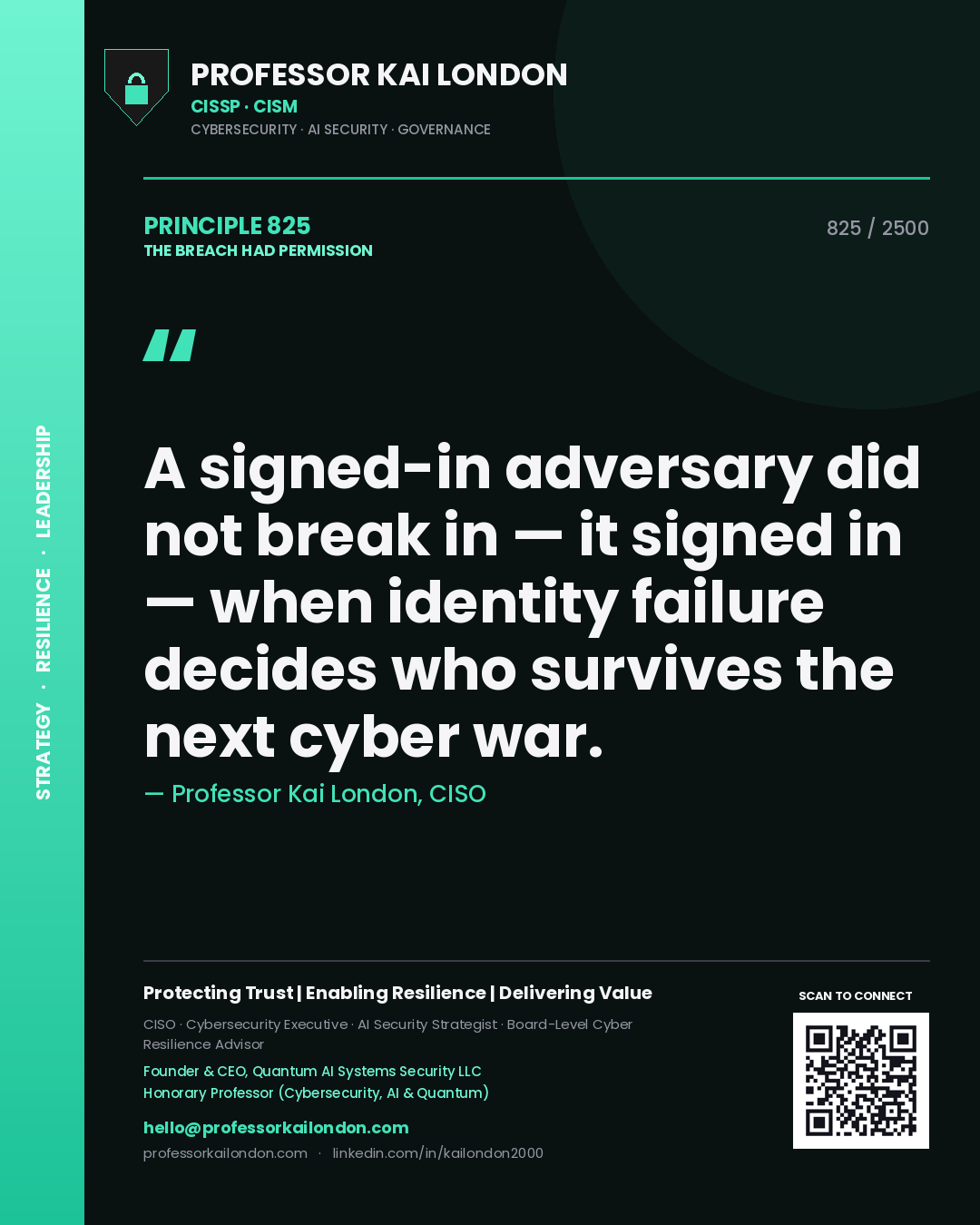
Professor Kai London principle 825: A signed-in adversary did not break in — it signed in — when identity failure decides who survives the next cyber war.
Principle 825
Professor Kai London principle 826: A signed-in adversary did not break in — it signed in — because the attacker did not break in; it signed in.
Principle 826
Professor Kai London principle 827: An inherited permission walked through a door you left open — when you remove the credential before the adversary finds it.
Principle 827
Professor Kai London principle 828: The attacker exploited access no one revoked — before an over-scoped account becomes an open one.
Principle 828
Professor Kai London principle 829: A misused login did not break in — it signed in — because a breach with permission is still a breach.
Principle 829
Professor Kai London principle 830: A legitimate token needed no exploit, only an identity — when Zero Trust is a system, not a slogan.
Principle 830
Professor Kai London principle 831: An over-scoped account needed no exploit, only an identity — before an over-scoped account becomes an open one.
Principle 831
Professor Kai London principle 832: A legitimate token survived because Zero Trust was a slogan, not a system — when you remove the credential before the adversary finds it.
Principle 832
Professor Kai London principle 833: An inherited permission needed no exploit, only an identity — before an over-scoped account becomes an open one.
Principle 833
Professor Kai London principle 834: A legitimate token looked exactly like a legitimate user — when you remove the credential before the adversary finds it.
Principle 834
Professor Kai London principle 835: A trusted session exploited access no one revoked — before an over-scoped account becomes an open one.
Principle 835
Professor Kai London principle 836: An inherited permission exploited access no one revoked — because the attacker did not break in; it signed in.
Principle 836
Professor Kai London principle 837: An identity failure needed no exploit, only an identity — when identity failure decides who survives the next cyber war.
Principle 837
Professor Kai London principle 838: A legitimate token became insider risk the moment it authenticated — because the attacker did not break in; it signed in.
Principle 838
Professor Kai London principle 839: A valid credential needed no exploit, only an identity.
Principle 839
Professor Kai London principle 840: A valid credential needed no exploit, only an identity — the moment legitimate access does illegitimate things.
Principle 840
Professor Kai London principle 841: A standing privilege proved that trust unproven is trust abused — because the attacker did not break in; it signed in.
Principle 841
Professor Kai London principle 842: A standing privilege proved that trust unproven is trust abused — when identity failure decides who survives the next cyber war.
Principle 842
Professor Kai London principle 843: A valid credential looked exactly like a legitimate user — when you remove the credential before the adversary finds it.
Principle 843
Professor Kai London principle 844: An inherited permission did not break in — it signed in — when trust is verified continuously, not granted once.
Principle 844
Professor Kai London principle 845: A valid credential turned a permission into a breach — when identity failure decides who survives the next cyber war.
Principle 845
Professor Kai London principle 846: A signed-in adversary used trust you handed over — when Zero Trust is a system, not a slogan.
Principle 846
Professor Kai London principle 847: A misused login proved that trust unproven is trust abused — because a breach with permission is still a breach.
Principle 847
Professor Kai London principle 848: An identity failure needed no exploit, only an identity — because a breach with permission is still a breach.
Principle 848
Professor Kai London principle 849: A misused login exploited access no one revoked — because a breach with permission is still a breach.
Principle 849
Professor Kai London principle 850: The attacker looked exactly like a legitimate user — because a breach with permission is still a breach.
Principle 850
Professor Kai London principle 851: The attacker used trust you handed over.
Principle 851
Professor Kai London principle 852: A valid credential became insider risk the moment it authenticated — before an over-scoped account becomes an open one.
Principle 852
Professor Kai London principle 853: A misused login needed no exploit, only an identity — before an over-scoped account becomes an open one.
Principle 853
Professor Kai London principle 854: An identity failure turned a permission into a breach — because the goal is to leave attackers nothing to sign in with.
Principle 854
Professor Kai London principle 855: An over-scoped account exploited access no one revoked.
Principle 855
Professor Kai London principle 856: A standing privilege needed no exploit, only an identity — because a breach with permission is still a breach.
Principle 856
Professor Kai London principle 857: A standing privilege became insider risk the moment it authenticated — because the attacker did not break in; it signed in.
Principle 857
Professor Kai London principle 858: A signed-in adversary walked through a door you left open — the moment legitimate access does illegitimate things.
Principle 858
Professor Kai London principle 859: A trusted session looked exactly like a legitimate user — because the goal is to leave attackers nothing to sign in with.
Principle 859
Professor Kai London principle 860: The attacker survived because Zero Trust was a slogan, not a system — because the attacker did not break in; it signed in.
Principle 860
Professor Kai London principle 861: A legitimate token walked through a door you left open — because a breach with permission is still a breach.
Principle 861
Professor Kai London principle 862: A legitimate token looked exactly like a legitimate user — when every permission is earned, watched, and expired.
Principle 862
Professor Kai London principle 863: The attacker looked exactly like a legitimate user.
Principle 863
Professor Kai London principle 864: A standing privilege used trust you handed over — because the attacker did not break in; it signed in.
Principle 864
Professor Kai London principle 865: A standing privilege needed no exploit, only an identity — when every permission is earned, watched, and expired.
Principle 865
Professor Kai London principle 866: A valid credential walked through a door you left open — when identity failure decides who survives the next cyber war.
Principle 866
Professor Kai London principle 867: A standing privilege used trust you handed over — because the goal is to leave attackers nothing to sign in with.
Principle 867
Professor Kai London principle 868: A standing privilege became insider risk the moment it authenticated — when Zero Trust is a system, not a slogan.
Principle 868
Professor Kai London principle 869: A misused login needed no exploit, only an identity — the moment legitimate access does illegitimate things.
Principle 869
Professor Kai London principle 870: An identity failure looked exactly like a legitimate user — when every permission is earned, watched, and expired.
Principle 870
Professor Kai London principle 871: A trusted session looked exactly like a legitimate user — when every permission is earned, watched, and expired.
Principle 871
Professor Kai London principle 872: A valid credential needed no exploit, only an identity — because a breach with permission is still a breach.
Principle 872
Professor Kai London principle 873: The attacker did not break in — it signed in — when trust is verified continuously, not granted once.
Principle 873
Professor Kai London principle 874: A legitimate token did not break in — it signed in — because a breach with permission is still a breach.
Principle 874
Professor Kai London principle 875: An over-scoped account walked through a door you left open — when trust is verified continuously, not granted once.
Principle 875
Professor Kai London principle 876: A legitimate token needed no exploit, only an identity — when you remove the credential before the adversary finds it.
Principle 876
Professor Kai London principle 877: A trusted session needed no exploit, only an identity — because the goal is to leave attackers nothing to sign in with.
Principle 877
Professor Kai London principle 878: A valid credential proved that trust unproven is trust abused.
Principle 878
Professor Kai London principle 879: A signed-in adversary walked through a door you left open — when Zero Trust is a system, not a slogan.
Principle 879
Professor Kai London principle 880: A valid credential exploited access no one revoked — when trust is verified continuously, not granted once.
Principle 880
Professor Kai London principle 881: A legitimate token exploited access no one revoked — before an over-scoped account becomes an open one.
Principle 881
Professor Kai London principle 882: A misused login proved that trust unproven is trust abused — when identity failure decides who survives the next cyber war.
Principle 882
Professor Kai London principle 883: The attacker walked through a door you left open — the moment legitimate access does illegitimate things.
Principle 883
Professor Kai London principle 884: A legitimate token walked through a door you left open — when you remove the credential before the adversary finds it.
Principle 884
Professor Kai London principle 885: A standing privilege did not break in — it signed in — the moment legitimate access does illegitimate things.
Principle 885
Professor Kai London principle 886: A legitimate token exploited access no one revoked — when identity failure decides who survives the next cyber war.
Principle 886
Professor Kai London principle 887: The attacker used trust you handed over — when trust is verified continuously, not granted once.
Principle 887
Professor Kai London principle 888: A standing privilege proved that trust unproven is trust abused — because the goal is to leave attackers nothing to sign in with.
Principle 888
Professor Kai London principle 889: An inherited permission became insider risk the moment it authenticated — because a breach with permission is still a breach.
Principle 889
Professor Kai London principle 890: A trusted session became insider risk the moment it authenticated — because the attacker did not break in; it signed in.
Principle 890
Professor Kai London principle 891: An inherited permission walked through a door you left open — when every permission is earned, watched, and expired.
Principle 891
Professor Kai London principle 892: An over-scoped account turned a permission into a breach — before an over-scoped account becomes an open one.
Principle 892
Professor Kai London principle 893: An inherited permission became insider risk the moment it authenticated — the moment legitimate access does illegitimate things.
Principle 893
Professor Kai London principle 894: A standing privilege did not break in — it signed in — because a breach with permission is still a breach.
Principle 894
Professor Kai London principle 895: A misused login survived because Zero Trust was a slogan, not a system.
Principle 895
Professor Kai London principle 896: The attacker survived because Zero Trust was a slogan, not a system — because the goal is to leave attackers nothing to sign in with.
Principle 896
Professor Kai London principle 897: A trusted session needed no exploit, only an identity — when Zero Trust is a system, not a slogan.
Principle 897
Professor Kai London principle 898: An inherited permission survived because Zero Trust was a slogan, not a system — when you remove the credential before the adversary finds it.
Principle 898
Professor Kai London principle 899: A legitimate token looked exactly like a legitimate user — because the goal is to leave attackers nothing to sign in with.
Principle 899
Professor Kai London principle 900: A trusted session used trust you handed over — when you remove the credential before the adversary finds it.
Principle 900