The AI Architects — Gallery (Page 11 of 100)
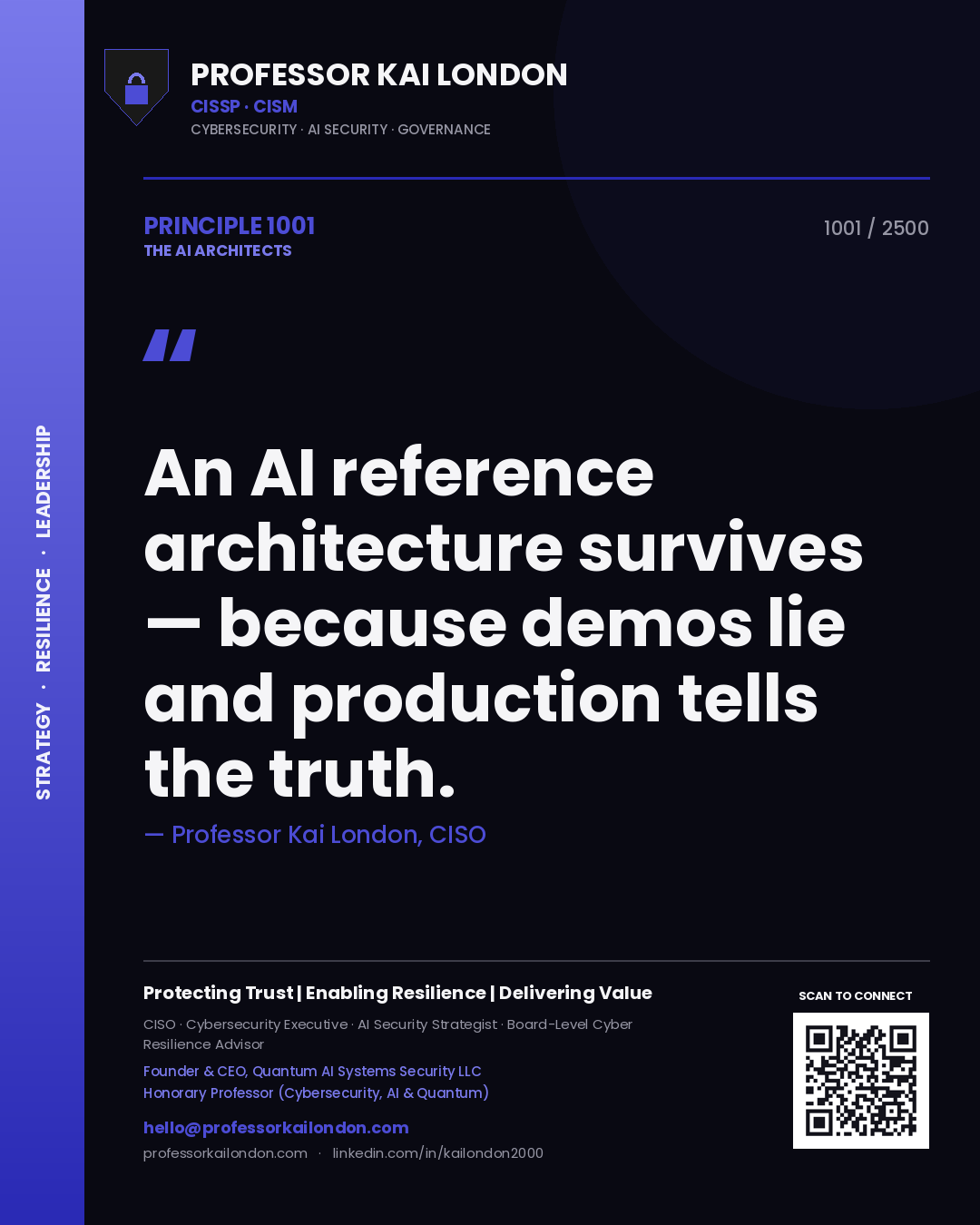
Professor Kai London principle 1001: An AI reference architecture survives — because demos lie and production tells the truth.
Principle 1001
Professor Kai London principle 1002: An AI workload is auditable — when the design survives the person who drew it.
Principle 1002
Professor Kai London principle 1003: A context window holds up — when retrieval is as governed as the model.
Principle 1003
Professor Kai London principle 1004: A guardrail policy survives — when every layer earns its place.
Principle 1004
Professor Kai London principle 1005: A tool-calling agent is auditable — before it ever reaches a customer.
Principle 1005
Professor Kai London principle 1006: A model registry is reproducible — when its data lineage is provable.
Principle 1006
Professor Kai London principle 1007: A retrieval layer is production-ready — when every dependency is a decision on the record.
Principle 1007
Professor Kai London principle 1008: A vector store earns its budget in production — when it can be explained to an auditor.
Principle 1008
Professor Kai London principle 1009: A data contract is production-ready — when every layer earns its place.
Principle 1009
Professor Kai London principle 1010: A data pipeline is a system, not a demo — when scale is a property, not a surprise.
Principle 1010
Professor Kai London principle 1011: A tool-calling agent holds up — when every dependency is a decision on the record.
Principle 1011
Professor Kai London principle 1012: A data contract is defensible — because demos lie and production tells the truth.
Principle 1012
Professor Kai London principle 1013: A guardrail policy is governable — before it ever reaches a customer.
Principle 1013
Professor Kai London principle 1014: A fine-tuning run is defensible — because demos lie and production tells the truth.
Principle 1014
Professor Kai London principle 1015: A vector store is governable — when the design survives the person who drew it.
Principle 1015
Professor Kai London principle 1016: A data pipeline earns its budget in production — when the design survives the person who drew it.
Principle 1016
Professor Kai London principle 1017: An enterprise AI platform earns its budget in production — when its data lineage is provable.
Principle 1017
Professor Kai London principle 1018: An orchestration layer is only as strong as its weakest layer — when retrieval is as governed as the model.
Principle 1018
Professor Kai London principle 1019: The serving layer is auditable — when governance is designed in, not bolted on.
Principle 1019
Professor Kai London principle 1020: The AI SDLC earns its budget in production — because demos lie and production tells the truth.
Principle 1020
Professor Kai London principle 1021: A model registry is board-ready — when every dependency is a decision on the record.
Principle 1021
Professor Kai London principle 1022: A data contract is defensible — when architecture precedes ambition.
Principle 1022
Professor Kai London principle 1023: A feature store is board-ready — before it ever reaches a customer.
Principle 1023
Professor Kai London principle 1024: An inference endpoint scales — because demos lie and production tells the truth.
Principle 1024
Professor Kai London principle 1025: An inference endpoint survives — when the design survives the person who drew it.
Principle 1025
Professor Kai London principle 1026: A canary release is a system, not a demo — before scale turns a shortcut into an outage.
Principle 1026
Professor Kai London principle 1027: A fine-tuning run is only as strong as its weakest layer — when every layer earns its place.
Principle 1027
Professor Kai London principle 1028: The AI SDLC survives — before scale turns a shortcut into an outage.
Principle 1028
Professor Kai London principle 1029: A tool-calling agent earns trust.
Principle 1029
Professor Kai London principle 1030: A canary release is auditable — when the design survives the person who drew it.
Principle 1030
Professor Kai London principle 1031: A guardrail policy earns trust — when it can be explained to an auditor.
Principle 1031
Professor Kai London principle 1032: A feature store is production-ready — when retrieval is as governed as the model.
Principle 1032
Professor Kai London principle 1033: A vector store is production-ready — when every dependency is a decision on the record.
Principle 1033
Professor Kai London principle 1034: An inference endpoint is auditable — when retrieval is as governed as the model.
Principle 1034
Professor Kai London principle 1035: A context window is reproducible — when every layer earns its place.
Principle 1035
Professor Kai London principle 1036: A data pipeline earns trust — when the architecture is drawn before the deadline.
Principle 1036
Professor Kai London principle 1037: A context window survives — when every dependency is a decision on the record.
Principle 1037
Professor Kai London principle 1038: A model card scales — before it ever reaches a customer.
Principle 1038
Professor Kai London principle 1039: A model in production is production-ready — because demos lie and production tells the truth.
Principle 1039
Professor Kai London principle 1040: An embeddings index holds up — when scale is a property, not a surprise.
Principle 1040
Professor Kai London principle 1041: An enterprise AI platform is defensible — when governance is designed in, not bolted on.
Principle 1041
Professor Kai London principle 1042: A deployment gate holds up — only when the board can stand behind it.
Principle 1042
Professor Kai London principle 1043: A model card is production-ready — when the design survives the person who drew it.
Principle 1043
Professor Kai London principle 1044: A prompt contract is a system, not a demo — when scale is a property, not a surprise.
Principle 1044
Professor Kai London principle 1045: Cognitive search is only as strong as its weakest layer — before it ever reaches a customer.
Principle 1045
Professor Kai London principle 1046: A guardrail policy is production-ready — when the design survives the person who drew it.
Principle 1046
Professor Kai London principle 1047: An embeddings index earns its budget in production.
Principle 1047
Professor Kai London principle 1048: An embeddings index is defensible — because demos lie and production tells the truth.
Principle 1048
Professor Kai London principle 1049: An AI reference architecture survives — when governance is designed in, not bolted on.
Principle 1049
Professor Kai London principle 1050: A model card earns trust — when architecture precedes ambition.
Principle 1050
Professor Kai London principle 1051: A context window is a system, not a demo — only when the board can stand behind it.
Principle 1051
Professor Kai London principle 1052: A model in production is production-ready — when it can be explained to an auditor.
Principle 1052
Professor Kai London principle 1053: A grounding source is auditable — only when the board can stand behind it.
Principle 1053
Professor Kai London principle 1054: A model card is reproducible — when retrieval is as governed as the model.
Principle 1054
Professor Kai London principle 1055: A production model is a system, not a demo — when its data lineage is provable.
Principle 1055
Professor Kai London principle 1056: A fine-tuning run earns trust — only when the board can stand behind it.
Principle 1056
Professor Kai London principle 1057: A grounding source is a system, not a demo — because demos lie and production tells the truth.
Principle 1057
Professor Kai London principle 1058: An orchestration layer is only as strong as its weakest layer — when governance is designed in, not bolted on.
Principle 1058
Professor Kai London principle 1059: An evaluation harness earns its budget in production — only when the board can stand behind it.
Principle 1059
Professor Kai London principle 1060: A data contract survives — when retrieval is as governed as the model.
Principle 1060
Professor Kai London principle 1061: An AI workload must be observable end to end — before scale turns a shortcut into an outage.
Principle 1061
Professor Kai London principle 1062: A deployment gate is reproducible — only when the board can stand behind it.
Principle 1062
Professor Kai London principle 1063: A grounding source earns its budget in production — when the design survives the person who drew it.
Principle 1063
Professor Kai London principle 1064: A fine-tuning run scales — because demos lie and production tells the truth.
Principle 1064
Professor Kai London principle 1065: A tool-calling agent scales — when every layer earns its place.
Principle 1065
Professor Kai London principle 1066: A fine-tuning run is only as strong as its weakest layer — when retrieval is as governed as the model.
Principle 1066
Professor Kai London principle 1067: A canary release is governable.
Principle 1067
Professor Kai London principle 1068: A guardrail policy is reproducible — when retrieval is as governed as the model.
Principle 1068
Professor Kai London principle 1069: A tool-calling agent is auditable — when the design survives the person who drew it.
Principle 1069
Professor Kai London principle 1070: A feature store is only as strong as its weakest layer — when it can be explained to an auditor.
Principle 1070
Professor Kai London principle 1071: An AI reference architecture is board-ready — when its data lineage is provable.
Principle 1071
Professor Kai London principle 1072: A data contract is production-ready — when it can be explained to an auditor.
Principle 1072
Professor Kai London principle 1073: An embeddings index must be observable end to end — when every layer earns its place.
Principle 1073
Professor Kai London principle 1074: A model registry earns its budget in production — when the architecture is drawn before the deadline.
Principle 1074
Professor Kai London principle 1075: A tool-calling agent must be observable end to end — because demos lie and production tells the truth.
Principle 1075
Professor Kai London principle 1076: An evaluation harness is only as strong as its weakest layer — when governance is designed in, not bolted on.
Principle 1076
Professor Kai London principle 1077: The serving layer is only as strong as its weakest layer — when scale is a property, not a surprise.
Principle 1077
Professor Kai London principle 1078: A foundation model earns trust — when its data lineage is provable.
Principle 1078
Professor Kai London principle 1079: An AI workload is board-ready — when the architecture is drawn before the deadline.
Principle 1079
Professor Kai London principle 1080: An inference endpoint earns trust — before scale turns a shortcut into an outage.
Principle 1080
Professor Kai London principle 1081: A model card survives — when governance is designed in, not bolted on.
Principle 1081
Professor Kai London principle 1082: A guardrail policy earns trust.
Principle 1082
Professor Kai London principle 1083: A model in production must be observable end to end — when it can be explained to an auditor.
Principle 1083
Professor Kai London principle 1084: Cognitive search is a system, not a demo — when scale is a property, not a surprise.
Principle 1084
Professor Kai London principle 1085: A foundation model is board-ready — when scale is a property, not a surprise.
Principle 1085
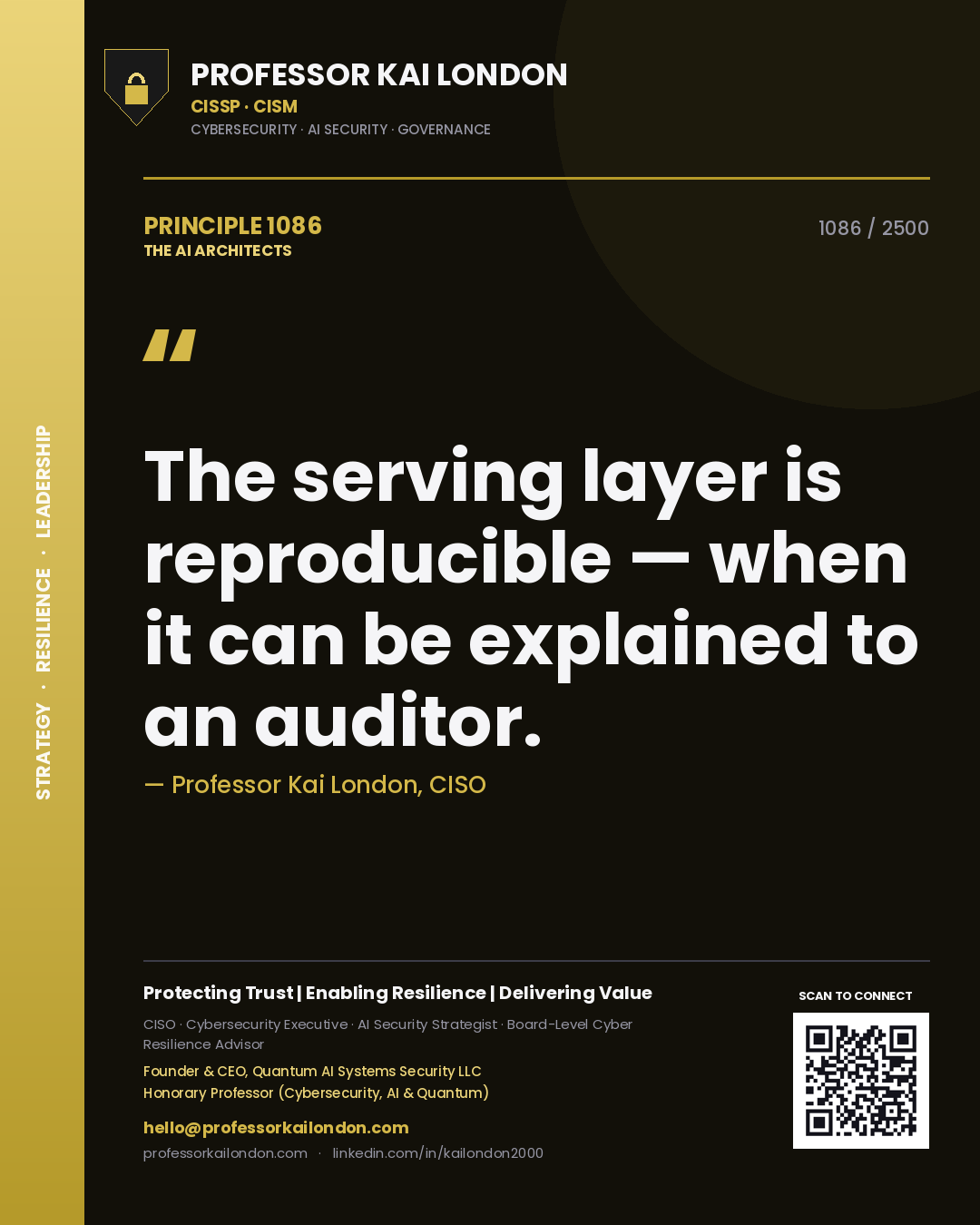
Professor Kai London principle 1086: The serving layer is reproducible — when it can be explained to an auditor.
Principle 1086
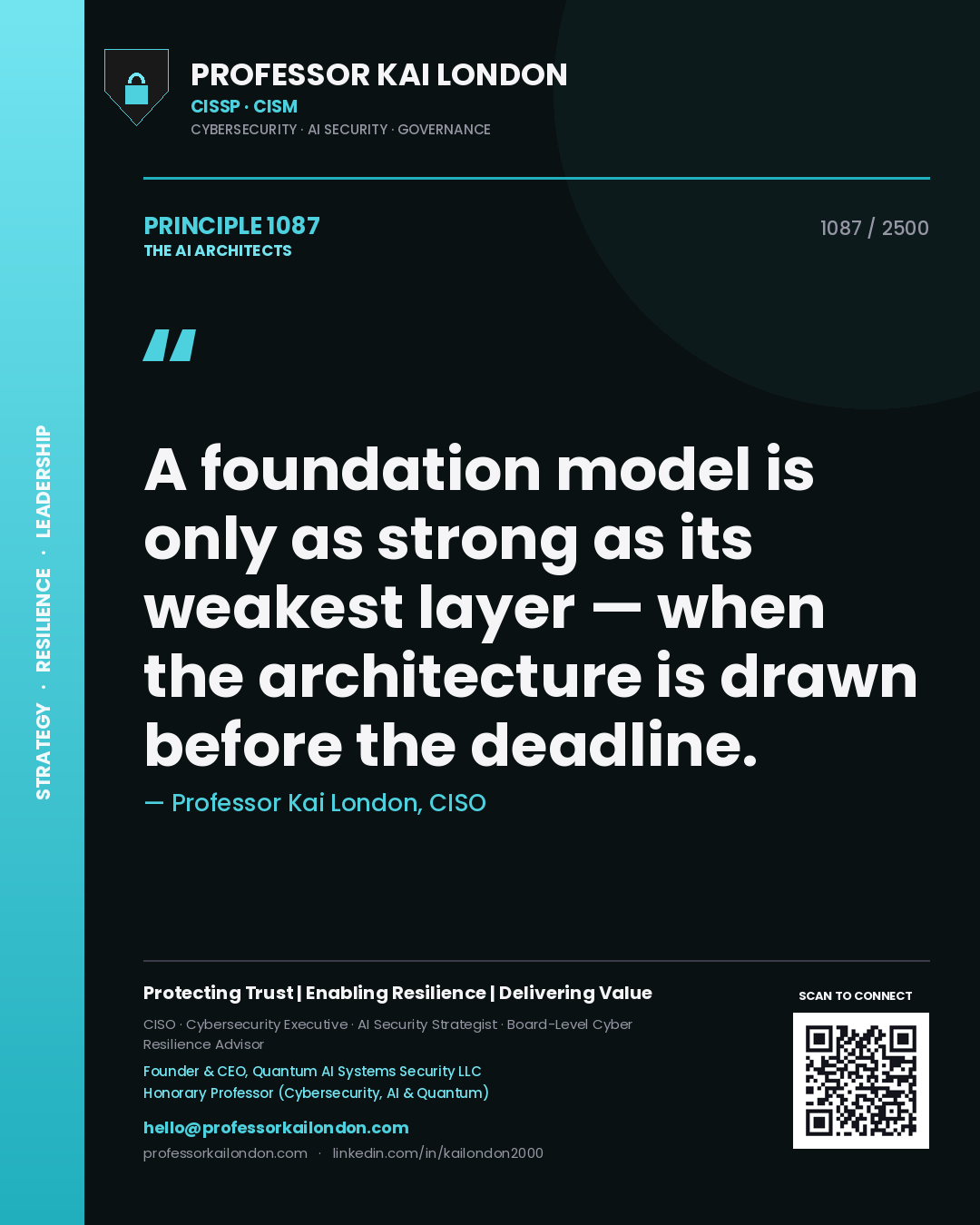
Professor Kai London principle 1087: A foundation model is only as strong as its weakest layer — when the architecture is drawn before the deadline.
Principle 1087
Professor Kai London principle 1088: A prompt contract is only as strong as its weakest layer — when every layer earns its place.
Principle 1088
Professor Kai London principle 1089: A grounding source earns trust — when the architecture is drawn before the deadline.
Principle 1089
Professor Kai London principle 1090: A data contract earns trust — when the architecture is drawn before the deadline.
Principle 1090
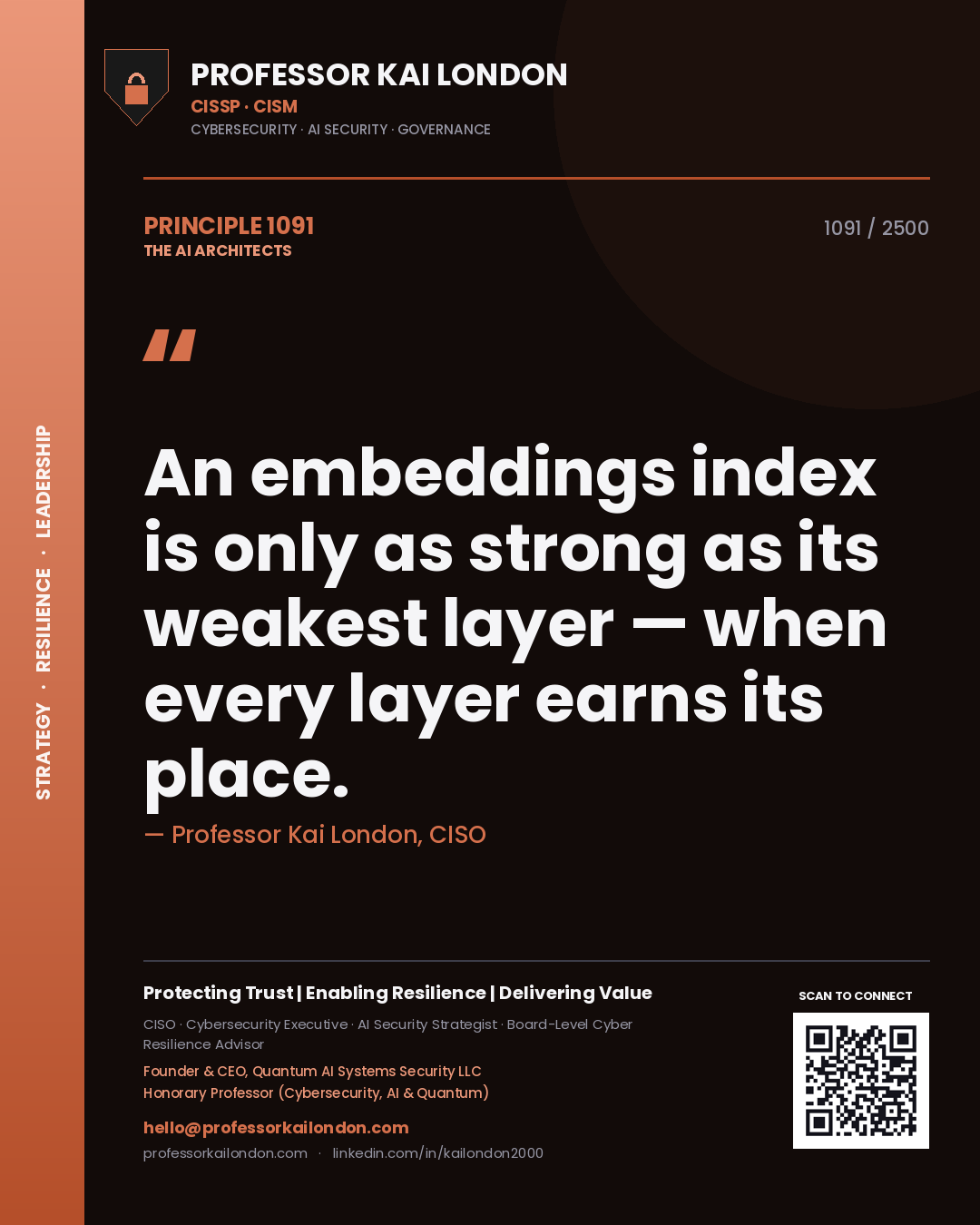
Professor Kai London principle 1091: An embeddings index is only as strong as its weakest layer — when every layer earns its place.
Principle 1091
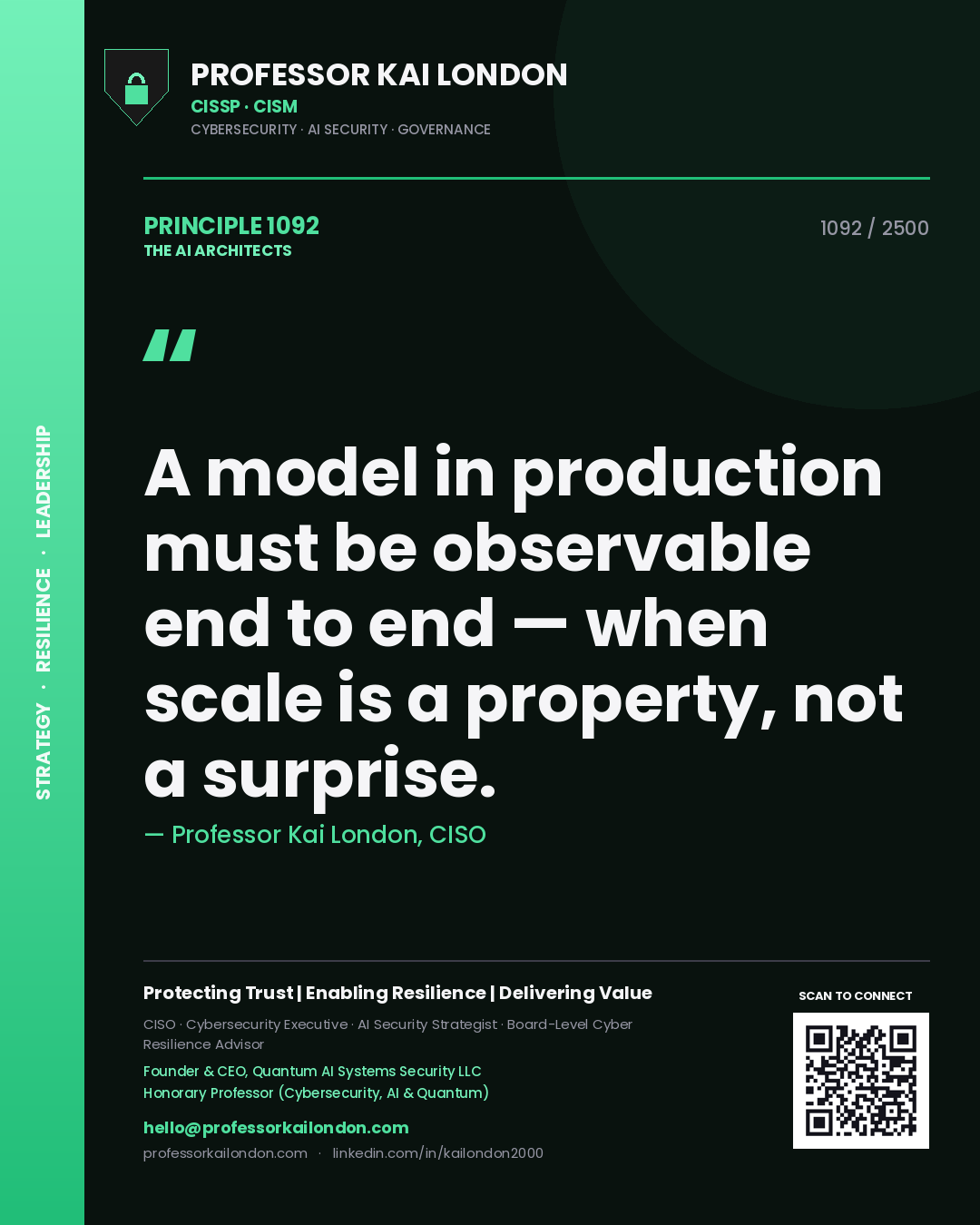
Professor Kai London principle 1092: A model in production must be observable end to end — when scale is a property, not a surprise.
Principle 1092
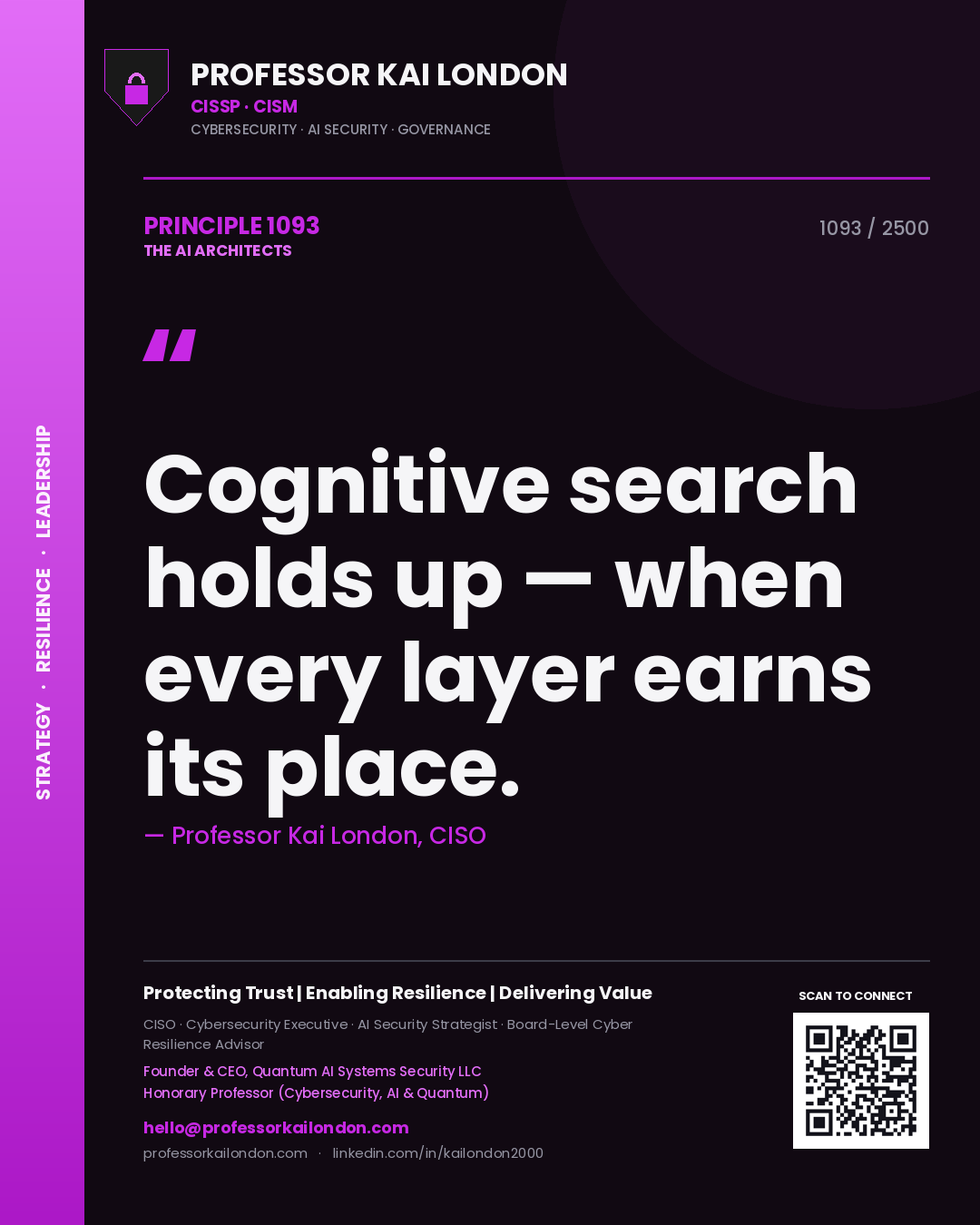
Professor Kai London principle 1093: Cognitive search holds up — when every layer earns its place.
Principle 1093
Professor Kai London principle 1094: A tool-calling agent is defensible — before it ever reaches a customer.
Principle 1094
Professor Kai London principle 1095: A guardrail policy holds up — because demos lie and production tells the truth.
Principle 1095
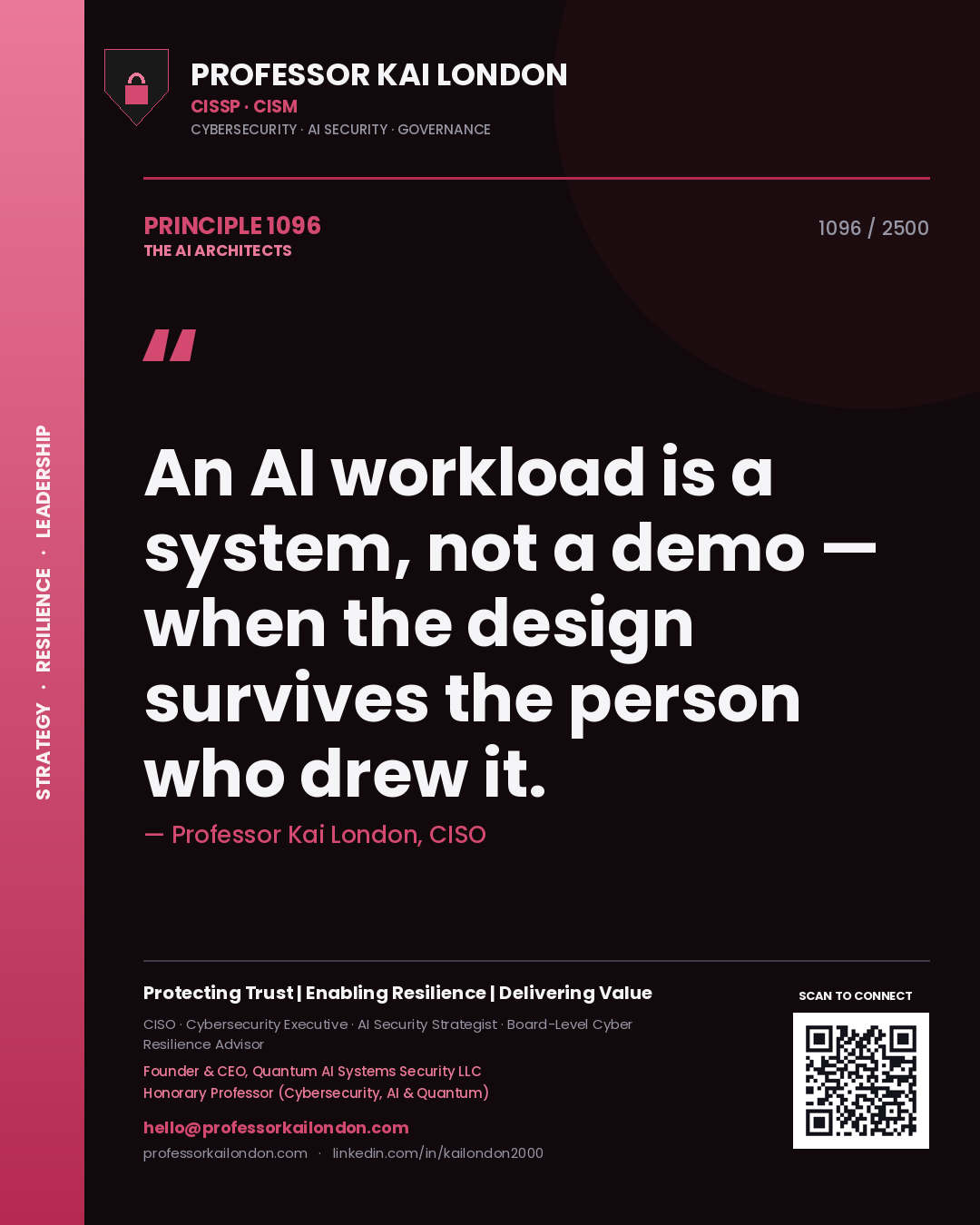
Professor Kai London principle 1096: An AI workload is a system, not a demo — when the design survives the person who drew it.
Principle 1096
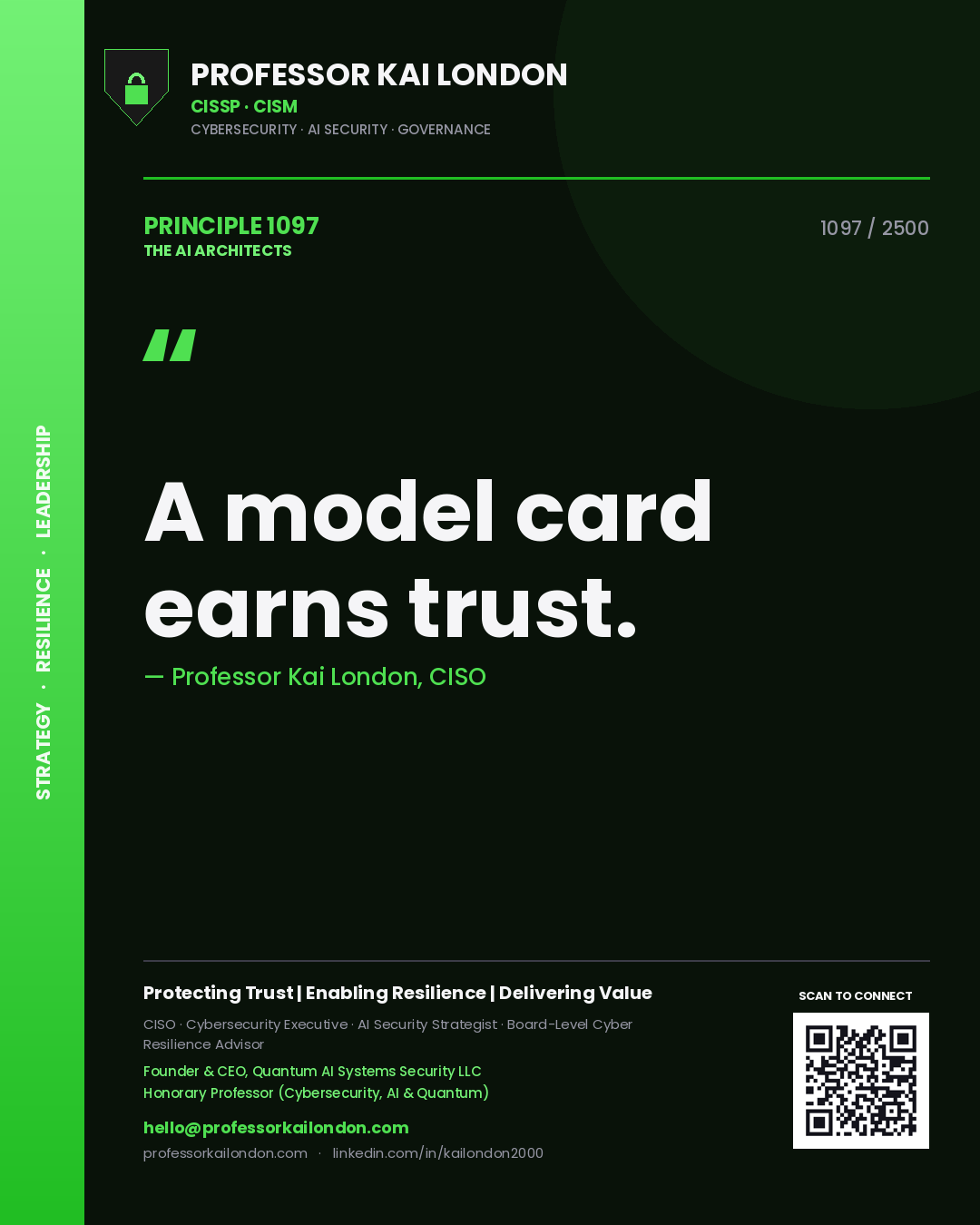
Professor Kai London principle 1097: A model card earns trust.
Principle 1097
Professor Kai London principle 1098: A data contract earns trust — when governance is designed in, not bolted on.
Principle 1098
Professor Kai London principle 1099: A fine-tuning run earns trust — when scale is a property, not a surprise.
Principle 1099
Professor Kai London principle 1100: A guardrail policy is governable — because demos lie and production tells the truth.
Principle 1100